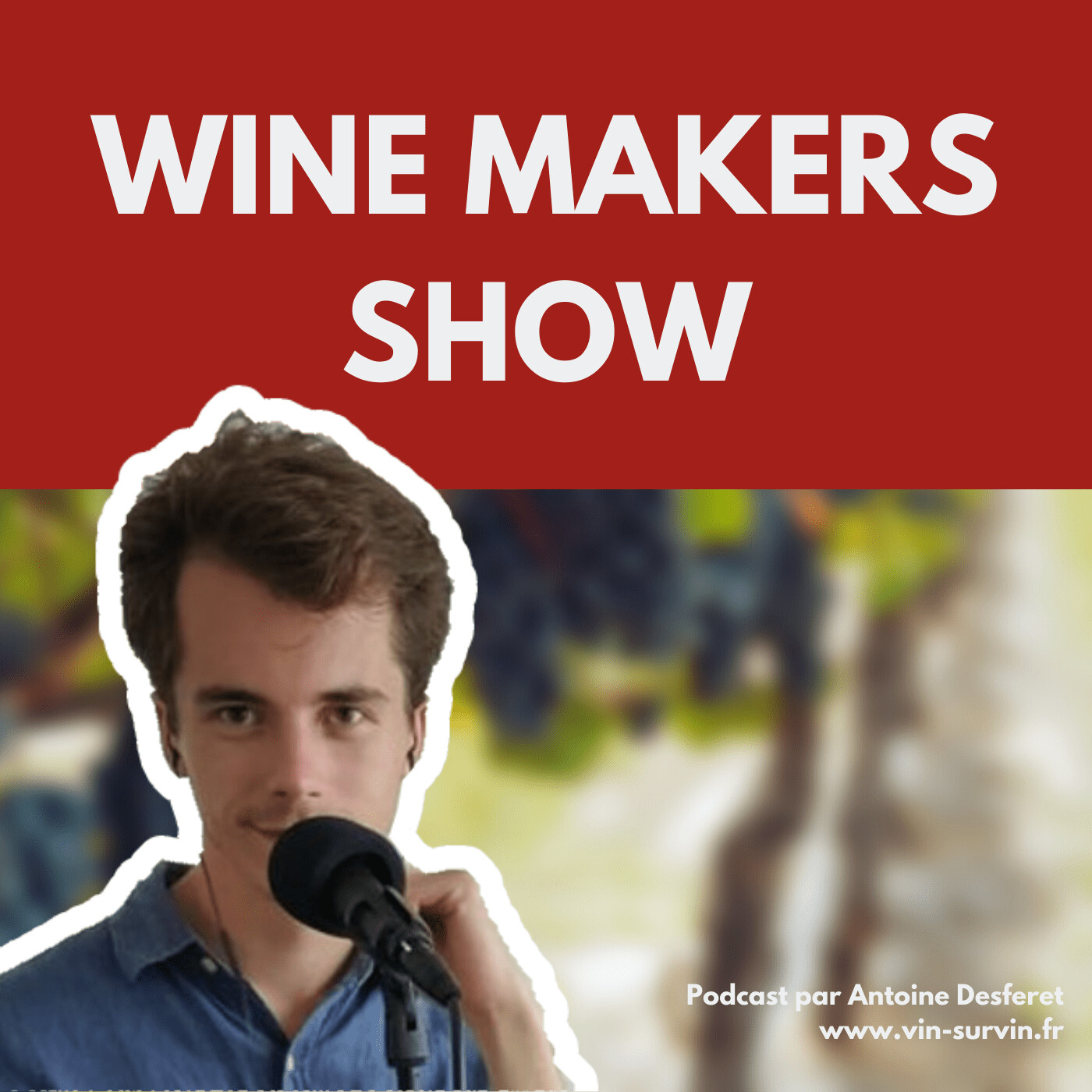
#110 - Antonin Pillot: a New Generation in Chassagne-Montrachet
40m 37s
Anto-Nan, vigneron de 5e génération à Chassagne-Montrachet, partage son parcours et sa philosophie lors d’un voyage en Asie. Après des études en commerce et des expériences en Bourgogne et en Tasmanie, il a repris la vinification du domaine familial en 2021. Face au réchauffement climatique, il adapte ses pratiques : il privilégie des levures indigènes pour des fermentations plus longues, apportant complexité et une sensation de fraîcheur grâce au CO2 naturel. Il utilise aussi des fûts de plus grande capacité (250 L et foudres de 1 200 L) pour une intégration plus subtile du bois. Il décrit la diversité des terroirs de Chassagne-Montrachet, où les sols argilo-calcaires donnent des blancs élégants et des rouges encore sous-estimés. En Asie, il est impressionné par la connaissance pointue des consommateurs et souligne le rôle crucial des partenaires locaux, véritables ambassadeurs de ses vins. Il reste optimiste, misant sur des ajustements œnologiques plutôt que sur l’irrigation, pour préserver l’expression du terroir tout en rendant les vins plus accessibles dès leur jeunesse.
- Aller, Hello Anto-Nan. - Hello Anto-Nan. - Merci beaucoup pour nous. À la plupart des fois, je vous dis que merci pour ce qui est passé, parce que je me suis l'air de voir les domaines et les esthés. Mais cette fois, nous ne sommes pas en Burgundy. Nous sommes en le centre de Hong Kong. Merci beaucoup pour le nom de Hong Kong. - C'est mon plaisir de venir et me mettre en Hong Kong, donc j'ai vraiment appris. - Grâce à vous, tu as l'air de venir aujourd'hui, je vais vous visiter cette partie et me faire le maquillage de Sasko, donc c'est votre agent de travel de l'année. - Oui, c'est mon premier vintage, donc je veux présenter mon monde, mon vision. Donc c'est le bon opportunité de venir et c'est un marketing de l'agent et mon custom, mon partners et tout. Donc nous avons fait ce tour. - C'est intéressant. On nous parle de tout ce que c'est. Mais peut-être que vous pouvez commencer par vous intéresser à vous. - Oui, je suis en Montenar Pio, qui est de l'autre famille de Chassane Morache, donc je suis le 5e génération qui est en train de faire le win-industry. Il y a beaucoup de domaines qui sont aussi des branches, parce que vous savez que les branches sont très connectés. Mais je suis au domaine de Jean-Arpio, Jean-Arpio est ma fauser. Son de Jean-Pio est ma fauser et c'est où le branch est de l'autre. Nous sommes en train de faire 12 victoires en Burgundy, mais en Chassane Morache. Et maintenant, je suis en charge de le win-making, c'est le win-tage 2021. Donc c'est vraiment très fun et. Maintenant, je dois faire le travail. Et je vais commencer. - Et donc vous avez toujours pu travailler dans le win-industry, quand vous avez des choses et des choses, vous avez toujours pu travailler dans le win-mé, ou dans le win-making, et c'est quelque chose que vous voulez toujours faire. - Vous avez toujours. Vous avez toujours pu le faire, le win-mé, le win-energy, le socialité du win, mais vous avez aussi aussi un parti de travail qui est très difficile dans le win-yard. Donc ma famille me demande à me faire très heureux dans le win-yard, donc je suis très bonne question de vous et à être une autre chose, je suis toujours dans le milieu de la main, mais c'est quand j'ai été une chose que j'ai vraiment apportée que je ne pouvais jamais aller au win-mé, et que je suis dans le win-mé. - Donc à la première fois, vous vous dites à moi, juste avant que vous étiez étudié, pas directement au win, parce que nous avons dit juste avant les interviews, que votre knowledge de l'Asia, que vous avez été et tout, donc vous dites à moi que vous êtes en charge de l'Asia, donc je pense que vous faites comme une business cool ou quelque chose comme ça? - Oui, je suis étudié en business pour quelques années, et je suis en charge de l'Asia, et donc c'était bon, mais il me réalise que je voulais vraiment venir à le win-mé, le win-femile de la business, et ça me permet de me finir, de me faire le revoir et de commencer à l'appeler le win-parti, et après que je suis étudié dans le win-yard, le win-selling et le win-mé, Ça fait partie, parti parfois pour enriched@ quantity possible sur YouTube. S'est très bienить, surtout moi aussi. La blaine de le Burre vendredipm est très sympa. Et l' texte qui pense bien au collectivывает? Ils sont transformés au NIS, avec des sous-titration Albright, qui raw support et va insuffire laWarrape en Informationen terrines, qui est particulièrement supr rêver. C'était aussi très intéressant. Il a travaillé pour une grande compagnie dans le Burre Gandhi et la Bouchard-Perefist. C'était très bien aussi pour comprendre tous les terrains de Bougain, car la Bouchard était 130 hectares. Donc, de la Côte de Bonne, pour la Norsca de Nuit, c'était aussi très intéressant. Et j'ai eu le win-tage en Tasmania, en Australie. - Ah, c'est bien. - Oui. Donc, on va travailler en Chardonnay, et en Pinot Noir, on veut vraiment avoir quelque chose très similaire avec le climat de Bougain, quelque chose très fraîche et où ils ont travaillé en Pinot et en Chardonnay. Donc, on a fait des choses pour le win-t-age. Périf Colin, qui est très bien à Tasmania, est très très cool. Donc, on est là et je suis très bien avec le plus familial de la War. C'est très cool pour nous faire un bon monde, parce que nous avons pu faire un bon monde, et vous savez, quand nous sommes en France, nous sommes en France, qui est évidemment très cool et divers, mais le fait de nous être ici, c'est vraiment un peu l'opinion pour nous, que France est juste un parti de la fin des pays, et puis nous avons des opportunités pour aller au Australie. Nous avons beaucoup de lois au Australie, les newsies et les africains, les africains, les américains et les wines. Donc, c'est très cool pour avoir un bon ventre de banche, pour vous en ouvrir des choses de nouveau. Et c'est très simple, nous avons pu faire un win-t-age. C'est vraiment très intéressant. C'est très cool pour nous que nous sommes en Bretagne. Nous ne sommes pas en train de faire ce change pour le moment, mais un win-t-age aussi développé. Il y a un peu de la saffre. Donc, nous avons maintenant le German win-t-age, un Spanish italien win-t-age. Nous sommes en train de être plus heureux, mais je n'ai pas de curiosité parce que j'ai travaillé dans cette wine shop et je m'en suis toujours travaillé à ça et j'ai vraiment aimé de faire beaucoup de wines de l'aise. C'est très cool. Donc, comment est-ce que vous voulez vous dire que vous voulez rejoindre le pays, et vous êtes en train de faire? Non, je suis en train de faire ce change pour le pays, mais je ne suis pas en train de faire ce change pour le pays. Je ne suis pas en train de faire ce change pour le pays.
style of fermentation that we have. Can you describe the people watching the difference between a yeast, how do you say like, like the section one or the natural ones or the indigenous and are more the natural ones coming from the fruits or the cellos you have. And that's sometimes a yeast, I would say, not stronger like the section one, but it can make some fermentation quite longer and give you more complexity finally into the wine. So that's change also another thing is that bring you those longer fermentation bring you some CO2, which is now really important. I think we will go after on the global warming maybe. But that helps to have a sensation of freshness in the palettes, the CO2, the natural one you create with the fermentation. And help to be able to balance finally the wine. So that's a big change also. And after I bring many things in the wine making also, for example, I told you just before, but the bigger of the barrels. So we choose now bigger size. So we are using 250 liters, not the classic burgundy barrels, and also some fooder. So big, big wood tanks of 1,200 liters, something like that. Well, to have a better wood integration, sensation of freshness in the palette for the testing after. And yeah, maybe something a bit less exuberant in terms of food, because sometimes when you drink a burgundy white, it's a lot of food in the mouth, which is sometimes amazing. But you need to find the sweet spot and the elegance that you want. Yeah, I know the wood you're true. Sometimes with the warm windage, the wood could be something quite unbalanced and it's better to manage it. I think you don't know the way now. So you've grown up in Chasseign Mourachet? Yeah. Can you describe Chasseign Mourachet for our audience? It's a small village with the church. It's a small village. We've changed a lot since the last 10 years or five years. We have a new generation. So mine generations coming back to Chasseign, who are 10, 12, I think to take taking back these states. Two of them create some restaurants, one restaurant in Winebar and one wine bar. You have a bakery, so Chasseign has become quite. Coming over here. Yes, yes. We are just 288 people, but we have a very dynamic village, where people are, I think, all appreciate each others. And that's make the difference. We have a good image, I think, also on the cut because we are quite cool people. And the wine still something accessible in Chasseign. There is not. I think it's a good village for that, yeah. It's a place I love in Burgundy. I've been there twice, I think. Okay. And there is this small restaurant in Summer. I don't know the name, but like it's outside, you know. And it's. Yeah, like a band, I think. Yeah, I think it's like a band. So, like a band is actually a very well known wine bar in Hong Kong. Okay. The mistake. But yeah, it's an amazing restaurant. I love the. I love the detail there. Oh, it's nice. So now we have like a band. The other star restaurant. So the two that we had before. But we have Naopapi, which is another restaurant, owned by two dancers, a friend of me, who also won the makers in Chasseign. And Clément Collin is. And his girlfriend opened a wine bar called Collette. So we have many, many, many places to go and have good wines. And that's amazing also because we are all wine lovers. And that's how we're still doing good job. Because we keep this curiosity. We have to come back to Chasseign. One day. Be my guest. You open to visit? Yeah, but for. We have a short time because I also work in the vanyards. And so I train to stay open for a few people. And because we don't want to have closed doors. So it's like we send you an email. Yeah, yeah. And sometimes it's. And I guess it's not during the harvest. Yeah, yeah. Like more during the winter here. So it's a bit less romantic, the burgundy winter. But it's still a great visit. I. November is fine also with the autumn. This is the perfect, perfect moment to be in burgundy. So one of the main things in burgundy is the climate. So the different parts of it. Can you describe what you produce, what you have in terms of wine? I know here we have Chasseign Mouache. So I guess it's a village. Yeah, it's the village one. Village one. Can you describe a bit what you do? And the type of wines that you will find? Chasseign is a very complex area because you have this mix between clay and limestone a bit everywhere. The wine tipicities are coming from the proportion of limestone you have. But also the tipicities of the limestone you have. So it's very different and very rich, I would say, by the terroir. In this Chasseign you have, for example, six plots blended together. You have thread the north. And the north part is very stony. Close to Poulini. It's giving a lot of acidity. At the center of the village we have to plot the mazure les essas. We have the classic mix of the small rocks mixed with the classic clay. Quite drainage clay of Chasseign. We're giving a lot of textures to the wines. But you have also some parts on the south where Chasseign's close to St. Né. We are more with a big dark clay and that give a bit the wrongness to the wine. So that's also what's coming from Chasseign a lot of threads because we have a bit of clay at the bottom part. So all those plots are better for threads. But we have the higher part of the slope, which is perfect for the Chasseign and all those complexity. With good premier grule, so in Chasseign. So we have the south ones with lecaire, le grand ruchot, le române, war just up to the hill. Which you produce as well? I have the caire et les farandes in this area. And you have also another one, the North part, which is quite rich with les verges, le chasseign, just located on the crueille of Chasseign with very stony soils, give a lot of elegance to the wine, very good complexity. So we have the chance to have a big mix of the airwars in Chasseign and you can find what you want. I love the fact that we can also find reds from Chasseign. Because you mentioned them. For me, it's undervalued. I shouldn't say that about Burgundy because you guys are going to have the price. You have many wines still quite accessible. The reds from Chasseign, I feel it's part of the red from Burgundy that are still accessible and that are really amazing. Like I really love it. Chasseign used to be planted with 70% of pino. Like the 70s 80s. So we have a big history with the pino. I think the conception also was quite different before. So maybe it's coming from that. But we for sure have a place for the reds because you can't produce good chardonnays and big dark clay. It's not a very good chardonnay. So we need to plan some pino on this way. But we have also the Stéroir like Clostin Jean-Eise or some plots of Morjeaux-Premier-Cruix. Like I think about the Boudre-Riotte from Ramonais or the Cardes from Moraux. Or Les Farons are also very, very good because you have this density in the palette. But you can have also some elegance for the pino. And that's quite in the red. You'll rewrite. But that's because the wine of Côte de Nuit I have the word the star before. But now it's changed a bit because Chasseign I think for the reds are more value for money like you said. And that makes people come in to a red world of Chasseign. And that's good for the pino chasseign. Yeah, definitely. Definitely and it's always nice to try. So you guys should try reds from Chasseign as well. So you are spending 10 days in Asia. You told me it was the first time that you're coming here in terms of not for fun and not for studies. So it's the first time that you are actually here for work. Can you describe first, can you tell me what's your goal in being here? And then maybe if you can give me an impression that you have on the market, on the people you met, how is the dynamics from your perspective? So the idea when I come over here is to meet my partner first so to explain them my vision because sometimes you meet the buyer of the wines or the owner of the company, the partner company, but they have a team sometime of 20, 30 people. So it's always good for them also to understand the wines, for me to meet them. To meet them and the other side is to meet the customers, the consumer of the wine finally, so to explain them my work, my vision. So it's quite recent that I'm in charge of the wine making. So I think it was a good time for coming with this Wintel 23 quite open, also quite accessible.
So it was the good moment. But also I was really surprised about the precision of some people in Asia. I was in Singapore first. I had a good lunch with some guys. They sometimes know better the plot than me of the other village next to Chessen. You know, it's crazy. So I think the knowledge is quite high for most of the people. So that's the good things I saw directly. In Asia. And we will see with the South Korea after. But yeah, I think it's quite good that our wines are drinking in a good way. And with people who are really interesting. And so-- Yeah, one of the things that strikes me the most in Hong Kong is the level of knowledge, indeed, of people here. Like you can redefine guys having trained and go through big education about wine. And like being really smart about it, really thinking about it. And the other thing is the level at which people open bottles, actually. And it's something that is pretty cool because you maybe don't see that that much in some places in France. But here we have plenty of wine bars. And people actually are just here to enjoy. I wouldn't say they don't care about spending, but they are OK to spend money. And they're like, yeah, it's just a good night. Let's open a bottle. And it flows like that. And for me, it's really amazing to see this wine being actually consumed and drink. Yeah, they look very generous. And the wine lists are crazy. You go to a restaurant, you have wine everywhere. So no, no, I think it's a good place also for wines. And that's why I'm really happy to be there and understand that also. And it's perfect. So you talked about the relationship that you have with partners here. How does that work? So if we have to describe the market to someone, so you produce wine in Burgundy, but you can't be everywhere in the world. So you have local partners in charge of selling this wine. How do you work with them? What you're looking for into such partners? Like for my question is, if I'm a wine maker in whatever region in the world, what should I look for and expect in working with such partners? So the really important thing is the collaboration and the partnership, I think. You need people who are trusting in your work, trusting in your wines to show them well and to be the ambassador of your wine because you can't come every year when you are doing the wine and the vanyas and you are in all the parts of the job. You can't just travel everywhere every year. So you need to have strong people who are selling well the wines. So that's why Connie invited me also for this trip. I think there are sometimes better than us to sell the wines because they have the good words also to speak with the people. And so they are very important into the market now. It's not just seller of wine. It's our real ambassador, as I think. And so on your side, how do you try to give them all this information? So you're coming, which is nice. I guess you had the tastings and everything. But I don't know, do you send pictures of the plots every now and then? Do you have regular touch points to discuss? How is it going? I'm quite bad for the moment, but the next trip I will be better, I think. So for the moment, it's my own world, my feelings, what I'm trying to do, which one I'm trying to produce and why a bit of the global warming. So many ideas come in. So it's also the beginning of my career. So we'll see in 10 years I will be with my one explanation. But for the moment, I think I'm just quite direct, quite honest, and just tell what I want and what's my challenge also. You talked several times about global warming. So you told us a bit before that you changed the wine-making technique with a bit less wood for the warm-up in-dage to preserve a bit of acidity and of, I guess, ability to drink. So I guess this adaptation to global warming is important to you. And it's really something that you're working on. Can you tell us a bit more how you feel it from the vineyards that you're doing? That could be a bit challenging because everyone's told us that maybe in 50 years we'll not have a shardonnay anymore in Burgundy and we will need to put some to plant something else. So I'm quite trusting in all you will need to use irrigation, for example. But I'm at rest that we have many keys and we can work a lot on some key points to fight a bit against this global warming. Of course, the wines will change a bit, but there will be maybe more accessible on the young edge. It's maybe good also because you know that all the people have not the sellers to age the wine for 15 years now. So we have a more direct consumption too. Which is the case for, it was what, 2023? Yeah. Which is already a super accessible one. Yeah, yeah. For the moment, this vintage is quite balanced and quite open. But the 2015 was a bit the same. We have this vintage slight warm, but we've really opened years on the young edge and after it go a bit shut for a perfect edging. So maybe 2023 will do that, but at the moment it's very well. It's true. So yeah, I'm quite optimistic with this challenge and I think we need to focus on it and just work well. So what does that mean for you? It doesn't mean like I guess changing the great varieties is not something that is open. Open irrigation is not the question. You know, you have some guys who try that in Burgundy. It's good to try, but for me, when Australia are starting to stop irrigation to have better quality, why doing that in Burgundy? It's also a humbleness to have very concentrated wine and so we cannot do that. For people listening, if you irrigate, it means that you bring more water to the grape by itself. Yeah, you have system in the vanyas. So it's not natural after that. You decide how many water the vanyas will have. So you can turn down a bit the wines and you don't have the vintage and terroir wines. But yeah, we have some other point. We can till a bit less during the summer. For example, keeping more grass. I have less sun reflection into the vanyas. Some guys try also some other density of plantation, maybe giving more space to the roots, to fight a bit again, those warm summer. I think we have just the beginning of the slight change of the work of Burgundy and we will adapt ourselves for sure and keep the shard and fresh in life for many years. I'm pretty sure. Yeah, definitely. You have plenty of things to try. You can keep a bit more leaves, I guess. Yeah, but by the vanyas, into the vanyas and also by the vinification. I mean, you can use big vessels, you can use the leaves, you can make some longer leverage to help the wines to gain a bit of bitterness. The freshness is not just coming from the acidities, it's a mix of everything. So you can have the bitterness, you can have the sensation of leaves with the sapidity of a wine, you can have. We don't just have to see the maturity and acidity, it's more complex than that. I think we have a lot of key points that we can use and keep this beautiful shard and ease of Burgundy alive. So you know, you arrive at the estate to start your journey and take over and take it to the next generation. One of the questions I have is for an outsider like me, sometimes Burgundy seems a bit fixed, meaning that it doesn't vary that much. I guess expansion projects are not easy to follow through or to have this perspective. My vision as an entrepreneur, I always want to create new things, different new things, opening, doing more, etc. How do you balance that? Are you not afraid of being bored in like ten years, you know, having the same plots doing the same wine? Do you have dreams for the next 30 years in Burgundy? I understand your question, but I think when you are passionate of wine, I see my father still working with us, coming to the domain every day, opening the door and being ready for the next harvest and talking about wine and a op I would never board about that. Of course, Burgundy is quite hard now to expand a bit our estates and the challenge is more keeping the estates, you know, the price of the plots are getting quite higher now and that's also a big, big challenge. Even for succession, I guess it's for succession.
for the less crop we have and we still have some loan to pay so we have those other challenging points but no no for me when you are passionate you many other guys by some other states you know the part of the world so maybe I will have the deciding in mind in 20 years but for the moment I'm very concentrated on my states doing very good job to produce very nice wine and for the moment and so the good thing would be something in the other hemisphere so that you can have one harvest in every six months you know bring back and forth would be tired with a two to really pick up two others because it's always a good fundering the harvest but you drink too much you know especially at the end. Nice what is it that we should wish for you so you told us keep doing the best chardonnay and the best Pinot Noir in the next ten years this is the the wish that you have. Yeah honestly yeah quite simple but you know when I see some states of Burgundy while making some great wine every year they have a level so I that's I'm just like there are like stuff for me and it's when you open a bottle it's always make me like feel so so good and that's just I once also do with my wine in the next few years so I hope I will succeed on it so we hope as well. So you told us a bit before that you one of your first experience was at Bouchard so a big big house one of the biggest house in Burgundy and what are the differences that you see between the way wine is done at Bouchard at Bouchard and the way you do wine in a smaller structure like what are the differences and what what do you want to take from Bouchard you know and apply to to I say Bouchard but it can be to yeah yeah and this is different but so Bouchard had used to have I think two of wine making they were quite carry with the the very nice appellation too so they make very great job it's not just turned out once of course they have to be a bit more technical on the on the entry level ones but that's also what we don't want to do on our small estates being too much technical we need to work before in the vanyars to have nothing to do finally in the wine making so that's the point but they work well on the I remember the Merseaux-Genevrier I tried what the amazing even if it's a big big estate you can still have very nice wine that's make that's how the terroir is important in Burgundy it's not just a wine making where or your size of the estate is and the other things that's helped me a lot from Bouchard it was in 18 2018 so it was a big big vintage with a lot of crop so they were I remember that it was quite impressive they were fruits everywhere but nobody's quite stressed so that's also helped me you know when you come back on the family estate my father could could be sometimes a stressed a bit some things in the way during the harvest and I think I'm more chill with that and we have many of our vanyars are based in Chessine so when you have wine ready sometimes you need to pick quite quick so we have a team of 60 people during the the harvest the idea is to pick two two hectares per day so one week and I think that's helped me also to see how you can manage many fruits in a chill time and that's helped me a lot for the the comeback on the on the estate the family one and did you change some process or some things are yeah but I more bring back things of processing from Tasmania okay for example we we are using a room for chilling the fruits because of the global warming sometimes you you pick during the afternoon at 30 degrees we cannot really wait for the picking so we need to pick in the afternoon we can't stop just doing the morning so that's chilling room at a help help us a lot so we put the food in the fridge and we just process the the day after and like that you have always cool cool cold fruits to to work with for the press first and also for the first the first methodation and when making of the reds so I think it's a very important things that I bring back from Tasmania because they didn't know how working with the hot the hot harvest since a long long time and we were maybe not ready in burgundy but now you have many people who have those chilling fruits rooms and so we build one also when I come back so another change and for the people listening you want to have cool temperatures from the from the grapes when they arrive so as you can first so kind of like price it and extract on either so first for the sorting it's better because you it's easier to detect to separate and after for the press you we have long press of forest so if imagine if we start with 30 degrees the fruits can go very high so it's better to have cold cold cold fruits at the beginning and for the reds when you are disteaming because the fruit is cooler it's more the berries are stronger and they are more intact into the the the tanks after the disteaming so I think it helps a lot for the type of a rotation we want to have we are trying to have quite a little cellulary fermentation for the reds and that's so you need to have the very intact yeah perfect so that's helped us a lot for for that makes sense great I think we covered a lot of what you're doing it's been it's been an amazing interview thank you for being available to meet us while you're in Hong Kong it's always great for us because one of the things we we have witnessed is that being in Hong Kong is a good way for us to meet more people selling wines in the trade so many as importers out of this but being out of France is a bit a not a shame but like a bit sad for us because we go a bit less into the vineyards you know and we meet a bit less wine makers actually definitely need to come back to Shasan yeah absolutely and it's always the type of places we love the going to Shasan is definitely part of them and you know it's always a pleasure to go to these regions especially for us leaving in the city and everything when we arrive it's a blessing to drink some cool wines and and being in such places and I have three last questions that are always the same the first one is do you have a book recommendation for me that's more a book who troubles me a bit it's from Lillian Berillon the jour in Europe plus de va because it's make me think about all these changes and this book said that okay we have to be really carried with what we are doing what we are planting for the next generation and I think it's helped a lot to things and to be more precise on the next plantations and and how you we have to to take care about the vineyards so that's a good book I think too yeah it's an amazing and the way it's written it's it's really perfect and I don't know if it's available in English or no I will check and put the link in description if it is but if it's not available yet in English and some editors are listening just to reach out to Lillian Berillon and Augusto Roto because the book is really nice and do you have a recent wine tasting that you loved yeah I had a Egonmuller Schwarzsoff 2021 it was it was amazing I had the chance to visit the Egonmuller two years ago with the team of Chassin because we have we have a good team of the young wine maker where we are doing one region per year and so two years ago it was Germany so we went there and I had two weeks ago the Schwarzsoff 2021 with just a slight sweetness and big big acidity it was amazing nice if you find some on the markets and you know what to drink and finally who is the next person we should interview I worked in this Wayne shop in Bonn called Latinium it's an amazing place and the owner Vincent Clément it's maybe the ambassador of the wine style life in Bonn so he knows everyone's about all the wine makers of Burgundy he knows all the decontor all the glasses of wine everything so and he has always good stories to talk about and so you can meet him is a really good fun and I think he will really happy to to explain you all the Burgundy world nice next time we're in in France and in Burgundy welcome to Chassin and before after we'll definitely go meet him okay cool great
Thank you very much, Antonin. Thank you. Thank you for taking the time to do this interview. For you guys, if you're still watching, it means that you love this interview, watching or listening. Actually, it means that you love this interview. So don't forget to share it to at least two percent. We need to drink more, just have some red wine. I think it's a good identification. Share this podcast like it. Share it around you. Antonin, thanks again for coming to us. And see you soon. Thank you. [MUSIC PLAYING]
Podcast Summary
Key Points:
Anto-Nan, vigneron de 5e génération à Chassagne-Montrachet (Domaine Jean-Noël Gagnard), présente sa vision et son travail lors d’un voyage en Asie (Hong Kong, Singapour, Corée du Sud).
Il a étudié le commerce avant de revenir à la vinification, avec des expériences en Bourgogne (Bouchard Père et Fils) et en Tasmanie.
Il adapte ses techniques au réchauffement climatique
Chassagne-Montrachet offre une grande diversité de terroirs (calcaire, argile) produisant des blancs complexes et des rouges (Pinot Noir) encore accessibles.
En Asie, il constate un haut niveau de connaissance des consommateurs et l’importance des partenaires locaux comme ambassadeurs de ses vins.
Il reste optimiste face au réchauffement climatique, privilégiant des adaptations dans la vinification plutôt que l’irrigation.
Summary:
Anto-Nan, vigneron de 5e génération à Chassagne-Montrachet, partage son parcours et sa philosophie lors d’un voyage en Asie. Après des études en commerce et des expériences en Bourgogne et en Tasmanie, il a repris la vinification du domaine familial en 2021. Face au réchauffement climatique, il adapte ses pratiques : il privilégie des levures indigènes pour des fermentations plus longues, apportant complexité et une sensation de fraîcheur grâce au CO2 naturel.
Il utilise aussi des fûts de plus grande capacité (250 L et foudres de 1 200 L) pour une intégration plus subtile du bois. Il décrit la diversité des terroirs de Chassagne-Montrachet, où les sols argilo-calcaires donnent des blancs élégants et des rouges encore sous-estimés. En Asie, il est impressionné par la connaissance pointue des consommateurs et souligne le rôle crucial des partenaires locaux, véritables ambassadeurs de ses vins.
Il reste optimiste, misant sur des ajustements œnologiques plutôt que sur l’irrigation, pour préserver l’expression du terroir tout en rendant les vins plus accessibles dès leur jeunesse.
FAQs
Anto-Nan est la cinquième génération de la famille de Chassagne-Montrachet, en charge de la vinification pour le domaine Jean-Arpio, avec 12 vignobles en Bourgogne.
Les principaux cépages sont le Chardonnay pour les blancs et le Pinot Noir pour les rouges, bien que la région ait une histoire de 70% de Pinot Noir planté dans les années 70 et 80.
Il utilise des fûts plus grands (250 litres et foudres de 1 200 litres) pour une meilleure intégration du bois, et favorise des fermentations plus longues avec des levures indigènes pour apporter de la fraîcheur et de la complexité.
Les partenaires locaux sont des ambassadeurs essentiels qui comprennent le marché et vendent les vins avec confiance, car le vigneron ne peut pas voyager chaque année.
Il souhaite rencontrer ses partenaires et clients pour expliquer sa vision et son travail, notamment avec le millésime 2023, qui est ouvert et accessible.
Il est impressionné par la connaissance précise des consommateurs asiatiques et leur générosité à ouvrir des bouteilles de qualité, ce qui rend le marché dynamique.
Chat with AI
Loading...
Pro features
Go deeper with this episode
Unlock creator-grade tools that turn any transcript into show notes and subtitle files.
 PodcastTranscript AI