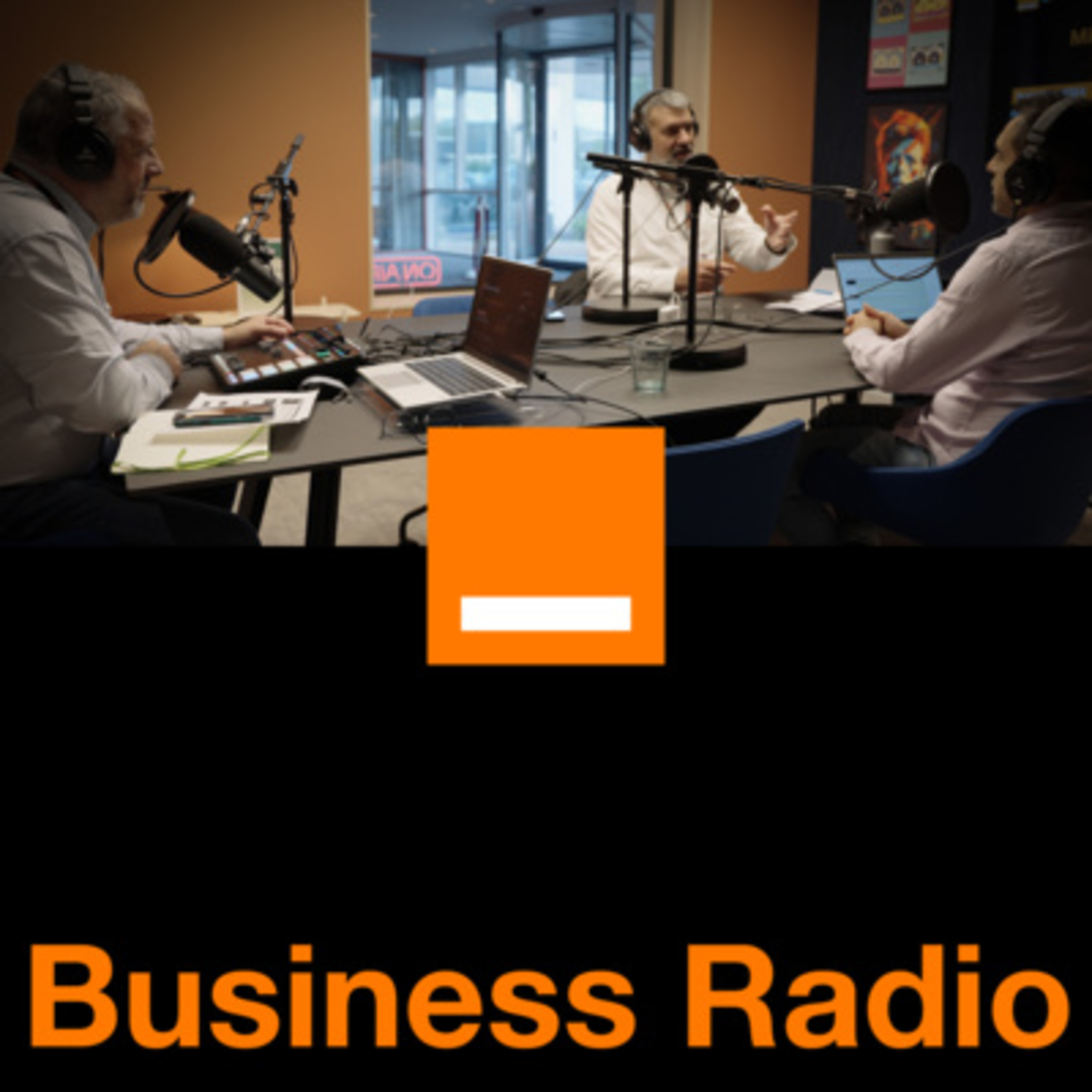
Episode 11: Transformation is all about the peopleGuest: Laurent Aufils: Chief People Officer at Orange BusinessLinkedInAbout the hosts:Frank de JongFrank has over 30 years of experience in the world of telecommunications and IT. Having held several roles at several different telecom operators and technology companies, he now works as Program Director and Tech Evangelist at Orange Business. In his spare time, Frank flies planes, does nerdy stuff and even recently started learning woodworking and furniture restoration. L...
Transcription
7084 Words, 38625 Characters
Hello everyone and welcome to yet another episode of Orange Business Radio, where we are passionate curious about the impact of technology. My name is Frank Dium and I'm the host of this podcast. And with me is my co-host Karam Arsau, hello Karam. And it's good to have you in the room with me once again. And to paint you throughout, to paint a picture for our audience, we are in Paris today in the headquarters of Orange. And we are here to talk about the transformation of enterprises. And of course we're not doing that with the two of us. But we have invited Laura Ofis who is the Chief People Officer at Orange Business. Welcome Laura. Great to have you on the show. Great to be here with you Frank and Karam. And so in this episode we want to talk about organizational transformation of enterprises and whilst preparing for the podcast, I obviously have been looking at your LinkedIn profile. And I've seen that you've been working for Orange Business in several roles before you became Chief People Officer. So can you tell us a bit about your journey and your personal transformation? Well, definitely, I'm a great example of the transformation because I actually started in mergers and acquisition. So I'm a finance person by, you know, by education. And I started with a company called Equants. And I had the opportunity and the chance to work on actually the birth of Orange Business with the merger between Equants and Global One. So it was back in 2005, 2004, 2005. And then I've been moving into different roles, some operational roles, some HR roles and why HR when you come from finance because actually I knew how to count. And it was quite, you know, a skill on demand within the HR team. No, but to be more serious, I was applying my financial skills and also, you know, my transformational skills, you know, into human resources. So it was great to work on this, you know, exciting topic. So I had the opportunity to work on different, you know, topics in terms of governance, in terms of skills and workforce management at Orange Group level. And then I worked on the transformation of the innovation domain within Orange. So that was quite a challenge. And then I joined back my first love, as we say in French, which was Orange Business as a Chief Transformation Officer, where I did, you know, quite different, you know, projects, merging, you know, the Equants friends with Orange in France and also simplifying the, you know, the structure, the legal structure of the organization. And design as well, some of the topics that I'm currently working on as Chief People Officers. So, you know, that's actually, you know, where the link is, that's a transformation, that is really the common factor. I love it. Thank you very much, Laurent. So besides that, and besides the personal transformation, today when we look at Orange, there is a transformation that's taking place right now. Can you tell us a little bit more about that? Like, what's the, is there an endpoint? Like, what's the rationale and the process and the objective? Well, it's pretty simple. Actually, we are changing completely our business model. We are moving from a connectivity services company to an integration services company. So connectivity services company means that our assets are the connections, the bandwidth that we are providing to our customers, to our B2B customers. And we are moving now to a full service company. We are providing cloud services, cyber security services. And this change in the business model is actually very exciting because it's all linked to the evolution of technology. Before, you know, all the technology was based on, you know, assets. And that was making, that was making the difference. And now actually, you know, with the cloud services, with the cyber security, with the software defined networks, all that is managed through, you know, actual services, not only the assets, but the services that are on top. And that's where the value resides. So that's what is really exciting. Is there an end to this transformation? To be honest, with you know, I think, and it's better that way, because it means that, you know, we are currently evolving and adapting to what our customer needs, to what, you know, the technology as well, you know, is changing our lives, changing the way the company can operate, can, you know, deal with their clients and so on and so on. So, you know, we will continue to transform. That's for sure. And I think that's actually what is very exciting, because, you know, when you look back, we have the opportunity to have worked on the internet, when the internet first came, you know, it was like not so long ago, it looks like centuries ago, but it was, you know, like 25s, 30 years ago. Then when the mobile phones came and with all the disruption that it brought, you know, the smartphones and so on, and then, you know, all the, you know, all the other services that are linked to the IoT internet of things, and now generative AI and even quantum computing. So, it's really exciting. I think it's, that's what I really love in what I'm doing is that I'm part of, you know, industrial revolution, a new industrial revolution and it's going very fast and it brings a lot of opportunities as well. And do you see this transformation as being shared by the industry peers as well? You know, maybe some of your competitors, basically, is this you think like a telecom's wide kind of transformation that some of the leaders are going through? I think it's much larger than the telecom, you know, sector. Actually, you have some new companies that are just, you know, being created, you know, to deal with these, you know, new services, these new ways of working, you know, and it's really great. But it's also our clients. When you look at, you know, what we were calling the uberization of the companies and of a lot of business models, you know, everybody is actually impacted negatively for some of them, but positively for a lot of them. And I think it creates a lot of opportunities in terms of, you know, business, diversity, skills, development and so on and so on. So I see it really as a positive change and it encompasses different domains, not just the telecommunications sector. And then specifically for your organization. So how does it impact your organization? You mentioned re-scaling upscaling and how does that work? Well, it's, you know, it changes many different things. It changes, of course, the skills because we are lucky enough to have, like, you know, expertise in technology, but these technologies are evolving and we need to acquire new expertise. We need to upscale people because, you know, again, people who were trained in generative AI 18 months ago, their skills are already obsolete. You know, so it's really, you know, it's really a continuous training and upscaling and re-scaling is really one of the main efforts that we are going through. And it's actually, you know, a positive for the employees, but also for the companies, for our clients because it helps us to work on more exciting projects than, you know, than before. But it's also, you know, deals, it also deals with the culture, the way people are working. You know, it's actually, you know, a much deeper change than just the skills per se, but it's really, you know, the way people are working, the way that they are moving into the agile ways of working, the safe methodology, but also, you know, a lot more, you know, in accelerated way, you know, to make decisions, to deal with clients and to, you know, not just receive, you know, the requests from the client, but continuously work with the clients, you know, to better serve their needs and to better, you know, respond to what they actually want to grow their business. So, you know, this change in culture is very, very important because we see people don't have the same relationship towards their job. You know, some people are very much, you know, invested, some people are perhaps less invested in their day-to-day job. So, this change in culture is also very important as it, you know, especially when we are completely in a services business, brings a lot of attention towards the engagement of the employees. And that's really one of the key elements that we are working on. You know, you can change everything around the orchard, you can change, you know, even the skills, if people are not engaged in what they are doing, if they are not ready to give the extra effort to better serve the client, you know, it's, you know, it's, it's not going to be a success. So, engagement is really the heart of what we are doing. So, I worked at a telco myself for about seven years and, and one of the things I noticed, and I worked until quite recently as well. One of the things I noticed is that it's very difficult to not only change the direction of an organization as large as yours, but also, it is very difficult to define a strategic direction and where you want to end up. I don't know whether that's the same case with you, but I'm wondering how do you actually manage the uncertainty that the future may bring, let's say, in this case, AI, right? Like artificial intelligence, futures are many at the moment, and we don't really know exactly where we're going to land. So, how do you manage that complexity and uncertainty into the programs that you are trying to build today? Can you, can you elaborate on that a little bit? And maybe if you've got like partners in crime about giving you more clarity about the direction, like who, who do you work with the most closest? It's not an easy question, but it's a really very precise question that is to the point, and it's actually the difficulties and the challenges that we have to manage on a daily basis. Of course, there is a vision, but we know that the vision is somehow evolving as well. Sometimes the vision is for 2030, but we see that things are accelerating, and we need to reach that goal before 2030, and we need to accelerate in what we are doing. And of course, all the world around us is not standing still. So, we need to adapt. We need to continuously manage these risks, and something that I actually learned when I was working in mergers and acquisitions in the risk management and the risk mapping, and how you address this risk, how you mitigate these risks, and basically how you define the path that will have the best balance between the risk management that you want to have, and also the objective that you have to achieve. So, I think it requires a lot of agility in the mindset. It requires to be clear on what is absolutely important versus what is not so important, and you can let go. It requires as well to be clear from the very beginning that the goal that you set might be adjusted. No regrets. No regrets, areas that you need to figure out as quickly as possible. Exactly. No regrets, areas, and it's how you're able to embark the teams to really engage, again, the teams. And there will be even so long the way that will perhaps slightly require for the plan to be adjusted, but it's how you manage the teams to also face these difficulties to really go beyond this in order to reach the goal and division. But again, the vision is moving. And it's normal. It's good. And I think it's especially through these days. I think it has always been true, to be honest, but before we were more working based on long-term plans and so on and so on. Now, when you look at the world around us, when you look at the technology on one side, the geopolitical context on the other side, just the way the society as well evolves in terms of the needs and how you need to embrace a lot more diversity in the way you want to respond to your clients and to your customers, all that gives you basically a lot of constraints. If you look at it negatively, it gives you, as well, I think a lot of challenges. Constraints, because if you look at everything that is happening, the solution is, okay, we better do nothing, because we know where we are today. We don't know where we will end up tomorrow. But I see it differently. And I think that's what our role is, is to really drive towards these changes, towards the fact that the changes will bring positive elements as well. And that these adjustments are the new normal, the complexity and the vulnerability is the new normal. So we have to live with it and to accept it. Yeah. So we discussed your achieved people officer. So let's talk about people for a while. So I understand all you're saying, I understand where you want to go, or where the organization wants to go. Now, how does this work on a people level? Because you need to get to a point where you convince the people of doing that as well. You mentioned there are different profiles and different, well, I think if I look at myself, for example, I see all this change, always as an opportunity. But I think there's also many people around in every organization, they see change as a threat. And we, I think we refer to AI as well. So how does that work? Because if you read the newspaper, we see that AI is going to replace many of us anytime soon. Now, personally, I have an opinion on that, but I would like to understand, first of all, how does it work in your organization right now? And I assume that you're going to tell me that not everybody is very enthusiastic about it. But how do you deal with that? What's, well, the modus operandi for that? Well, the modus operandi, I think, is you can have everything written in the book and the way it will actually happen might be completely different. So you have to be ready for that. And that's what is great with people is that it's not machines. So you don't know how people react, how they will interact with each other. And, you know, and that's what makes it, you know, great. And that's why I really enjoy what I'm doing today. You know, it's, I think it's very important to be clear about the objectives, to be clear about where we are going, even though it might be changing, but where we want to go. Why we need to go as well. So, you know, it's, it's very important. And something that we tend to forget along the way is what will be the individual benefits for each employee. And it's not easy because you can have a large vision, you know, strategy, which is you want to, I don't know, grow by 10%. Okay, it's fine. But for me, who's working in this domain, what does it mean? How can I contribute? And it's very important to, you know, bring people to become actors and not spectators. So that's, you know, not easy because some people are keen to, you know, moving into releasing every opportunity in changes. And some others are for very good reasons. More seeing the changes as a threat. Sometimes as a personal threat, they are, you know, they are afraid that they might lose their job. They are afraid that they might be, you know, completely outdated in terms of skills and so on and so on. So that's why, you know, attention and proximity, you know, and, you know, to be really close to the employees is very important. It's something, it's not only a human resources job. It's everybody's job. Of course, human resources are, you know, a key player in this, in this game, but, you know, it's really, you know, working with the managers, working with the employees, responding, being clear as well, on what the changes are and what they are not. Sometimes we, you know, we tend to forget what things are not tell, at least to be clear on what it is not. So, you know, it requires a lot of, a lot of explanations, a lot of time spent on the field with the teams to really, you know, show them the way to explain what could be their benefits in these changes and why their, you know, engagement and, you know, involvement in, you know, making this happen is very important. So, you know, that's in some way the trick, but again, it's definitely not easy and we have to remain very humble on this because, you know, it's never done deal. So, I mean, it's a very complex project and you're not doing it by yourself either. Like you say, when you, when you talked about the managers taking responsibility, the employees themselves trying to understand their future and contribute to it, engagement, it was the word that you used, but at a, at a project of, of this scale or the responsibility of this scale, you are not doing this actually all alone, right? I mean, you're working with, you know, strategy departments, you're working with commercials. Like, how does that work? Because, you know, you know, human resources can sometimes be either the super good or the super bad, right? In these scenarios where, oh, HR is calling, you know, I'll tell you to HR, you know, we don't want that sort of thing to happen because actually when you're in the, in the business, you know, very well that these decisions are taking collectively. So, who are, like, at a transformation project of this scale? Like, how do you sit down together and where does like, you know, HR really come into play? Can you, can you shed some light on where you fit into the big picture, this puzzle of this organization? Yeah, definitely. HR needs to be part of the thinking process. That's something that I really, you know, I'm really convinced about. It means that sometimes, you know, in some other companies, human resources, it's just there to execute the decisions that have been made, you know, by finance, by strategy, or whatever. Here, you know, it's very important for human resources, but for finance, for sales, for communication people, to be all together around table, to define the vision, to understand what it means in terms of executing this vision and this transformation. And, you know, that's where also you see that, you know, you start to find the right balance, because sometimes finance might have a very good idea, but in terms of implementation, you know, it's going to be very difficult or it's going to be requiring, you know, some, you know, some, some elements. So, it's really very important to be all together, working on the definition, and it's also important, because in some way you are skinning the game from the very beginning. So, when you are skinning the game and you are part of the definition of the strategy, part of the definition of the transformation, it means that you, you know, will be working with, you know, the teams and, you know, to really, and you will be able to explain, you will be able also to say, hey, you know, that's the decision process, and yes, we had to make some adjustments, and we had to make some, you know, rebalancing, because, you know, that aspect came, you know, in the picture. But it's definitely something that we work very closely with the strategy team, with the transformation team, with finance, and again, all the, you know, with marketing, you know, for instance, as well, it's very important, because sometimes, you know, the, you know, the, the plan on paper is really great, but the way it's going to be implemented and the execution is very, very, you know, very, very difficult. So, the success factors for that is really for everyone to be involved in the beginning, and then, you know, to, you know, carry the world and to, to, to really like, you know, share, you know, that's and be able to explain to you, you know, to the teams, that's, that's very important. So, is there any specific, well, that you have in mind, specific mix to skills that you're looking for today, and how does that differ from the mix of skills that we had, or you had, earlier? Yeah, we mentioned AI, for example, but I think it's not necessarily only about the AI, I think, but all the other things that are developing, or the, well, as they call it, agile way of working that comes forward more and more. So, is there anything you'd say, hey, but this is, this is, well, much different than it was before. I, I think I'm going to be a bit disruptive in the, the, the, the response, well, I will, I will provide it. I think the critical skill today is to be able to learn. The ability to learn is absolutely critical. So, you can be, you know, an expert in a technical field, but what will make the difference is actually your ability to learn and to develop these skills, and to perhaps, you know, gain, you know, new skills. That's the first one. And the second one, which is something that, you know, we look, we are looking for very much when we have interviews, when we recruit candidates, is actually the people skills, because with all this technology, what is actually crucial is, you know, people, employees who have the right people skills, who can interact, who can, you know, not be completely, you will have a, you know, critical thinking. You look at generative AI, you know, and perhaps we'll talk more about that later, but, you know, we look at generative AI. There are a lot of bias. There is, there are hallucinations. There are a lot of things. So, if people are just using, you know, generative AI without having this, you know, critical thinking required to assess if it makes sense, or if, you know, if it's an hallucination, then it's, you know, it doesn't, it doesn't make sense. So, you know, the two skills that we are looking for would be definitely, you know, ability to learn and then the people skills. I'm very happy that you say that about critical thinking, and that you make the link to generative AI, and then actually every now and then, when I speak to people, you know, I'm working on certain innovative topics, and every now and then I have people also in the company coming to me saying, you know, actually, what chat GPT is telling me about this, or any other generative AI, is telling me about this, and then there's a list of, well, which an expert would immediately classify as nonsense, and of course, well, if you don't know about this, then maybe chat GPT or DENU2 may, may help you go forward, but the critical thinking is, well, this, I don't know whether this is true or not. I think that's, that's a very important thing. So, it's nice that you made the bridge into AI, and I think Karen will have a question on AI later on, because you said something about recruiting as well. So, we, you want to do that question now? Yeah, I got two, two requirements. Okay, next question is actually, one of them is about AI, the other one is not. So, I want to start with the one that is not, which is attracting the right talent, and attracting the right talent as a company that is known as a telecoms operator, right? And, and, you know, when we talk about these, you know, AI, software, world, and we just saw, for instance, like meta importing a lot of talent for an unbelievable amount of price. So, how do you, how do you actually deal with that in the competition? Like, what, what sort of sweeteners do you bring into the deal? How do you attract the right talent in this era now as a, as a as a, as a telco? It's a, to be honest, with you, it's not new. It means that already 10 years ago, we had difficulties to attract talent, because orange business or the telco sectors was not seen as, as promising as, you know, Microsoft, Google, or whatever, or Facebook at that time that was not called meta yet. So, you know, it's something that we are continuously working on, and that we have developed very much in terms of what are our differentiators on the market. We are not definitely the best company for the salary. We know that, and we are completely fine with that. It means, it doesn't mean that we are very bad. It means that, you know, we are in the average in the median, which is cool. However, we have, you know, company culture that is really recognized as, you know, bringing, you know, a lot to the day-to-day life. The, you know, walk-life balance as well is definitely perceived as a plus. And what is perceived as a plus is really the fact that we have a long-term investment, long-term investment in people, long-term investment in our policies. For instance, I read ways of working. We didn't come back on the fact that, hey, you know, on one day because there was COVID, everybody goes, you know, walking from home. And then, you know, after two years, everybody comes back to the office and it's mandatory. So we are like a long-term investment. And this long-term investment in people is also recognized because we help people grow. So we don't hire people for three years because they will deliver what we want for three years. We hire them to grow with the company and to help the company grow. So that makes the difference. And again, we are, you know, you look at a generative AI where we are recruiting, you know, talents in this field these, you know, these days. And of course, you know, like we have to bring these strongly differentiators when we discuss with the talents because, you know, everybody with, you know, expertise in generative AI and CV on our CV is very much, you know, a resource on demand these days. So that's, you know, what makes the difference is really as well how people, our employees talk about their experience with orange business. It's also possibly that they can make a difference here that is very visible. You know, maybe, you know, going to some of the companies that you mentioned earlier, and, you know, there they may just become a number, whereas over here, there is so much exciting room for transformations, switching physical into digital, you know, switching hardware into software and doing it with the use of AI, which if I were an engineer, a software engineer, that is, or that is, you know, having expertise in AI, I would find it quite attractive probably seeing that, okay, you know, this is a place where I can really impact. That's something that we, you know, that we, you know, we tell our, you know, the talents that we want to attract. And when I was, you know, saying about the employees advocacy, which is our own employees talking about what they do and what they leave by working with orange business, is very important, you know, in that field because they say that when you come to orange business, you know, and you feel that you have an impact, you are quickly working on customer projects, and you see that, you know, basically, you see the results of what you're doing, you see, you know, how it helps the company. And, you know, it's something that we, we push a lot in terms of communication, but it's not so much communication, it's actually, you know, delivering it, you know, for real and demonstrating it in the real life. So it's important. And we see one of the good elements that we see is that some people who decided to leave us to join another company are very proud to say that, you know, they've been working for orange business and they are also sometimes willing to join us back. We have, you know, some employees, you know, after three years working for another company or even five to ten years, you know, knock at the door and say, hey, you know, I really remember, I really enjoyed my time with orange business, you know, is there something we can do together? And of course, we, you know, we always look at these, you know, these applications with, you know, I could definitely see that. I mean, you know, probably the proudest time of my career on my CV would also be the time that I work for a talk, although I like what I do more now, but on paper, it probably looks the coolest and most powerful to be honest with you. Yeah, be careful, be hope because your boss might be listening, right? Really? So the other question about recruitment, which was about the AI bit, right? Are you using AI in any sort of recruitment processes? I candidate monitoring, CV filtering, etc. Because we're hearing about those things, as it come to your world yet. Yes, we are using AI, generative AI for in the recruitment process. For me, you know, I have a strong conviction is that we cannot use AI without being clear on the ethical, you know, rules for the usage of AI. So, you know, very clearly, we are not using AI for face recognition or emotion recognition during interviews and things like that. However, that would be creepy. That would be creepy, you know, that, you know, some people are like, you know, the lazy, you know, they are like, you know, what happens when the tort is falls on it? And then the candidate attacks you. So, you know, again, we have very strict rules and we are experimenting. So what we are, you know, where we are using AI is, for instance, for sorting, you know, CVs, for, you know, helping us in the, let's say, administrative tasks. For instance, checking, you know, like credentials, diplomats and things like that. We are also like, whether they are authentic and stuff like that. That's one way. And also, what we are using, generative AI is to help us, you know, because sometimes we had people who were, who applied in the company like sometime, you know, like a few, a few years ago. And it could be interesting to actually have a look at what they are doing and if there could be a match for potential, you know, higher role these days. So, you know, that's something that we are, we are using AI for. We have very strict rules in terms of, you know, the potential bias that AI could bring, for instance, in sorting CVs because AI, again, it's algorithm. So it's reproducing the past. So we want to avoid that. So we definitely want to have diversity criteria in our recruitment processes. And to be, you know, to summarize the use of generative AI in our recruitment process, it really helps us to spend more time with the candidates during the interviews on, you know, making sure that there is a fit between the candidate and the company, the candidate and the culture, the candidate and the teams. And it's very, very important. So before we had interviews and that part was, you know, kind of reduced to the, you know, to a small time of a small portion of the interview. And now that's becoming actually the most important part of the interview because, you know, it's no point checking, you know, if an expert is actually, you know, like able to solve an equation or whatever, you know, that's something that we can check beforehand and that generative AI can help us do. But however, you know, to have this human skills and this human, you know, aspects which are like the cultural fit, you know, the fit with the team and the majors are really, really important. And we, you know, we dedicate more time on that. So it's very, what I call, augmented nature. So actually what you're saying is you use AI to get rid of the stuff that keeps your focus from giving attention to people. I think that's that sort of sums up where this is, well, in my belief also should be going with AI. So, so have the real, well, important stuff stay with the human and then give the hassle to the to AI. Now we're getting close to the end of this podcast, but there's still one question in my mind that I would like to ask you because you, of course, you speak from your own experience, which is mainly in Atoko, specifically the HR part, it's mainly in Orange Business. But I was wondering, do you have a view on whether that, well, the methods you're using are also relevant for other enterprises. So I don't know, a secret manufacturer, for example, or you know, whatever. Sure. I actually have the opportunity to exchange with peers, you know, the human resources field from other companies. And it's always interesting to, because of course, it's the buzzword. So everybody is asking, okay, what are you doing? What is it? You know, like, you know, we are using to, for job desk, for instance, you know, and I was sharing that with another company and they say, yeah, that could be a good idea. You know, it's pretty simple usage of, you know, of engineering. And you probably get some more questions because you work for a technical company anyway. And so they think, you know, what you're doing. Yeah, yeah. In some ways, you are in, you know, we've perceived as being in the tech, you know, sector. So, you know, we're supposed to be the best in class, which I'm sure we are not everybody. Everybody knows we are, right? But, you know, we have to be, you know, we remain very unbound on that. But at least, you know, it's interesting to see that everybody is trying. Everybody is experimenting, you know, GNII at a different scale, you know, with a different, you know, speed as well. And we see that, you know, companies like, for instance, in the services sector are really interested in, you know, like using GNII to simplify their, like the administrative part of the jobs and so on and so on. In the industrial sector, it's a lot, you know, used in the HR function for, you know, like manage, you know, like the administrative part of managing people as well. And, you know, how you can help people or how you can prevent, you know, accidents, you know, in health and safety, for instance. And it's quite interesting to see that, you know, like the great, you know, the great impacts you can have in, you know, helping reducing the number of accidents, for instance, I was discussing with, you know, company manufacturing parts for, you know, the automobile sector. And, you know, if they are really using it and they have monitored in terms of attention, in terms of the time of the day where, you know, like, so if there are a lot of factors and actually GNII is really, you know, bringing a lot of value into that and it's linked to the human resources. So, you know, and, you know, like some companies are using it a lot in R&D, for instance, research and development. So, you know, it's very interesting to exchange with peers to see that, you know, their, you know, going at scale, at least on some, you know, on the large companies is not yet, you know, what is at the top of the priorities. We, you know, it's more like the experimentation, getting people to know, to use AI and so on and so on. But, you know, looking at what's happening in some other companies, I've been exchanging with some companies in Singapore, for instance, or in the Silicon Valley. There, it's already there. It's already at scale. They are using a GenTik AI. They are using, you know, this and they are replacing completely, you know, they're, you know, some of the HR processes by Gen AI or a GenTik AI. So, yeah, we will get to the point where at some point in time, like a candidate will send his AgenTik AI to the AgenTik AI of HR to work out the deal to start working for you. So, we don't have to go to job interviews anymore. Now, getting to, you know, to, usually, at the end, I ask, Karam, is there one last question you would like to ask? I don't. No, you don't. This is great. I always do, but I don't for the sake of time. For the sake of time, you don't. Okay, so maybe we need to get to another episode then. But, Laura, anything you think we should have asked you that we didn't cover it just yet? Well, I think we spoke a lot about GenTik AI and a lot about HR. And a lot about HR, but the link between the two is, you know, is very important in terms of not HR, per se, but how the human part plays a utero with GenTik AI. And, you know, again, a lot of people see GenTik AI as a threat. I see it more as an opportunity for, you know, augmented activities like I spoke about augmented HR, but there are other ways, you know, like to see how it can bring value. But I think it's also leading us to really review where the human part adds value. We discussed about the recruitment process, for instance, in the interviews and so on, but I think it's actually a very important question that we all have to ask ourselves. And it's, you know, without going into philosophical, you know, discussions, but, you know, it's also a great opportunity for, you know, to create some jobs or to bring some jobs more, you know, to make them more visible because of the human part of the value that is actually embedded in what they are delivering. So, you know, it's the famous, you know, it's the famous saying that, you know, I don't know, I've seen several times on the internet is that, you know, there are two things that I really like about generative AI is that people, you know, generative AI won't replace people, but generative AI will replace people who don't use generative AI. So in some ways, it's like, okay, yes, something that you have to embed. And the other thing, it's like the, you know, like someone saying, hey, you know, I was expecting generative AI to do the, you know, to do the laundry and the ironing for me. And so that I can have time to do the drawing and the thinking and the innovation. And actually, generative AI is doing the innovation, the drawing. And I still have to do the, you know, so we have to also look at it in terms of, you know, what value do we get out of it? And where is the value of the human aspects, you know, in our jobs, in our day-to-day life? Specifically to that. I think it's not only, sometimes there's a discussion or there's an idea, you mentioned the one about doing art. And I think it was art and poetry that she was talking about. And that maybe AI can do that better. But I think also the question would be, and I think that as a chief, people offer that would resonate with you. Sometimes you also just need to ask yourself, but what makes the job of this human more enjoyable? So even if you see, well, you know, it's easier to give it to the AI to do the fun part. And then, well, the difficult part, we just keep for the human because AI can't do it. I think that at some point in time needs to be focused also for us, technology people to say, but now can we make the the dull part go away so that you can still have the fun in your work? And I think specifically from your side of the organization, it's interesting to look at about what do people consider the fun part of their work? Because I know for me personally what the fun part is, but that may be completely different for a colleague on the other side of the building. So is there anything else we need to discuss? Or are we here? I think that's a great conclusion. Thank you very much. So this brings me to the end or brings us to the end of this this podcast. So thank you very very much Laurent for being with us. It was very interesting. It was fun. It was, well, yeah, it was fun. I think that's important. Thank you very much, Karen. Thank you. Thank you, Laurent. And to the audience, I would like to say, see you in the next episode. Orange Business.
Podcast Summary
Key Points:
Summary:
Chat with AI
Loading...
Pro features
Go deeper with this episode
Unlock creator-grade tools that turn any transcript into show notes and subtitle files.
 PodcastTranscript AI