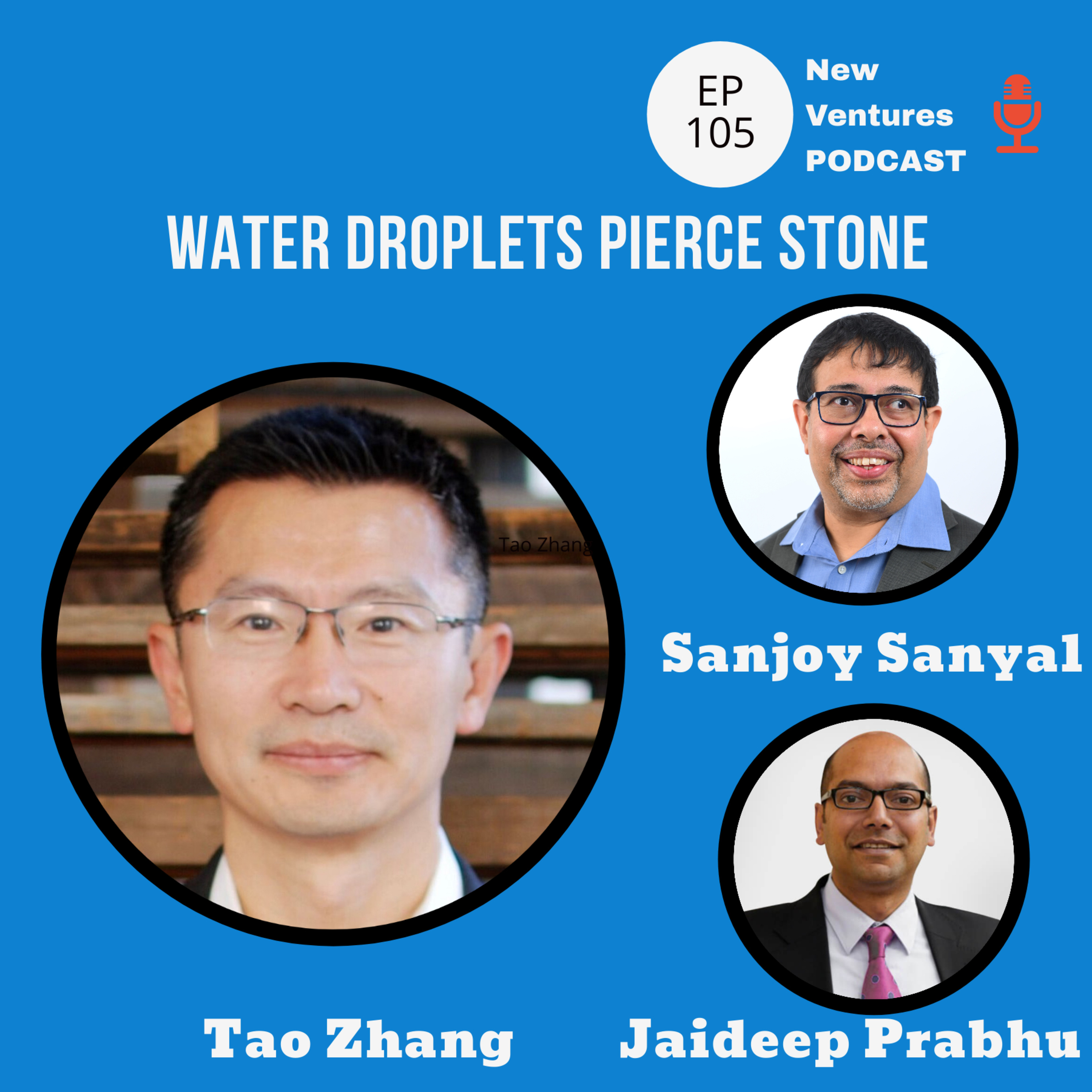
In this podcast episode, hosts Sanjay Sanjal and Professor Jairi Prabhu explore climate change and food security with guest Thau, founder of Thau Foods, an impact investment firm focused on alternative proteins in China. Thau details his diverse career, from journalism to Harvard Kennedy School, where he discovered impact investing. He explains that China consumes 26% of the world's meat but has lower per capita consumption than the U.S., with growth potential posing environmental risks. Thau Foods invests in innovative protein companies to target mainstream Chinese consumers, emphasizing taste and affordability over moral appeals. The firm also engages in ecosystem building, partnering with local governments to advance sustainable food sectors. Challenges include shifting consumer habits in a culture where flexitarianism is inherent and plant-based foods are often seen as inferior. The discussion highlights China's strategic importance in global food sustainability efforts.
(upbeat music) - Welcome to the 105th episode of the New Ventures Podcast. I'm your host, Sanjay Sanjal, the founder of Regain Paradise, a boutique climate finance firm, and a visiting fellow at the Cambridge Childhood Business School. Along with my co-host, Professor Jairi Prabhu, we try and understand the links between climate change and food security in these cities of conversations. - Hi, my name is Jairi Prabhu. I'm a professor of marketing at the Cambridge Childhood Business School. My area of interest is innovation, more specifically, frugal innovation, how to do more and better with less. And it's through my work in frugal innovation that I've become interested in food security around the world and frugal solutions in that space. I'm delighted to be doing this podcast episode with Sanjay. - Our guest for today is Thausang, the founder of Thau Foods, an impact investment and a focusing firm for alternative protein companies either based in China or focused on the Chinese market. Welcome Thau. - Thanks, Sanjay. Thanks for having me. - I know that Sanjay and you know each other very well from a long time, but I don't know much about your background. So perhaps we could start with you telling us a bit about your upbringing and career. - Sure, I'll try to make the long story short. So I was born in China, I grew up in China. So I went to school in China. I got my undergraduate degree in China. After college, I got a job at China's Xinhua News Agency working there as correspondent and editor. So actually, Xinhua even sent me two apostles to work there for a couple of years where I covered business affairs of the European Union at the time. So that's when I got interested in business, but as a journalist, right, you talked to a lot of people, you watch a lot of things happen, but you don't necessarily have hands-on experience. So that kind of motivated me to go to the US to get an MBA and later an MBA. So at different schools, right? So after my MBA, I got into the tech common technology space working for startup, both startup and multinational companies at different places, you know, in the US, in Beijing, in Singapore. From there, I went down to my own investment consulting and advisory firm called AC Bridge Global Advisors, where I got actually not only covered tech common technology, but also with a partner, got into the clean energy right space. So that's where I got to understand the serious consequences, not doing the right things, right? In the environmental space in China. That's also when China's pollution was getting very serious and also caused the ice of a lot of just ordinary people, right? So especially in Northern China, where I grew up actually. So that's kind of a wake-up call to me. So I thought to myself, how could I leverage my policy background and also my business background to do something for this for the environment to good up China. So I just passed what I do on the business side of things. So I decided to go to Harvard Kennedy School to pursue like a mid-career MPA degree. I went to the Mason program at Harvard Kennedy School. That's where actually I came across the concept of impact investing. So that's basically like the epiphany moment for me, right? So this is definitely something I could meet myself doing, right? So for the rest of my life, leveraging both my policy background and also my business and your investment background. - So wow, Tao, that's really very impressive. You've done so many different things. Tell us more about the transition to impact investing. What are the motivations and what have you done in that space? - I came across the concept of impact investing in at Harvard Kennedy School, for me, right? So that's basically like a wake-up call. Oh, this is something I could be doing for the rest of my life, leveraging my strengths and background in policy and also business and investment. Tao, after Harvard Kennedy School and I got a job leading, you know, double eye new ventures from DC. We had six local centers, you know, China, India, two local centers, probably the most important local centers. I'll just enjoy this leading new ventures in India. Just to give you a quick intro on new ventures, global, new ventures, global is basically like accelerator kind of organization, a focus on supporting environmental, small and medium size and pricing six key emerging markets in the world. - Tell us about your RI, because maybe some of our listeners don't know what it stands for and what they do. - It stands for World Resources Institute. Actually, when I joined WRI, so it has less than like 200 people. I think now it has grown into probably the, one of the top right, environmental think tanks, not only in the US, but also globally. I think it has a staff, probably more than 1000 people all over the world. - What does the new ventures on do of the WRI? - New ventures actually is quite unique, actually even with C&W, right? Because the WRI is a think tank, but the new ventures is like I said, is accelerator program, focused on supporting environmental, small, medium size and prices and six key emerging markets all over the world. India, China, Indonesia, Brazil, Mexico, and Colombia. More than half of the small, medium size and prices in a environmental space actually came from China and India is combined. Asia is definitely a conspore problem. - It's a big issue. - It's a big issue. - It's a big issue. - It's a big issue. - It's a big issue. - Yeah. That's what new ventures did, but later new ventures was separated from the WRI, from the World Resources Institute, because the WRI was to keep its focus on a think tank, and turn it up what they do. - And so from there, you then decided to start your own, actually we incubated a couple of like impact funds when we were Sunday night working at new ventures. So one of them is called China Impact Fund. So we received funding to look into the feasibility of starting like an impact fund, focusing not just supporting, right? So because a new ventures, we did not provide funding to this small, environmental and prices, but as requested actually as discussed with some of the entrepreneurs, one of their key feedback to us is that you guys are already working at business, right? Why don't you become a master in this? So that's a kind of occurred to me that probably you should start an impact fund to support this entrepreneur as well. So that's how China Impact Fund was incubated. As WRI was thinking about letting like new ventures go independent, then I basically left the WRI to lead China Impact Fund. And later, right? So one thing leads to another, is how ventures came into being, because I thought to myself, China Impact Fund is not sufficient by to provide impact or to support to this entrepreneur, because we're also looking at some cross-border entrepreneurs at the time. So that's how ventures came into being, in comparison to different kind of impact entities. - And what is your investment strategy in Dow Foods, which now seems to be your main focus? - Yeah, I spend most of my time on Dow Foods right now, is also kind of a long story. I'll try to make sure, you know, it's around like, I think it's 2017. So my classmates from Harvard County School, his name is Albert Sung. So actually he's also like the Impact Investor himself. He has his own like Impact Investment Organization, called Mung Spies Social Ventures. He got interested in alternate proteins and also the environmental impact behind taking on alternate proteins. He reconnected with me in DC, and actually he also introduced me to the founder of an organization, it's also Think Tank, called Good Food Institute. So the founder's name is Bruce Redrich. So we met in DC and basically we talked for quite a few hours. That's when I realized the importance of alternate proteins to China and also to the world from a climate impact perspective. A long story short, that's how we Albert and I decided co-found the Dow Foods together to focus on taking on alternate proteins or development alternate proteins in China and in the four China. And Good Food, of course, a very important Think Tank and it's really interesting to know that how you decided on your plans for business after this very long meeting. In Dow Foods, do you carry on that tradition of incubation, support, and then at least age investment in companies? Or have you obviously sort of modified it over the years? Yeah, things have been evolving. When we started at Dow Foods, we spent a like a year doing Facebook study on the ground in China, talking to different stakeholders about how we can help with development of alternate proteins in China, right? Because China's situation is quite unique. China has a long history of plant-based food to start with, so people are not necessarily the strangers to the concept of vegan or vegetarian food, right? So but vegan vegetarian food has been, at least from in China, has been perceived kind of inactively because he's considered tastes less unhealthy and more kind of reserved for religiously vegan and vegetarian consumers in China. So mainstream consumers don't necessarily have a good perception of vegan and vegetarian foods. But of course, what we want to do is back.
from a climate impact perspective, we want to target mainstream consumers. Of course, we want China's vegan vegetarian consumers to eat better, but I think in order to achieve the kind of impact behind what we do, we have to target mainstream consumers. So eventually we decided on the impact the investing pathway to investing and support next generation alternative protein companies, or as we call it, new protein companies in China to tackle this kind of challenge. - So on the one hand, also looking at other countries, there's this idea that as people get richer, eating meat is almost like aspirational. It's like a signal you send, as you get richer, you want to eat meat, and this is happening around the world. But then on the other hand, as you said, China has this long tradition of being, you know, having actually very delicious food that mimics meat and in many cases, looks and tastes like meat, or feels like meat in the mouth. And also I believe China has surpassed the US in per capita protein consumption, but much of that is coming from plant sources. So how can you help us understand some of these paradoxes? So what in your view is actually happening in China? - Take one step back and look at some data points. In this regard, well, in terms of China's meat and diary consumption, right? So what are the implications to the world, right? From a climate change, or a environmental perspective? So basically, China consumes 26% of the world's meat, 45% of the world's seafood, and close to 45% actually the world's poor consumption in meat category. But if you look at like a meat consumption on a per capita basis, it is still half or even less than half compared to that of the US. At the same time, right? China represents the biggest consumer market on Earth. Chinese consumers have different tastes and different expectations from their food. And protein as it exists in China nowadays is not yet meeting these expectations with demands. Because there is like more than 400 million millennials in China that increasingly looking for healthier, more sustainable, more taste, alternative proteins in food, the eat, right? At the same time, if you look at like Hong Kong, right? So meat consumption per capita in Hong Kong even has exceeded that of the US. And Hong Kong naturally as a part of China, right? But it definitely shares the same food culture as the mainland China. So that's why it's definitely not as stressed to imagine that the meat consumption in China, in mainland China, would continue to go up. But at the same time, in China or in the world, right? We don't have all the resources to meet such kind of demand coming out of China. If China's per capita meat and direct consumption is gonna reach the level of the US or Hong Kong, right? That's why, you know, but at the same time, as we all know, I don't want to like doubt too much into it into the environmental impact in dust to animal farming. But basically, you know, if you look at just some numbers, right? Like it accounts for 23% of global freshwater use, close to 15%, we even bigger share, right? Of global greenhouse gas emissions, 45% of global land occupied. So the environmental impact, climate change, impact from this for the traditional industrial farming, animal farming is definitely huge. So China is the biggest piece in this whole puzzle, as I would think. So no matter how much work you put in in the rest of the work, but if you don't solve this piece of the puzzle, you know, with AKA China, right? So there's no way you can address the environmental and climate change challenges coming out of this. Just to understand this, and obviously, we hope our audience understands the environmental impacts of food production in general, it helps us understand the Chinese angle. I think one key takeaway is that China consumes a lot of the world's meat and seafood, but at the same time, the per capita consumption is not as much as is in the United States or in the developed world. So one question is that what happens is it just allowed to increase, right? The other question is, this increase that has happened, obviously because of China's economic prosperity, right? In your opinion, has there been any way in which Chinese consumers have started to eat more protein from plant-based sources, not necessarily new farm plant-based sources, but just from plant-based sources in general, as opposed to eating meat? I think China's unique in the sense that, you know, every Chinese mainstream consumer can be considered like a flexitarian kind of consumer. So because, you know, as I grew up, right? So we always encourage by our parents to eat both meat and vegetables, right? So you're going to suit, right? So basically that means on your plate, you need to have vegetables, you also need to have meat products. Also meat basically stands for protein kind of products, right? I think, you know, in that sense, every Chinese mainstream consumer is a flexitarian, that doesn't matter whether they admit it or not. I think the challenge for someone like an impact investor or advocacy firm like Tau Fu's, right? How we can make more, especially younger generation consumers understand the meat they are consuming is actually why they need to consume meat products. A big part of the reason is that you need protein, right? So we need good protein, quality protein, but protein can also come from plant sources or other alternative sources, right? That we can talk about more later. And some of the traditional Chinese food like Tau Fu, right? So definitely, and also a weed can provide enough good protein to mainstream consumers, but assuming they can be made into good enough consumer products that would impute to mainstream consumers in taste, in texture and also in price. That's probably the challenge if we want to help divers by protein intake, right? In China. So that's why, you know, we need good entrepreneurs who know how to create such kind of what we call an external rich in good food products that meet the needs of say younger generation Chinese mainstream consumers, but at the same time, they know how to relate, right? To the needs of these mainstream consumers and figure out a way to conquer not only the mindshare of these consumers, but also wallet share of this mainstream consumers. So Tau, what is really motivating young customers? Yes, and no, I would say so yes, because we definitely don't want to through what we do, right? So through what we do, we want to give the say to consumers, especially mainstream consumers, the impression that Tau Fu is trying to replace the meat products on your plate or force you, right? To eat, to eat the plant-based food products out of moral kind of consideration. If we do that, I still won't be good, right? So we can definitely easily get resentment from mainstream consumers or whoever we want to work with in China. I think the Chinese government are actually, even at a central government level, they have been encouraging the diversification of protein high level, strategically. They have been trying to do that for quite a while, but Stu is doing narrative, right? Like strategic kind of narrative, but they don't want to force, you know, like, okay, plant-based protein or microbial kind of based protein upon heads of mainstream consumers either, because last thing we want to do, right? So when it comes to people's food choices. So that's why the challenge for like impacting Esther like Tau Fu is how we can figure out a pathway to conquering the mind-shear and the body-shears of this mainstream consumers. The only thing that we can do is to, you know, work with the entrepreneurs, with supporting invest in the kind of entrepreneurs who know how to come up with the right products to do that. - We are all aware of the impressive achievements in China in various sectors like solar, of course, energy efficiency, more generally electric vehicles, batteries, and you have this very rich ecosystem that's supported by policy and government intervention and support. Do you see something similar happening in the food area? Tell us a bit about that ecosystem. - Sure. I think you know, China, a Chinese garment has made food security a national priority of a quite wild and funneling, you know, substantial supporting to food sector to boost domestic production and reduce reliance imports, especially in an orc protein space because China has been relying like soy, right? Imports from the US and later right, Brazil for quite a while as animal feed, right? So feed stock, so China's definitely understands the importance of reducing their reliance on that kind of imported products. So that in the way it explains China's, you know, Chinese government support for a protein diversification. But at the same time, you know, so China is so big, I think you cannot just say, you know, there's a directive from the central government and all the local government would jump on it, right? Because they don't know how to do that, right? Because you cannot just tell you the consumers, oh, I'll go eat plant-based, right? So that won't happen. So as, because we work, aside from impacting investing work we are doing, we are also doing ecosystem building work in parallel with our impact investing work, our ecosystem's the building work actually is basically targeted at the local garment.
like local palates and particularly those who put it emphasis or who want to develop like the food sector as one of their strategic sectors. So we have forward to the partnership with quite a few of municipalities in China ready and we launched the China-type multi-region new protein initiative like a couple years ago. So under which we plan on not just focusing on you know the tier one city is like Shanghai Beijing and Shenzhen right also want to expanding our food brand and influence to to those tiers as three cities in China as well. So as it turned out actually some of local garments are very much embracing of this kind of this kind of food innovation that we want to see happen at local level but because some of the local garments understand right so we have the data managed to develop like say either alternative protein or innovative protein whatever it called it was sustainable food a healthy food into something that they can benefit not only economically but also like longer-term rises to titically not not only for the local people you know like garment officials but also for the local people as well. Just stepping away and looking at the overall global picture investments in the alternative protein sector has plummeted a good for institute reports significant plummeting across all categories and what is the situation in China I mean I suspect a lot of cross-border investment with all Chinese entrepreneurial companies will anyway go down because of ongoing issues Chinese companies raising capital from other sources of the bootstrapping it depends right you know some of them and also depends on the approach being taken by any entrepreneur in question I would say and it depends what products they focus on doing more kind of strategy right they are pursuing for their business I think you know if you we take one step back and look at it in industry on where the industry is going right so either globally or in China it's natural thing right so that entrepreneurs they go through ups and downs and all the industry is going through that downtime right now because if we look at like the EV industry solar panel kind of industry sectors in China they they have gone through the same thing if they just take EV as an example there's so many EV kind of companies adventures in China but at the height of the time is there's probably a few hundred EV companies but most of them have failed and have come back bankrupt or they could not raise more money to do what they do right there are only a few survivors that turned out and they still kind of surviving in to a good extent but the EV industry as a whole has taken off in China so and is here to say I would thank for attorney protein sector or sustainable food sector is probably going to take even a longer time for China to reach where it wants to be so that's why the government is not rushing right so like our policies to say oh you need to do this we need this or you need that because that's just kind of a totally different kind of game right so that's why you know the entrepreneurs or any investors in this space they need to have more patience and they also need to understand if you look even if you look at traditional food companies those that are very successful they probably have been definitely have been around for more than 10 or 15 years or even longer right so food sector is not like kind of like AI will come in internet kind of companies you know you can quickly became successful like within a few years so you need time to divide brand that reputation quality of the products in order to win at eventually I would say so is this a long game as we always communicate with people right so this is a long game although you know a few years ago China had quite some momentum in the plum based food sector a lot of the company they received a lot of funding you know like not only from impact investor actually impact investors in this space too few and far between but the quite some like finance first like mainstream investor they were also putting a lot of money into some of the startup being China but at the time some people thought is oh that was kind of the golden time for a China's era of plum based the protein or the protein arrived but I didn't think so actually you know some of the plum based food company that received a lot of funding more more writing on the way of hotel of China's new consumption trends at a time but I wonder if there are areas where we have seen success in China just like in the west where plant based milks have made quite a lot of inroads into markets and consumption is this true in China as well yes and no I think you know if you look at the first company we invested in called Starfield is like next generation plum based food company based out of Xinjiang right so of course the border from Hong Kong when they started when they first spoke with us right so the founder's ambition is to become the equivalent China's equivalent up beyond me to impossible foods actually the founders they came from like a restaurant background at the time in the restaurant they even imported like impossible burgers and cooked them at a restaurant that's how we got to know them because we tried our products we went to the restaurant the restaurant looks very kind of next generation so to speak so very modern you know definitely did not look like a traditional vegan vegetarian restaurant in China so we thought we want to talk to the founders and unfortunately the founders none of founders were there at a time but somehow they later approached us email me saying oh we want to have a meeting with you because we understand how foods see impact in industry in this space that's how we got to meet and a long story short right Starfield they they definitely know how to relate to the feedings and the the needs of younger generation tumors they are also timing is good for them so they managed to raise you know more than like 100 million US dollars and they went into a lot of like you know outlets you know like a Sam's Club 711 lacking coffee all this family mart more than 50 thousand meme more right so outlets of this chain stores or restaurants so they have been doing well but at the same time they have been evolving their product strategy I think now they are more focused on plum based like protein bars plum based like snack food plum based drinks kind of products so these two trying to develop like plum based and meat products but they understand you know the plum based meat products have a long way to go right in in texture in flavor of that type of consideration that needs to be at the same part right with the traditional meat products so it is still a long way to go yeah what about plant based milks have you seen that category takeoff in China oh yeah actually the plum based to mute a marketing China has been experiencing throng grows driven by basically a few factors right a large lactose intolerant population increasing health consciousness and growing interest in new varieties beyond traditional traditional soy milk but at the same time it is definitely worth mentioning that Chinese mainstream consumers have long been used to drinking different flavors plum based milk already right like soy milk almond milk coconut milk because of traditional lack of cow milk products they are used to the the kind of flavors of different plum based milk products already but at the same time now this market is really fragmented and fiercely competitive I would say so if you there's like international players like only and also you know there are so plum based milk products not only from some of our startups but also from some of the domestic players as well big food players so it's very competitive it will be interesting to see how this sector is going to pan out on an coming years but I would say plum based milk as part of categories here to stay in China already in the case of the plant based meat products starfield I think that's the name the company you are mentioning in general what I'm hearing you say is that the concerns around quality concerns around texture that are there in the western world today are also there in China for these plant-based meat but they're right now still in a sort of in supermarket shelves it is just as the consumer acceptance is slow or consumer acceptance plant based meat products is slow for a variety of reasons right so as you mentioned tax their flavor of big considerations or factors in the buying decision of mainstream Chinese consumers because if you look at Chinese mainstream consumer they're probably most demanding or discerning kind of consumers when it comes to food products and they are not necessarily bound by moral considerations at the same time I think more and more younger generation Chinese consumers are becoming environmentally conscious the conscious of the climate consequences eating traditional meat products but that's not necessarily mean that you know so when they go to restaurant when they order food the switch to plum based products just all of a sudden right so I think because they are demanding because they're discerning the plum based meat product need to reach a certain level in order to be acceptable to this mainstream consumers including those next generation younger generation consumers in China so I would say you know if you look at the western market right so I think they're quite even in the western market I think companies
like Vietnamese and impossible food have kind of reached some kind of plateau because I think the probably have already got the market share they could get their hands on, particularly flexitarians, right? So with moral considerations for the kind of products they would like to eat, who are willing to make some kind of compromise, right? When it comes to protein products versus, you know, traditional meat and, and die rate products. But in China, I think, of course, you know, we want to see more and more younger generation consumers to become like environmental unconscious when it comes to food choices. But I don't think this is something we should and could force them to do so to speak. Yeah. So I think the garment is aware of that as well. - And tell, when you think about Chinese companies in this space, plant-based alternative protein companies, how is there approach different from the US companies in the sector? - I think Chinese entrepreneurs, it doesn't matter how, what motivates them to do what they do in the plant-based or protein space, they are probably more flexible than, well, probably not entrepreneurs, some of the entrepreneurs, I have talked with in the US will, will Western Europe, because like I said, right number one, Chinese mainstream consumers are very much demanding and discerning. So they don't easily make compromise out of moral considerations. So if you say you are sending me a plant-based to meat products, chicken will beef, your product better, stack up against the, the traditional meat products. And because the applications for food, for meat products are also very much diverse in China, right? A hot pot, like different kind of applications that are very much different applications in the US, right? So Western Europe, in the US, you know, just burger, in hot dog, you know, so maybe spaghetti, you know, so in the way, I think the applications in the West are kind of easier than food applications or meat product applications in China. Because the Chinese entrepreneurs are trying to seeking a different approach to promoting, marketing, developing their plant-based meat or their products, more based on the needs and the wants of mainstream Chinese consumers, which is quite different from the US and Western Europe, for sure. And just I think on that consumer's being more demanding, I think the variety of food that you can eat in China and the different types of cuisine just naturally makes consumers more demanding, I guess that's one thing. The other thing that I was speaking, I was thinking that beef consumption in China is probably much lower and the environmental impact of beef is far higher than that of chicken or poultry. So that environmental angle will also have a different implication in China. - Well, China is big, right? Although the put kept consumption of beef in China is lower than that of the US. But if you look at the market overall, right? So it's too, so it's like one quarter of the beef consumption from China. But of course there are other meat products that Chinese people probably eat more than consumers in the US and Western Europe. So overall, I think the environmental impact from China is definitely huge. But by the same time, the younger generation and mainstream consumers, definitely eating more beef products increasingly nowadays because these consider kind of quality protein and pork products do definitely populate in China because the taste and texture that Chinese consumers are very much used to, right? So especially when I grew up right, so pork is probably the stable meat products on the daily basis. Moving away from plant-based drinks and meat just in some ways, the complete food, precision fermentation, microalgae, which I, in my ideas, more additives. What are the things that you're seeing in China? - Yeah, precision fermentation or biomass fermentation cellular meat, we also have companies in output folio like that. But I think when it comes to precision fermentation and cellular, I think the number one thing is that the regulatory heardups, right, or challenges the entrepreneurs need to confront them with. Number two is that I think it's too early to talk about commercialization or precision fermentation and cellular meat companies in China or the rest of the world at this point because the early state of R&D efforts in this field, I would think that probably more ground funding and impact investment dollars is still limited. But more like ground funding, government support very much needed precision fermentation and a cellular meat development before private capital can be widely deployed in this sector. - And how about cellular meat itself? We focus just on that. We've talked to people from some other parts of the world or in this space and it seems like it's still a bit like science fiction at the moment. What's the situation in China? Is China ahead of the curve here? - There's quite some efforts like a research R&D efforts going on in the cellular meat space. But many of these efforts are happening at the universities, economic research institutions because we invested in a few couple of like more tactical inventors in this space of cellular meat development and the entrepreneurs are basically professors. We understand and we want to invest in them because we have a kind of long-term view to a development of cellular meat products. But at the same time, the reason why we invested in these professors and their teams is because we think it's safe for them. They do develop to do what they do, right? So continue their R&D efforts in universities or in the labs because the aside from the support we limited support we can, or funding we can provide to them. It helps catalyze more government funding to this kind of tactical momentaries. - And what are some of the issues there? Like what's your sense about where are the bottlenecks and roughly what are we talking about in timeframes? When will we expect this? I don't know, like the chat GPT or deep seek moment in this space. - Yeah, I think you know, if you look at opening on chat GPT rights, the key to their success so far, it's scaling. Basically, they received a lot of funding to skew up what they do, not only in terms of GPUs, the number of GPUs, we can afford to use, but also the massive amounts data, data set that they can deploy to their advantage. So funding I think is key, but for say cellular meet of development, I think more and more like a private sector investors, these starting to realize that this is kind of a black hole, they cannot afford to fuel in, right? More government funding or R&D kind of funding needs to come from like foundations, garment entities. So the entrepreneurs or the scientists can carry the work to the point where the private sector can realistically come in, right, to help with the commercialization aspects what they do. So we are holding the same kind of approach to our impact investment into tech driven metrics like this, either in precision implementation or cellular. - And how long do you think before we'll see it, we'll see cellular meet on people's plates or in the grocery stores. - I think it's going to take a long time. Like I said, food sector is a sector where you need a lot of patience, not to mention something as advanced, scientifically advanced as cellular meet. But I do believe in cellular meet as the future. How long I don't know, you know, 15 years, 20 years, I think it's probably reasonable as to make, you know, before we start to see, right? So a product like this, you can kind of massively in the market. Also consumer education, I think, is going to take time for cellular meet, right? So I'm pretty sure there's early adopters who are interested in eating this kind of cellular meet products, but I don't think the mainstream consumers are eager to jump onto this kind of product when they first see them. It's going to take time. - Are you sure? But in China, they're talking about the future cellular meet. But I think I suspect that there is a lot of innovation in the traditional foods as well. For example, in bringing Mac for gotten species and things like that. - Yes, I think China basically, you know, a long-term initiative, right? Framed by a greater food approach. Basically, you know, under this approach, they want to have it rely on technological innovation, including large-scale digitization, agricultural, robotics, biotechnology. To me, the knees is a vast population of despite limited arable land, because China definitely has this limited arable land challenge, right? Well, it turns out proteins, it's just one of the things the Chinese government has been encouraging since probably like a few years ago. So it's part of the greater food approach China has a Chinese also making extensive garment, kind of backdaffers to revive traditional and ecologically diverse crops and farming methods. So this initiative actually is part of China's border or rural revitalization strategy, which aims to boost food security, improve farmer income, and enhance the environmental sustainability. - So Tao, one of the other things we've been looking at where food security and innovation is concerned is food waste. Like how big is it an issue and what are some of the things
So seeing that space. - Oh yeah, China's big on food waste. China has really stepped up in tackling food waste. In 2020, right, the government wrote out clean plate campaign, encouraging people to cut down on leftovers, especially at big gatherings and restaurants. They have also introduced policies like the fines for wasting food and pushing for smaller serving sizes and restaurants and eateries, right? And some other companies in China also are catching up to this kind of initiative. For example, as the operator of KFC, PisaHat, Taco Bell in China, Yam China integrates AI technology into its operations, we enhance sustainability. For example, it's a KFC super app, leverages AI to recommend manual items, reducing food waste and promoting the inclusion. Yeah, which is, and there are quite some other Chinese food companies who are restaurant trains trying to do the same thing. - I studied this issue in the UK with a colleague of mine and here there's also a big issue around the way the whole supply chain for groceries works, particularly fruit and vegetables. Few retailers that are very powerful at the heart of this. And they put a lot of pressure on farmers to kind of deliver. And then these grocery stores basically focus on excess production because they don't want to have empty shelves in the grocery store to turn away consumers. And there's a lot of competition between these three chains. And that results in a lot of waste, both in the farm, because sometimes the buyers who are these grocery chains will reject a whole crop of carrots or whatever because they're not the right size or color or shape. And then it also forces consumers because of discounts and so on to over buy and then waste in the hope. Do you see any of those issues in China? - Yeah, I think there are definite issues in China like that. But at the same time, I think both food companies, so like including retailers that you have mentioned because they understand the importance of the government initiative like the campaign. If they incur any kind of food waste, they could be confronted with the possibility of being fine. So they need to balance. Okay, you know, we want to have enough inventory. So in a full file restaurant, we'll file retail stores at the same time. We need to consider them because the government does inspection of such wasteful behavior if someone reports, right? This restaurant will, or that the retailer is storing up right a lot of food that they are not setting out and being wasted. So they could be facing the possibility of being fine. I think for that reason, the retailers or restaurant chains, they need to kind of consider the economic consequences of doing such things. - That's why I think, you know, initiative like the team paid campaign from the government is placing important role in balancing things out, right? - Apart from the policy issue, which you just talked about like the clean plate and campaign, what about in terms of innovation like food upcycling? How do you see anything there? - Yeah, the Chinese government definitely has been encouraging like I mentioned, right? So encouraging food innovation and using modern technologies like AI biology to do food innovation. So innovation is always something that the Chinese government appreciates, but at the same time, you know, so it's really up to the entrepreneurs, right? To translate the kind of innovation the government would like to see into something that they can do realistically for the benefit of consumers, right? So we have a company in our portfolio called Shanghai Protein, basically it's like a superfooding gradient company and they have created process of upcycling soybean pulp in Okara by byproduct into sustainable fooding gradient that is rich in dietary fiber and protein and can be used as like a superfood protein in gradients in a portfolio of healthy products, right? Like especially in bakery products, non-frike chefs, chocolate and plum based cream. This company has received attention from one of the government one like institute in the Chinese Young's the Delta region. So the government is not only provided like funding to this company called Shanghai Protein but willing to provide R&D support to this company. So I think that definitely speaks to the winningness or to the wheel of the Chinese government to support innovative companies like that. - This is very interesting of course, but as you are speaking, I'm just thinking, you know, you have to also balance as a government, you have to balance needs of the large livestock industry, the large number of people who is livelihood is related to the livestock industry. This is probably the reason to go slow and steady in this area, is it? - Yeah, if you look at China's speed gone on clean energy, right? But at the same time, you know, China still generates from half its power from coal. But China needs to do that because, you know, you have the livelihoods 1.4 billion people for consideration, right? So I'm joined as a CEO right now, you know, because you know, China does not want to rush, right? Thanks especially in sustained buffoon or attorney protein space because they understand the importance of undertaking such efforts to diversify protein intake in China, especially from a climate and environmental perspective. By the same time, they also have livelihoods of people, right? Different stakeholders they need to take into consideration. Like animal farming is too big in China, right? But they want to do it in the more ecological and environmental way, so to speak. And of course, and that also helps create jobs before, you know, like an attorney protein company is a technology mature enough, right, to take over, to take over at the, at least part of the traditional farming or industrial farming kind of work that is needed to meet the protein needs of Chinese mainstream consumers. So it's a process we're going through. So it has impact investor, San Joi, both of you and I know that we call itself patient capital, right? A Chinese government has been using patient capital the term quite a lot recently. I think that that resonates with what we do. And especially for the agri-food sector, I think, definitely more patient capital is needed, but hopefully more patient capital from the private sector is also become available over the coming years. And coming to the entrepreneurs in the space, what sort of background are they from and are they more women in the sector? Yeah, actually, if you look at our portfolio, we have at least half of entrepreneurs, are women and entrepreneurs. Definitely if you look at the funding team, more than half of our, well, probably two-thirds of portfolio companies, they either are founded by, by a woman entrepreneur or have a woman entrepreneur as one of the key co-founders, which is not surprised to us, right? Because you know, like women, they know how to create the kind of food, right? So children and their family members, even if you look at the alternative protein sector or the food sector in China, you know, there's quite some women entrepreneurs. Well, women, co-founders behind what they do. What type of education background, where did they work before? Most of our entrepreneurs, you know, that we support, they come from some kind of food background, either restaurant like Starfield, I mentioned, they come from a restaurant background. They're like entrepreneurs, like one woman entrepreneur who does like plant-based bakery products. And she got an MBA, but she came into the food sector because her concerns for the health needs of her children. But basically, in most of the entrepreneurs that we have supported so far come from some kind of food or food related background. So there's basically two entrepreneurs we support. You know, one is what we call CPG company, consumer-appaceted good companies. And the other is more like tech driven mentors, right? So tech driven mentors are more started by professors at a university, Chinese universities or C turtles. You know, basically, you know, US or West and Europe training educated entrepreneurs. So they are more focused on tech driven kind of ventures because they're background, because they're lack of experience dealing with Chinese mainstream consumers on the ground. But most of the CPG companies are started by just local entrepreneurs. They don't necessarily have very trophy education of that kind, right? So they know Chinese consumers very well. So they know how to relate to the needs and wants of this mainstream consumers. So like Starfield, right? Starfield, you know, has been doing really well on the ground so far. They sell their products, they've been selling pretty well. I like it. I had Sam's Club at a locking coffee or this almus. Even at the Sam's Club, I think they are generating a long generating like a more than 100 million or a V kind of running already. So Todd, we've covered so much from the Chinese consumers to various types of products and then Chinese entrepreneurs. But still, this is a podcast about food. So we're going to ask you, what is your favorite dish? Oh, yeah. I like eating tofu, right? Different varieties, tofu products, ever since I grew up, Right. So one of our various Topic products.
I don't eat meat, right? So tofu, you know, in different flavors, cooked in different ways, you know, is definitely my favorite kind of, if there's tofu in it, is. If you want to provide a recipe for the audience, I don't cook unfortunately. But my wife cooks at home, there's tofu products, right? So my son and I, you know, kind of fighting for the tofu products on the table. I did a TED talk like a couple years ago, talking about why China needs to change, right? So at the beginning of the talk, I was just telling people right. So for someone who, whenever, when shopping or eating, sometimes I had hard, hard time telling the difference between beef or pork products, he's okay. But somehow I got into the food sector, you know, as an impact in Boston. And Tao, we've come to the end of the podcast, people want to get in touch with you, how should they? Either through you guys, or they can, you know, find me on LinkedIn. I have a LinkedIn profile. And we'll keep your LinkedIn profile in the down food. Yeah, you can look me up with Mr. Worse Tao Jen, my name and also Tao Fuz, my name of my company. So they can easily find me on LinkedIn. And with that, thank you very much, Tao. It is wonderful catching up. No, same here. One for talking to you again, Sanjoy. And meeting you, I am talking to you. They deep appreciate it. Thank you Tao. It's been wonderful talking to you. Learn so much from this episode with you. Thank you.
Podcast Summary
Key Points:
The podcast discusses the link between climate change and food security, focusing on alternative proteins in China.
Guest Thau, founder of Thau Foods, shares his background in journalism, business, and impact investing, leading to his focus on alternative proteins.
China is a critical market due to its high meat consumption (26% of global total) but lower per capita intake compared to the U.S., with potential for growth.
Thau Foods invests in and supports next-generation alternative protein companies in China, targeting mainstream consumers rather than just vegetarians.
The strategy includes ecosystem building with local governments to promote protein diversification and sustainable food innovation.
Challenges include changing consumer perceptions, creating tasty and affordable products, and navigating a unique food culture where flexitarianism is common.
Summary:
In this podcast episode, hosts Sanjay Sanjal and Professor Jairi Prabhu explore climate change and food security with guest Thau, founder of Thau Foods, an impact investment firm focused on alternative proteins in China. Thau details his diverse career, from journalism to Harvard Kennedy School, where he discovered impact investing. , with growth potential posing environmental risks.
Thau Foods invests in innovative protein companies to target mainstream Chinese consumers, emphasizing taste and affordability over moral appeals. The firm also engages in ecosystem building, partnering with local governments to advance sustainable food sectors. Challenges include shifting consumer habits in a culture where flexitarianism is inherent and plant-based foods are often seen as inferior.
The discussion highlights China's strategic importance in global food sustainability efforts.
FAQs
The podcast explores the links between climate change and food security, featuring discussions with experts and entrepreneurs in the field.
Thau is the founder of Thau Foods, with a diverse career including journalism, an MBA, work in tech and clean energy, and an MPA from Harvard Kennedy School, leading to his focus on impact investing.
Impact investing aims to generate social and environmental impact alongside financial returns. Thau discovered it at Harvard Kennedy School, seeing it as a way to leverage his policy and business backgrounds for positive change.
Thau Foods is an impact investment firm focusing on alternative protein companies in or targeting the Chinese market, supporting next-generation protein innovations to address climate and food security challenges.
China consumes a large share of global meat and seafood, but per capita consumption is lower than in the US. As demand grows, alternative proteins are crucial to reduce environmental impact and meet consumer needs sustainably.
Traditional animal farming accounts for significant global freshwater use, greenhouse gas emissions, and land occupation, highlighting the need for sustainable protein alternatives to mitigate climate change.
Chat with AI
Loading...
Pro features
Go deeper with this episode
Unlock creator-grade tools that turn any transcript into show notes and subtitle files.
 PodcastTranscript AI