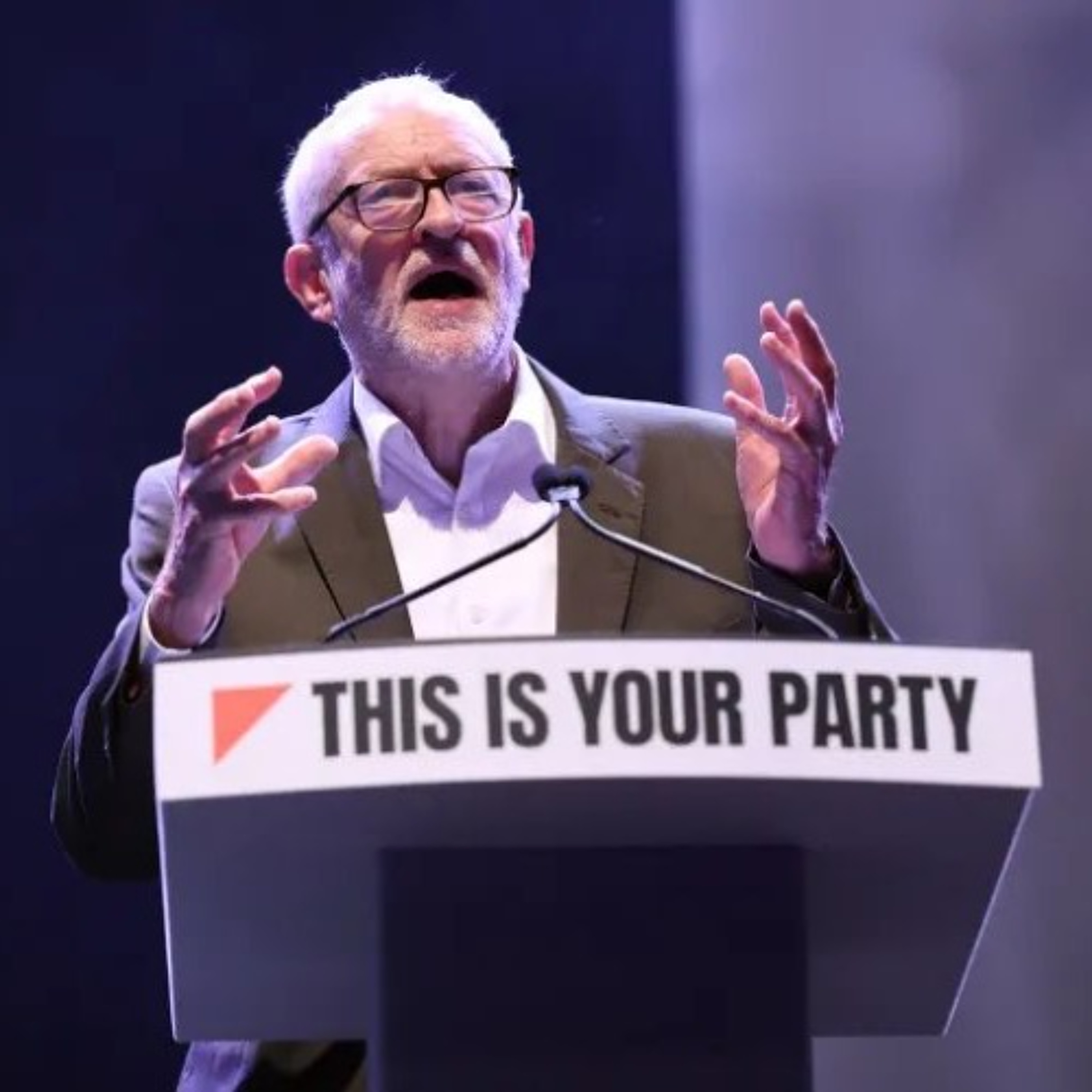
1013 - Your Podcast feat. Jonathan Shainin (2/23/26)
100m 42s
The podcast episode features a conversation with returning guest Jonathan Cheney, reflecting on the show's early days and his influence. The discussion then shifts to current UK events, focusing on the arrest of Peter Mandelson, a controversial political advisor and ambassador linked to Jeffrey Epstein, highlighting perceived media ambivalence toward his long-standing associations. Another topic is a distressing incident at the BAFTA awards involving a person with Tourette's syndrome, which sparked complex social media debates about accountability and disability. The conversation critiques the nature of British political journalism, describing it as a small, interconnected "village" where reporters often operate with overt political alignments and a premium on access, contrasting it with the more formally objective, though similarly flawed, American model. The tone throughout blends humor with analysis of media and political cultures.
[Music] Greetings friends, it's Monday, February 23rd and this is your chafo. We're coming to you once again during another snow day. Hope you're happy for making us work. But on today's episode Felix and I are joined by our old pal Jonathan Cheney. London based journalist who I believe a year one chafo guest, right? Is that possible? Was it year one? It seems like a long time ago. No, no. I remember, yeah, for people that don't know, for newer listeners, you can think or possibly blame Jonathan for the existence of this podcast because 12 years ago when I was would just like going my phone at my job in St. Paul. John was the first person who wasn't like an MMA shithead to follow me because he apparent you I will never forget this. You thought I was like a writer in New York that you knew who was just like using some other guys pictures so you could like make fun of Rosie Gray without endangering his job. But no, John is the entire reason I like went to New York and pursued an illustrious career first making $15,000 a year and then inventing podcasts in 2016. I do remember you telling me I remember DMing you like one night and being like, hey, like what's your deal? I was maybe like, where do you live in Brooklyn? Yeah, yeah, you were like, no, I'm in college. And then I think you were like, I was thinking of doing like a, I mean, maybe you were shitting me like doing like a waste management internship. No, I was, I was like the only real job I had lined up the old one. I was like, no, I think you should move to New York. I'm glad to have this on the record. Yeah, no, we've looked it up. Jonathan, you were on episode 18 of the show on June 27th, 2016. That was also, and according to Chris, this was also the debut of beloved Choppo comedy character, the Portuguese butler, D'Cretio. Well, so D'Cretio was, was I think part of the early Felix lore. I feel like what was your, what was your Twitter name then? @sworthyvillain. That was worthy. Yeah, it got suspended in like 2016. And I remember what actually happened now. I was sick. I had like the flu or something. And I was just like, I was sending threatening messages to the YouTuber, Oh, Nizion. And of course, you know, they were just death threats. That's what you did back in 2016. And of course, when I got suspended, I was like, this is bullshit. What did I even do? How times have changed? Well, I don't know how you can do anything. But yeah, it's been 10 years, but Jonathan, Jonathan, you were back now with a new magazine of politics and culture called Equator. And I would like to talk to you today about some of the stuff that you have featured in this magazine. So I think to begin with obviously the UK, what's going on across the pond. And I've got two big stories just just a kick things off today, what came across my newsfeed this morning, starting with the arrest of Peter Mendelssohn looks like the Babies have nicked him and he is headed to old Bailey. Number two biggest story from the UK today is the BAFTA's last night where a guy with Tourette shouted the N word at Delroy Lindo and Michael B Jordan when they were presenting an award at the BAFTA's and I mean, look, when I when I saw that story this morning, it was like having a waking anxiety dream. I mean, I feel bad for everyone involved in this story, but like, it like that's got to be like one of the worst fears possible, right? I think that someone like before the award show is like, hey, this is one of the things you yell, maybe you should just watch it on TV and he got yelled at. I didn't want to say I told you so I feel like this is one of those social media. I mean, it's a news story, obviously, but one of these news stories, or I've just like, a situously avoided finding out what happened all day. The whole thing, the whole like I just you see it and you're like, I would be better off not know. I know my approach to award shows more generally. I feel like I've seen a lot of pretty good meta discourse. That's a bit like do not get drawn in. You know, I'm, you know, I used to be people saying like the yanks want to have an argument about this. Do not fall for it. We don't this would never have been at the Oscars. I'll tell you that much. I mean, I don't want to I don't want to get this wrong. My understanding is is that the person in question is the is maybe the writer of a movie about Tourette's. Yeah, that was nominated for not want to see the first draft for that script. Yeah, oh, I see no, he's the star. Okay. He's the star. Yeah. Yeah, it does. It does seem like kind of like some reason it puts me in mind of like it's like an episode that seems like designed to generate like Twitter culture. Oh, yeah. Oh, yeah. You know, um, a bit like a bit like when you like go and you post that like my husband was on the subway and someone came in and just pissed all over the place. Yep, that's another big discourse today. That's been big today, right? Yeah, it's big stuff. And then as soon as I saw that woman's husband, I yelled the N-Roll Adam. No, I just like obviously, you know, it's certainly raised a lot of awareness about the condition Tourette syndrome. But you know, like the discourse is like, oh, like, does it matter if you have Tourette? He still races. I mean, he apologized to Delroy Lindell and Michael B Jordan, obviously, but like, I feel like in 10 years ago, this would have been like a sort of like pre-woak or like proto anti-woak fantasy of like the kind of guy who's like, listen, if you had to say the N word in your office, stop a ticking bomb. Right. Would you do it? No. It is very fortuitous that it ran concurrently with the stuff about the person pissing on the subway because it I mean both are like you would not think that you could jam both together. But I've seen dozens of posts that are like, oh, so people want to excuse the guy who said the N word, but not people who piss on the subway, which I don't know. Oh, like I have not seen anyone say that they love both guys, which is why. But you like, you need one of those like two by two grids. It's funny. I spent today thinking about how I would describe Peter Mendelssohn to like an American audience and who was like the Peter Mendelssohn. I mean, maybe this is like totally useless. I think my way of trying to like relate British politics to people in America is to be like, oh, okay, well, like, you know, Scotland is like the Canada of England. You know, like looking for these kind of really bad analogies. And the best I could come up with is that Peter Mendelssohn is like gay, raw, immanual. I think that's pretty good. I have been kind of fascinated by this whole thing because I was, I had very low expectations for the entire starmer administration. But I, I was still shocked when he made him ambassador to the United States. I mean, I guess the reason for it is obvious. He would see Trump and go. Remember that thing that we can't talk about. But I just thought it was like common knowledge and a discussed thing that he was, you know, a very close associate of Epstein, but many Brits revealed to me that it just was not reported on. Yeah, it's a classic of the genre of like if you were like a shitter up shitter if you were like a Twitter shit poster or or or vaguely acquainted with Twitter full stop. You would have seen the photograph of Epstein and Mendelssohn, you know, what like shopping together for a belt or something like 1000 times, you know, but presumably like your starmer has like never actually looked at Twitter. It's very, it's mysterious because I one of the things that's like maybe this is just like what happens in these kind of political situations. For, for like a long time, Peter Mendelssohn's whole thing, right, was like, oh, he's like the master of the dark arts. He's like a spin doctor. He's like really tight with all these shady rich dudes. He's like on a Russian oligarchs yacht. He's hanging out with Jeffrey Epstein, you know, but like this was somehow part of the appeal or part of the like it was like a thing that you know, that you just journalists seem to not really be super interested in or it was like, oh, we just everyone knows that about him. So it's not news. It's sort of like, oh, you need a bastard to control all these other bastards out there, but he's but he's our bastard. I think the analogy of Mendelssohn being sort of like a gay a manual is a good one. But with Mendelssohn, there is like there was always like a heedanistic or like a liberty and quality to him, even before the Epstein stuff was commonly discussed in the UK, where he's almost like I would compare him to someone like Ted Stevens, almost or maybe even
even someone who left off his during the abscandal. Like he is kind of a throwback in that way. - Yeah, and people would always be like, oh, Peter, you know, he just, he has a weakness for really rich people. - Oh no, that's like the funny character type. Like, oh, he's got a sweet tooth, you know, or like, oh, he's just, you know, he can't stop vaping. - Yeah, I think it's very strange. And he, I mean, I had a, I had a, before I left the Guardian, I was at like an event in London for like a think tank. And one of my Guardian colleagues was there. This was like, I don't know, a couple of months before the election. And I was talking with some other Guardian colleagues and we were like, what is the deal with this guy? Like is he, is he, it was a great deal of ambiguity before Starmer won the election in 2024 about like, is Peter Mendelssohn involved or not? You know, and there would be these kind of boy suggestions that like, oh, a Starmer's getting advice from all of the people like to say the big beasts of new labor. - And he's been the biblical sense. - Yeah. It's like one of these, I don't know, it's like one of these like, it's like when someone's described as like a giant of the Senate, you know. - Oh yeah, yeah. - It's like that Joe Rogan thing where he calls comedians, he likes like assassins and birders. (laughing) - Yeah, that's like a big beast. So, and one of our like reporter colleagues was there and we called this guy over and I was like, hey man, what's going on? What is, what is the deal with Peter Mendelssohn? It's like is he an advisor to Kierstommer? Is he not an advisor to Kierstommer? And the repeat, the incredible thing that the reporter said was like, and this is a guy who's like a Westminster every day was like, well, nobody knows. We think, we think that Peter, and he, you know, he's very manipulative. We think he's trying to make it seem like he's more of an advisor than he really is. You know, and I was like, well, have you thought of finding out? Is that, is that, if you could make some phone calls, you know some people, you know, like you could probably, you could probably get to the bottom of this with a little bit of effort. And the reporter was like, no, I don't, someone would have to commission me to do that. I'm not sure anyone's interested. So, but I think this is something that has persisted even after all the scandal stuff. I mean, I was trying to piece together today to like refresh my memory or to like, you know, be able to kind of walk you through it, the order in which all this stuff happened. And I think that even when he was appointed to be the ambassador, there was like this like calculated ambiguity of like, you know, it's come out now that he's very close with this guy Morgan McSweeney, who was the kind of mastermind architect of the whole kind of Starmer project stroke scam. But even when he's appointed ambassador, there was a sense of like, oh, they've Starmer has like reached into the past to like pull this guy out of retirement and for one last job. I'm not putting these things together. He sized up that Trump, you know, you need someone who can like go face to face with Trump. And there's like, you know, it's come out like in the past couple of weeks, of course, that like all of these people now who like columnist kind of types, you know, were like, oh, what a masterstroke, you know, brilliant. This is incredible, you know, he's, he's like, there's something you can really dazzle like political journalists by being like, we got like the biggest cheat, you know, like dirty fixer. We got him to come back and he's he's back for one last job now. And we're like sending him to deal with Trump. And people will be like, oh, masterful masterful. That is, I feel like that, that is a very distinctive feature of UK politics is the idea of the press being in the tank for someone. It is more of an openly understood and sometimes openly stated thing, at least among at least in professional circles. It was seem to be very well understood that the press was like in the tank to for starmer for to some extent in 2024. Whereas here, it definitely happens, but you just, you cannot suggest it at the time or you're insane. And like even though 2020 through 2022, the press was obviously completely in the fucking tank for Biden in the exact same way. To add on that, Felix, I think another feature of the UK media is that it's like, it's more widely accepted and understood that the press not just to be in the tank for someone, but to be implacably hostile to someone else, IE Jeremy Corp. - Exactly. - Yeah, like, you know, like that's understood. Whereas in America, the same thing happens, but the sort of, I don't know, the standards of American journalism are like, it's sort of, it's Kant and, you know, it's Kant and bromides like demand that you have to maintain this veneer of like, you know, both sides objectivity. - Yeah, I spend a lot of times thinking about this for obvious reasons, I guess. And I think my like, I think one thing about it, like I think in Britain, and it's funny to say this stuff 'cause it's like, obviously there are always counter examples from America, right? Like, as the American journalism is not like the best place in the world right now. But I think in Britain, the sort of smallness of everything in terms of like, you know, like in America, you have like, you know, you got 50 states, they've all got governors, they've all got state houses, you've got all of these representatives from all over the country, you have senators from every state. In Washington, you have Congress and the Senate, but you also have the White House, and you have, you know, this sprawling federal bureaucracy and kind of all of this in England is like, one tenth the size or one 100th the size. And there's this like, little cohort of like, the kind of people who like in like the early days of blogging like Paul Krugman and Glenn Greenwald would call like the villagers, you know. Oh man. (laughing) I'm like dating myself here. That's a deal. Yeah, yeah, yeah. You'd be reading atrios and, you know. Shout out atrios, he's one of the still real ones. I think he lives in England actually. I feel like he's a professor somewhere. I'm pretty much a real. If you're listening, you know, old fan. Yeah, he wasn't Philly, I think. But, you know, like, I think you have this sense of like, kind of like state, it's like state capture or a kind of rent seeking where like, you have this really small world in Westminster of these like political parties and the government itself is really small. And there is, I mean, I saw someone once said that like, you know, American politics is like Hollywood and like British politics is like theater. (laughing) And I think that's like not a bad analogy. There's a sense in which, yeah. Because also too in America, like you look at these people, like who is the Republican speaker of the house now? Like Mike Johnson. Mike Johnson, like John. Yeah, but like nobody knows Mike Johnson. Where did he come from? You know, like, it's like vanishingly small odds that like Jake Sherman from Punch Bowl news went to high school with Mike Johnson. Could you imagine? Right. Like it would be like, is what you're saying is like, all these people went to the same fucking school. They went to the same schools. They went to the same house. When you enter the media and then you're like, the people you know are now, you have to cover them. There is more of these, everything is more governed by these kind of unspoken social cues and codes. Yeah. And well, and I think that even if you didn't, even if you don't have that background, you come into this sort of structure. And it's like a really interesting thing too. It's a bit like, you know, I don't know in New York. I mean, maybe there's a bit of this in America where like, oh, like the New York Times, Washington Bureau will have kind of its own center of gravity. But all of the reporters who cover government don't sit in like the newsroom. They all sit in parliament. And so, and you never like these people don't like, you know, you don't see them that often or I don't know. They come in like once or twice a week. But there's like a real sense I think that like, their job is to sort of explain parliament to the rest of us. Like it's like, they almost like they work for the state or they work for parliament. And they're like the ambassador to the telegraph or the guardian or the financial times or the new statesman or whatever. And I think the sense there then becomes that like, whatever is the sort of the people who promise access or who have access to this world, it's like a really highly valued commodity because the newspapers needed or the TV news needs it or whatever. So you have this kind of like rentier economy in which like a real high premium is put on like a kind of reporting that's like, oh, like, the number 10 has revealed that like, Starmer's gonna do a big relaunch next week and it's gonna be awesome. (laughs) - I know I've got, they're ready to bounce back and people are like, oh great, okay, yeah, amazing. That's fantastic. He's bouncing back, okay, good. - I know I've showed this quote on the show earlier, but whenever I think of the difference between American and UK journalists, I always think of a quote from Alexander Coburn who said that the difference is that in America, journalists all essentially like themselves and see them as participating in a noble endeavor due to movies like all the presidents men, whereas every journalist in the UK hates themselves and if you can find one who sober after 3 p.m., like you'd be like, you know, a genius. - Well, I think I would have said what, what you would have said I think in the past, and this is like an interesting thing vis-a-vis like Corbin, Boris Johnson, Starmer. I, you know, I think you would have said in the past or you would still say that like, okay, the like, the best asset or the best quality of British journalism by comparison to American journalism is that it doesn't take itself too seriously. And if you hang out with British journalists and you know, one does, you know, the like the self-seriousness of like the Pulitzer chasing American journalist is like a figure of fun. I think one of the things that happened in like the like period of like Brexit and then Trump and then Corbin and then Boris Johnson was this like sense of like British journalism suddenly. had this like, or a lot of British journalists suddenly had this kind of like mantle of like we are the defenders of sensible politics. We are like waiting for the grown-ups to come back into the room. And so you have Brexit and you have then Boris Johnson who takes over for Theresa May and then Boris Johnson gives way to Liz Truss, you know, who I learned when doing a little research earlier as the only Prime Minister who has lower approval ratings than Kierst Armor in history. She was at minus 70 at some point. We'll come back to that in a minute. So when Starmer comes back, you know, like Will said, you know, these politicians, these journalists were kind of in the tank for him. I think that part of what you have there is like, maybe not even a particular fondness for this guy, you know, and maybe the, maybe it's like, maybe it's less emotional or less ideological than people supporting Biden or journalists kind of in the tank for Biden in America. But I think there's just a sense of like, oh, the grown-ups are back. And the people who, the people who deal with us are back. The people who are our friends, our our colleagues are like the reasonable folks like us are coming back into power and it's going to be great. Well, along those lines, I mean, I guess I want to ask you like, could you tell us about how even before all this like Epstein stuff and the arrest of Prince Andrew and now Peter Mendelssohn, a guy who's incredibly close to the Starmer administration like, could you just get that for us like, how the labor party has just completely collapsed in its support? Like, how do this happen and why? Yeah. So they, okay. So in 2024, I mean, I think like one of the things here, and I guess this is true of any kind of election conversation, right, is like, you know, does, does one side win or does the other side lose? You know, so, so coming into the election in 2024, the Tories are incredibly unpopular. Rishi Sunak calls an election, I think, very unexpectedly. I'm not quite sure what the logic there is. There's like a lot of like, you know, Benny Hill style pratfalls where like all of his aides or caught or like a bunch of his aides are caught gambling on the on the like odds that like there's going to be an early election. And this is like a kind of election defining scandal at the time. So Starmer wins the election and he wins the election really because like the Tory vote has kind of collapsed. And I think he wins with like 33% of the vote. I mean, it's complicated. It's hard to read this across to America because it's like a multi party system. And this will become I think significant when we get into Starmer's abysmal approval ratings. Um, one of the thing is that the Starmer strategists make a big deal of, and this is like the Morgan McSweeney, you know, big brain victory approach. Well, yeah, Morgan McSweeney. Am I read about this guy? He's an Irish guy who lived on a Kabuts in Israel. And am I wrong about that? I think this is true. This is all part of his biography. I don't know if he's ira I think he's born in Ireland, but I think either his parents lived in the UK or he moved at some point to the UK. He definitely did go live on a Kabuts at some point. He, I mean, Morgan McSweeney is like an amazing story in his own right. And I see Jewish. No, no, he's Irish. Um, I'm going to use the name like McSweeney. Yeah, yeah, yeah. I know he's like, but he, I mean, there's like a thing that's hard to describe. And I was thinking today, like, how am I going to explain this right? Like in the labor party, there's sort of like two, there's two sort of right wing factions in the labor party. And the one that everyone will know about is the sort of Blairite faction that's kind of modernizing. And like, you know, we're going to be like really capitalistic. And we're going to do away with all the old union shit. Uh, and then there's like something that is usually referred to here as the labor right, which is the kind of like old tradition of being like, you know, I suppose it's like a sort of like right leaning social democracy. Uh, it's very union oriented, but it's also very much about like, you know, these people are very proud that like Ernest Bevin was one of the founders of NATO and he gave Britain its own nuclear bomb and all this kind of stuff. And it's like really like Rara, like we're going to go to like the factory where they make the nuclear submarines that the United States actually controls. And we're going to like campaign on like good jobs for good jobs for British workers, you know, building like drones that fly over Gaza. We're going to we're going to tour the room where they keep the doomsday button that can destroy it. All of you. It's your the room is in Fairfax, Virginia, by the way. Yeah. Yeah. Exactly. But you saw too. And like, you know, in 2017, 2019, right? Like the big thing with Corbin was like, you're going to push the button. What? What happened? Yeah. Oh yeah. You're going to do it. You know, are you a patriot? That was like the only answer ever given by a politician that wasn't fundamentally insane was when Corbin said, of course, I wouldn't know. You fucking face me like, but this is going to end all human civilization because London doesn't exist. So I think McSweeney kind of comes from that sort of tradition. And he, I mean, we can get into this in a bit because it gets into this. I don't know. You guys maybe have not followed this whole thing, right? Like since McSweeney got kicked out over the Epstein Mandelson stuff. Now like there's been this torrent of stuff coming out about how McSweeney basically like, you know, comes in the Corbin era, McSweeney gets involved with this kind of think tank stroke kind of pressure group called labor together and basically puts together a plan to kind of take back the labor party from Corbin and eventually a few years into this plan, a lights upon Kierstarmher as like, this is the guy. And he's going to come in and he McSweeney has done like loads and loads of polling of all of the labor members and he's tried to figure out precisely these people. I mean, like one of the things about like both the Blair right tradition and the kind of labor right tradition. And I don't know what the Democratic, U.S. Democrat kind of equivalent of this would be is this idea that like, okay, members of the labor party are like naive left wing idiots. And we have that what we have to do is we have to protect them from themselves. And we have to like make it very clear to them that like the stuff that you want you can't have, right? What what you can have a party to me. That's yeah, you know, you know, you're one to one. Yeah, you can have nuclear submarines and you have like a good job at the nuclear submarine plant. But like you can't have, you know, any of this piece Nick hippie bullshit forget about it. So McSweeney basically puts together this plan and he has with the big thing that's happened in the past couple weeks that's interesting here. I don't know if it's made it over there is like McSweeney takes in all these donations basically from like hedge fund guys on this prospectus of like give me all this money. And I will like take back the labor party from all of these like lunatic leftists. And then he fails to disclose any of these donations until like it's way too late. So he basically is like taking in all this money like, you know, not huge amounts like 800,000 pounds or something like that. But he like very deliberately keeps it a secret. And this is against the law, but election law being what it is, he gets like a sort of rap on the knuckles and like no one pays much attention to this. In November of 2023, these this guy Paul Holden who's written this book about Starmer called the fraud. Maybe I'm going too deep into this stuff. She has these documents with reporters for the Sunday times, which is, you know, a Murdoch paper and not usually great, but you know has some strong investigative stuff. And they basically put out this story that says that like, oh, hang on, wait, Morgan McSweeney, who's now like running Kier Starmer's campaign, basically has been caught lying for like taking in 800,000 dollars in like secret donations, 800,000 pounds rather in secret donations. And then it turns out that after this story comes out in the Sunday times, all these people around McSweeney hire a PR firm basically to like quote unquote investigate the journalists who are publishing this material, which like effectively amounts to like running a little smear campaign. So like these PR firms starts calling up all these other journalists. And they're like, oh, did you know like this story that's in the press about like Morgan taking all these like secret donations like this was planted by the Russians, you know, this is like a Russian hack. All these guys are part of a pro Russian disinformation network. And as the Mandelson Epstein, I mean, Prince Andrews, less relevant to Starmer stuff has been happening. There've been a series of stories in the press, which is now like incredibly outraged because it's been discovered that this young MP called Josh Simons, who was Morgan McSweeney's successor, and then was like parachuted into like a safe northern seat for labor. Basically like ran this sort of smear campaign against all their, all their colleagues. So he's like asking this PR firm basically to call up other journalists and to be like, hey, have you heard about this guy who's like a Sunday times journalist? I think he's like secretly a Russian plant. Sorry, I've gone down a deep rabbit hole here. I realize well, where does that leave labor and the Tories like the traditional parties of great parties? Because like, I mean, like we have the sort of the rather meteoric and rise of the reform party. And now just as an outside observer, it seems to me laborers argument is that like you have to vote for labor because we're the only way that you can vote strategically to prevent Nigel Farage and his like, you know, barking fascists, you know, from taking over this country's government. But like, how does that square with like the green party, it seems like like they're probably more popular than labor is right now. But yeah, it would have been laborers old voters who have been told to fuck off by Morgan McSweeney in company. Yeah. So, so I'll go back, sorry, Will, and answer your question from a little while ago. Sorry, which is like after Starmer comes into office, they basically like commence shooting themselves in the foot as soon as possible. They like take away the winter fuel.
you will allowance from old people. (laughs) They-- - That was like the first thing they did. - It was one of the first things they did. And it's kind of, I think like an interesting thing here. And again, this maybe like goes with a sort of like US Democrat kind of analogy, right? Like an incredibly important less scandalous, but like nonetheless miserable aspect of starmerism is this belief, this kind of cargo cultish belief that like you have to reassure the public by which they mean political journalists that like you're serious. You know, you're gonna keep like an iron clad hold on the budget, you're gonna be very austere, you're gonna be like, you know, you're not gonna fuck with the bond markets. - You have to show a willingness to reduce the surplus population, is this it? - Yeah, exactly. - Exactly. So they-- - You're not getting visited by the ghosts of Christmas past then you are not serious. - Yeah, so they take away the winter fuel allowance and then I think like at about the same time, all the stories start coming out about how they're getting lots of like all these donors are giving them like free clothes and free tailors with tickets. And like this stuff basically just like sticks with them and won't go away. There's a guy here who's like a pollster like focus group kind of type, who has this like great chart that's like, these are all the policies that labor, these are all the policies that people know about and these are whether people like them or hate them. And all of the labor policies that people know about the most are the ones that people hate the most. And the policies that people know about the least are the ones that like, you know, like, oh well, it turns out they've frozen prescription charges but like only 20% of people know about that. Whereas like 85% of people know about the Peter Mandelson scandal and the winter fuel allowance cuts. - I mean like that sounds exactly like the fucking democrats in this country and when I hear from defenders they always talk about it like it's so unfair how nobody talks about, you know, the good things Biden did and everyone just remembers the genocide and all the bad stuff and it's like, what, like who's fucking fault is that? Like, yeah. - Yeah, so they, so they pretty much like pretty quickly their support began to crater. I mean, I would have to look at the numbers to be like, when did it really start to fall apart? And I think a couple of things happened like, like the Tories are obviously saddled with a pretty bad reputation from the past 14 years. I think you could say, you know, going back to the conversation about the 2024 election that like, you know, labor won principally because so many people were like, let's just get the Tories out, it doesn't matter. And as labor has like chased, so like the Morgan McSweeney theory was like, there are, this is an amazing phrase that you guys will not believe, right? There are these people who used to vote labor who are like working class like people in like ex-coal mining communities and you know, they're very patriotic. The imagination is they're very socially conservative and these are the people who left the labor party because they hated the like a terrorist loving Hamasnik Jeremy Corbin and they went to vote for Boris Johnson. And Morgan McSweeney called these people, "Hero voters, hero voters." Hero voters, so it was like, we have to win back the hero voters. It's never been really explained to me where this term has come from. Are they heroic for turning their backs on Hamasnik Jeremy Corbin or are they heroic? I can just like, they virtue of their sort of coal mining sell to the earth. I'd say like, are they, would they fight in World War II? Is that the impression here? If what in World War II and they're still working in a coal mine to this day? Do they have to, the good British spirit of, do they mean it in like the old internet parlance, like end hero, like they voted for Boris Johnson and then killed themselves? Did they represent like voters, we just can't win back? Well, so the idea was like, we're gonna get these people back. And I think what actually happened, I mean, I'd have to look at, again, you'd have to look at the numbers, but I think what really happened is that a lot of these people just went to vote for reform. And so as the right wing votes split, all these people, you know, labor was able to get in in all of these places. And I think in office, so summer has done like two, there's like two main points of like, stormorism, right? One has been like these like, unforced errors, like we're taking old people's winter fuel allowance away, well, at the same time, we're being like photographed, enjoying our free-tailors with the concert. And then the second thing has been like, shitting on the left wherever possible. So like anything to do with Gaza, you know, you know, you may be aware that there was a sort of direct action protest group in this country called Palestine Action. Oh yeah. That was in the habit of going into kind of weapons factories and smashing them up. This group was prescribed as a terrorist organization, which meant that if you said, you know, hilarious and wonderful images for the British state of like a 90-year-old, Anglican priest being arrested by the fucking Babis for simply holding up a cardboard plackard that says, I support Palestine Action and genocide. Yeah, so like this kind of stuff. So like at the, so summer has done this kind of magical thing basically of like the people who are kind of fed up with government now vote reform. And the people who are fed up specifically with this kind of like right wing kind of, you know, we're gonna crack down on immigration, we're gonna deport more people than ever before. These people are now all voting for the Greens. And there is a big, what in this country they call a bi-election. This is surely great actually. So there's a labor MP in like the outskirts of Manchester who had to resign from office because his like WhatsApp chats were leaked with like a group of his like co-workers and his like local constituency office saying things like, oh, this woman keeps calling me up about her bins. I hope she fucking dies. (laughing) Okay, I think I'm like, I support this guy now. Yeah, yeah. Well, there's another guy who punched a constituent on the street. That also blows my election. I support this guy. Yeah, this guy's a great. I think the labor party, if you have better standing, if they would just physically assault their voters. I think the Democrats need to start doing that in this country, quite frankly. Yeah, yeah. Why did he try and he's a bi-electionist? (laughing) So this guy steps down and again, the big thing here has been like there's a guy, the mayor of Manchester is a labor mayor called Andy Burnham who has like positioned himself. I mean, again, I don't know who a good American analogy of this would be. Maybe he's like John Ossoff or something. That's preposterous. He's kind of inhabited this idea of like, I'm still like the authentic labor guy. I'm gonna make the buses free in Manchester. I'm gonna stand up for people in the North, whatever, whatever. And he wants to topple Starmer. And so when, and in a way, this is like the thing that maybe could save the labor party possibly from its kind of calamitous poll ratings. And this goes back to the thing we were talking about with British politics previously. So this guy has to stand down. This MP who tells his constituents to fuck off and die. And Burnham wants to go and run for parliament because then once you're in parliament, you can challenge Starmer and say, I wanna be the new labor leader. And because there's no sort of primary system here, Starmer's people are just like, no fucking way. Are you kidding me? We're not gonna let you in. And they all go to the press and they like, you know, this like, it's a classic thing to me of this kind of like labor tradition. Is like, this is like a total corrupt stitch up. But like, they're making it seem as if it's the most reasonable thing ever. Like why would you, it's like, it's as if like Biden had like Bernie assassinated. And then what's going to, well, you know, what else are you gonna do? We're gonna let him challenge us. - Yeah. - And, you know, we had to, we had to like, have him run over Biden truck and put him in the hospital. - I'd buy it, Biden would never do that. Obama did actually do that. (laughing) - Yeah. So anyway, so, so there's a buy election happening this week in, in a area of outer Manchester called Corken and Denton. And the green is, I think probably look like they're gonna win. The polling basically shows that it's kind of like 30% to reform, 30% to labor, 30% to the greens, you know, roughly. And what labor is afraid of now, and will I think you're talking about this is basically like, the only thing they have going for them. And this is again, you know, like a good analogy with Biden. It's like, you have to vote for us to stop for a rudge. We're the only chance to stop for a rudge. But once you lose that and people are like, not afraid of Trump or people are like, well, I'm not gonna vote for you just because you're saying I have to, then you're screwed. There was an election in Wales in a place whose name I can't pronounce properly, called like, hair fillet. - It's got six L's in a row. - Yeah, it's a C-A-E-R. And this was a situation where the, the, I'm really bearing myself in it. The local Welsh nationalist party, which I think is called pled comery. - Is anyone running on the premise of giving whales a vowel or two? (laughing) - Maybe in the, maybe in, in, in, they, they basically established themselves in Wales now as like they're the anti-reform vote, you know. And this is like, well, Wales is like the, you know, the traditional heartland of the labor movement right ever. It's like Pittsburgh or whatever. West Virginia. And the labor will not win there now, you know. It's gonna come down to reform against the sort of Welsh nationalists. And so, the, the, the Starmor and the Starmor people are freaking out right now because if they lose to reform, also too, I mean, this is a great thing that you guys will love. The reform candidate in this bi-election is a, is a kind of right-wing former academic called Matthew Goodwin, who became famous because in 2017, when he was still like a somewhat respected, well, I don't know if he was respected, but he was like an academic still. He hadn't yet become a kind of like right-wing political entrepreneur, but he said that if Jeremy Corbyn
and didn't get like destroyed in the 2017 election, he would eat a copy of one of his books on television. Do you remember that? - Yeah, I know I do. - And I was like, video of this guy like eating some pages from his book. - Classic corner hurts out move. - Exactly, exactly. So this guy is the Faraj, is the reform candidate. - The book eager. - The book eager. - Yeah, so that's on Thursday. People should watch out for that. There's been one vaguely serious poll, which shows that the greens are in the lead and reform our second and labor our third. I don't know whether that will hold up or not, three days from now, that would be a risky thing for me to predict. But I think if labor finished third, that's like seriously bad news. And the starmer, I mean basically what happened, I was gonna say after the Epstein, Mendelssohn stuff, starmer was basically saved by like, you know that like, you know, when Mr. Burns goes to see the doctor and they're like, all your dreams. - Oh yeah. - To the door of the same thing. - Yeah, yeah, yeah. - So basically it's like everyone is trying to bring down starmer over all this stuff. - And they're getting stuck in the door like the three stuages. - Yeah. - Yeah, yeah. And basically no one, everyone sort of has a reason for either letting someone else try and do it or waiting a little bit longer. And I think the conventional wisdom is basically that like, there's a set of local elections that will happen in May that are kind of effectively like a UK equivalent of a kind of midterm. And labor is gonna get absolutely trashed. And then I think dealing is like, well at that point, then everyone will run to kind of take over for starmer. - Jonathan, like we've been talking about analogous figures in the UK and US politics. And you know, in terms of, we've got Biden historically an popular president, just like Kira Starmer, who has led to Donald Trump and his snake pit of fascists who are now also themselves historically unpopular, but we're stuck with this two party system. So everybody hates everything. But in terms of possible offerings or alternatives, roads not taken in the UK, there's Jeremy Corbin and America, there's Bernie Sanders. So I guess I need to ask, what happened to Jeremy Corbin's your party? And like Bernie Sanders, is this another example of our beloved Unks becoming washed? - I think, you know, I said earlier that when I woke up this morning and I saw the like BAFTA Tourettes, discourse on Twitter, I was like, I endeavor to know as little as possible about this before the end of the day. This is sort of how I think I feel about your party and I think how a lot of people feel about it. I think that like when it comes to like politics as like a sort of parasocial thing where like you wanna be invested in like some of the drama, right, you wanna know about like some, some, who's on Zoron's team or like whatever, like who's AOC fallen out with or whatnot. What's going on in the squad? I think there's like a degree to which when the drama gets to be so intricate that like you would need to literally spend like six hours a day following it to know who's doing what to who. So Corbin is by all accounts, I think kind of persuade it. You know, so Corbin, Starmor kicks out Corbin and makes like a big show of this. And in fact, like last week or two weeks ago when the Tories in Parliament were allowed, what exactly was he kicked out of the labor party for? So he was kicked out of the labor party ostensibly for his reaction to a report by like an equality commission about the treatment of anti-Semitism cases in the labor party under his leadership. And there's like an enormous volume of ink has been spilled on all of the negotiations about this. The Starmor people maintained at the time that well, they had no choice but to kick Corbin out because he refused to accept the verdict of this commission. At the same time, the Starmor people were like griefing to the press. Well, like of course we had to kick him out because that's how we show everyone that we've changed. This is like one of their cargo cult obsessions, right? Like in order to win over the hero voters, you've got to kick Jeremy Corbin out because if you loud Jeremy Corbin, the hero voters want to see Jeremy Corbin humiliated. That's part of their heroism. So you have to kick him out because if he's still hanging around, then you can't plausibly say, well, we booted that guy. And when Kenny Badenock or someone said to him in Parliament, how did you appoint this Peter Mendelsson? He was like, well, I fired Jeremy Corbin. I kicked him out of the party. No one, Starmor gets like, I think unlike Biden actually, gets super thin skinned when people confront him about this stuff and he immediately lapses into your worst ever boss vibes of how dare you say this. I did this the right way. So Corbin gets kicked out and then runs as an independent against labor in 2024. And all the labor party people are like, oh, we're gonna crush him, but he wins. So he's still in Parliament and he forms this kind of loose grouping with these other MPs who ran his independence largely as like a Gaza protest vote. Just real quick, Peter Mendelsson did go to Jeremy Corbin's writing to canvas for the labor candidate. Yeah, yeah, he did. He did. He went everywhere. Yeah, yeah. It's not work. Islington North. Yeah, yeah, I used to that's where I used to live. So he, but like also too, this like in the run up to this, all of these political journalists are like, oh, he'll never win. You know, it's not, you know, these people just like to vote for the labor party. They don't actually like Jeremy Corbin. So Corbin like forms this loose grouping with these other, I think kind of like largely Muslim men who have won seats basically on like a Gaza protest vote and they call themselves the Gaza independence. And there's a sense I think that, or maybe they're called the Gaza independence. And there's a sense I think that like, people want to start a new party. And my impression from talking to people who were involved in this or who no Corbin or worked with him is that like, he's not super up for it. He's like, oh, I don't know, do I want to go through this again? Is my sense? I mean, this is not journalism on my part, but kind of hearsay and my impression. But eventually, gets kind of bounced into doing this by a young labor, now ex-labor MP called Zara Sultana. And she basically is about to get kicked out of the labor party over some other Gaza thing. Starmer's like kicking out lots of MPs all the time for various things, like voting, I mean, it's an amazing starmer thing, right? So like, there's a vote. The Tories brought in this very unpopular policy, which nonetheless is still very generous by American standards. That if you have more than two children, your child benefits get like cut off. So if you want to have like four kids, that's fine, but like, you're not getting any benefits for those extra kids if you're on benefits. And everyone in the whole world of like policy, whatever politics is like, this is like the cruelest single policy that the British government has. The easiest way to fix child poverty in this country would be to lift this two-child benefit cap. And Starmer not only refuses to do it, but when there's a kind of ceremonial protest vote to try to get him to do it, he kicks out all the MPs, mostly from the parties left, who vote in favor of lifting the cap. And then a year later, he lifts the cap anyway, and then goes boasting around about how like, I'm the one who finally lifted the two-child benefit cap, you know, and you're like, "Well, hang on, you kicked these people out." So Zarassaltona gets kicked out of labor. And basically, I think does some kind of deal with Corbin and the people around Corbin that's like, "We're gonna start this new party together." But Corbin, I think, is very reluctant, or doesn't, I don't know, they haven't like done the choreography. And so Zarassaltona like goes on Twitter one day and is like, "Hey, everyone, I've just been kicked out of the labor party. We're starting a new party, Jeremy and I together." And immediately Corbin or the people around Corbin are like, "Whoa, what the fuck, we didn't agree to this. Why are you talking about this to the press? We're still like, haven't finished this out. Finished like working out the details here." And this basically like sort of sets the tone for like the next six months, where like, depending on who you believe, either the Corbin people are like control freaks and they were trying to like, own the process and they won't let Zarassaltona have a say in things, or if you believe the Zarassaltona side, with that's the Zarassaltona side, the Corbin side is that Sultana is like constantly doing things like announcing a membership portal, but like not telling the Corbin people that she's going to do this and all these people are coming and signing up. I'm not joking, it's like you can't even keep track of it anymore. It's like very, and I think there's a funny sort of to me, my own personal feeling is like, "Oh, this is like, I'm just like a bit of a softie, I guess." You know, like I think I have to admit that like, I want to like root for the Greens to like beat the Labor Party. I think that's very satisfying. I'm not sure I have it in me to like, this is, I mean, this is like the equivalent of like some sort of like endless, like New York City DSA sectarian. Yeah, yeah, that was kind of my thing. Was that I was paying attention to the surprising strength of the Green Party in some bi-elections and a lot of people I knew over there were incredibly excited about it, but I was very, I mean, it doesn't matter what I do one way or the other, but I was, I felt a lot of trepidation around the Green Party just because of Polansky. Polansky was a huge, the leader of the Green Party in the UK, was a pretty, he was pretty into the Corbin anti-Semitism stuff in 2018 and of course he said that he misjudged it, he made a mistake, but you know, that's fine if you're just a guy, but you're leading a fucking party. And only once, you know.
at best it calls your judgment into question. And I hope I'm wrong about that. But I really wanted your party just a fucking horrible name. - No, I know, I know. That's what I was gonna say. - It's probably even a problem. - But like I really wanted it to be successful or for them to at least figure something out with the Greens, but you know, I also, I have the same problem you do where I can't even look at it anymore because I have so much personal affection for Jeremy Corp. But when you compare it to anyone we've ever fucking had in America, he is such a wonderful guy. But watching this, it is the only fucking political party in the world that is run exactly like a restaurant that Gordon Ramsay visits and throws up his hands and says, I can't do anything. - Well, I was the Andy's baking company of parties right down to the age mismatched owners. - I was gonna say that it's like trying to like start a podcast with your friends and you like fall out with one another. I don't know. - Yeah, yeah. - Like there's a sort of sense of like no one's - I'm not podcasting 20 hosts. - Yeah, I feel like I have real sympathy for this 'cause it's like, well yeah, no one's in charge. You have to kind of like, you have to have an election to figure out who's in charge, but like how are you gonna get from like not existing to having this election? I mean, it's been, I do, I think with Corbin, you know, I think at the end of the day what was decisive for Corbin's success or failure was probably not down to his kind of managerial skills. But I do think the sense that has come through in the your party thing, and I think here he's like, unlike Bernie, I think in this way, is that he seems a little bit uneasy with taking charge and making decisions and being like the boss of something. And I'm like, okay, I'm very sympathetic to that. I wouldn't wanna do that stuff. But I think that that has kind of, and I was just gonna say, I feel like it's like in Felix you're probably seeing this too. I feel like I have friends or whatever, mutuals I guess we now call them. On Twitter who are still like really into the your party stuff and they're like posting about like a vote for this, you should vote for the grassroots left slate or you should vote for the Corbin slate, which is called the many. But I kind of can't keep up with it. And I think what's ended up happening and the sad thing from this sort of Corbin perspective is that if this thing had started maybe like two years ago, a year ago, I think you wouldn't have seen necessarily this exodus to the Greens. But basically the Greens and Polanski, who's kind of embraced this kind of eco-populist mode have just kind of taken all the energy. And I think for most people who are looking for a way to not vote for Starmer or to be sort of freed from the shit show of labor, that's more than enough. And I think the Greens, I mean I would say I think of the Greens that there is a sense of, I think increasingly in whatever politics anywhere in the rich world, there's basically people who are trying to come up with some reason to defend the status quo. And people who are like, no, we need to kind of challenge and confront whatever sort of establishment is trying to keep things from changing. And I think the Greens have just kind of taken up that mantle now. You know? - Yeah. And I think that I think that I think that I think I'm being like, you know, not being cowed by the allegations that are being put against him in the press and the kind of, you know, I mean, he's probably learned a bit from the Corbin experience in that way. - Yeah, and he already went through it in the 1960s. It's cool that they learned. - I thought he was living in France. - Yeah. - But no, no, I mean, like, yeah, I obviously am. - I am worried about his connections to Woody Allen, to be honest. (laughing) - Mr. Palais, will you denounce Woody Allen? Will you push the button to blow up Woody Allen? Sorry, I'm gonna start there. - But I think I know, I would like, for all my reticence about plans game self, I mean, it does, from an outside perspective, it does seem like the Greens have people whose judgment I worry about last, and at the very least, they seem to, at least the leadership can agree on what they're going to post on a given day, which is not the case for your party. I just, yeah, it's just too fucking sad to watch. Most of the people I know are already, they're committed to the Green Party, or they are just watching in horror at your party. - I also think the, I mean, one of the funny things to me, or one of the ironies of the your party situation, is like the extent to which it seems to be in a kind of Freudian way, like recapitulating all of the worst labor stuff, right? Like there's a sense in which, like it's like to be involved in your party, or you know, and I think in a way, right? Like it's like, if your concern is like a long term, you know, socialist party of the working class, or whatever, you know, I think that's, that is what your party aspires to be, and the Greens, I don't think have that ambition. But like, it's just like you're so caught up in like the sort of residual drama of the labor party, of like labor ways of kind of factional, like I were going to the press to complain that like our like inner party rivals have done such and such dirty tricks. You know, it just has that, it has this sort of reek of laborism about it. - Yeah, I think like Corbin, I mean, one of the things about Corbin that I think is interesting, and again, it's a bit of a contrast with Sanders, you know, is that like Corbin, like I think when you read stuff about him, or you talk to people who know him, you know, there's like a deep emotional attachment to the labor party, you know, and I think he was like, absolutely, you know, horrified to get kicked out by Starmer, and I think this sort of sense of like what he wants is to be like a left-wing labor MP, or what he wanted was to be like a left-wing labor MP. - Yeah, I think the comparison to just, you know, going, going on Twitter, or left book, if it was 10 years ago, and reading about some indesciverable fucking DSA problem, or some factual dispute between the 75 year olds who made up the first wave of membership, arguing with 25 year olds over non-binding resolution over Hugo Chavez being a dictator. (laughing) - It imparts the same feeling. Nothing ever made me feel worse about giving money to the DSA than when I saw all their disputes litigated online, and you know, there was a lot I admire about PSL, but maybe their single best organizational policy is that members cannot litigate these disputes in front of everyone online. That is one of their rules, and I think it is fucking brilliant. Your party, if they can be credited with anything, it is taking that stuff out of insular left-wing online spaces and bringing it to the press. To imagine a world where the Danny Fatante scandal was litigated in the national papers. This is London. (dramatic music) - Jonathan, I do wanna talk about a Quader magazine. And I wanna think about, you know, first of all, maybe just tell us about like, a little bit about what a Quader is and why you started. And then I wanna talk a little bit about the really exhaustive reporting that you guys did on how the BBC has handled Gaza over the last few years. - Oh yeah. - Well, yeah, so this is a magazine that launched, we launched in at the end of October last year. I think the seeds of it go back to kind of like early 2024. You guys may have been aware of an episode. One of my kind of equator colleagues is the Indian novelist and literary critic, Pankaj Mishra, who's an old friend of mine and a writer I worked with, you know, at various publications over the years. And he had been asked to give one of these LRB winter lectures to the London Review of Books, does this winter lecture series. And these winter lectures were supposed to be hosted at this big London arts center called the Barbican. You've probably seen it in TV programs or whatever. It's like this like, I think pretty cool, like brutalists miniature city, but it's got like, you know, a cinema and theaters and things like that. And when the Barbican agreed to host all these lectures, and then when the LRB published the titles of the lectures in the magazine and the Barbican saw that Pankaj's lecture was called the Shoah after Gaza, the Barbican flipped out and canceled the whole thing. So this is like around the time that we were starting to kind of think about this magazine. And it kind of sort of organically a bunch of writers and editors kind of coalesced to kind of work on this project. So there's myself, there's Pankaj, one another old guardian columnist called Nasserine Malik, who's a Sudanese writer who lives in Kenya, a guy called Gavin Jacobson, who was an editor at the New Statesman to writers in New York called Nicarazamy and Susie Hanson, who were both kind of like people Susie was a foreign company.
are a Spondent, lived in Turkey for a really long time, and the Pakistani novelist, most in Hamid, it was just kind of like bunch of friends basically. And I think there was a sense of like, okay, sort of sparked by the way that Gaza was being misrepresented in the mainstream press. I think really while Biden was still in office in some ways, I mean, I think this started to change once Trump won the election, but like that feeling of 2024 of just like, okay, are we going crazy here? Like, I can see this stuff on my phone every day. - Well, I mean, I think one of your authors summed it up that it's probably one of the, like, I mean, it's impossible to rank. What's the most evil thing that's happened during your lifetime? But I think like what separates Gaza from other, you know, mass slaughters or mass murders in the past, is that like if you are a citizen of a Western country, certainly the United States or the UK, both major political parties completely support what's happening. So I think that would, and then the entire media behind it, backing them up. So I think that would like, that adds a certain distinct character to this level of this kind of mass murder. - Yeah, and I think, I mean, absolutely. And I think the other thing that I think is interesting and we spent a lot of time talking about this in the early days is like, think about the kind of like, global outrage that went with the Iraq war in 2003 and like the sense around the world that like, oh my god, what are the Americans doing? This is completely crazy. But I think the difference between, you know, 2003 and 2023, 2024 is that like, now you can see everyone freaking out in real time, right? And there was a sense, I think, that not only is the US government, the UK government and all these other European governments basically helping out in what, you know, at that point is rapidly starting to look like a genocide. There's a sense that like all over the world, people are really angry about this and shocked and horrified, but there's no sense in which like, what are they reading? What's there? It kind of, it kind of calls into being a global community, I think, of people who are united in a new way by like watching this kind of horror altogether. So I think that sort of instinct there was like, this is, I guess a moment too, where like, the feeling was like, look, all of us had spent a lot of time working in establishment legacy media organizations. You know, I had been at the Guardian for 10 years. You know, I worked at the New Yorker, I worked at the New Yorker's book, whatever, like, you know, these were like, we, we, we'd been in these places. And I think like we had, I guess like a sense of like disenchantment, right? Just like a feeling of like, okay, this, this, is this ever gonna get better? You know, like, we've put a lot of time and effort into trying to, I don't know, I don't, it's like, it's hard to talk about this 'cause I think you sound a bit naive, right? But you're like, okay, I invested in the system. - Yeah, these are institutions that are trusted in other regards or do good work in other fields. But like, I think there's a sense that like, the Palestine exception has really broken all of these liberal institutions, you know, and then which leads us into the BBC, though. - The BBC, yeah. If this, this can no longer be maintained, like either to the public or to many of the people working there. And I guess like, the example of the BBC is very instructive because like this is one of the crown jewels of the British state, you know, like, I was, I feel like, you know, like the, probably the top example of like how good a state broadcaster could be. However, the way they've handled what's happened in Gaza and the way they maintain and like sort of a artificially abridged set of, of, I don't know, are obviously abridged parameters of debate as it relates to Israel and Palestine. Like, like I said, the piece by Daniel Trilling is called Inside the BBC's Gaza Fiasco. And it's a, it's exhaustively documented and reported. But like, Jonathan, like, how does that manifest itself in the BBC? I mean, we've all seen examples of like news presenters, like if they have a guest on, he uses the word genocide, they're immediately cajoled into being like, "Well, well, now we're just gonna remind our viewers that like, you know, Israel disputes that and like, you know, that that that's a controversial world that's very much in contention." But like, what are some of like the institutional ways in which like the BBC has, I don't know, continued to uphold this Palestine exception well past the breaking point? Well, I think, I mean, it's interesting that you talk about this sort of liberal institutions, kind of like unable to bear the weight of this. I think one of the things that has happened is that like, and the BBC is like far and away the best example of this, I think, is that like this moment of, call it like ideological crisis over something like Gaza has coincided with like a long-term decline in their sort of strength and independence and authority, right? Like the BBC, I mean, one of the things that I think this Daniel Trilling-Piece gets at is that the BBC has been kind of like targeted and undermined by successive British governments, you know, really starting with that, sure, but including the Blair government. And more and more is kind of looking over its shoulder to be like, well, what does the state want us to say and what does the state want not want us to say? There's a sense in which like, it's a lot, the BBC finds it a lot easier to report the news when, you know, Britain's enemies are involved. And I think one of the things that, you know, I think is good about this. Like a good example, hence the day be like, they will describe actions taken by the Russian army in Ukraine as slaughters or massacres or war crimes. Yeah, yeah, yeah, absolutely. And I think, I mean, you know, my own experience at the Guardian and I think is similar to the BBC is that, you know, if you, one of the things that Daniel I think did very well in this piece is like, the BBC did lots of serious reporting on Gaza, but I think the serious reporting that was done on Gaza was overshadowed by this kind of tippy toes, like, okay, let's not be too straightforward here. We need to be worrying about like what we're saying and how we're saying it. I mean, Daniel gets a lot of, has kind of inside sources who talk to him about like the extent to which that there was like iron clad insistence that you had to always say it was the Hamas run health ministry that was providing these numbers, right? And this was kind of an up and down Dictat through the BBC. Well, they don't do it as a Dictat, right? But there's a sort of sense of like, and any time that there was a big documentary that was looking at, you know, conditions in Gaza. So, you know, they did this documentary called How to Survive a War Zone. And then there were allegations or people came out, you know, alleging this documentary had a script that was narrated or read by a child. And it turned out the child's father was like some technocrat deputy agriculture minister in Gaza. So he was described in the media as, you know, this is the son of some Hamas terrorist, you know, I think this guy is like literally like, you know, like an agriculture PhD. I have no idea. I don't think he has anything to do with like the fighting part of Hamas. So then the BBC is just like spirals into a whole panic. And then they've got another documentary about doctors being attacked by the Israeli army. And they're like, oh, forget it, we can't do this, you know, so they like immediately cancel this after like holding in limbo for many, many months. And then it airs on another channel. And it's, you know, full of praise and winning awards and things like that. So I think the sense to me what I was saying is like, after October 7, when the scale of what Israel was intending and starting to do in Gaza became apparent, I think there was a sort of weird lack of urgency as if this was just like, Daniel, I think captures this really well. It's just kind of like, well, this is just business as usual, you know, they're like mowing the lawn as Nenyahoo or the Israeli generals say. In a way that I think again, when it comes to kind of Russian action in Ukraine, you wouldn't get that, right? It was like much more with the invasion of Ukraine in the UK media and the US media too, I think, right? Like this sense of like, holy shit, this is crazy. What's going on? Oh my God, you know? So I think that's, yeah, that's kind of the outlook there. - Well, I mean, it does seem to be like a repeated pattern. And like, I guess like the question is like, where does this leave the BBC, right? Because like, I mean, it's just like, the maintenance of this exception, what it requires from the people who have to maintain it. And whose utility in maintaining it is based on their credibility as serious objective broadcasters has, like I said, essentially like it's beginning to eat itself because like you can't have one without the other. And like, so what, like, it's hard to imagine like where the BBC goes from here or like, or any other, like, or the New York Times for that matter. I mean, like, I guess they've always been like this, but like, it's become, if the, if Felix has talked about on the show before, like, effective propaganda, like that, you know, it's used examples like the BBC or the New York Times, it works because most of what they report on or present is true. So it's like when they put their thumb on the scale for something that like they really want you to look the other way on or they want to cover up, it glides past you because like of the credible work that they've done in the past elsewhere. And I guess like what I'm saying is like, for the New York Times or the BBC, what has happened in Gaza or like, what Israel has done to Palestine and like the way that they have tried to like, manage their liberal audiences, like it inst-political instincts, which is that shit like this is wrong. And like, if you want to think of yourself as the good guy, you don't necessarily, like, you can't be rooting for the army, there's just slaughtering unarmed civilians. Oh, like, on the ass. - Well, I think too, the thing that you see in any kind of news organization is like, when there's a feeling of uncertainty or like, you know, the BBC basically kind of invites its critics on the right to kind of have a bit.
big say in how it's doing things, right? Like there's a sense in which I think, and I think the piece kind of gets at some of this stuff. There's a sense in which criticism from the left is not taken very seriously, or is not seen as the sort of thing that we need to respond to. Criticism from the right is capable of stirring up real panic. And sometimes the critics from the right, you know, a light on something like, oh, well, you had this documentary, and it was narrated by a kid whose dad is a Gaza government official, and we're going to blow that way out of proportion. But there's a sense of like, okay, they've got us there. And so then inside the bunker of the kind of like flustered, liberal establishment news organization, this sort of sense of panic sets in, and there's an anxiety, and there's a, you know, you start screwing things up, because you don't know, you lose sight of like, what made you trustworthy to begin with, I think. - There's another piece at a quater that I wanted to touch on by Ben Moser, which you mentioned basically about, along similar lines, the death of liberal Zionism, and how this kind of contradictory stance can really no longer be maintained. And you know, it's titled, is it time for us to stop talking about ourselves? Can you lay out for us? Can you get a little specific about what Moser identifies as the problems of liberal Zionism, and how October 7th led to its death, or like the impossibility of maintaining its contradictions, much longer? - Yeah, well, I think, so this is a piece by, as you said by Benjamin Moser, who is, I think best known as Susan Sontag's biographer, he grew up in Houston in the 1990s. I mean, I think one of the things that came to be a theme of all these early equator pieces, and I think still, you know, we're not that old now, is this sort of sense of like marking the end of this era that's like the long 1990s, right? Like, you know, the end of the end of history period. And I think one of the things that Ben is writing about in this piece is the idea that for a certain kind of liberal American Jewish community, the idea of kinda Oslo era, I mean, he doesn't really get into this, right? But like a sort of, you know, peace process liberal Zionism was kind of of a peace with an era of like American exceptionalist, like the whole world is going our way, the Berlin Wall has fallen. We are history's good guys, right? And I think one of the things that Ben does a really good job of articulating is the extent to which the war in Gaza is like an American Israeli co-production, right? And the sort of sense that without the image of a sort of imaginary Israel, that is gonna make its way to kind of peaceful Jewish and democratic existence, you can't sustain this discourse, basically. You know, and I think that the, I think that the, it was kind of like sense of like, okay, this was, this, this, it's about your sort of centrist uncle, you know, who was like above all saw himself as a liberal. And yet, it is calling on, you know, Columbia University to like, you know, arrest these kids for protesting. Yeah, I think that's interesting. I think like when I think about centrist, it's like the people who get the most mad at the left for like, let's say sitting out the last presidential election over an issue like Gaza and the genocide that our government was sponsoring and debiting. I think like, because they see themselves as liberals, I think they have a really hard time identifying the idea that there are people more liberal or more to the left that they are. So they have to think of it in terms of betrayal, where it's just like you betrayed the Democratic Party. And it's just like, well, if you ask me like, they betrayed their own conscience, you know, or like, or the idea that like that anyone, that they, that they enforce the parameters of like the furthest left you can be. And if you go further left than that, you are just a right-winger to them because you're quote, supporting Donald Trump, you helped him get elected. And I think like, you know, especially of like an older generation, like they all think of themselves as like, oh, we were anti-war, you know, we were hippies. And then as they got into adulthood and like, you know, life and home ownership or whatever, they've never really examined that. And like, I think they are a innately hostile to the idea that there are further left horizons or political commitments than the ones that they've adopted or sort of fossilized into. - Yeah, I think, I mean, you see that in the conversation we're having about Starmor and the Labor Party as well. I think with, to spend Moser Peace to me is a piece about that as he puts it, the marriage between a kind of American exceptionalism of the post-89 world and the kind of ethos of liberal Zionism. And the ethos of liberal Zionism, in this case, being the sort of willful preference for a kind of imaginary Israel over kind of actually existing Zionism and practice or actually existing Israel in practice. And I think part of what Ben is talking about and I think what you see in this kind of post-October seven, you know, right, like people being like, we need to shut down the universities, we need to back Donald Trump as he's, you know, fighting anti-Semitism at Harvard and Columbia and whatever is I think of people abandoning the pretense to a kind of liberal universalism for a kind of like tribal, like, well, you know, our enemies can go fuck themselves kind of vibe. That's a really interesting, and I think really a stuit way to put it. I've always, and it's a framework, I've always been kind of fascinated by the long death of the nineties. I was, you know, I was in grade school in the nineties, but the main thing I do remember about it was the sort of, not just idealism, but the true sense among a lot of adults and especially liberals that the main problems of the world had been figured out and that we can move on to things like, you know, getting America, all of America's fat children into shape and eradicating disease and, you know, inventing prestige to you then. And it is everyone who, what at least had conscious thought whose internal monologue contained language, does have these very fond cultural memories of the nineties, but yeah, I think this is the nineties lived for, you know, like 30 fucking years inside the minds of a, especially sort of center, laugh center, right liberals because those were, those were the people, even during Trump one, who loved, they were always putting out books that were like, here's ways that the world is actually great and better than ever. They were really holding onto that. And there's been a, people have talked a lot about how the, you know, the Trump two foreign policy is, it is a sort of formal end to a style of a mirror, a post-war style of American empire where soft power is dead, it is the age of regional powers and just more overt extortionism where everything is run like a mafia. It always was, but it's more on the surface. A similar thing happened with liberals where this type of liberal really, because I think Reagan filed liberals, just at the year average guy who's a liberal, has responded in a very surprising way, at least in America, with Palestine, but it was, it also represented them becoming more thuggish and transactional, but in service of this thing that they previously thought, they previously saw it's just another problem that could be solved, but when the default wasn't just praising Israel, when the default public posture wasn't just that, and they actually felt threatened, the last of their utopianism died. - Yo, I think also too, there was a sense that like, you know, I think your point about like the rank and file liberal, right? Like rank and file American liberals, whatever their other flaws, I don't think see like, they don't see like Israel's war on Gaza as like, you know, a heroic outpost defending us from the Muslim war, and you know, keeping our Western civilization intact. And I think until recently, there was a sense, we're like, yeah, but we need to still kind of go along with that, right? Like the Democratic Party is like, yeah, okay, we don't actually think Israel is a fortress defending the West against, you know, at the gates of Vienna, but like, there was still a sense that that was the, in order to win elections, you had to say that, that you couldn't touch these sort of red lines. I mean, I think that the 90s thing has been big, part of what we've tried to do so far, there's another essay that is less inflammatory than these ones, by this really great Nigerian professor called Ramanadrissa, that's called State Mania, which is a memoir of growing up in Africa in the 1990s, [BLANK_AUDIO]
And he describes this sort of amazing moment where like the sort of Soviet influence on the continent of Africa suddenly vanishes overnight and you know a situation in which like in a heartbeat students who wanted to go study abroad in Europe or in Moscow or whatever are now like all like queuing up to go to America. And like suddenly this idea of America as the new promised land is like everywhere in the air in the 1990s. And I think returning to that moment and seeing the like contingency of it is an important element of what we're trying to do to be like look this was just like a thing that happened. It was a kind of accidental moment in history. Or it wasn't accidental. It was the culmination of various things but like there was no sense in which this was like the permanent final stage of like human culture was like 1997 America. You know it was nice. It's also like the least replicable conditions possible. Like I always I think that is such a funny aspect of new labor and the Democratic Leadership Council. This idea that like everything's all fucked up now because we departed from the way we did things in the 90s. And it's just like if there is any other decade where the conditions are harder to achieve I have not seen it. Well this is the I think this is the sort of like equator manifesto so to speak is this idea that like look how much of the journalism that we consume or how you know set aside Gaza specifically how much of the world that is presented to us by other newspapers magazines TV programs or whatever is still inhabiting this kind of 1990s ethos right is still whatever the good work that's being done whatever the excellent reporting that's happening from all around the world to what extent is like the intellectual architecture of all these venerable publications which like as well was saying before like you know do you know they do very good work there's very good work in all of these places but it's kind of stuck in this idea of like we've just defeated the Soviets you know history belongs to us and I think you can see you know Gaza Trump China like things are starting to unravel for like for this kind of whole world view right now you you like the 90s are over because Donald Trump was elected president of the United States of America not once but twice and like there's no coming back from that for America we're never again going to be thought about as like a serious or good country to the extent that we ever were and I mean that forget how other people across the world view us we don't care about that but how we view ourselves right like yeah well I think if you like Trump you like him because he's a reflection of what an angry miserable fuck you are and how much you hate everyone else and the rest of the world and your neighbors especially but like but there there's no more going back to the idea that we're the adults in charge or that we have a moral duty or responsibility or right to govern the rest of the fucking world because look who our fucking president is that's who we elected that's who we are well and I think the second election is really significant yeah obviously more more so than the first one well only because I think there was a dream of restoration right like like much like Starmer here right Biden brought sanity back to America and and and you know the the world was going to respect us again and we were going to be you know responsible stewards of the liberal international order that's why I think Gaza is so significant for this right because it's like that is that is Biden's genocide you know that's I mean Trump is like perfectly happy to let not know who do whatever he wants but this is on Biden's watch I know he feel like he it started under him and he could have stopped it and he didn't and yes they they lost an election because of it yeah I've seen that this is there's some reporting that's come out yesterday or two days ago that like some kind of internal post-mortem I won't I won't I won't subscribe to Axios to find out what that article actually says I keep I keep I keep trying to open it in cognizant mode but like look it's uh we already know exactly there's like oh they like the DNC did a post-mortem on Kamala post 2024 election and then for some reason they decided to keep its findings top secret and the fact that it's taken this long to leak to the press is is impressive but we all know why it was helped but we all know why it was secret because what it what it reveals is exactly what everyone has been saying they chose to lose an election for Israel rather than win one by you know by listening to their voters well and I think that they again you know it's a bit like I suppose the fabled of like the scorpion and the frog I the I think the kind of people who staffed the upper echelons of Biden's State Department National Security Council the for for these people it's axiomatic that like US foreign policy is about supporting Israel the Israel's our friend Israel is our closest ally right like there's no like grand conspiracy here I think that like you if you come from that foreign policy establishment this is how America has always done things right and I think it's way it takes us back to the 1990s right like you are you are a product of this kind of Bush to Clinton kind of worldview uh sorry Bush to I mean uh Bush one uh you know you know in the same way that like oh well there's certain rules about like how we have to talk about Taiwan you know because like this is just how American foreign policy is conducted um you know I mean you'd like to think that like these people had some conscience and you know my colleague on equator Susie Hanson did a great piece for New York magazine basically about how all of these like inside the State Department all of these reports were coming in of Israeli war crimes in human rights violations that should have triggered uh you know uh uh uh uh stop on shipping weapons and they were just summarily ignored you know but like you would think that like some conscience would kick in but I think this is just like these guys are on autopilot you know there's a sense like this is what America does we I know and like I mean whether it's that inertia their own lack of conscience or they're you know you know surplus of actual genuine conviction for Zionism in the project it represents uh what they've done is now handed over American foreign policy perfectly represented by guber extraordinaire my cockabee who went interviewed by Tucker Carlson over the weekend said uh the bible gave Israel the land between not the not the Mediterranean and the Jordan river but between the Nile and the Euphrates which would encompass Jordan Syria, Lebanon, Egypt and then he's our he's our diplomat he's our ambassador to Israel who just said that Israel is entitled biblically to virtually the entire Middle East. It was such a bad risk reward because you know Tucker isn't on TV anymore so if you did that interview and your hookabee and you want to stymie Tucker because you know he's he's he's um he's mean to Israel you you you think he's uh anti-Semitic he's ruining the whole thing uh no one's gonna fucking see it they're not gonna log into acts to watch the Tucker show but if you fuck up imagine doing such a bad interview that several foreign ministries condemn it and it's not even on TV yeah with not even it's on acts the everything app look if we've done this show for like 10 fucking years you do some bad episodes sometimes we've never no foreign ministry has ever been like this is such a bad episode that we're calling our ambassador his answer is about the his answer is about why he met with Jonathan Pollard or also where he was like look he was just there I said what's up you know whatever no we're gonna talk about I thought we were gonna talk about Pete Hegseth and the and the are the weights fake I want Felix's verdict on this I know so I have always been very impressed with um Hegseth has done a lot of photo ops where he's working out the troops and he's doing burpees and pushups and shit and regardless of what you think about the guy and he is a terrible guy just even on his his his personal conduct he should be in the Tower of London but I have never seen anyone who is as big of a drunk as him a not bloat like him and be do as many early morning workouts as he does I don't know if he's still drunk if he metabolizes that's like cocaine is what I yeah but like guys who work on cocaine guys who work out on cocaine just like sweat a lot and he's spending a normal amount and I am really I look it looked a little too smooth for me and it did make me think he's bullshitting a little uh but I would not be totally shocked if he actually did he's you have to give it to him I believe it what the fuck else is he doing other than working out it's something not running the Pentagon or fucking yeah no planning any wars are going to about to fight my dad had this uh have the saying he said uh if all you ever want to do is make a lot of money that's you can do that you just won't you know you won't get anything else um and I said good advice and I did it I'm just kidding but um no it's the same way if all you want to do is get drunk work out and ignore your kids you can do that
And the best way to do that is be Secretary of Defense, Secretary of War. Secretary of War, excuse me, excuse me, I'm sorry. Well, we've taken a long time today. We should wrap it up here today, but like as long as you're talking about the 90s, an era in which people thought, you know, there are still some problems out there, but the big ones, they pretty much been solved and things are getting better. I would like now to read from the document, this is what Kira Starmer has done so far in terms of some of the problems that are being solved by far. This is our new website. We're really proud of it. We're proud for a while. Please go to whatkirahasdone.co.uk in light of our Instagram account being pulled from itarily. It's we're replacing it with this is what Kira has done.co.uk. So here is just shout out to our shout out to our generation alpha employee Spencer. He was born in 2014. He found this for us. By the way, this is just a few things that Kira has done so far. Let's see here, given communities more power over their local bus service, delivered planning reform to build the homes we need. Announced homes for heroes, a program to ensure all UK armed forces veterans, as well as domestic abuse survivors and care levers have a roof over their heads. In the same house? That's something. Launch the curriculum and assessment review to help improve schools. That's just like nothing. Yeah, you know, listen to this. Launch skills England to transform opportunities and drive growth. What the fuck is transforming opportunities in driving growth? Scrapped to single headline off-steed grades in schools in landmark school reform. Oh my god. You used to get like a letter grade. They don't do that anymore now. I like launched landmark pensions review. Here's a good one under environment. Launched a new flood resilience task force to turbo-charge flood preparedness and to support delivery of flood defenses. Oh, a task force? There's a lot of task forces working all day. Yeah, there's a lot of task forces and plans and reviews. I'm surprised that they don't have the big joke forever here was like that they wanted to bring a they wanted to labor governments. I always used to say that they wanted to bring on speedy boarding for heroes. If you had served in the army, you could like you could go to the front of the line when you're getting on the phone. Unveiled new measures to support small businesses impacted by late payments. See, I think they should have just kept it that unveiled new measures to support small businesses. You remember when you would order order food on like Grubhub or something during COVID and it would give you a little message that says thank you for supporting restaurants. That's like those that's Kierstarmer. That is his tenure. Just supported restaurants, supported supported shoe repair stores. Yeah, he brought in a new committee, sort of a review committee over speed bumps. Growth and skills, levy. A growth in skills levy. Kickstarted the rollout of free breakfast clubs for all primary school children through an early adopter scheme. Okay, well, you know, I can't that's a good one. That's a good one. I can't. Yeah, that wasn't good one. No, there's plenty of this stuff, but this is the stuff, as I said before, that nobody knows about. All they know about is like appointed appointed the most famous Pito's best friend to the ambassador to Washington. I mean, it is true. Like when your government when your government is that closely connected to Jeffrey Epstein's best friend who, you know, let's just say allegedly is a notorious pedophile, like so many other people in the British government. That kind of does outweigh the the homes for heroes program to ensure that domestic abuse survivor is in veterans who have a house will have a roof over their heads. I don't like bandwagon fans of anything. I'm just going to say that. Introduce the new fiscal lock law to deliver economic stability and protect family finances. Don't like locks. I guess I, Jonathan, my final question here for you is like we'll begin it with Nandelson getting arrested. This is on the heels of Prince Andrew getting arrested. Those are two extremely high up and powerful people in British government and society. Why do you, what do you think accounts for the discrepancy in the UK being able to arrest some of these people? And like, let's be honest, both of them have been arrested for sharing UK state trade secrets with Jeffrey Epstein, which is sort of like getting alcapone on tax evasion. But like, what do you think accounts for the discrepancy in the way the Epstein files have led to some level of accountability in European countries versus here in the United States? Yeah, so very good question. I mean, I think I'm tempted to say that if, if, well, there are two things, right? One is that like, unlike Donald Trump, you know, Kierstauer himself has no connection to Epstein. So there's no incentive. He's just doing it for the love of the game. He's doing it just for the love of the game. I think that, I think that, well, you guys tell me like, if Trump could arrest some people and it would like plausibly make this go away, well, no, because then they would testify against him. Anyone he could theoretically arrest would turn states evidence against him. Yeah, so that's it. That's the, that's the, that's the thing, I think, you know, it's like they're just, they're, they're, but it is interesting, right? Because it says you're saying, well, it's like the, the, the, the alleged misconduct in public office is like 20 years ago, having told Epstein, you know, oh, here's what Gordon Brown is up to, rather than like, you know, sex trafficking. Well, that's what Gordon Brown was also up to. But let's, allegedly, allegedly, allegedly, no, not Gordon. I like very sweet. You know, there's a really good, uh, yeah, he's like a lovely bear, Gordon Brown. I like that they're, they're basically getting prosecuted for like telling Jeffrey Epstein that Kierstarmher was going to like set up a plan to review the pensions and small businesses. Like they just sent him what has Kierdone.co.uk. We're leaking, we're leaking the speedy boarding for heroes plan. So that's just a secret ahead of it. And my five issue to de-noticed all British publications that they cannot talk about the homes for heroes or speedy boarding process. All right, Jonathan Shannon, I want to thank you so much for joining us today. The new magazine is equator. We will have links in the show description. And before we sign off for today, I'd like to turn things over to Chris to give, give you guys a rundown and preview of our upcoming 10th anniversary show and a few other exciting announcements. Hello, yes, our 10th anniversary show April 3rd at the palace theater in Los Angeles. Still a few tickets on sale, but I think fewer than 150 right now. So get them all you can because we have an exciting lineup announcement. We are pleased to invite friends of the show episode one seeking derangements and brace belten to be accompanying us at this wonderful event that we are throwing. They will be doing individual segments throughout the night with us. Will and Felix are planning some wonderful stuff to to serve as kind of the backbone of the entire show, but it's definitely going to be a big hoot nanny. Are you guys excited to perform with these guys? Is the first time we perform a seeking derangements on stage? I am very excited. I'll be I'll be clapping for carers. I've got UK UK brand right now. Yes, yes, clapping for carers like seeking derangements episode one and brace belten who sucked me off for my laptop for carers. I'm sorry, I was in the bathroom. That's how excited I am to perform with all these amazing gentlemen and ladies. It'll be a night to remember and not just because we'll be reenacting the bezel and theater tragedy. And we might even add another exciting guest or two to that. So if you guys are already clearly excited about the show tickets are selling fast. You've got one month about to get your final ticks for that sell out the palace theater get those last 150 tickets. And then also I have a bit of a nerdy admit announcement, but I'm very excited about this over the last few weeks. I have been adding every free episode of Chappell Trap House, all of the public RSS feed only episodes from before about episode 500 when I started adding them all to the Greywood feed. Now every single episode of the show is on the Greywood feed, the Patreon feed. I know that the public RSS feed cuts off after about 500 episodes and it makes it a little difficult to listen to early episodes of the show. If you want to go back to those, now they are all, if you are a subscriber to the show, they are all there in your feed. You can go all the way back to episode one and listen to the show in order if you wanted to. If you were particularly sick in the head. But yes, now every single episode that we've ever put out of the show, I think that adds up to something over 1300 individual pieces of content is right there in the Patreon Greywood feed for subscribers five bucks a month. As always, one stop shop every single episode, everything Chappell. Yes. So go back and enjoy some classic episodes. Like episode 18 with Jonathan, the upset governor. If you wanted to hear that, that's right in your
Alright everybody, that does it for us today. Till next time, bye bye. I'll lose track of time.
Podcast Summary
Key Points:
The hosts reminisce with guest Jonathan Cheney about the podcast's origins and his early role in encouraging the host to move to New York.
Discussion centers on two major UK news stories
Analysis contrasts UK and US political journalism, noting the UK's more openly partisan and insular "village" media culture compared to America's veneer of objectivity.
Summary:
The podcast episode features a conversation with returning guest Jonathan Cheney, reflecting on the show's early days and his influence. The discussion then shifts to current UK events, focusing on the arrest of Peter Mandelson, a controversial political advisor and ambassador linked to Jeffrey Epstein, highlighting perceived media ambivalence toward his long-standing associations. Another topic is a distressing incident at the BAFTA awards involving a person with Tourette's syndrome, which sparked complex social media debates about accountability and disability.
The conversation critiques the nature of British political journalism, describing it as a small, interconnected "village" where reporters often operate with overt political alignments and a premium on access, contrasting it with the more formally objective, though similarly flawed, American model. The tone throughout blends humor with analysis of media and political cultures.
FAQs
Jonathan Cheney is a London-based journalist and an early guest on the podcast, credited with inspiring the host to move to New York and pursue a career that eventually led to the podcast's creation.
Jonathan Cheney is involved with a new magazine called Equator, which focuses on politics and culture.
The stories are the arrest of Peter Mandelson and an incident at the BAFTAs where a person with Tourette's shouted a racial slur during an award presentation.
Peter Mandelson is a controversial UK political figure and former advisor, whose arrest relates to his associations, including with Jeffrey Epstein, highlighting ongoing scandals in British politics.
They note that UK journalism is more openly partisan and insular, with a smaller, interconnected media landscape, while US journalism maintains a veneer of objectivity despite similar biases.
They criticize the UK media for being overly cozy with politicians, often acting as cheerleaders or hostile actors rather than independent watchdogs, especially during elections.
Chat with AI
Loading...
Pro features
Go deeper with this episode
Unlock creator-grade tools that turn any transcript into show notes and subtitle files.
 PodcastTranscript AI