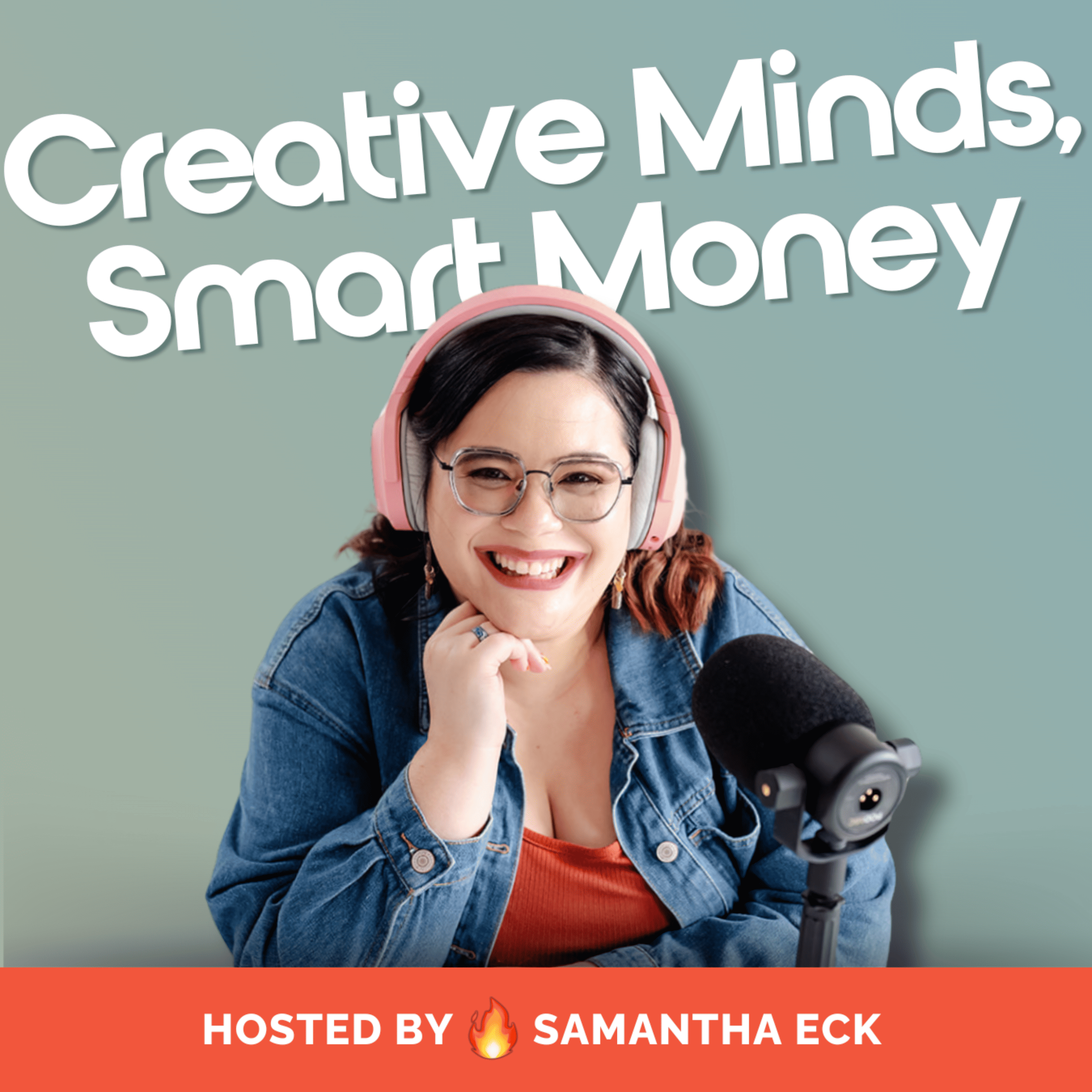
100 Episodes In: What Teaching Creatives About Money Has Actually Taught Me
15m 50s
In this 100th episode of the Creative Mind Smart Money Podcast, host Samantha Eck reflects on the journey of the past two years. She started the show to address a lack of free, accessible financial education for creative entrepreneurs, aiming to demystify topics that many find confusing or scary. Early episodes covered basics like choosing a bank and accounting software, but she notes she initially relied too heavily on guest episodes, which diluted her own educational focus. Over time, episodes on quarterly taxes and the importance of working with a dedicated bookkeeper—especially after the Bench shutdown—resonated strongly, underscoring the value of consistent, personal financial support. The podcast targets creatives at any stage, offering short, digestible lessons that build confidence and clarity. Samantha emphasizes her unscripted, conversational style and commitment to providing actionable takeaways rather than perfection. Looking ahead, she plans to delve into fractional CFO services and the importance of monthly financial meetings, aiming to expand the podcast into a go-to resource for creative financial education. She thanks longtime listeners and welcomes new ones, promising continued dedication to free, shame-free financial guidance.
Welcome to the Creative Mind Smart Money Podcast where we turn financial confusion into creative confidence. I'm Samantha Eck, the keeper and fractional CFO for Creative Entrepreneurs. Each week I'm sharing my financial expertise and actionable strategies to help you build a thriving creative business. Plus, you'll hear from industry experts who bring fresh perspectives on growing your business beyond the numbers. Because building a successful creative business starts with strong financial foundations. Your next chapter starts now. Hello, hello, hello. I am so excited because today is the day of our hundredth episode, which means there's a lot of reminiscing that's going to be done today and a lot of looking back at everything that's happened over the past two years of me podcasting, which is insane to say that you know, it has been going for as long as it has. There's been a lot of changes in my business. There's been a lot of changes with the people I've worked with. There's been so many different changes and I'm just so excited to dive in and talk about all of these different things that we have going on. So let's kind of dive into a little bit of reminiscing, but also some personal stuff. Like, one of the first questions that I kind of want to post to myself is why I opened this podcast in the first place. And the reason that I started this podcast in the first place was specifically because I felt a lack of education in the financial space, especially for creatives, but just in general. And I think that's true of every industry and of finances in general, account and CPAs, everything that are very cagey when it comes to sharing industry secrets or things about like what could be going on. And that's, I think those are more old school CPAs than a lot of the newer ones because a lot of people that are similar in profession to me currently also, they also value education and sharing education, at least some of them do. So I started this podcast because I felt like there was a gap in the education space for finances when it comes to creatives, when it comes to the industry that I'm working with. So I wanted to be able to educate you guys on topics, but also have you get to know me so that if you're like, I kind of want to work with this Samantha girl, but I know I do who she is. You're able to hear my voice every week and know that I'm, you know, someone you can get a feel for my personality if that makes sense. So you're so you finally get the chance to actually get to know me and get to see who I am. So again, it was just really about the education piece and being able to provide that education without you having to pay any, because really finance education is so limited that I wanted to be able to provide a free resource that you guys could come back to again and again. When I think back to the very first episodes that came out, I did release for all at once on the very first day of the podcast launch. And a lot of it was very introductory. So we had like the banking episode, like how to choose your bank. We had the one it's time to know if you need help, what's accounting software. You know, all those types of things and they were very basic, but it was my aim at the very beginning was to help you guys figure out kind of like what you need to do. Now the one thing I do wish I kind of did a little bit better when we first started was my podcast went right from those four episodes, right into guest episodes and didn't stop with the guest episodes until I think like October. And it was all guest episodes like there wasn't even an episode with me. And I quickly realized that the plan that I had come together with to give you guys that financial education wasn't really being shown because we were showcasing a lot of other people's expertise. And those episodes were fantastic. I'm not going to lie. All of the guests, I thank you all so much. If you guys are still listening, thank you all so much for being on my show and sharing your expertise and sharing your guidance. They were so fantastic, but I wish I'd space them out better. I wish I had done like one guest episode, two, three of me and I did a lot of that. But we're very upfront and very like, okay, let's just get this going. When I think back on what episodes feel the most important and what ones are like really key, I definitely think the quarterly estimated taxes episodes, probably one of my most washed episode. But I also think there's a couple of episodes about in general, not just like a CFO or an event, but just about why you need a bookkeeper that are so vital to helping you understand that. There are people who get finances and can do finances on their own. There's people who absolutely hate finances. And I think there's a difference there is that the difference is in if you want to keep doing your finances or if you want to outsource your finances. That's the real key there. I think the topics that surprised me the most that I really resonated with was definitely, it wasn't even actually planned episode, it was the bench episode they came out because I don't think it was last year, no, it was the year before that one bench, kind of like abandoned everybody and just told them, hey, we're shutting down. You're going to have to find someone else to help you out. And so all the bookkeepers were like, oh my gosh, like there's going to be an influx of people coming out. And I think that really showed people how a company doesn't necessarily support you like a person could because they could just drop you in seconds and not give you any notice. And you don't have any of your data. And it just showed a little bit of like the importance of the ownership of your data. It showed the importance of working with someone who actually knows your books and can help you consistently because I had tons of people coming to me who were like, I worked with like six different bookkeepers over the course of the year as that with bench. And you know, some people don't mind, honestly, some people are like, hey, that's great. But there is, I think, a certain point in time where people are like, I just want to work with one person and I want to know that person. And that's when they reach out to people like me and other bookkeepers. So when we think of who this podcast is for, I think it's for creatives in general. I do not think that this podcast is for any stage of creatives. I think you could listen to this podcast as a brand new creative. I think you could listen to it as someone who's been in business for three years and still learn things you didn't know about. I think there's a variety of different things that you could learn and gain from this. And I really do think that this is the perfect podcast where if you're someone who's scared of your finances, it can give you a little bit of confidence into knowing what to look for, what to look at, how to hire all these different things that you wouldn't normally look at. I think one of the things that a lot of my listeners have shared or said to me is like how educational they find this podcast. So a lot of my reviews and stuff like that on Apple podcasts, I'll Spotify everywhere that I've seen them are a lot of people saying that this is the perfect podcast for them. They find the education really great. It's great for bite size lessons. So instead of having something where you have to sit there for 30, 40 minutes, they're able to kind of just tune in and listen to what I have to say and learn from it and then go about their day. So it's great for a lunch, it's great for a walk, but yeah, the just in general, the general consensus has been that a lot of people just love the idea of the podcast. I'm like the financial education. Obviously, I have JC use my social media manager and this bestie and she just loves the podcast because one, she loves supporting anything that I do, but also she loves to share it and be on it because she's been on it twice. So that's great. And I just think that it's such a great opportunity, honestly, to be able to share with you guys beyond the comments of social media because I feel like social media is so limited to what I can say, but also I feel like my voice is so much more powerful than just the text that I can say. So I often speak better than I write. And there's apps for that now like whisper flow and things like that, but it's so much better to actually be able to communicate that in the podcast than it is to just say something. There's a lot of good feedback, but some of them are like, thanks for shedding light on what is normally so confusing and overwhelming for creatives, you know, how she's heard about the topics of the topics that are in this podcast. She's like, I need this and then the first half of the episode, she already had clarity and takeaways. I think it's important is because a lot of people hate talking about money, they hate thinking about it, they hate being interested in it. So the thing that I try to do with my podcast is really connect with people over the fact that money can be a lot less scary and finances can be a lot less scary than people make them seem. So that's something that's very important to me. Obviously, I'm not filming every week. If you guys see my outfits or in the clips and everything like that, I do batch my episodes. But the feeling of showing up every week has generally been in fix. Sometimes I'm excited and sometimes I'm absolutely nervous because I feel like I've touched on so many different topics over these past 100 episodes that I'm like, how can I possibly come up with more information or how can I possibly come up with more data to give them. But you guys keep coming back and you keep loving the episode. So I'm like, you know, I'm just going to have a little bit of a conversation with you.
There's obviously things that are still important that people still need to hear about, even if it's just a slightly different perspective shift from a previous episode. Because it allows me to go even deeper on a topic that I didn't go as deep on originally. So, you know, there's multiple different topics about scope creep. There's multiple different topics about pricing. So, it's just great to be able to have all of these different things that you can explore and really understand. On the weeks where it felt super hard to hit record, my only thought there was, I think you guys aren't looking for perfection. So, when I can consistently show up and just show up in a way that's meaningful and say what I have to say, that's going to be better than just saying nothing at all. So, a lot of the times I don't actually script my episode, so I have prompts. And I look at my phone and I look at the prompt and I say, okay, so how would I respond to this? You know, it's a question, it's a topic, whatever it is, and I look at this and I say, okay, what do I want to say on this topic? What do I want to say to my audience? And it's just to be talking like there's no script, there's no set way I'm saying anything. I'm just talking to you guys. And that's what I love. Now, hitting 100 episodes personally to me is phenomenal. I can't believe I've recorded a 100 episode. I can't believe I have had as many podcasts listens as I have had. You know, we surpassed, I think, at least to 300 views a month now, which is insane to me, that 200-300 people are listening consistently every month. And obviously, that'll only go up with time. And my podcast has not been a sprint. It has been a marathon. It is not something that I'm like, oh, I want people to just instantly listen to it. People start listening to it, people share it, and then people come and really expect it. So to someone who's been listening since the very beginning, I want to say thank you. Thank you for showing up. Thank you for supporting. Even if you already knew everything that was in this podcast, thank you for hanging out and like actually being here. But for someone discovering the show for the very first time, maybe this is your very first episode. Please listen to the 99 other episodes that I have. They're so talk full of good information and good education that you can use in your business and utilize. Takeaways and everything I've had. And if you ever have any questions, don't be afraid to reach out to me. I am not going to try and nickel and diamond or charge you for asking me a question on a topic on the podcast. Again, my primary goal in this whole podcast was education. So if you feel like you're missing something, I would love to help you, you know, explore that and understand it better. And then I would love to take that and make it an episode in and of itself. Now, what am I most excited to talk about in my next 100 episodes? Well, a lot of the shifts in my business have been towards that fractional CFO piece. So I really want to start digging more into the fractional CFO pieces and really explaining why you guys need someone who's there. Why monthly meetings with bookkeepers are important. Why just getting PDF financials is not good enough. It's a stepping stone, but there's so much more to it. Obviously, you know, if you're someone who's good at financials and you're just hiring a bookkeeper, just have a bookkeeper, then PDF financials are fine. But if you are someone who's still lost in your numbers, you know, having a meeting and things like that is so important. So definitely something you were going to talk about. And I would love for creative mind, smart money to grow into just like a primary podcast for creatives. We're looking for financial education. And I would love if you guys know another creative who could use that podcast to share it with them. And I do this out of the kindness of my heart to share all of this information in this education with you because I feel like there's such a lack and such a gap in this area. It's just not enough education. And you know, you could go to school for it. You could take a course online for it, but there's nothing as much in as much detail as just listening and just being able to soak up the information and garner what you can from him. So, you know, despite having 100 episodes and how cool that is, but I do have 100 episodes, I think the biggest takeaway is that this podcast is mainly based on education. It's based on financial education. There's some other pieces in there. Obviously, I have some gas, some great educational pieces based on social media and like other areas, like emotional areas, things like that. So I think you should check out everything you can. But, you know, I want you to walk away feeling like this is a podcast for you. So if I could leave you with one thing, it's that one I'm never going to shame you. I'm here to bring you joy, but also bring you that financial education in the kind of way possible. I want you to walk away, take ways, I want you to walk away with data that you can use and I want you to walk away with decisions that you can be able to make, whether that is higher in the bookkeeper, whether that's knowing me, you need to talk to your current bookkeeper about cash flow forecasting, whether that's talking to someone else about profitability, whoever it is, whatever it is, just helping you figure out where you need to go next is the most important thing for me. So as always guys, I so so so appreciate you being here. Happy 100 episodes. I'm so excited. Let's see where this keeps going because I ain't stopping anytime soon. I appreciate you so so much. If you like this episode, make sure to like your chair, subscribe. As always you guys, I wish you the best week ever and we'll see you next week. Farewell fellow travelers.
Podcast Summary
Key Points:
The podcast celebrates its 100th episode, reflecting on two years of providing financial education for creatives.
It was launched to fill a gap in accessible, free financial education—especially for creative entrepreneurs—and to build trust with the audience.
Early episodes were introductory (e.g., choosing a bank, accounting software), but the host wishes she had balanced guest episodes with more solo content earlier.
Key impactful episodes include those on quarterly estimated taxes, the importance of bookkeepers, and the Bench shutdown, which highlighted data ownership and consistent support.
The podcast is designed for creatives at any stage, offering bite-sized, non-intimidating lessons to reduce financial fear.
The host values authentic, unscripted delivery and prioritizes education over perfection, with a focus on helping listeners make informed decisions.
Future episodes will explore fractional CFO services, monthly financial meetings, and deeper financial planning, aiming to grow the podcast into a primary resource for creative financial education.
Summary:
In this 100th episode of the Creative Mind Smart Money Podcast, host Samantha Eck reflects on the journey of the past two years. She started the show to address a lack of free, accessible financial education for creative entrepreneurs, aiming to demystify topics that many find confusing or scary. Early episodes covered basics like choosing a bank and accounting software, but she notes she initially relied too heavily on guest episodes, which diluted her own educational focus.
Over time, episodes on quarterly taxes and the importance of working with a dedicated bookkeeper—especially after the Bench shutdown—resonated strongly, underscoring the value of consistent, personal financial support. The podcast targets creatives at any stage, offering short, digestible lessons that build confidence and clarity. Samantha emphasizes her unscripted, conversational style and commitment to providing actionable takeaways rather than perfection.
Looking ahead, she plans to delve into fractional CFO services and the importance of monthly financial meetings, aiming to expand the podcast into a go-to resource for creative financial education. She thanks longtime listeners and welcomes new ones, promising continued dedication to free, shame-free financial guidance.
FAQs
She started it to fill a gap in financial education for creatives, providing free, accessible resources that demystify finances and help creative entrepreneurs build confidence.
The first four episodes were introductory, covering topics like how to choose a bank, knowing when you need help, and selecting accounting software.
She highlights the quarterly estimated taxes episode as one of the most washed, along with episodes on why you need a bookkeeper.
The unplanned episode about Bench shutting down resonated strongly, showing how companies can drop clients without notice and emphasizing the importance of owning your data and working with a consistent bookkeeper.
It's for creatives at any stage—from beginners to those in business for years—especially those who find finances scary, offering bite-sized lessons to build confidence.
She uses prompts instead of scripts, speaking naturally to her audience to keep the episodes authentic and meaningful.
Chat with AI
Loading...
Pro features
Go deeper with this episode
Unlock creator-grade tools that turn any transcript into show notes and subtitle files.
 PodcastTranscript AI