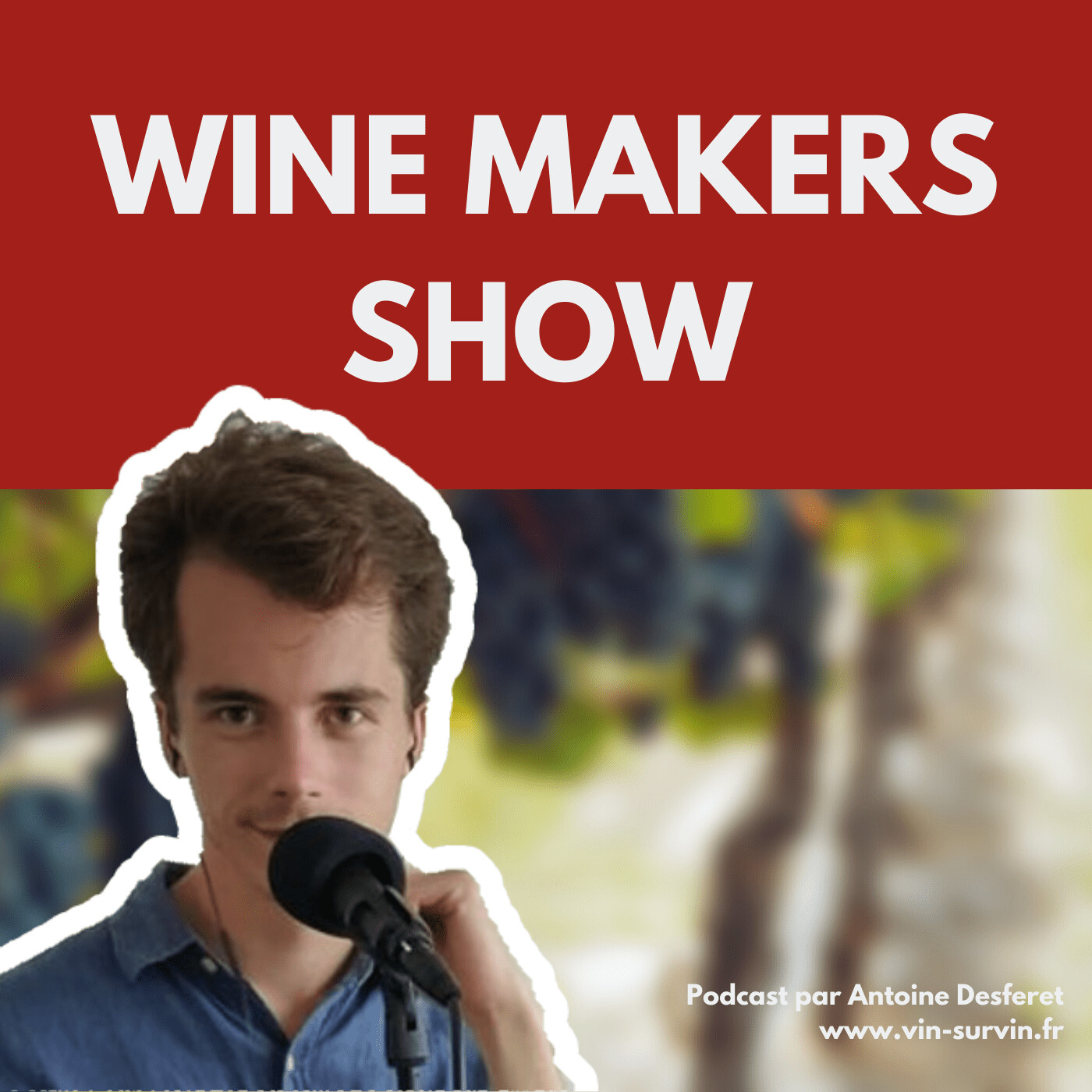
#100 - Arthur Yeung: building a new wine legacy in China
52m 43s
Arthur, second-generation owner of Renowekau in Yantai, China, shares the story of this unique winery that blends wine production with tourism and hospitality. The project began in 2011 after Arthur, initially studying engineering at UCLA, took winemaking courses at UC Davis, where he met partner Pascal Duhan. They chose Penglai, Yantai, for its coastal climate, ideal for white wines and seafood pairing, and its accessibility for tourists from China and Southeast Asia. The winery started from scratch in a barren valley, with government support for infrastructure. Renowekau produces around 40,000 bottles annually, focusing on boutique-scale quality with three wine series: Whisper (fresh, easy-drinking), Renowekau (barrel-aged, complex), and Mulan (only in exceptional vintages). The climate features moderate winters and significant rainfall, which is a challenge, but granite soils impart minerality and a salty note, as recognized in blind tastings. The property includes a 47-room hotel, attracting luxury brands like Ferrari and Porsche for events, as well as team-building groups. Arthur emphasizes a long-term vision, planting for future generations and experimenting with resistant grape varieties to minimize chemical use. He sees Chinese wines as up-and-coming, targeting curious domestic consumers moving from hard liquor to wine, with a growing trend for fresh, fruity whites. The winery aims to build a foundation for a 100-year legacy, balancing short-term decisions with enduring goals.
One, two, one, two. I make a show. Nice hat. Thanks. All right, so let's go. It's not early in the morning, but it feels early in the morning today. Thank you very much, Artur, for being with me this morning and for welcoming us at Renowekau. So the story behind that is that last week we did our first Chinese wine tasting and we came across each other. Then we met some other people and they were like, you should come to Renowekau next week from this weekend, actually. And we're like, of course, let's go for it. And well, I wasn't expecting Artur a place like that, such a beautiful place, such a view on the vine, such a region around that. So thank you very much for welcoming us. We'll discuss about all that in this podcast. But first, can you start by introducing yourself? Sure. Thank you, Antoine. And it's a pleasure to have you guys here this weekend. My name is Arthur. I'm the second generation of a winery owner at Renowekau project that was started by my father. We'll start it together. And we started the project. We first imagined the project in 2011, the idea of having a winery, but also combining tourism and lifestyle concepts into the winery. So then in 2013, we-- well, I was studying in the States, engineering, actually, not related to winemaking. But as I just take a shot, I was at UCLA. And then the UC system had-- I can take classes from any UC schools. And I found out that Davis, UC Davis, is a great winemaking program. So I just signed up for class and went to Dijon and the study level of winemaking. And that's how I met Pascal Duhan, which is now actually one of our partners at Renowekau. And that's how we got into the industry. So in 2013, we first came to Yantai, Penglai fell in love with the region. And then we just thought, this was the right place to do the project. And then 12 years go by. And now here we are. So for you, it was starting to study wine. It was basically pure coincidence. It was-- I would say pure coincidence, fate. I got lucky, to be honest. I would definitely not call myself a very professional wine person, to be honest. I took an introductory winemaking course. And we did more drinking than wine making, right? But you still got it from UC Davis. You still went to the joint. Yes. I know some wine making stuff, but I'm on the wine maker's show. I'm sure of the people that you interview. I am the bottom of the qualified pile. Yeah. So how did you start here? So you came-- you told me-- Yeah, actually, yeah. In 2013, so we've actually visited all the regions before we wanted to start the project. We've been to Ningxia, Xingjiang, Yunnan. And at the end of the day, we decided that we liked to yantai the most for various reasons. First of all, this is the-- yantai is actually the only coastal wine making region in China. And then we-- even very early on, we saw a great potential for white wine, especially pairing with local cuisine. And I mean, like, food ingredients. You got a lot of great seafood here, white wine. And then in terms of the tourism aspect, yantai is also a very accessible city at the region, not just for consumers in China, but also all over Southeast Asia. So everything considered, we really liked the region. There was nothing here. And when you came, like-- There was a-- No vineyards, no-- Actually, so there were some vineyards here when I first came. But not this particular valley. But the city does have a little bit of wine making history. But yes, when we first came to this valley, it was raw, it was barren. We started everything from scratch. Took a picture and just desired to do a rendering on the foot of the mountain and how this region was going to be. But I think the government also did a wonderful job supporting the development, including paving new roads, cleaning up the village, and everything like that. You know, when we first came, there was the main road that you guys come in from and didn't exist. We had to come through the village. And there are no roads here. There's nothing here. Yeah. It's a very impressive place for that. So you were the one to start the collaboration with Pascal? I'd say I met him first. Yeah, but-- And it was quite interesting, I think, just like you guys, I met Pascal in 2013. And I just decided to invite him. And he actually came by the end of 2013. He flew into Hong Kong and met my father and our partner in Hong Kong and had a conversation. And I guess everybody was sort of on the same frequency. We had similar visions. We liked what each other was about. So I think it was a very easy collaboration. We just decided to work together, even though we had known each other for long back then. But now it's turned into a 12-year friendship. It's an amazing experience for him and for you as well. It's so fun to-- I wasn't expecting a friend guy doing wine. Sure, it's-- I can only speak for myself. It's been an amazing experience for me. That's definitely for sure. And for our family. Because I think in the wine world, we're very, very young family. In China, you say you've done something for 12, 15 years. We're relatively rooted in the industry. But we go to events in Dijon and Burgundy. And I'm meeting these other wine families. And people shake it my hand. They're like, hey, I'm 12 generation. I'm 14 generation. I'm going around. I'm second generation, second generation. Nice to meet you. But there's definitely so much to learn still in the industry. That the culture, the techniques. But we're very lucky to have Pascal, someone like Pascal, as a partner, I think, really helped us in a relatively short and period of time to establish, I think, what we have today. So obviously you're doing wine here. This is the main reason why we're here. How do you do to-- who are your clients? And what's the vision that you have relative to sales and commerce? How do you see-- I don't really-- so run a breakout. I never heard of it when I was in France or in Europe. So I guess that your market is more here in China. How do you sell? What's your vision about that? We wanted to start in China for the market. I think that it's difficult for Chinese wines to say go into the European market, et cetera, et cetera, because it's already a very mature and competitive market. And I think Chinese wines are up and coming. But there's still a lot of room for the product to mature even more and settle down. But I would say our main demographic right now are Chinese clients, including a lot of Southeast Asian, Hong Kong, Macau, et cetera. I think they are wine drinkers that are curious, curious, enough to want to try wines from different regions. And the growing demographic are, I think, Chinese consumers 30 plus. People are moving off of hard liquor, so less whiskey, less bichou, more into wine. I think it's maybe a sign of maturity or a change of taste. But definitely, a lot of relatively new wine drinkers. So for us, a trend for white wine is growing. And I think it's because it's an easier entry to wine, especially when we're making wines that are fruity and fresh versus an old, bordeaux or old pergundy. So I think that the demographic and the trend of fresh or fruity white wines going up sort of matches. But every five to 10 years, it's going to change again. But this is what we're seeing right now. Yeah. You had this vision of a place that does wine and hospitality from the beginning? Yeah. So my father, actually, he went to Berkeley. So we're all using systems.
And he wasn't Berkeley in the 70s, and he saw how Napa Valley developed over the years from nothing to now a very famous region. And then I was also in California, so we also frequently went to Napa. And I think that for us, because we're not Y-makers in the beginning, we were attracted into the industry by the lifestyle. So when we built this winery, we had a clear idea that we wanted to present not just wine, but I think everything about wine. The culture, the lifestyle, it's what attracted us into wine, and it's something that we wanted to bring to our clients and customers. So yes, from the beginning, we designed, having in mind wine plus tourism, plus hospitality, food and beverage and everything. Because this place where we are is absolutely incredible. I think it's 40 rooms, something like that. 47, something like that. And we're the only property that I think in China was with the hotel plus winery in the same place. It was definitely, and we've traveled a lot. And we tried to learn from the other regions and we designed it to our concept, I guess. Yeah. Because you first of all, you went to Burgundy and it's a press fund because in Burgundy, you do wines in very small places. Sometimes you have a lot of trouble finding the place. You can absolutely not sleep there or it's very rare if you can sleep there. And on the other side, you have this beautiful place, a lot of rooms, a lot of facilities, capabilities to have people. So it's a big switch from Burgundy. This is considered a small facility in China. I think you're going to interview a lot of wineries that are producing millions of bottles. We try to keep it at a size of a boutique winery where we're currently producing 40,000 and we're going to expand a little bit more but we're going to keep it around 80,000 in the final amount just to, I think, limit our production to a smaller quantity. But Burgundy is different because I think wine and Burgundy has already become ingrained into the DNA of the place and then there's a history of it. So these small corners and sellers, incredible places. You can visit a lot of times, you can't even go in. We wanted to learn from Burgundy but we can't be Burgundy. Even the wines that we make obviously have to be Chinese wines, Chinese style. We can learn from these regions. They have great techniques and attitudes towards the culture. That's all we need to learn about. The ideas after taking all those things, how do we make our own and what makes these punk-lie wines, what's the punk-lie characteristic and even in terms of a lifestyle. When we're making wine, we're also thinking about the food on the table. How does Chinese wine pair with Chinese food versus traditional Burgundian? If you look at different regions, Burgundy wine pairs great with Burgundy food and cheese. And Bordeaux wine pairs great with Bordeaux food and cheese, but even if you cross a little bit, sometimes it doesn't work that well. A region on the other side of the globe is even more so, I would say. Yeah, 100% agree. We've what you said. Yesterday, I was talking about the notion of Taiwan. For me, this is where you recognize the quality of a wine. Taiwan is not just about the soil or just the expression of something. It's of course the soil, the climate, the landscape and the people around it. For me, this makes the difference between good wines and excellent wines. Do you reflect the Taiwan where it's done? We've tasted some other Chinese wines that were like Bordeaux blend or that type of things, which is amazing and well done, technically speaking. But what's good when we came to taste Renau Rekau is that you have this taste of the place. Wine making is the expression of this specific land. For me, this is what makes amazing wines. That's a vision that we share on this. Definitely. Thank you for taking guests with us and being so understanding. We're a young winery, so I know there's a lot of room to grow. But definitely, these years were even from talking about varieties in Routesac. We stopped focusing so much on the particular variety of the wine, but instead focusing on the style of it. So let's say there's our whisper and Renau Rekau and the Blondinor. For the whisper, I always talk more about the style of wine that it is. It's a fresh, fruity, mineral, pleasant, easy drinking wine. We focus less on the varieties because we're experimenting with these new, less well-known resistant varieties that are more naturally resilient against different diseases and rot, etc. Which helps us to use less products in the vineyards, less chemicals, less pesticides, herbicides. But at the same time, how do we find these new varieties that still, like you said, able to capture the essence of the tehua or the characteristics of the tehua, the klimat of the place. This is going to be a process. I'm not saying we have it all figured out, but we're continuing to discover, explore, experiment. But then that's why I'm saying we're now. I would focus on the style of the wine instead of a particular variety. But when people ask, "It's a blend of five varieties," and you probably haven't heard of three of them, especially for Chinese consumers. They're just used to shard nays and so on. You've started talking about the wine just before that. Can you describe a bit the klimat that you have here in Niantai? Niantai is. well, like I mentioned at the very beginning, it's the only coastal region in China. I would say it's relatively temperate compared to some of the more continental regions. Our winters are less harsh, so we don't need to bury our vines. In fact, we often see snow in the winter. It smells quite heavily, which protects the vines and keeps them moist. But on the other side of the coin, it rains. I would say that we're a relatively rainy region compared to the other regions in China where they're drier. The fruits may ripe quicker or have much higher sugar levels. It's about keeping the acidity delicate. That's a balance. The rain is definitely our challenge. We are finding ways to cope with it, including why we're making a lot more white wines because we harvest earlier, just before the rain season and whatnot. Even with the rain this year, we just harvested the GAMA yesterday and the sugar levels were great. Rain season means that the main challenge that you may have in winemaking. For us, the rock is the rock. The rock and the rain. It's a challenge for our vineyard manager. But he's doing a great job. For the soil, how is it? We see mostly sandy soil on the top. When you go down a little bit, it's granite. Lots of granite, which gives this clear character of the minerality. The white is got this nice minerality and in the end, it even has a sort of salty or savouriness to it, which we also think probably influenced by the ocean, sea breeze. In early 2019, our first vintage of shardonnay, we actually sent it to Burgundy. We entered into a shardonnay demand, which is a shardonnay blind tasting. That shardonnay actually got an award. What was interesting was that I remember receiving the notes from the tastings in Burgundy and it's a blind tasting. didn't know where the sharno was from.
but they said they tasted sea salt. So this region must not be far away from the ocean on the blind tasting now. - It's amazing. - These guys are so good. (laughing) - It's so good. For me, tasting wine is always a humble moment because you may guess a few things inside your glass, but you never really know what's behind that or the work where it really comes from and you can have different views on the same wine at different times. So it's always amazing to blind taste. - Yeah, definitely, definitely. So this is about the place, the weather, the soil. You started talking about the wine. So you do whisper, which is the white wine. - Yeah, so we have three series. The entry level is whisper, which is definitely more pleasant, easy drinking. We have our runaway cow series where we're starting to use a little more barrels. We had just recently started with the barrels because we planted in 2015. So early on our vines were still a bit young. - So actually, it's the ones that we drink are kind of one of the first vintage, you can interpret like that, including the gammae that we had, which we've made into a blonde and ar, but it was a second year of fruit set, maybe a third year, something like that. So once we get a little bit more vintage in the vines, we're using a little more barrel. So I would say our runaway cow series, our blonde and ar series will be a little more, will be rounder, a little more complex. And then on the top line, we have Mulan, which we only do on very, very good vintage. So so far we've only had one Mulan in 2019 and it was a really good year for the reds here. So the Mulan one is the name of the wine. And we are currently observing, and maybe perhaps we might have a Mulan one in 23, but we're still deciding. - Okay, but so for that means that you, so you actually have red plants, you do the harvest, you take the juice out of it, and you just wait and evaluate afterwards. - Yeah, sometimes we do that. We have a couple of reds sitting and we're deciding whether or not it's worthy to be Mulan, or if not, we'll just roll it out as a runaway cow. - Okay. - A bit earlier you talked about experimenting in the vanyard. For me, this is super interesting, but the point is usually when you plant grapes, you tend to say that you plant them for your children or for your grandchildren, it would take so much time for them to have deep roots and to grow and make really good wines. How do you manage this very long-term project with shorter term or shorter expectations? For me, it's always good to see, I have a story. I think you were the second, earliest estate state I visited in my life. The first one was actually in Belgium, and it was also super interesting because, I think when I visited them, they were not even selling wines yet. They were doing some wines, but more like for friends and family, and they had the bottles, but not ready for commerce. You are a bit more advanced, but how do you manage this like a shorter term, things with very long-term expectations? - I think first of all, we do recognize, and we have to admit that it's a long-term endeavor. What you said about planting for the next generation, I mean, my father's obviously doing it for us, but even for me, I think by the time this property really excels would be my grandchildren, or great grandchildren. So I think it's important to recognize that. We're not trying to achieve any sort of greatness in the short term, but what we're trying to do is, we're trying to make as many right decisions along the way to build a foundation for a long-term way, how to be a 100-year-old, 200-year-old winery in the future. So we're doing a lot of the homework, but I think we have to recognize that it is a long-term endeavor, and a lot of the things that we're doing, I think we may not be here around to see the results. - It's always, for me, I always find it amazing when I'm in the Vanya's this continuity of time, around it's a bit philosophical to say it like that, but it's just you do things and you only wish to give it in a better shape to the next generation so that they can continue. - Yeah, there's definitely this element of it. And I think my father, and even Pascal, they wanted to do it to leave a bit of a legacy, something in their name, something that they've created and left behind. I think from a personal perspective, maybe this is a more realistic motivation. - Yeah. - Do you have a bit more than 40 rooms here? What is the profile of people coming? - A lot of mid-30s, friends and groups. We also see a lot of team building from companies, events from luxury brands. That was a good mix. Chinese, Southeast Asian, even European. For instance, we've actually hosted a lot of luxury brands here as well. Ferrari, obviously, was our first one. They built out the entire winery for a month to debut the Portofino. Their Asia Pacific debut of the car was at the winery. And for one month, they invited the sort of car media guys, distributors, VIP clients. And afterwards, we've had the fortunate enough to work with a lot of other brands, show part, Roger Dubois, Range Rover, Porsche, et cetera, et cetera. So a lot of events we do as well. It's sort of the wine lifestyle sort of seamlessly works with these luxury brands as well. And then other than that, you get your team buildings, your company, a lot of companies around here, and then a different group of events. Yeah, so I would say on an individual traveler side, lots of couples coming for a weekend, yeah, something like that. Yeah. - And it's really like the winery and Ranoico as a whole is really, how can I say, like engraved in the tourism attractivity of the region? How do you, because, so my question, sorry, it's a bit complicated for me to formulate this question, but the question I had is basically, when we used to travel in France, it's pretty established. Like there is tourism office, you have the list of vanias to visit. You have a road with the vanias that are clearly indicated along the way. You can rent a bike, whatever. How do you work on that here? Because when you create things from scratch, I guess it's something you have to work on, maybe altogether, maybe with government also as well. How do you develop this? - It's a difficult question and it's a complicated answer. First of all, you're absolutely right. I think in France, the entire wine tourism industry, everything is very well thought out and developed. And even government officials here, they travel to Burgundy on board though, to learn, to take notes. When you say, "How do we develop this?" I can only say we do it slowly, step by step. But you're right, when we started from scratch, one of our difficulties was to market this region as a wine, sort of a destination, which is not, I have to admit, it's not very well known in the mass public. But I would say these couple of years, we've gone our reputation up, definitely mostly by word of mouth. So there are these specific wine loving demographics that when you dive into it, you realize, it's not that big of a group of people. And these wine tourism, guys, they talk to each other and spread the word. So, I would say in a relatively short amount of time, we're known, I would say we're known in a lot of wine circles. I think the name is known. But if you go into a mass public and just ask a random person, a tourist destination, they probably haven't heard of us. So yeah, hopefully.
I forgot the question I had. It was a very good one. Sorry. Sorry, we can always circle back. Yes, this was the question. On the other way around, when you travel, you obviously say that you do wine here. What is the reaction of people when you say that you do wine in China? You talk about traveling to Berrandi to France. I guess you still go back to the US and not pass some times. What is the reaction of people? Chinese wines actually exist. Do they know the place? Are they surprised? How do they feel? The different types of people that we meet. But I think mainly, whenever I meet someone in the industry, the reaction is that they are always very respectful. I think that between wine people, I think they recognize how difficult it is to start from scratch. I would say a lot of them are very encouraging and respectful and shows a lot of curiosity. Lots of questions. To tell the bit earlier that we spur one summer world in a blind tasting that you had, I think one of the things that marked me when we were. I'm going to grab a water. That's okay. I know. When we were at the tasting last week in Shanghai, I think it was your father who told us that this wine was served at the birthday of King Charles. King Charles wine. Yeah, so every year they have. I think it's the King's dinner in Shanghai. I'm sure they have it in different cities. Major cities. I think there is one in Hong Kong. We'd have to give credit to Wine App, obviously. They liked the Whisper and the Rose. It was just selected for the King's dinner. Did you go there? My brother did. So we're a family of five, three boys and sometimes we spread out and we all help out with the industry and the business. Do you all work at the winery or it's mostly. It's a bit divided. It's a bit divided. I think my job is. I handle more of the technical stuff. The wine making, the growing, the production. Early on I helped with the branding and that part. But now we're trying to. My youngest brother just came back so he's probably going to do more of the branding because he has a younger sort of perspective. It might do a better job than me. Between the three of us we divide up our time to all help out with the family business a little bit. Yeah. Okay. For you, the winery is your main focus for your work. For about a decade it was my main focus between 2013 and 2023. I'm now actually. Now I have my own venture outside of the family but the winery is a continued effort for me. But now it's because I think that the wine industry has its own tempo and then a lot of things I think you still need time to build upon it. But we're lucky enough that our wine team is relatively matured now which gives me a little more room to do something else on the side. So I'm doing multiple projects right now. This is one of my continued efforts. And yours are projects? I'll link to a nice style or. No, technology. I'm working for AI software company. Developing technologies and autonomous driving. We're doing AI algorithm that helps. Essentially we do the brain of the self-driving car. Yeah. Okay, it's often because you must see big differences between that and wine making. You have long term. It's two extreme opposites in terms of tempo. The tech industry is very fast. Sometimes you're even rolling beyond your own capabilities. But wine is the opposite. You have to take time step back and go slow down. Force yourself to slow down. But it's a good equilibrium in life because you're fast, fast. So I go fast, fast, slow. First, first, you can transition to the other. So it's a bit more cool. Do you use one of the things that strikes me in the wine industry is that it's a pretty low-take industry. We have some technology in wine making, knowing specifically the temperature of the barrel or type of things. But it's really like standard information technology. You just know about something. It's going to rain. This is the exact temperature or the exact acidity of the juice. We don't have that much technology in prediction or in action. What I mean by it, like you talked about autonomous driving, one of the things autonomous driving is that basically takes the information. But it does something out of this information and makes things in wine making. My vision so far is that technology doesn't do anything. It just gives you the information and then you as a wine maker act on it. Do you see it differently? What did you try to incorporate more technology in the vineyard? In the vineyards, definitely incorporating more technology to help with, say, vineyard management, you can have autonomous tractors going into the field to do the jobs. In that sense, yes. You have some? We're actually working with some companies to develop one right now. I think soon, because it's a problem that we have to deal with the villagers or labor force getting older and older and the younger people are not really coming back to, they're mostly staying in cities. I think in five to ten years' time, it's going to be a real finding manual labor for the vineyard. A lot of the things we are switching to autonomous or even before autonomous, we have maybe one guy can remote control to three tractors, something like that. Technology, I think, in the vineyards, definitely. Wine making is a little more difficult. I think wine making, to me, it's categorized as industrial, but I think it's really more art. It's a little bit like cooking, like cuisine. In China, they have all these cooking robots. They sell the robots and they sell the ingredients. It's like you said, all the information is there. What ingredients to put, how many times? But let's say a fried rice made by a robot versus fried rice made by a Michelin chef is just different. So how do you qualify or quantify the difference? It's hard. I think that's what makes wine special. I think it's the personal touch or the sort of art element of it. And that's why it makes food special, too. Because food, like you said, is low tech, but chefs are not out of jobs. Obviously there are times and places for, like I said, cooking robots. They call it the stir fry machines. Like AI stir fry machines, literally they sell the pre-packaged, you know, say like you want the green pepper beef. They sell a package, fresh ingredients. Green pepper beef. So what I mean, you just add, you just throw it all in and you add the, and then the machine makes it, but it just doesn't taste the same as a real, as a really good chef doing it behind the stove, right? So I think that's the same thing with wine. So it's great. Wine maker won't be out of job too soon. I don't, I don't think so. I don't think so. It's like artists, artists are not going to run out of jobs. Wine is not just, wine is sometimes more culture than product, I think. Yeah. Yeah. I really believe that yesterday I was also talking about the, the history of wine. And you know, like the first traces that travel of wine, of wine date from 7000 years before Christ. So basically it's been 10,000 years that the humanity is doing wines, drinking wines. And for me it reflects.
way more than just a product to reflect, as you said, you know, culture, humanity, sharing things, yeah, for me it's deeply rooted in what I think so too. Alcohol is culture. But for China, so actually I had this discussion recently about the type of wine, maybe you can give me more first-hand knowledge about that, but the guy I was talking with about that, he was saying that Chinese are actually pretty accustomed to wine, because their palette has been trained by tea, like it told me that you drink a lot of tea in China and you're very good tea, and so your palette is really trained for wine and for what. I wouldn't say it's trained for wine, but I would say that it's easy, in some ways it's easy to introduce the concept of wine because a lot of the elements of wine drinking and tasting and growing is similar to tea. Tea also talk about tehua, different climates reflect on different qualities of tea, and then the tasting elements, you also have similar flavors, the aromas, the flowers, the fruits, the finish, and the mouth, but there's still some differences, but I can only say that the framework sort of works, yeah. Yeah, so it helps being in the same framework, in the same state, I'm like, you can easily explain people can understand, you know, tannins, for instance, and whatnot, because you have that in tea as well, you can understand, you can explain food pairing because you have that in tea as well. So yeah, the sort of overall framework and logic, I think works here. This morning we were preparing a little bit the interview, we were just discussing on which at about time places and what we're going to talk about. One of the things I was talking about the future of Rana Rekau, what can we, what can I wish you for the future of Rana Rekau? Obviously continuing making good wines, but what are the specifics around that? We have projects, do we have what's next? I think at the stage what we're trying to do is continue to make good wines. I think that's a big big thing for us. I think there is a lot of room for improvement for wine making and I think more time in the vineyards and more time for us to age some of the wines, we're going to see more exciting results. Even now, I think each vintage is better than the previous. If you taste the 24 whisper, it's better than the 23. The 23 is better than the 22. If I were to say one thing, I wish for this trend to continue. I wish that every vintage we make, we feel like wow, it's even better than the last vintage because I think obviously there's the tourism and lifestyle aspect of the brand, but everything is still centered around wine. We have to be the most serious about wine making, about growing. We're continuing to find varieties that are more suitable, that are more resilient, that can deliver what we want. I would say the focus has to be on wine, if you ask me. For me, it's very exciting to be at this point because what I really feel is that it's kind of an inflection point when it starts, as you said, it's better every year, but then you know you pass a threshold at which it starts to be really interesting to be here and to see this. You know what I mean? This is definitely an inflection point and also a 12-year 10-year mark of the property. I think every 10 years is you're going to see a company growing or shrinking, but it's definitely where we're at a place where we're forced to reevaluate some of our ideas and strategies and what to do in the future. Thank you very much, Arsfer, for that. Do we have topics that you absolutely want to talk about and that I missed in this interview? No, not today. I'm a little bit hungover still. I'm glad I'm able to make it through this interview. We had a nice time together. This interview sometimes takes a bit more time to reach the end. It should have interviewed me yesterday before drinking. Next time we'll do that. Thank you very much, Arsfer. Honestly, I absolutely love the place and the wines, but most importantly, I just said it's like every year is getting better than the one before and I really wish to sit at in 10 years, in 20 years because you know, if we do this interview again in 20 years, I think it's going to be amazing. We're going to both be 20 years older. That's for sure. We'll keep the hats. Yeah, I'll keep the hats. You don't see the state of the line, but definitely we'll be a bit older. No, thank you very much for that and thank you for sharing with the audience this journey. No, thank you for bringing this platform to us. Sometimes you guys are the storytellers. Right. So I appreciate you guys coming out here and interviewing us and you know, helping us reach a wider audience. Yeah. Thank you so much for that. Obviously, if you guys like the interview, if you want to come to Run Away Cow, it's possible you have a website. Yeah, a website you can book through, I think so, or on booking.com. Yeah, C-trip, Salchon issue for like, WeChat users, just search Run Away Cow. Yeah. Okay, I will put a few links in the description of the podcast. So just feel free to reach out and try to come to this place. Honestly, I always have the same story in front story for people if it's a bit redundant on that. But one of the stories that when I created this podcast, I didn't thought I would go to some places. And for example, in France, so there are big mind-making regions, but that are big regions anyway. Like when you go to Dijon, when you go to Bordeaux or whatever, it's big cities. Like if you're French, you probably go there at least once because it's just a big city. But doing this podcast, I've also been to places that I never thought I would go like, for example, for example here. In France, for example, for example, but for example here. And you know, like if five years ago someone told me you would have a podcast about wine and you would actually go to Jiantai in China to see it, I wouldn't have believed that. And so what I want to say by that is that Jiantai is actually very accessible. Like it's, I think it's one hour and 30 minutes, two hours from Shanghai. Yeah, yeah. One hour, one hour, one and a half hour flight from Shanghai, one hour flight from Beijing, even closer. Yeah. And then it's, we're 15 minutes away from the airport. So super close. Yeah. Right from the airport. It's super fast. So what I want to say is that if you plan to come to China, you know, I don't think that Jiantai is in the touristy guides that we usually have. But actually it's, it's very interesting to come to see a wine making regions and to just take this flight and the place is amazing. So anyway, you will have a great time. So, so I will put all the links in the description, but just to say try to come to Jiantai and just don't welcome to anyone who wants to come, I guess. Yeah. I have three last questions that are always the same in this podcast. The first one is do you have a book recommendation? Oh, there's a tough one. Non-wine related is okay. If it's wine rates is better, but if it's non-wine, go for it. A lot of wine books are kind of dry. I think I'm going to go non-wine. I think the most interesting book I've recently read, I might be late to the party, is I like science fiction a lot. As a Chinese author, the author just saying, wrote a three-body problem. I don't know if you've heard of it. It's a Chinese pretty hardcore science fiction writer. I think it's one of the more interesting books that I've read recently. So three-body problem. Go check it out. Yeah. I would try to find it. Yeah. Then what is a recent tasting that you absolutely love or something that you want to share around it? This one is very difficult. A lot of. The last trip, my most recent trip to Burgundy. I was fortunate enough because Pascal was there to take me around.
We're fortunate enough to taste some homani conti and I still think that every time when you go back to You know bone and Dijon you get reminded why it is the top region even we're going around not just conti we also visited Bezo We had there was a Eschazo and certain different fields and I still think that the the levels Have much much much higher in burgundy so it keeps us humble as a new wine region, but I think it's important to Always go back and taste the different regions, especially the top regions. I would say that Within this year obviously those two Taste things were the most Impressionable for me. Yeah, I Yeah, I'm using most of you know crazy expense And that's question who is the next person I should interview So I was saying the easiest recommendation is the closest guy so our neighbor Long die by Lafitte. I think Charles would be a good person to talk to and I think that the guy who introduced us David I think David is a must Interview and in terms of you know, maybe he's not about wine making But in terms of I think insight into the entire industry He's the one that you know brought all of these wineries together and they they're doing an incredible job So I would recommend these two Count on us. Thank you for the this recommendations. We're definitely interviewer Charles and David I think David will have your opportunity to do it today or tomorrow And Charles I don't know she do David first We'll find him in the future. We'll find him. He's not far. Thank you very much. I ask you for taking the time Thank you for having me. It was really a pleasure to have you on the podcast if you like this interview Please share it to at least two person. We need to discover Chinese wines and also to come to the anti To taste them if you have the opportunity to find some runner-up caro wines But please try try them. I don't know if you're that much in the in the US or in Europe Not not yet. We're going to be later on. Yeah, all right So stay tuned and if you have the opportunity to find some bottles of runner-up caro You will definitely enjoy them. I'll show things things again, and thank you and one. Yeah, it's been a pleasure. Thank you Thank you guys and thank you
Podcast Summary
Key Points:
Arthur is the second-generation owner of Renowekau, a winery in Yantai, China, that combines wine production with tourism and hospitality.
The project began in 2011, with Arthur studying engineering at UCLA before taking winemaking courses at UC Davis, where he met partner Pascal Duhan.
The winery is located in Penglai, Yantai, chosen for its coastal climate, potential for white wines, and accessibility for tourism.
Renowekau produces around 40,000 bottles annually, focusing on boutique-scale production, with three wine series: Whisper (entry-level), Renowekau (barrel-aged), and Mulan (top-tier, only in excellent vintages).
The climate features moderate winters, significant rainfall (a challenge), and granite soils, giving wines a mineral, sometimes salty character.
The winery also has a 47-room hotel, attracting clients like luxury brands (e.g., Ferrari, Porsche) and team-building groups, aiming to create a wine lifestyle experience.
Arthur emphasizes long-term vision, planting for future generations, and experimenting with resistant grape varieties to reduce chemical use.
Summary:
Arthur, second-generation owner of Renowekau in Yantai, China, shares the story of this unique winery that blends wine production with tourism and hospitality. The project began in 2011 after Arthur, initially studying engineering at UCLA, took winemaking courses at UC Davis, where he met partner Pascal Duhan. They chose Penglai, Yantai, for its coastal climate, ideal for white wines and seafood pairing, and its accessibility for tourists from China and Southeast Asia.
The winery started from scratch in a barren valley, with government support for infrastructure. Renowekau produces around 40,000 bottles annually, focusing on boutique-scale quality with three wine series: Whisper (fresh, easy-drinking), Renowekau (barrel-aged, complex), and Mulan (only in exceptional vintages). The climate features moderate winters and significant rainfall, which is a challenge, but granite soils impart minerality and a salty note, as recognized in blind tastings.
The property includes a 47-room hotel, attracting luxury brands like Ferrari and Porsche for events, as well as team-building groups. Arthur emphasizes a long-term vision, planting for future generations and experimenting with resistant grape varieties to minimize chemical use. He sees Chinese wines as up-and-coming, targeting curious domestic consumers moving from hard liquor to wine, with a growing trend for fresh, fruity whites.
The winery aims to build a foundation for a 100-year legacy, balancing short-term decisions with enduring goals.
FAQs
Renowekau is a winery in Yantai, China, combining wine production with tourism and hospitality, started by Arthur's father in 2011 with a vision for a lifestyle concept.
Arthur studied engineering at UCLA but took winemaking courses through UC Davis, which led him to meet Pascal Duhan and start the Renowekau project in Yantai.
Yantai is China's only coastal wine region, ideal for white wines pairing with local seafood, and accessible for tourism from China and Southeast Asia.
The main challenges are rain and rocky soil, with sandy topsoil over granite, giving wines a mineral and salty character influenced by the ocean.
They have three series: Whisper (entry-level, easy-drinking), Renowekau (barrel-aged), and Mulan (top-tier, only in exceptional vintages like 2019).
Clients are mainly Chinese and Southeast Asian wine enthusiasts, aged 30+, shifting from hard liquor to wine, plus luxury brands like Ferrari for events.
Chat with AI
Loading...
Pro features
Go deeper with this episode
Unlock creator-grade tools that turn any transcript into show notes and subtitle files.
 PodcastTranscript AI