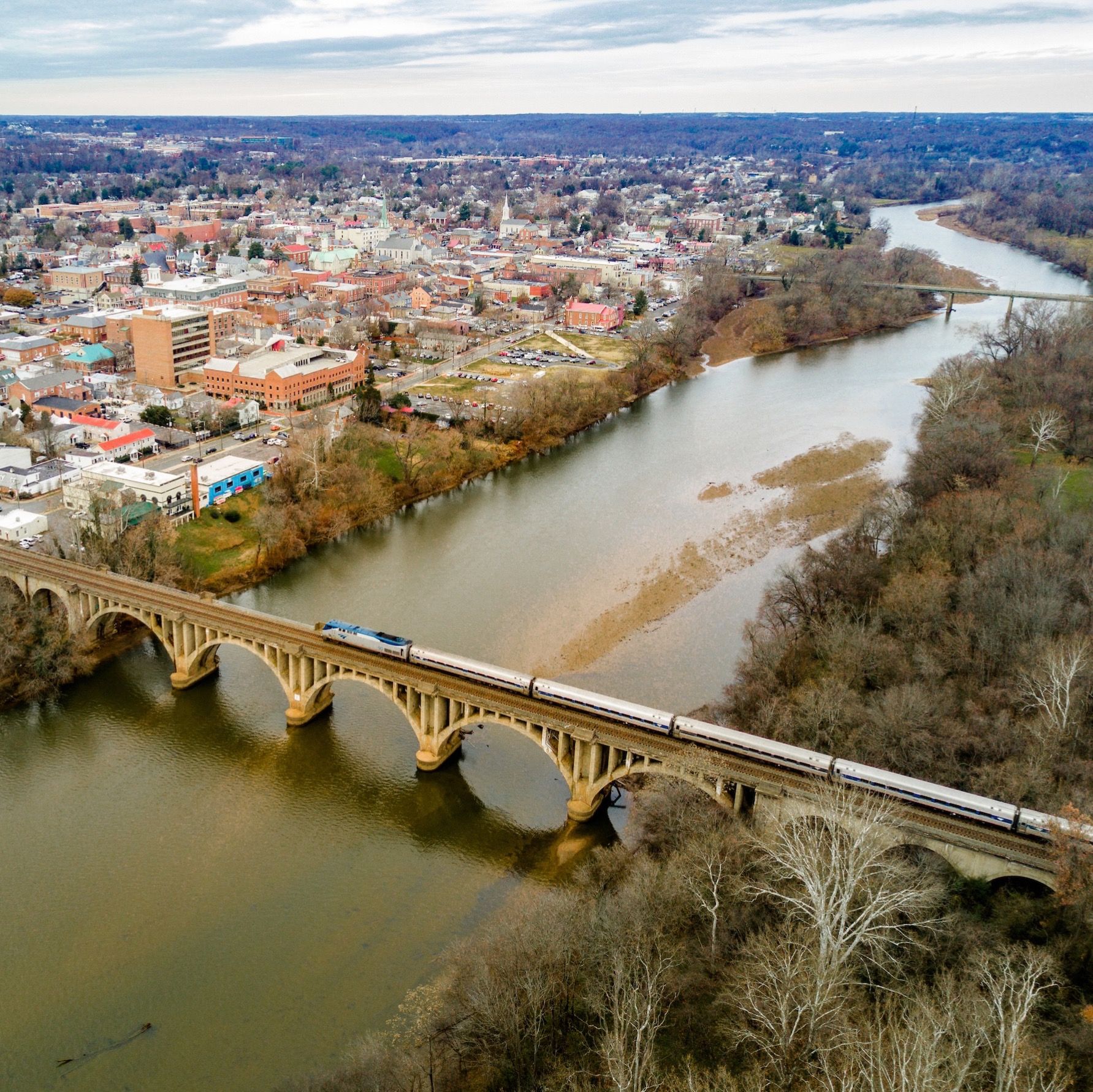
The River Radius podcast, hosted by Sam Carter, features Shantel Dominguez from American Rivers to discuss the 2025 "Most Endangered Rivers" list. This annual campaign, now in its 40th year, spotlights ten U.S. rivers confronting critical threats while also presenting clear, achievable solutions to safeguard them. The list aims to raise public awareness, mobilize community action, and influence policymakers. The conversation highlights past successes, such as the Klamath River's restoration, the protection of the Okefenokee Swamp from mining, and New Mexico's enactment of state-level clean water protections following federal rollbacks.
The episode delves into specific rivers on the current list, detailing their challenges. The Gauley River, a renowned whitewater destination, faces toxic pollution from coal mining operations violating federal laws. Louisiana's Calcasieu River suffers from historical and ongoing chemical dumping, harming public health and the local fishing economy. Alaska's pristine Sitna River is threatened by a proposed industrial road that could enable extractive industries. The discussion underscores the balance between economic livelihoods and environmental accountability, advocating for collaborative solutions. Listeners are encouraged to engage through advocacy actions linked in the show notes, reinforcing the campaign's proactive, solution-oriented approach.
This is the River Radius, a cultural nexus of rivers, people, and boats. I am your host, Sam Carter. Welcome. I think this list, I think it really showcases the inner connectedness of it all. Whether you're looking physically at these river systems and the tributaries and the communities that they're flowing through, or you're thinking more metaphorically or even spiritually, what are our connections to these rivers? I see this web of inner connectedness between all of these rivers, all of these beautiful, wonderful communities that make up our nation, and how they're both so important. This episode comes to you from 10 rivers in the United States. Each year for the past 40 years, American rivers has published a list highlighting 10 rivers that they believe are at the greatest risk from external factors, and that also have legitimate and accessible solutions to remedy the problems. The River Radius has hosted American rivers for the past three years to talk through this list, and again this year, we welcome American rivers to help us look at this most endangered list for 2025. In addition to talking through the list, we will also look at some of the rivers in the past that have been on this list that have had great success, the Klamath River, the Oki-Fanoki Swamp, the Tijuana River, the rivers of New Mexico. Please welcome my guest for this episode, Shantel Dominguez, from American Rivers. My name is Shantel Dominguez, and I live in Reno, Nevada. I am the director of Conservation Partnerships at American Rivers. My focus is really on supporting staff in infusing equity and justice in our conservation work within our conservation strategies, building, nurturing and supporting meaningful relationships within our conservation team within American rivers, and then especially those relationships with partners. The other aspect of my role is managing most endangered rivers, which is one of our most high profile well-known national campaigns. Tell us a few things. Tell us about what this list is, and then this list came out in April of this year. Talk about what the list is, and this is the 40th year you all have published and promoted this list. Yeah, so most endangered rivers is a list that American rivers releases every year. At Spotlight's 10 rivers that are facing urgent threats whose fate will be determined in the coming year, and we believe we can help influence decisions for that river for the better. So the campaign is really a call to action for people to speak up on behalf of their rivers. It's a call to action for decision makers to make the right decision for their rivers, for their communities that depend on them, and it's a public awareness campaign as well. What are these rivers that are facing these major threats and what can be done about it? So there's an element I always think when you see these lists, like the top 10 worst places to live or the top 10 most polluted towns or the worst projects, there's an element that I just want to ignore it. But there's another side to this and that the rivers you all have highlighted in the past, not all of them, but many of them have had really strong success stories in terms of how this attention from American rivers and other organizations brings action to get these rivers out of these places in good shape. Talk about that. Maybe highlight some rivers that it's really impacted and supported the betterness of that river. Absolutely. What can we do to protect these rivers? There's an action that can be taken. I think that's really the beauty of this campaign. I think of other lists and even documentaries or knowledge sharing resources, anything with David Attenborough. I love you, I love you, David Attenborough, but it can feel very sort of hopeless and sometimes depressing. The beauty of this list is yes, we are highlighting these major and very urgent threats that threaten rivers, of course, all life that depends on them. Lifeways, right? Very, very intense consequences that we are thinking about. But we are also highlighting 10 solutions, 10 very clear steps for action so that we can get to better rivers. We can encourage decision makers or whoever it may be to make the right decision to protect these vital waterways. So it's 10 threats. It is 10 rivers and it's 10 solutions. As you said, we have had many successes in the past. The most, I think, recent, perhaps in most popular example is probably the climate river that's been all over the news. The tribal led initiative, community led initiative, the climate was on the most endangered rivers lists several years ago and we're seeing major success stories, even stories of native youth paddling down the river, just these really beautiful stories. Recently, as well, there has been news about the Okie-Fanokie swamp, which is this international treasure. It's one of the world's healthiest large-scale freshwater ecosystems. It's also potential UNESCO World Heritage Site and this was on the list a couple of years ago. And just this month, we saw a major win after the Conservation Fund finalized this major historic land deal that will protect thousands of acres within this swamp. So in 2023, we were fighting to protect the swamp from this proposed, titanium mine project located just outside the wildlife refuge. And now, with this land deal, it makes it to where this mine is completely off the table. Yeah, those are great. I remember the Okie-Fanokie swamp being in the list a few years ago and we all talked about it. And then, of course, the climate and that incredible story and we've been able to work with paddle-shower waters on a few episodes. The other one that I think about, I'm looking at last year's list, I think the number one listing was the river's statewide in New Mexico. And that was this interesting piece where I think it's from a court case that went through the Supreme Court. The United States Supreme Court had to do with wetlands. It pulled back this federal layer of protection for wetlands and there was a lot of concern that all the sudden these places were not going to be protected. And one of the solutions was that states would have to take it on themselves and create state protections. And that's what New Mexico just did. They just added in the governor-designed governor-aggression. She designed this builder to restore the clean water protections for that state. And that was a conversation that there was hope that she would do that. And so it's great. I love hearing that because sometimes it's hard to be patient as we move through these lists and think about the challenges that sit in front of us with them. It is progress can be really slow moving. And I love that you brought up the rivers of New Mexico, too, because not only was it number one on the list last year like you stated, but that was a major win. And our frontline community partners have been really advocating for rivers of New Mexico for such a long time. And with those collaborative efforts with American rivers, with our local partners, frontline leaders, and state leaders, we were able to secure this major win. So I'm really glad that you brought up the rivers of New Mexico as well. And you told me just a few minutes ago, you just paddled a river of New Mexico. How was that? I did. The Rio Chama, yes, just a few weeks ago, I was able to join a river trip with my colleagues at American Rivers. It was my first time ever getting out on the river in that way, a multi-day river trip. And it was so special. I'm a desert cat. I'm from Green, Nevada. So I love the desert. It holds a very special place in my heart. I obviously love rivers, right? I work for American rivers. There's a reason for that. And so to be able to experience something like that, that I've never had the opportunity to participate in was just a really special opportunity. Yeah, that's great. This episode is sponsored by the Denver area Nissan dealers. Over the past three years of the River Radius, you have likely heard me tell you from inside my Nissan Frontier how great that truck is. Today, I still feel the same way. I'm still driving the Nissan Frontier Crew Cab with a four-door model that can carry five people. This truck has the long bed with a shell and a roof rack for optimal storage and hauling a river gear or firewood or lumber or groceries or loads going to the thrift store or bikes or dogs or whatever. The truck is totally powerful under load. It is so easy and so smooth to drive. It keeps up with all types of traffic. I've driven and parked easily in deep city traffic and deep in river canyons on muddy steep roads.
Do I recommend the Nissan Frontier? Yes, I absolutely recommend this truck. Right now you can access great APR rates to find us in the Nissan Frontier. You can find links to the Denver Area Nissan Dealers website and social media in our show notes. You can find them online at NissanUSA.com. Our sponsor today is over at RaptCover's. This RaptCover is built with a heavy-duty woven poly fabric that is UV stabilized and blocks 98% of UV light. This cover is breathable and does not flap around in the wind. It is water permeable so rain and snow does not puddle up on top of it and itself heals. If you poke a hole in it, the woven fabric can be massaged back to hole. I use this over at RaptCover on my boats on my trailer right now and I am so glad to have this product. Use the promo code RiverRadius for free shipping on your over at RaptCover. That is RiverRadius 1 Word lowercase. Use the link in our show notes or our Instagram link tree to get right to over at RaptCover's. So we are going to move through the list. There are 10 rivers on this list. Number 10 is the Goli River. I think it is an important one to talk about. One because it is so fun to go paddle there. It is an incredible place where a lot of boaters convene in the fall. It is incredible white water. It is warm out usually. You do not have to wear wet suits and dry suits. You just get to wear your surf shorts and your PFD and it feels good. It is fun. People love it. It is a river that has been through a lot of challenge. I want to say the 70s or 80s. I forget exactly. I think it was the 80s. David Brown did a bunch of work to secure the releases on that river. I have interviewed him about that and he wrote a book about it. He was involved in the Goli River protecting that river as well down south. That is a project that your guys partner kind of peer in the conservation world of American white water was very involved in. They still put on the festival. This river is a river that is damaged. It is such an important place for so many reasons. Now it is at the top of the list. Tell us about why it is on the list and what some of the solutions are for that. For the Goli River, we are really looking at the risk of toxic pollution from coal mining specifically in the head waters of the cherry river, which is a main tributary of the Goli River. Like you mentioned, this is a world-renowned white water destination. It fuels such a rich outdoor recreation economy that generates hundreds of millions of dollars annually. It is beloved by kayakers, rafters, recreationists, really around the globe. It flows through the Manangihila National Forest, offering prime spots for hunting, fishing, camping, etc. It is a beautiful river ecosystem that is being plagued by this toxic pollution from Southport coal company. Southport coal has been discharging toxic pollution into the Goli River watershed by way of the cherry river. To put into perspective how much damage this is causing, since 2019, Southport coal has released harmful heavy metals and sediment into the cherry river on at least one year. This is a very important thing to do. The company has been hauling 100,000 tons of coal through the Menongahila National Forest every year. This is a very clear violation of federal law. We're looking at these various complexities in federal law and these violations put forth by Southport coal. It gets more complicated even. Coal mining operations are illegal and national forests outside of few exceptions. And so one of these exceptions is when the office of surface mining reclamation and enforcement, the OSMRE, deems what are called valid existing rights, which essentially determines that a mining company had the rights to conduct mining practices prior to 1977, which was when this national program for coal mining regulation was enacted. Southport coal company does not meet these requirements for valid existing rights. It didn't even exist in 1977. Yet the OSMRE has granted this exception. So this is actually a very recent decision. And so unfortunately, we're looking at some some major consequences from this decision from the OSMRE currently. They did file for bankruptcy, I believe in February. So that sort of added a whole other layer of complexities to the situation. The other challenge too that coal mining is historic in West Virginia. And I remember being there in West Virginia and doing some interviews with some voters who had family, deep family history with coal mining and talking about it's a profound way for these families to make it living to take care of their families, to take care of their lineage. And there's another thought that West Virginia kind of sacrificed itself, its lands, its people by coal mining at the levels that it did while the United States was being, I want to say, built. That West Virginia provided a lot of the coal that provided a lot of the power, electricity, trains, etc. for the United States and that they get a bad rap around it. And that the people there don't necessarily want to be polluting. But then I wonder sometimes if in a situation like this that could be a way we look at this, like, oh, we should give them some credit, give this some slack. But there's this other side of it that this coal company, they can do, they can make this right and not travel through the forest and not emit all these pollutants in the river. We're far advanced beyond needing to be so polluting. Yeah, I'm just kind of talking around this a little bit. I don't know the story super well, but I just find it inherently an interesting intersection of doing our best with waterways and a state, a place trying to make a living. Right. And we see that all the time across rivers and watersheds and lands for that matter. And we see this, how do we grapple with this history and economic context and people that are trying to make a living, they have that that legacy and in their family. Oftentimes there's a lot of pride associated with that as well. So do we show compassion and grace with these situations while also holding accountability for ourselves and certainly for these corporations that are causing such damage. For me, especially as you're chatting, I think it is a yes and situation. I do think that there are solutions that we can put forth even. I mean, the amount of discharge 900% beyond those legal limits. Is that necessary? No. So so what can we do? And another beauty of this campaign is really calling folks in how can we work together to find a solution. Local groups are continuing the work as they have been for a long time. Their advocacy continues and it remains strong and I don't want to speak on behalf of them, but I know that they are taking action currently, probably today, even as we speak. I look forward to finding solutions. We'll post these we'll put these links in the show notes for people on how they can they can get engaged with this and and going to speak out because there's a path that you guys are offering that people can follow and make a statement like a literal written statement. Let's move on to the next one up is I saw how to pronounce this one. Calcassue. How do you say that? Calcassue. Yes. I also had to learn how to pronounce it when it made the list. Yeah. The Calcassue River is located in Southwest Louisiana. The surrounding watershed really creates this really cool network of buy use marshes that are vital nurseries for a fish and wildlife. It's home to the beloved pink bottle knows dolphin appropriately named pinky who can be seen swimming through the ship channel with her pod. But there's a long history of chemical mismanagement legacy pollution and continued on regulated dumping of extremely toxic chemicals directly into the river. So major effects to the environment major effects to public health. Not to mention the harm said it's causing for the fishing industry that has really served as the cultural and economic backbone for local communities for generations. So the EPA is currently working on its to your review and update to technological standards. And so we are really urging them to update water pollution technology.
standards of the major polluters that are entering the Calc issue, ad limits for toxic pollutants so that we can support not only the industry, but public health livelihood and all the life, including Pinkie and her pod that relies on the Calc issue. Is Pinkie just one pink dolphin or is she like an anomaly? I think she's sort of an anomaly. I won't speak on, I won't speak on Pinkie. I'm not an expert, but I know it's mentioned so many times when you look at the Calc issue. It's Pinkie and her pod. Interesting, interesting, Pinkie. Okay, number eight is this is Sitna River, which I think is in Alaska. Talk about this river. Tell us what's going on here. You are correct. So Sitna River, number eight is in Alaska, and it's the stunning and pristine river in Alaska. So we talked a little bit before, I believe, about how the most endangered rivers aren't always the most polluted, necessarily, or the dirtiest. And this is a really great example of that. This is beautiful and pristine in Alaska and provides critical habitat to abundant wildlife of immense cultural significance to indigenous native communities in Alaska. But it is threatened by this proposed 100 mile road, the West Sitna industrial access road to be precise. And this subsequently opens it up to risks from mining, oil, and gas activities. So that is where this river is really at risk. It is beautiful. It's pristine. It's mostly untouched. It's a vital cultural and ecological asset. But this road and those subsequent potential extractive activities really put this this river at risk. So this is an interesting one to me. This is talking about the impact of a road that doesn't exist yet, but the that a proposed road can have on a place. Last year on the 2024 list, the little PD river in South Carolina was on the list and that threat there was the building of interstate through the upper end of the basin. And I remembered that one. So I actually was able to get on the phone this week with Dylan Coleman from Winyar Rivers. And he's the expert there on this place. He grew up there. Super, super interesting young dude. And we talked about it. And it sounds like what's happened there is that that construction is not necessarily happening that it still could happen that a lot of the attention that was brought by the American rivers list allowed for the regional and local news sources to really provide a deeply educational set of stories for the people of that area about the impact of that road. And that the people there do care about the rivers and this is an interstate that would help kind of ease the tension on some of the highways of the traffic that's going to the South Carolina coast, Merrill Beach. So it's kind of a needed thing to alleviate the pressure with all these people, but that that's not the best place for this road. And he said that it's not a solved problem yet, but that the attention on that that roadway in that river basin has really helped to potentially make the outcome something more suitable for the health of that river. So this is sitting a has a road threat and I think this is a great thing to pay attention to how we can alleviate those roads. Okay, clear water basin. This is an Idaho beautiful rivers of Idaho tell us what's going on up there. Yeah, so sort of similar to the to the Gali River rivers in this basin are really renowned for their rapids crystal clear beautiful waters home to abundant wildlife. A fun fact is that the clear water river basin is known as Noah's art for Chinook salmon, bull trout and other fish species because it will continue to sustain fish populations, even as temperatures warm due to its elevation and cold clean water flows. So it's sort of like this oasis for several fish species, but a new land management plan is in progress that relaxes restrictions on extractive activities such as commercial logging, dredge mining, dam building, putting clean water and that beautiful fish and wildlife habitat at risk. And so we are calling for the Nes Perse clear water national forest to provide very clear new direction and guidance on how these extractive activities can be conducted while protecting and prioritizing clean water and this necessary wildlife habitat. I think it's important here to talk about some of the other names of these rivers that a lot of river runners might know, which is the locks on the cell way. These two rivers are the upper branches and when they join that's where when they join at, oh, I can't think of a little town, but it's a sweet little little camping zone where they join there is the beginning of the clear water river. So that's all the greater clear water basin. It's a really important place for wildlife in that upper reach of the Rockies in in still United States and I bring it up because I think it's an important piece to add into to people's mental river mapping that this is a part of that that the sewing locks are part of this story here. It is and that our local partners were very intent on clear water river basin as opposed to just the clear water river itself because of those those tributaries and and the importance of that that interconnected river system and the larger affects that this will have on the larger river system. So clear water river basin. The lock saw is the first place that I went white water rafting in the West when I was just a teenager and I decided then that I would be come and river river junky. Today's episode is sponsored by Over It Rapt Covers. Right now my boats are inflated sitting on a trailer and they are covered with a raft cover from Over It Rapt Covers and it is so much better than the ridiculous plastic tarps I used and destroyed for years. This Over It Rapt cover is perfectly shaped for my boat. It has slots for the or towers and it has solid d-ring sewn on to secure this to the trailer or to a raft. These covers are designed and sold by Kevin, a river runner who likes to keep his boat well protected and ready to go on the trailer. Use the promo code River Radius for free shipping on your Over It Rapt cover that is River Radius one word, lowercase, use the link in our show notes or our Instagram link tree to get right to Over It Rapt Covers. Are you looking for a new vehicle? Have you looked at the Nissan Frontier? This is the truck I drive now and have driven for the past three years. I am amazed at how perfect it is for my life. For daily driving it is smooth and easy to use. For road trips it is comfortable, solo and with other passengers. I have pulled trailers with boats, even a camper. After having several sizes and models of trucks over the years it is easy to say the Nissan Frontier is the best option for my lifestyle. Right now you can access great APR rates to finance a Nissan Frontier. On to number six, this is a fun one to say the Rapa Hanna River. Tell us where and what is going on. The Rapa Hanna River is in Virginia and is really threatened by water mismanagement, a lack of planning, short and long term. Putting water quality and availability for homes, businesses and agriculture at risk. This one is interesting because we think of water scarcity a lot in the west, especially the southwest but not so much in the east and especially Virginia. But because of this water mismanagement unchecked development, we are really seeing a changing landscape and a changing narrative for rivers just like we are seeing with the Rapa Hanna. And so the call to action here is that local partners are really urging for this development and implementation of a comprehensive base and wide water supply plan. There's really this need for a coordinated thought out effort to protect the Rapa Hanna from what is currently occurring unchecked development, harmful water mismanagement and really integrating regional and localized plans into a unified strategy across the river basin. Really it's the comprehensive base and wide water supply plan. And I think really the highlight of this one is that we're not saying not to develop. We're not saying not to build in a lot of cases. Sometimes we are saying that. In this case, we're looking for planning, we're looking for strategy, we're looking at understanding the impacts that is having on our watershed. So we're really just looking for intentionality and planning for how our water and our resources are being used and what the impacts of development and rising populations, etc, etc is affecting our waterways. All right, next one on the list number five, the lower Rio Grande River. Yes, so the lower Rio Grande really what we're looking at here specifically with the lower section of the Rio Grande is water scarcity.
mismanagement and aging infrastructure. And since putting clean water at risk, river access is at risk. And of course, very critical wildlife habitat. There was a recent agreement, Minute 331. This recently signed minute by the International Boundary and Water Commission. Between the US and Mexico, aimed at improving river flows, establishing an environmental work group, and fostering stronger partnerships for better water management between the two nations. Because this is a bi-national river system that we are looking at. So that requires bi-national water management strategies and cooperation. It's essential that Mexico, the United States and major water users, are building on this collaborative effort, continuing to work together, to especially fund. We need funding in order to be able to implement key provisions of Minute 331. So really, we're saying that your agreement is amazing, but it's not enough. We need sustainable funding to actually be able to make sustainable action and change for the Rio Grande. I think that the Rio Grande is one of these places that it's always got a challenge. And so we just kind of like, I don't know about we. I always think, oh, the Rio Grande is just got another challenge. It doesn't have any water in it, or it's the border, or it's dirty, or it's this, but it's still a river. And it's one of these rivers is just surrounded by real issues. Absolutely. And I think the complexity of the socio-political landscape around the river in the United States and Mexico, we do have that border infrastructure that the buoys and plans, strategies for the wall that have been approved and then denied and a lot of fluctuation there. And you're totally right. There are certainly effects to the humans in these areas. This is rivers and it's humans and it's wildlife and it's all interconnected. We make rivers our borders, it gets complicated. All right, number four. Number four is the Pasey River in New Jersey. This river, I wasn't aware of this river before this campaign. And so I've learned just so much. It's a critical resource, the mode of transport. It supports economic development and livelihoods with 10 reservoirs and three drinking water facilities that serve over 2 million people. So an immense resource and asset to folks in New Jersey and beyond. But it's really suffering from this ongoing industrial pollution by the chemical manufacturing companies that reside along its banks. And these companies have been harming the river and the communities for nearly two centuries, two centuries of industrial pollution and harm to the river and the people that rely on it. So it was officially designated a superfund site as such in 1984. So there is a legal process required as a superfund site requiring investigation, cleanup, specifically of these contaminated designated areas as a superfund site. And so we're really asking the US Environmental Protection Agency specifically region two to maintain its commitment to the cleanup of the Pasey River as is required as a designated superfund site. So it was designated in 1984 as a superfund site and is it still the same, I mean, that seems like a long time to be dealing with that problem. Is it just being ignored? Is it being like challenged? Yes. And so I think what is really, really beautiful about this is this is a really amazing example of long-term resiliency and action from local communities who have been advocating for the Paseyek for a cleanup for a really, really long time. And there have been major strides taken thanks to the ongoing advocacy of community leaders, including agreements, there have been formal agreements from many of the major polluters agreeing to help fund cleanup efforts, which could cost up to $1.8 billion. So it's no small, no small fee. However, there's still a major portion of funding needed to move forward with cleanup efforts. And so that is really what we're trying to get at is who is going to fund this, who is going to ensure that this is implemented as is legally required as a superfund site. I'll also mention that there has been a lot of ongoing interest collaboration and commitment from Senator Booker. Thank you, Senator Booker. He has been a huge advocate for cleanup of the Paseyek. He once quoted it as New Jersey's biggest crime scene and recently proposed $500,000 as an earmark to address the river pollution specifically. So there are strides being taken, especially from local community advocates and leaders, our partners, it's really complex trying to find and really prioritize funding for this cleanup. All right, let's move on to the next one. This is another collection. This is the rivers of southern Appalachia. Tell us what's going on. Tell us like where specifically you're focusing this and what's going on here. Absolutely. And so the geography of the rivers of southern Appalachia was something that we had to really strategize and work out with local partners, especially because we are talking about areas, rivers, watersheds that were particularly impacted from Hurricane Helene. So what we decided on in collaboration with our local partners are rivers of southern Appalachia, which include North and South Carolina, Tennessee, and Georgia. So this area is rich in biodiversity, supports an abundance of wildlife. The rivers and water systems are vital to the region's culture, economy, provides clean drinking water to over 2 million people, and then obviously provides ample recreational opportunities. I think we're going to go back to the last two years. As we thought, there was major destruction and devastation caused by Hurricane Helene, which really ravaged communities, river systems. It damaged many sections of rivers, caused major infrastructure damage, left behind storm wreckage, pollution, and tragically, as we know, hundreds of lives were lost, just immense devastation from Hurricane Helene. And so in this moment, there is a real need to address the impacts of Hurricane Helene and extreme weather events that, as we see, are continuously occurring. So wastewater, drinking water, infrastructure failures has our disdams that were breached due to the storm, and really bringing real investments for recovery funding that are critically needed for the communities to keep them safe and recover now, and also in preparation for future flooding events, which we know will occur. I do, though, Sam, actually have some really, really amazing news, which I actually just received very recently. American Rivers works in partnership with Mountain True, one of our local partners, and Pew Charitable Trusts on policy that is now signed into law, which provides funding for repair, modification, or removal of many of the high hazard dams that were damaged during Hurricane Helene. This is really amazing news and a great step in the right direction to get the funding needed for those repairs. And that's to remove some and repair others, but dams that are not necessarily critical for infrastructure anymore, but that are by just being in place or causing damage and harm. Yep, major hazards have been damaged or beyond repair, and I think it will depend on how the damage functioning, how much damage occurred if there needs to be removal proceedings or simply repair modification. Awesome. We'll learn more on that one. We've got two more to go. Number two is the Tijuana River. This is a story that the River radius has done a lot of work around last year that Tijuana River was on the list. I forget what number it was in 2024. It was such a unique one last year that we actually interviewed Ramon Chyres from Unmari Dig and Lotus to learn more about the story. That resulted in Ramon reaching out to me afterwards and saying, "Hey, come down here. Let's do some real work on this." So I went down, traveled down to San Diego, Tijuana, spent a week on the ground learning about this place with Ramon, Imperial Beach, right at the border, at the estuary, at the ocean in Tijuana. We built three episodes. Folks have listened. You know that story. If you haven't, they are linked in this episode. It is a wild story to me. I say it in one of the episodes, but when I started this podcast, I had a feeling there were stories like this, but I had no idea that there was a story like this. It's this international river that's moving through this city that is one of the busiest border crossings in the world with some of the
most, there's just all these layers of economics and migration and history mixed with pollution that goes into a river that blasts through an incredible estuary that's surrounded by millions of people and into an ocean that makes the ocean a place you can't swim and surf. And there's also some of the most incredible surfing. I guess I kind of summed it up there. So I do want to say some updates though, because there are some updates that are really critical to this while this is sitting. It's really amazing and very recent updates. Yeah, very recent. And I'll just start off with one thing we covered in the last episode. And that is that the director of the Environmental Protection Agency, Lee Zeldin, went down, toured the scene, got a feel for what's going on, made some statements. Since then, the International Boundary Water Commission plant that's in the United States with its collaborative plant with the United States and Mexico is up and running at 25 million gallons per day that it is managing and that it's very soon, very soon it will be able to do a 35 million gallons a day of that pollution from the river that it's managing. In Mexico, the San Antonio Los Buenos plant down on the coast that also manages some of that water is at 18 million gallons a day. Apparently, there's still raw sewage passing through there that's going into the ocean. That's a bummer. That's a real problem. But the fact that that plant and the IVWC plant are both upscaling their numbers is a part of the solution. And those numbers are going to continue to be worked on to become even higher so that they really capture all the pollution. Another cool thing that happened is that Paloma Aguirre, who has been the mayor of Imperial Beach and really working on this topic, she just was elected to the San Diego County Board of Supervisors and sworn in on July 22nd. So that's a big deal because now her reach is huge, yeah, it's huge, right? So for the whole county. We take a moment just to clap in our heads about that and celebrate, yes. I was able to interview her. I didn't end up using the audio because I had so much to use, but the interview with her was fascinating. She's really. The depth of knowledge she has around the topic is incredible. And the passion she has for this, because it's so directly impacting people throughout that region in such a negative way and it's kind of being ignored. There's a lot of people who are like, "Oh, it's not a big deal." I went there. It is nasty. It's so smelly, so dangerous. You feel it, like just messing with your system when you're there. It's gross. And I think it's. And I'm sure Ramon took you to the Saturn site. Oh yeah. The Hodgepodge. We started off the episode right there because it was just. It's overwhelming. It's actually just like. I didn't know what to say when I was there. I was just a little like, "What the heck are we doing with this gross?" I'm scared. Rightfully so. Super intense. Those things are happening. So Paloma is now on the county board of supervisors. They have this five point plan that they're going to put into place. It's been put into place and they're not going to implement the details of that plan, which will really help them deal with the pollution. Ramon is still cranking on this topic. He's telling me he's going to start a podcast. Ramon, where are you at? Where's your podcast? Ramon. And where are your accountability partners? We're waiting for you. Uh huh. He'll be great at it. Yeah, it's exciting. It's exciting that there's action happening because it's really. You know, one of the things I found. I found this in Los Angeles when I was like, I don't know, 23. I found that when I was down there with Ramon that these are some of the most beautiful places on the planet. It's easy to not see the beauty because there's millions of people in extensive infrastructure. But the mountains, the inner interaction with the ocean, the air, the temperatures, it's beautiful. It is just an incredible place. You can figure out how to have massive cities that also mingle with beauty and sustain beauty. And I think this is a painful learning experience for the folks there, but it can happen that it's going to be healed. There's my long update on the tea water river. I'm excited. Do I even need to say anything? I don't think so. That was beautiful. Would you like to add anything to that? No, I just. I love that context and that narrative. And communities as we've heard, Mayor Guire, talk about so much in Ramon and Mario at Un Martha Colores, communities have been suffering for so long. And a lot of folks I think have gotten complacent despite experiencing extreme negative health impacts from the ongoing toxic pollution that is in there, in their waters, in the soil, in the air, on the beach. And so despite communities actively fighting, I think there was this feeling of hopelessness. And so I'm just so grateful that that folks like Ramon and Mario and Sarah at Surfrider Foundation, Aloma Yurei that they are so passionate, so knowledgeable and are able to continue to make progress, to stand up for their communities, to stand up for the river and the watershed, which many have probably deemed hopeless. It's not hopeless. And we've seen that action and were able to amplify it with the most endangered rivers listing, being able to amplify it even more with number two this year. And so I think it just shows, it's a really beautiful showcase at how far local leadership can go. It's a long-term struggle in a lot of times, but this is such a landmark agreement with Mexico. We've got plans in place for restoration and commitments on both sides of the border. And so just really, really beautiful story. We're going to move on to the final one. The biggest rivers in North America tell us this place. There's a lot of places and the problem, the threat. So we are talking the entirety of the Mississippi River from the headwaters to where it flows out of Louisiana into the ocean. This is America's river, our nation relies on the Mississippi for drinking water, agriculture, economic wealth, community health, art, culture, how many poems and books and songs allude to the Mississippi, the historical and cultural context over time. I mean, the list goes on. Yet, despite the immense cultural and economic benefits of the Mississippi River, we are seeing failing infrastructure, outdated flood management that poses risks to public safety and river health. What we are focusing on for our number one listing for the Mississippi River this year is really addressing failing infrastructure and outdated flood management. We are really looking at the need for federal agencies like the Federal Emergency Management Agency also referred to as FEMA to be modernized and fully staffed and enabled to provide states and communities with the capability to deliver and properly execute flood and disaster relief. So a lot of similar things we're looking at with the rivers of southern Appalachia. You can also connect this to unfortunate devastation that that recently occurred in Texas. We need these federal agencies to be properly funded, properly staffed, to have capacity to provide relief and support for these events that we know are going to continue occurring. And we need the federal government to maintain a robust role in maintaining and responding to floods and other natural disasters. And that includes ensuring the health of rivers and streams, allowing our rivers room to breathe to function more naturally than we have in the past, investing in natural infrastructure and flood management strategies. So we're really looking at the federal agencies with this one and making sure that they've got the capacity to do what they're intended to do. Yeah, the Mississippi to me is so interesting always. It's close to where I grew up. We could drive down there within 40 minutes and we'd go down often and look at it and it's huge. Even when it's low water, it's enormous. So many communities are built up right along it and there's just all these levy systems that just force the river to stay in. And you can see these bluffs that are like sometimes like 50 miles from each other on both sides of the river that want to be the true boundary of the river. But we have decided that these communities in and it just makes such a challenge for the river. And I think we give rivers a bad name. We give them Mississippi a bad name and then when it floods because it's really not flooding, it's just breathing. Is this is their conversation and what you all are talking about here to create these? I forget what they're called, but when you create like greenways and parkways within the river corridor that do well when they get flooded. People won't be harmed. That if their flood happens, it's going to cover up the sidewalks and the parks and all these things. But that greenway can absorb the water. Is that kind of part of, I mean, there's a lot of answers, but is that one of these layers that you're talking about? certainly in aspects and in a critical layer when we're looking at
And you know, as we've looked at with some of those other listings, both this year and in past years, when we're looking at development strategies and how we're building and how we are preparing and responding to floods, green infrastructure is one of the best strategies that we can be able to utilize because as you said, the rivers are breathing. They're doing what they do. It's when we build or you know, don't take into account these natural systems. That is where we see the most disaster occur. And so, you know, concrete infrastructure and these, these lovy systems that are prone to break, they may have a space and I won't speak too much to that because I'm certainly not an expert in infrastructure, certainly not flooding infrastructure. But if we try to work collaboratively, understand the science and the data and think long-term and sustainably to what actually works for flood management, allowing rivers to function as they function and work with the river as opposed to working against it, that is where we will see the most benefits and where we have seen benefits in a lot of different places. It's a great river to finish with because it really collects so many of the rivers that you've talked about. You know, by the time that water hits New Orleans and is heading out into the Gulf of Mexico, the rivers of southern Appalachia are coming down there, the Goli does. It is the collecting point for so many of the rivers of the country. Awesome. So, you told me you are in your early 30s. I'm curious, you know, I hear sometimes from people in that age realm in their 20s that there's a feeling of do me to the forward of life right now. And I can see that for some folks and I don't want to buy into it and I want to just carry on doing what I think is the best things for rivers in this instance and telling stories around that. How does this story of this river list, how does this impact you as a person in your early 30s, really pushing out your professional career going on your first river trip this summer? Yeah, how does this impact you personally? I love this. I love this question because when we connect our personal stories with perhaps the professional work, the larger work in environmental or social justice and you know greater impacts in the context of the world, right? Our personal story matters. And so thank you for asking. I think this list and working on this list this year, really leaning into the leadership of frontline communities and within American rivers, going on my first river trip, I think it really showcases the interconnectedness of it all. I talk a lot about intersectional frameworks, intersectional environmentalism and what I mean by that is the way that all of these various sort of spheres of influence and status and power really play into each other, affect one another. And I think you can really see that really beautifully in this list. We've seen people's connections to rivers. We see how much Ramon loves and cares for the Tejuanah River and we see how much he cares about the communities and the way that it's impacting these communities. We see the intersections between social and political landscapes and binational cooperation of between the United States and Mexico, both on the Tejuanah River and with the Rio Grande in Texas. Very different systems, but also very similar connecting pieces. We were talking earlier about the Gali River and the Cherry River being its main tributary and what's happening on the Cherry River is going to affect the Gali River. We also talked about the Clearwater River basin and those interconnected systems and the larger system as a whole. And so whether you're looking physically at these river systems and the tributaries and the communities that they're flowing through or you're thinking more metaphorically or even spiritually what are our connections to these rivers? Where do I get my drinking water from? How is the economy impacted and how does that impact my life, my family's lives, my community? Right? So I think I'm rambling just a little bit and that's because I see this web, this beautiful web of interconnectedness between all of these rivers, all of these beautiful, wonderful communities that make up our nation and how they're both so important. Life depends on rivers, our nation depends on rivers, our communities depend on rivers and we depend on each other too. So that's what I think of is the interconnectedness of it all. Awesome. Sean Tell Dominguez, American Rivers. Thank you so much for your time to talk through this most endangered rivers list. And yeah, it's been great to get to know you on this conversation and I look forward to talk with you in the future. Thank you so much, Sam. A clean and healthy sized river thank you goes out to our guest today, Sean Tell Dominguez and American Rivers. You can access links to this full list of the ten most endangered rivers from American Rivers in our show notes and by searching online. We also have links to the solutions and actions for the rivers in our show notes. You can find American Rivers online and on social platforms. We have a direct link to their homepage and their membership in our show notes. Our sponsors today are Over at Rapt Covers and the Denver area Nissan dealers protect your boat, cover it up with the excellent options from Over at Rapt Covers and as you consider their options for your next vehicle, check out the excellent financing available from your Denver area Nissan dealers. Thanks for the websites and social accounts for both Denver area Nissan dealers and Over at Rapt Covers are in the show notes. Be in touch anytime. Hello at theriverradius.com. Thanks so much for joining the River Radius. I love this question. The beloved pink bottle nose dolphin named Pinky. Anything with David Attenborough. I love you. I love you David Attenborough. I'm a desert cat. I love this.
Podcast Summary
Key Points:
The River Radius podcast discusses American Rivers' annual "Most Endangered Rivers" list, highlighting 10 U.S. rivers facing urgent threats but with actionable solutions.
The list serves as a public awareness and advocacy tool, calling for action from communities and decision-makers to protect vital waterways.
Past successes include the Klamath River, Okefenokee Swamp, and rivers in New Mexico, where focused efforts led to significant conservation wins.
Specific rivers on the 2025 list are examined, such as the Gauley River (threatened by coal mining pollution), the Calcasieu River (impacted by toxic chemical dumping), and the Sitna River (at risk from a proposed industrial road).
The episode emphasizes the interconnectedness of rivers, communities, and ecosystems, and promotes public engagement through provided advocacy resources.
Summary:
The River Radius podcast, hosted by Sam Carter, features Shantel Dominguez from American Rivers to discuss the 2025 "Most Endangered Rivers" list. This annual campaign, now in its 40th year, spotlights ten U.S. rivers confronting critical threats while also presenting clear, achievable solutions to safeguard them. The list aims to raise public awareness, mobilize community action, and influence policymakers. The conversation highlights past successes, such as the Klamath River's restoration, the protection of the Okefenokee Swamp from mining, and New Mexico's enactment of state-level clean water protections following federal rollbacks.
The episode delves into specific rivers on the current list, detailing their challenges. The Gauley River, a renowned whitewater destination, faces toxic pollution from coal mining operations violating federal laws. Louisiana's Calcasieu River suffers from historical and ongoing chemical dumping, harming public health and the local fishing economy. Alaska's pristine Sitna River is threatened by a proposed industrial road that could enable extractive industries. The discussion underscores the balance between economic livelihoods and environmental accountability, advocating for collaborative solutions. Listeners are encouraged to engage through advocacy actions linked in the show notes, reinforcing the campaign's proactive, solution-oriented approach.
FAQs
It is an annual list published by American Rivers that spotlights 10 rivers facing urgent threats, with the goal of calling for action and highlighting solutions to protect them.
The list has been published for 40 years, with the 2025 list marking the 40th anniversary of the campaign.
The campaign aims to raise public awareness, urge decision-makers to protect rivers, and provide actionable solutions to address the threats facing these waterways.
Yes, many rivers on past lists have seen success, such as the Klamath River and Okefenokee Swamp, where increased attention helped secure protections and conservation wins.
The Gauley River is threatened by toxic pollution from coal mining in its headwaters, specifically from the South Fork Coal Company, which violates environmental laws and harms the river's ecosystem and recreation economy.
The Calcasieu River faces legacy pollution and unregulated dumping of toxic chemicals, which harm public health, the fishing industry, and wildlife, including the unique pink dolphin known as Pinky.
Chat with AI
Loading...
Pro features
Go deeper with this episode
Unlock creator-grade tools that turn any transcript into show notes and subtitle files.
 PodcastTranscript AI