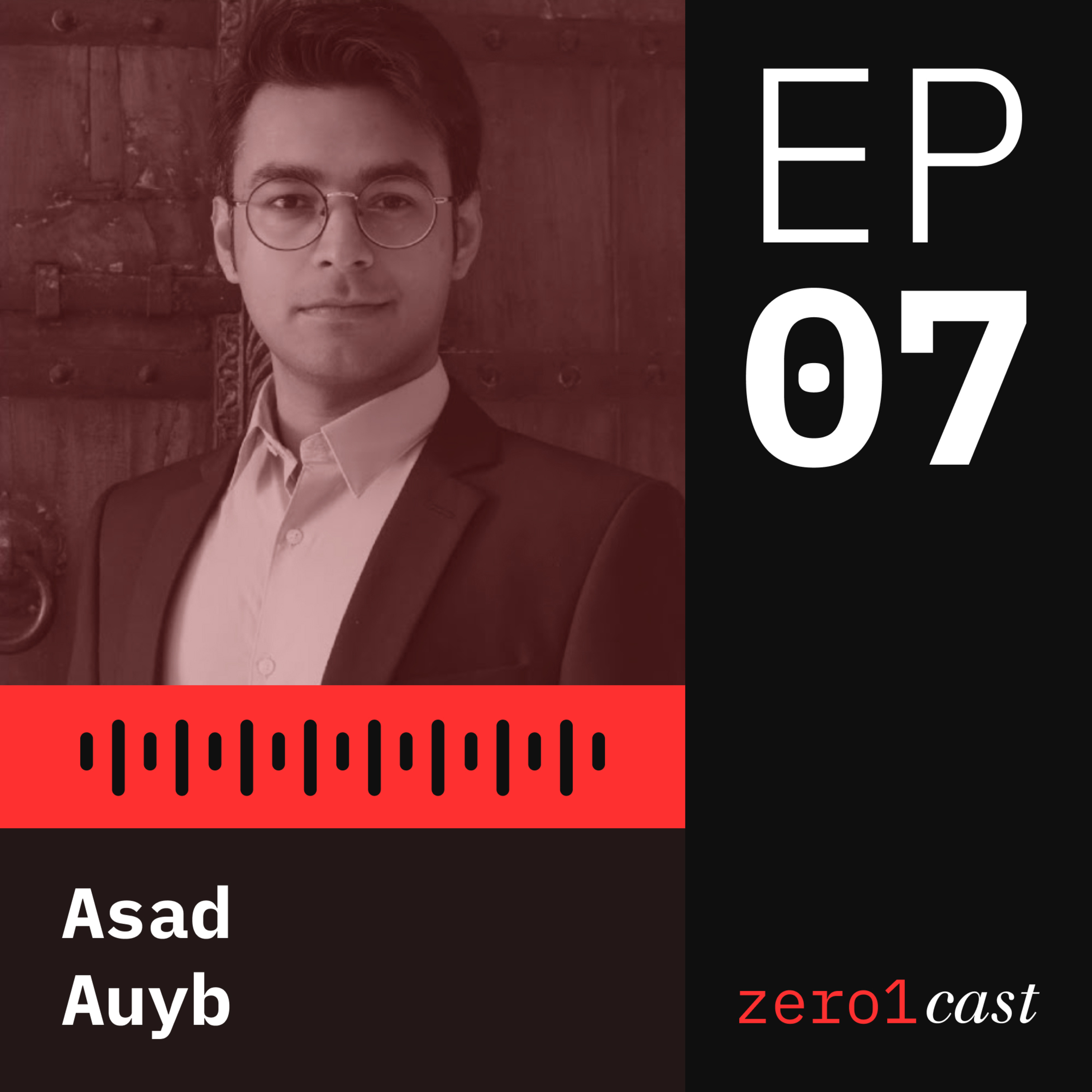
#07 Asad Ayub | Amsterdam AI Film Festival, Creativity, Music and many more
83m 8s
The AI Film Festival was established to finance indigenous projects and create a fair platform for filmmakers. Discussions during the festival cover topics like the future of jobs and creativity. The Madhatter Foundation focuses on industry 4.0 education and technology, offering AI filmmaking services and training for indigenous tribes. The foundation aims to simplify complex concepts like blockchain and AI for people of all ages. Additionally, collaborations with corporations help subsidize free training for indigenous tribes, promoting social good and technological advancement.
Transcription
13569 Words, 71978 Characters
Yeah, so AI Film Festival was born out of the necessity to finance our indigenous projects that do not make money. It was born out of the need to make a film festival that was not controlled by one of the top five competitors in this field so that all five of them have a level playing field to perform it. And it was born out of the necessity to because our promise is not just a film festival. We're not just a film festival when you buy our ticket or when you come to our film festival, then you leave a filmmaker. That's the promise. Hello, welcome to one more episode of Zero One Cast. Today we had Assad Ayyub. He is the organizer of the Amsterdam AI Film Festival which is happening in 21 of June in Amsterdam. Me and Mauricio were going to be there. I will also be part of one of the discussions and the festival will be very interesting. We are looking forward to it. But we are not here just talking about the festival. We will talk about the future of jobs, we talk about creativity, many other things. So yeah, Mauricio, what's your take on it? Hello, yeah, today's episode was really interesting. He's a super guy focused on like opening companies and doing social good and helping like indigenous tribes and people that are in need. So I think there's a lot of interesting points on the today's talk that I really can make us think a lot. And he has a quite interesting take on the future, so yeah, hope you all like it. All right, so let's go to the episode. Place where humans create a machine stream. Today we have with us, Asad Yub is one of the organizers of the Amsterdam AI Film Festival. So yeah, also by pronunciation incorrectly. So yeah, we are here for a chat, not just about the festival, but about creativity, about filmmaking, about the job market and many other things which are relevant to everything that's happening now. So Asad, would you first please give a short intro about yourself for people who are listening or watching to know a bit more? Yes, of course. So yeah, hi, my name is Asad. I'm one of the co-founders of the AI Film Festival Amsterdam. And this is basically a project of the Manhattan Foundation, which is the nonprofit that is hosting the AI Film Fest. Before I started doing AI Films, how I got into this was because I was a musician. We were a group of musicians looking to make music videos to get more engagement. And basically, yeah, so our heart is really in the sound and the sound design. And that's how we got into AI Films, just making music videos and then just fell down a rabbit hole from there. So yeah, that's a quick introduction about myself. That's very interesting. Me and Marisa, we are also a musician. And the first AI film I did was also a music video from my band and was totally experimental. And that also drags me into the rabbit hole. So I think we are a similar story here. And I'll just drop a question which I drop for everyone on this podcast, which is before we talk about AI talk a little bit about the Asad before AI. So how was your life, how was your routine, what you were doing or even your career before AI and how did it change after AI? Well, that's an interesting question. So the story starts in 2011. I'm doing my bachelors. I'm in my second year. I start my first business. It is a social enterprise, a business which has a social mission and a purpose. It was to revive the sort of at the time in Pakistan. There were quite a few things that were wrong that were going on. Like for instance, there was a foreign Afghanistan. There was a lot of terrorism. There was a dengue fever, thanks to climate change that had found our way to our country for the first time, which we had never sort of experienced. We had a lot of dis in Brazil. It's problematic. Indeed, it's the same story. It was a Sri Lankan airplane where one passenger came and then it became an epidemic thanks to the changing climate. So it was around that time that I was at home and there was some kind of ethnic clash going on between my ethnicity, which is originally Indian and another ethnicity from Pakistan. And people were getting killed in the street for looking like me. And that's when I came up with sort of this idea that we need to have a media force in Pakistan where something positive is set on the news because there was a map of Pakistan with dengue mosquitoes flying on the left. US drones flying on the right, bombing the border and terrorists, quote-unquote, violating sovereignty, national sovereignty. So yeah, this is 2008, 2011. It's a crazy time and that was my first enterprise. And ever since then, I have been involved in the field of a social enterprise. And specifically, after two years of setting up my own business, we landed a grant. For 350,000 euros from the Mastercard Foundation in 2013 to run a center for social innovation in Pakistan, the first social enterprise incubator. So an incubator for business that are for social good. But also profitable, so not like NGOs. So yeah, that's a bit my story from 2013 to 2017. I was a partner for the social innovation lab. After that, I came for my masters because when I started the social innovation lab, I hadn't even graduated from my bachelor's, so they didn't give me the director position. Because that we partnered with my university and that those were the rules. So I came to get a master's from Germany for that reason. In 2017, I spent the last seven, six, seven years in Germany and arrived here last summer. After spending a long time working again with social enterprises, social enterprise incubators funded by the European Union. So yeah, that's my story before. And this is, I would like to call my professional sort of trajectory. On the side, I've always had some consulting businesses going on. So in Germany, we had a consulting business, me and a bunch of friends. It was me and three brothers. We started a consultancy forum where they were the tech people and I was the UX UI kind of guy and the idea guy and the design thinking guy. So I've always been right next to technology. And also for artistic reasons and stuff because I was a musician and I used to use these knobs and faders and everything. I tried to get into, I think, in 2018, sorry, in 2020, in February, we were about to prototype something from China, which was like gloves where you can use hand gestures instead of knobs and faders. And other expressive things like fire, you bring fire close to it and the volume increases and decreases or light or wind or plant vital. So that's what I was working on with this one device that is sort of like it translates the elements of the wind and sunlight and humidity into music, into, you know, into control of individual tracks of sense. The heartbeat of a human was going to be the drumbeat of the whole thing and it was sort of a crazy thing that I learned a lot of IOT knowledge for how to use chips to sort of make all of these things possible. But I always dependent on someone who had coding knowledge to bring my ideas to life. And before that, when I had the magazine, my very first business, I tried to start a comic book division which didn't take off. I had things to go off like the documentary studio, etc, etc. But the comic book studio did not take off. And that was something of a passion project of mine. And all these years later, just like I've always needed a coder, I've always needed an illustrator. And now, thanks to all of these technologies, me as a writer, I can storyboard my entire film myself, me as an aspiring animator or filmmaker, can actually bring my concept to somewhat to life. And that is extremely exciting. So, yeah, I always wanted to make films when I was younger and it was always a goal of mine. I thought, first music, then I learned how to draw and then I animated myself, Disney style and draw each and every and paint each and every background. But then this came along and, you know, everything changed. So, yeah, that's my story. Thank you for this story. It's very interesting. Many things, a lot of experience, I think you had in many different fields as well. And since you said that you have this potential to bring your ideas to life, so do you think that AI enhances or replaces human creativity and for you, what are the potential pros and cons of creating with AI? Well, I think my story in itself has the biggest con in it. So, for instance, sorry, the biggest pro in it, which is that I had a 15 year timeline from the point where I, let's say, in 2020 or something, a 10, 15 year timeline, in which I had five year goals and stuff, where I was going to learn how to animate myself, because I wanted to work on my passion projects. Much like yourself for, you know, where you got those paintings of the indigenous people painted yourself and you had this project lying in the background. What is it called? You know the one, right? Green hacker or something? Yes, green hacker. I was not sure if we're talking about zero one senior, the green hacker. I was talking about that. So, indeed, so it was the green hackers project. So, it was exactly like that. So, I had a lot of these ideas, my plan was, and this is like 10 years ago or 15 years ago. This is like 2011, and I have a little division that didn't work out in the whole sort of my first business. And this was my passion project. I wanted to make a graphic novel, not because I was in love with graphic novels, but because it was going to be my storyboard for eventually what would be my film. And over the years, say, let's say 10 years later, I got really into sort of, you know, over the next 10 years, I got into sound design, really crazy into sound design and music. And yeah, so I think I was on my way and on my journey. And the next step was to learn how to animate. Now, of course, you know, in this story, there's a bittersweet kind of element there too. Because here, where I would have learned to actually draw something, which is a skill, now probably I wouldn't ever need to, unless in a sort of, let's say, frivolous way. Like, it's just purely for luxury. It has no other value. It has, it's only for my own joy. It's like cycling towards the sunset. And the evening, you're not getting chores done. You're not going to work. So that's what the role of creativity is going to be. It's going to be therapeutic. It's going to be for oneself. But will you be able to sell these skills? I don't know. I mean, I guess I'll put it this way. Why would a company pay 50,000 euros a year for a low entry level graphic designer? When they can get the same or equal quality in ten year, in a ten year subscription. So this is this basic capitalism. It's not, it's not going to work. So anyway, I'm not, I'm not in a sort of a doomer kind of a place because in my story, you can also see the cause of the pros of this, which is it expedited my timeline. So my timeline of five, ten years of first learning in a very slow way, how to animate things, etc, etc. The amount of time and money it would have taken me to finally prove to people my direction skills or my ability to direct or tell a story because that's the point of all of this. It's to do the cave paintings that are ancestors did its storytelling is the oldest possible way of entertainment. And yes, so I think in when you look at it as storytelling and not film or a particular career, then yes, it's a win for humanity. But when you look at say, I like giving this example. So my sister did graphic design and she did it for five years. She has yet to graduate. And I really wonder, I mean, with how good natural language processing has gotten, how good Dali too has already gotten and with Sora. So if you only need natural language to code, if you only need natural language to make videos, if you only need natural language to make images, then yeah, what value do those skills of Photoshop really bring us anymore? Yes, I think it always has its two sides for both things. But from the other side, this skills like Photoshop and all the illustrative skills and everything is really like, it can be a commodity, something that you just want because it's a pleasure for you. But it can also be like the way you generate new things, you create new things, you know what I mean, like you do your work using AI, but then you create new art and new expressions using this new, this old techniques, let's call it. And for me, the biggest problem about like the AI part of being simple language communication to be the way to operate is it's completely flawed like language and like alphabet is incredibly limited. That's why we created art and music and all this kind of things to express ourselves as better than just with words, you know what I mean? Go beyond the language, right? Yeah, yeah, so I think that's a quite interesting point because I think what type of language communication we need to develop or elevate to like better operate AI just with language, you know what I mean? But I think it's a really interesting point like to remove the barriers of like have to learn a skill to build something. So yeah, I'm 100% with you on that. I'd like to talk a little bit about the entrepreneur side of your career, especially with the Madhater and the AI Film Festival, which we are a board member of both companies, especially curious about Madhater and like what the company can do in terms of plans for the future. And what is the experience should be part of a company like that? Yeah, for sure. So Madhater Foundation is a foundation that exists to further industry 4.0 education, technology, sorry, education regarding industry 4.0, then you would ask, what is industry 4.0? Because it's kind of like a buzz word. So industry 4.0 was a term coined by the head of the World Economic Forum. I think his name is Klaus Schwab. Sorry, but yeah, I think it is definitely Klaus Schwab. So yeah, the head of the World Economic Forum wrote a book, I think a couple of years ago, maybe six years ago, something like this. In which he said that we have a new paradigm, a new kind of industrial revolution that's going on. And in that industrial revolution, he included certain certain technologies that he said we're going to sort of lead the way to the future. And of course it had data and all of these things in it, but it also had 3D printing, AR, VR, IoT, blockchain, AI, so drones, etc. So yeah, thanks to my consulting experience in Germany and working for incubators, which basically means you help 20 businesses get off the ground in six months. So you get a lot of experience and a lot of industries and your job is to help them make their business successful. So yeah, and just for those who don't know what incubators are like Sam Altman, the CEO of OpenAI, he was the president of Y Combinator and incubator before he became like OpenAI CEO. So yeah, there is definitely some value there to be around these enterprise nebulous where stars are being born. So you get exposed to a lot of these crazy ideas and then being around universities, you get exposed to philosophers and writers, and yeah, so I guess I've been blessed in that way. Oh, sorry, I wasn't able to answer your question about Matt Hatter. So, of course, so Matt Hatter Foundation is at its core. So that's our mission, that's our vision industry 4.0. There are three things that we focus on. One of them is blockchain, which blockchain technology is something that in a previous life in Germany, I've written an encyclopedia on this, something like 150 words or something. It's linked in the Matt Hatter Foundation half of the book is there. So if you click MattHatter.technology and just, you know, I'm sure you'll figure out where to find it. But yeah, so just and that's not to like flex or anything, but just to show you the amount of knowledge that you have to know about a field to write about it in with simplicity as well. And the reason why you will find all of the material that comes from Matt Hatter to be very almost like a high school science book or something, you know, that's how the visuals are. It's very simple. There's a lot of negative space. The whole point is not to waste any one's time. And the point is to explain all of these concepts from blockchain, from IoT, from AI, to people from the ages of 8 to 80. Like they should all get it, you know, short of all like short of memory issues or something like 8 to 80. It should be accessible. That's what people leave. And in that our biggest focus and our biggest project right now, because the IoT stuff and the blockchain stuff are things that I brought here from previous projects that I was working on knowledge that was brought to the organization. But as far as execution is concerned, currently we are 100% focused on AI filmmaking and with our biggest festival being AI Film Festival. And what we do is we offer AI Film Studio Services. So we are essentially an AI Film Studio. We have a couple of sound people. We have a very talented team of filmmakers and people with various kinds of sort of artistic backgrounds. And what we do is corporations and companies come to us and in return in an exchange for working with us, they help cross subsidize. So their trainings help pay for trainings that we conduct for free in parallel. So for every corporate, we will conduct a parallel training with an indigenous tribe. So green hackers exactly like that. It's very on point, very on brand. And the thing is that I did my masters in anthropology and I spent a long time with the Kalasha tribe in the Hindu Kush region. It's one of the last Hindu Aryan tribes to survive in that region. And it's 3,000 people who believe in a religion older than Hinduism, older than the Greek religion. They live high up in the mountain. And there's a rounded by Afghanistan and Pakistan, yet they brew their own wine. They're women are free to marry whoever they want. Whereas in the south, if you go to where it's India, then, you know, like, down south in the plains, you know, people commit honor killings, you know, you go down south towards the plain. And I'm referring to all of it as historic India because Pakistan used to be India. So by that, I mean planes versus mountain people, not countries as they exist today. So in the planes, you have honor killing and things like that. You have acid, their husbands throw acids on their wives because they suspect them of cheating. And that is the documentary that Pakistan's first Oscar winner, the first Oscar winning documentary of Pakistan was exactly on about that, the acid victims of Lahore by a Pakistani filmmaker. So anyway, my point is that for me, it's really incredible to have this tribe survive and to observe and study their social structures. And also there's something very ancient about this knowledge that seems to have been passed down, unbroken, thanks to how high the mountains are and how rough the terrain is and how the mountain passes close for six months. So they remain preserved in a snow globe and time. And as I lived there, I realized that all of these children that seem to be roaming around in that valley, they no longer respect the stories of their elders, which I listened to with so much fascination. And anthropologists and sociologists from Greece and France all spend extended time here, people write papers about it and yet the children, all that they find fascinating is the TikTok and Instagram videos that they could see or in that time, there was no cell phone connection. So at that time it was Bollywood, you know, and Bollywood for those who don't know the way I refer to it is hyper commercialized. There are some good parts of Bollywood as well. Amar Khan is a very good example. He is known, notable, established and mainstream. That is high art. But everything else seems to be hyper commercialized with very little originality and focus on being high art in any way. So yeah, there is this flashiness and this commercialization, this bling all in your face sort of, and it's not just Bollywood, it's also the same thing with Hollywood, the question that it's the same thing with Instagram. The point is they're seeing something on their screens, no hate intended to any one of these individuals sort of places I'm not saying they're the problem again. What I'm trying to say is the things that these indigenous kids children see on their phones, it inspires them. It's so flashy, it's so blingy that it makes them disrespect their elders and their elder stories and they're not interested. It doesn't catch their attention anymore. So slowly the intangible heritage of the elders that has passed down unbroken, this is the generation where the chain breaks. And so what we want to do at the Mad Hatter Foundation is use their cell phones of these tribes to tell their own stories to them using their own shamans as first directors to their own stories where we are assistant directors to them. And instead of us being like, hey, look at this refugee, look at this poor refugee, look at their sad story, I'm a white person telling you this sad story of this refugee. Instead of that, it's going to be the refugee telling their own story themselves. And that's what we're trying to enable and empower them to do. Again, no hatred to white people is just that generally these industries are located in those areas and that's where people respect intangible heritage and stuff and these kinds of stories. So that's us in a nutshell. Well, man, that's that's incredible story. I think every project focus on like to good has so much beauty and power behind it like naturally. So yeah, congrats really, really admirable and really interesting. And the idea, I think it's great, you know, everybody complaining about technology, you just get the technology and power the people correctly and they will do good, you know, they will create something that is new and still represented their culture and everything. So yeah, amazing, amazing. Following a little bit on that note, you also are the co-founder of the conceptualizers project, right? This is what I was referring to in Germany, the consultancy that I co-founded, where I tried to make the music instruments, the expressive music instruments that are no longer knobs and faders. So that's what I attempted there. I tried to make a meditation device there, which was, which were both hardware products, a meditation device that isn't your cell phone, that is sort of like a, with the black and white screen, which is mostly like a sonic journey and it's, it's, it's, it's generative. You know, so before gender, it's kind of like, how do you call it, granular synthesis and you use all these other techniques to sort of achieve this ambient meditative kind of thing. And as you meditate every day, so it was also like a smart watch, it would, it would keep a check on how you're breathing and how your heart rate is relaxed. And if you would use it to meditate and it would give you these soundscapes, then you get points in this game of gamified version of meditation, where you unlock sound, where you unlock more sensors and more things inside this device, where you, when you bring fire next to it, now that you've meditated for a month, now you've unlocked the fire thing and now whatever soundscape is playing in it to meditate, that you're meditating to, it will respond to sound, it will respond to light, or you unlock different features in it, now you've unlocked the granular synthesizer, so it was sort of like, but without the complicated terms, you know, letting everyone sort of trip themselves out on, on music and just, you know, tweak some things, but still make it sound nice without, you know, giving, yeah. So this was conceptualizers and we did a couple of blockchain projects, so conceptualizers was blockchain and IOT and ESG, so ESG is, is the kind of stuff that I did, you know, with the sustainability and social enterprise stuff, so, so yeah. For me, I've been in the field of social enterprise for since 2011, so that stuff is like, on the back of my hands, and what happened was that in Pakistan, a poor country, you need to concept like social enterprise, where you have a lot of these problems. What started happening in Germany, interestingly, when I showed up was that social enterprise was a brand new concept in Germany, when I showed up, because just as new as it was in Pakistan in 2009, in 2017, because the social structure, the graph of the pyramid, there are too many people on the pension, so the future generations, as they get older, they won't get the same pension or the lifestyle as the ones before them, because the pyramid is wrong. Like in our countries, I don't know, like in the south, in the global south, Brazil, Africa, South Asia, you have these experiments where the youngest people are more than 50% of the population. So the German social welfare state was on the verge of collapse or is, and their solution for this was to import the idea of social enterprise quietly, so that they can sort of privatize some of these social services, which previously the state was providing with tax money. So that's how I became involved in that, but it's interesting and old, but to work in a developed country in the developing sector, or in the social sector is a very different experience, and it's not exactly why I got into it. Like I didn't get into it for bureaucracy, I got into it for the tribes, for the people of being in the villages, smelling the cow dung, you know, all the good stuff. Really nice. I don't know if you know, or also if people know, but the green hackers also start as a blockchain project, an NFT project when I was working for a bank list down as well. And we were also co-creating it with some tribes of indigenous in Brazil, so they are also helping with the drawings of the NFTs, and also we even shot some short documentary inside this, it's called FUNIO tribe in Brazil. And because inside the tribe, they had like a filmmaking crew, I three guys, and I had a friend that connect me to them, so they like, we shot this short film of this, yeah, so then the NFT project in the end didn't have, but our idea was to make some profits, also donate like the biggest part of it to the indigenous communities, like this like OMG, so they would distribute the money for the people who really need it because we don't know. Right, but it was important for us to co-create as well with them, also with the story of the project, and yeah, but I hope that bring this in some way back, but it was a very interesting project. And talking about this, I would like to talk about skills, so how should I, just like everything about community as well, the social projects. And we also soon are going to open this online courses in Brazil, so we also want to teach filmmaking for our kind of like in Portuguese as well, and create content in Portuguese, but basically educational content about a generative arts in general, not just about filmmaking, but for South America. So in Portuguese in Spanish probably that that's something we are currently working on already and soon we'll have like first first stuff. And yeah, but our life talk about skills, so why, like how should creative education adapt this like rise of AI? I think we are on the meat of this big shape, and I think the skills that you need will also change even like before we didn't have social media, you know, you have social media managers, social community strategy, et cetera, et cetera. And we know this AI also bring a lot of new stuff, so what skills will be on your opinion, what skills will be the most valuable for the future of like artists and creators? Adaptability, lifelong learning, I'm a social science major, I can make you a micro control or control smartwatch, you know, like there is no limitation. The beautiful thing about this is that Chad GDP and all of these new technologies can really like when YouTube came, all of us have all some amount of to tuition fee to YouTube really, you know, the ads, they're like that's okay, you can take my ads, you can take my subscription, but we really owe almost a university to tuition fee amount to what we learn on YouTube. You know what I'm trying to say, so YouTube is a big open university, you can learn at least the basics about anything you want, of course, you need to go deeper at some point, but like the basics, you can learn, it's like I see it as like a free open university, I took like many classes of like Yale or Harvard, like free open class recorded on my living room in Brazil, and I was like, how cool is that? I don't want to be able to be there, but there are some classes here where I can learn and yet, but a lot of people don't realize that YouTube's like a brief free public punk university in some way. For sure, and now with Chad GDP, this is also going to sort of the base at which we can learn new things, it's exponentially increased. And we have to sort of, it's a bit like jazz, we have to play it by the ear, and we have to improvise as we go along, because now we're an uncharted territory, because I don't think you and I can fully fathom the speed at which this thing that we're interacting with casually processes and things. I don't think any attempts that we make to sort of, and what I mean to say here is that using this tool that is extremely fast, extremely adaptive, can help you in any way, this can be the ultimate tutor. So when I say lifelong learning, YouTube was just like in the previous iteration of the internet. This new iteration of the internet has this assistant co-pilot coach, which can basically teach you to make whatever you want, and so your wireless of dreams and fantasies can come true. The craziest thing that you ever wanted to do and study, you can now just do in your free time, or learn in your free time, or come close to it somehow. And before the world of social media, for instance, people like you and me, us conversing with each other, this was a bit harder, right? I mean, a couple of guys in Prague, a couple of guys in Amsterdam, very locally connected, how would we get in touch with each other before the internet or before social media? How would we find each other, like us people who have common interests? So yeah, in that way, I think it's going to completely revolutionize the way we do pretty much everything, the way websites did, and everyone has a website now. So you will never have a website foundation or a website company, and similarly everyone has an app now, so you can't be a website foundation or app company or app.com, because that makes no sense. Similarly, AI, the way I see it is going to be exactly like that. And there are some very good academic charts about academic papers that are written over time, and it predicts this, because it's the same kind of graphical pattern for apps and websites. So basically, everyone who's trying to make their name right now saying, oh, AI, AI, this AI, that world's first AI, AI, AI, soon after Microsoft and Apple and Google get together and get their own eyes, everything is going to have AI, the word AI is going to be meaningless, because everything has it, you know, just the way everything has algorithms, you know, and algorithms are in everything. So apps every, every, everyone has a website. So yeah, I think just the word AI and being associated like this, this, this kind of hype. Of course, it's justified. It's going to transform things and everything, but we need, even, even people who are, who are phrasing themselves as, hey, I'm going to teach you how to be an AI filmmaker. We also need to think a few steps in the future, you know, what, what happens in this world, where what's app allows people to make the same AI films that we're making now? What happens in this world when people have it this accessible? Every Instagram post has a built-in runway agent to 11 labs, whatever, and it's even faster, even better than what are we. So yeah, some sort of, so yeah, again, going back to that, we need to be extremely adaptive, we need to improvise, it's a bit like jazz, you got to switch up the tone when you hear the drummer play faster, you know, something like that. So yeah, we'll have to see. And the opportunity is incredible to learn anything that you want, like never before. Back when I was programming these microchip and these controllers for these little device experiments, I needed another human who needed who knew coding in order to actually get what I wanted, you know, as a UX or idea person. I needed, I was entirely dependent on someone now with chat GDP. I don't need any of those people anymore. I can actually ask chat GDP to write that code for me and a wallah. As a person with a lot of ideas, this has really empowered me basically is what I'm saying. And with a backlog of interesting ideas that I would have loved to try it, but couldn't because I didn't know programming, I couldn't draw. Same problem I have always had too many ideas and always hard to find developer to code that it's still not there, but I think we are something between I can already do some basic stuff by myself, but I really dream of when I would just design it and I would just explain it how it works. This is how it works. I can connect some prototypes there, like when you click here, you go there, but I would just explain like I would explain to a developer. This is the logic, this is how it works. And then it will and then the same way there will be a bug in an error, you just ask to fix it, it will, okay, this here, I fix it. But I think we will see even more and more and more ideas and stuff, but I will talk a little about this in the next questions further. Let's talk a bit about the Amsterdam AI Film Festival. So first, why did you decide to create it in the first place and how is the audience reception and the general public reception to the festival? Well, yeah, the first question was, how did we decide to make the AI Film Festival? Yes, so basically last July, the original idea was to make the world's first AI museum where we, yeah, I'm not going to go into more detail because, you know, you can still go ahead with that. The idea started off with an AI museum where we have, okay, I'll give you a little bit, all the way from hardware to software to everything sort of just lying there because we kind of take for granted how much goes into exactly what we are using on this final product. So how much like from the silicone from which is the most common substance found on earth, the amount of processing power and everything. So I wanted to make like a miniature version of all the way from ASMR chips, starting with sand, going with these lithography things, all the way to Nvidia, all the way to Amazon, work services, all the way. So you can just visualize it and infrastructure and the hardware that that enabled it and then right at the end of the installation in the museum where in the rooms or stuff, you have like a person on a cell phone or in front of a television, you know, and it's all one continuous sort of like one long corridor where you experience the entire thing and then it really makes you realize, holy, you know, like wow. So yeah, the idea started with an AI museum. I was already discussing it with my previous co-founders last summer in June, July and from that it kind of evolved, evolved, evolved into AI Film Festival. The reason why we went for AI Film Festival, the story is a bit like the Matrix, you know, the Wachowski, the Wachowski's at the time made the Matrix as a proof of concept so that their financier would give them money for the real project that they wanted to make. So Matrix was the side project to prove that they could make the real project that had money. So AI Film Fest Amsterdam is our Matrix. It might take off and do way better than what we originally set out to do, which is the Indigenous Filmmaking project. To find money for that is much harder and that's more of a passion project, that's more of a charitable project. In order to finance the operations of that project, we needed something that allowed us to leverage all the players in this industry, so all the tech players that we have in this industry and also bring together all the academics in this industry and have a place because we saw that Runway had a Film Festival. If it's Runway Film Festival, then Peacock will never participate on a panel there or Peacock will never be showcased there or work from Peacock and why not. So Runway Film Festival existed, but it was mostly screening event and maybe one panel discussion event separately from everything else, but mostly screening. Other events that I saw around the world including AI Film Festival and stuff, again mostly screening. So we realized that there was a something missing in the world which is a place right in the middle of Dubai and New York, right in the middle where we can combine all the people from the east and all the people from the west and have a true international annual Film Festival that has panel discussions where people talk. We know where we hear professors and thought leaders and industry professionals and techy people all come together and artists raising these questions and saying you are taking my jobs away and us having a lively debate around this, right? Like of course this is what democracy and all of this is about and if it affects all of us, we all deserve to ask these questions. We are all stakeholders in the shared future. This technology is too big for any company to call it just their own and that's the charger open AI started off with. So and like open meaning open source, I'm just saying that that's what we believe in now. And yeah, so AI Film Festival was born out of the necessity to finance our indigenous projects that do not make money. It was born out of the need to make a film festival that was not controlled by one of the top five competitors in this field so that all five of them have a level playing field to perform at. And it was born out of the necessity to because our promise is not just a film festival, we're not just a film festival. When you buy our ticket or when you come to our film festival, then you leave a filmmaker. That's the promise. You come in, we give you the subscriptions, we give you the master classes. During the master class, you will animate your first few seconds of generative AI visuals. And if you have enough of those together and stitch together some music, there you have your very first iteration of an AI music video. There it is. Make three of those four second clips in our master class, put it up on our social media, put it up on your social media. Tag us and we will send you free credits for Leonardo dot AI and Eden dot art and unstable diffusion or civ it. So yeah, that's the plan. The plan is to get people in. The idea is our slogan is democratizing filmmaking. And in this, we have faced some resistance. Of course, there are some people who like thinking that they're specialists who like thinking that they're. They're special and they deserve media attention and all of this just because they are film AI filmmakers and that's very special. It's the first time in the world and all of this and every news media agencies are talking to me, I am the original filmmaker. I am the one who are you. Everyone can be a filmmaker. You can promise everyone to be a filmmaker after that. Not everyone is an artist, you know. So there are people who I meet in my interactions who are kind of threatened. Like I feel some of the people that I interact with are genuinely threatened by how everyone can now express themselves creatively and they find their own position or identity under question. And this is a very strong sort of thing to question, you know, like if you spend 30 years, you know, in the stock market and then Bitcoin shows up, then you of course you hate Bitcoin because you don't know. I remember a similar story with the photography when alver's smartphone starts to have a camera and then Instagram. I use it on the very beginning, right? And then you basically take a very bad photo and then you put the filter, it looks a bit better. But then like everyone was kind of telling that they are a photographer, right? And I think it's and then I think also photographers were very uncomfortable with that because their study so much and they know so much the techniques and people are just clicking with their phones, putting a filter and calling themselves a photographer, right? I think it's a bit similar story, but again, like having the brush doesn't make you a painter, right? Having the camera doesn't make you a photographer and knowing how to animate sequences doesn't make you a filmmaker. True, absolutely true. I was going to observe that I've seen people with extremely expensive equipment, extremely expensive cameras, huge musical setups. I see their output and what they make in terms of the music or whatever doesn't resonate with me and I feel like they wasted their money. All I've made five albums, 49 tracks on Spotify, the total amount of money that I spent on making those tracks, the equipment that I used for it was 80 euros and an Ableton trial subscription that I never got cracked version of or a full version of. I just stayed with the 8 track restriction and I ran with it and I've got 50 tracks now. So the point is that and that was my entire investment that got me to my goal. So yeah, again, with your point, it doesn't matter how good your camera is, but I've also seen something funny. So I've also seen people that I've known who identified themselves as photographers, who have a DSLR at home, it's really good, but still choose, you know, because of the screen, because of how good the screen of the phone is, how the screen is just much better than a DSLR screen. So the end result that they see in the moment in their phone is just so much better and rewarding and satisfying that almost the DSLR doesn't need to be taken out anymore, it doesn't give the same immediate satisfaction. And that might be the case with this technology as well, that we get a bit, I mean, people will complain at first, but then, you know, if Adobe has AI, then pretty much everything will have AI in it, right? Like some of these foundational software is just need to incorporate it, and there it is. It's mass adoption. It's like, it's happening already, right? There will be Sora and runway inside Premiere. But yeah, it's an interesting time to be alive, for sure. But yeah, coming back to your question, AI phone fest, I hope I answered your question. Is there anything else? Yeah, we can talk a bit more about later, but it's nice this, I think it's nice this learning aspect and the workshops and the talks and discussions, most organizing this Film Festival in Prague together here with the Czech Association of AI. There's some local foundation and also some marketing agency here, Caledale, but I also bring some discussions and also, and also for the jury, I want to have people who know about traditional cinema, but people who also know about how hard and how to create films with AI and all the mutations we have with consistency and all of this. I don't even have this both feels for the judgment as well of the films and I also like to try to bring transparency, even if we could put publicly some notes of the, so people can see how the films were evaluated. Like things that we are, me is like part of this community miss a bit on the other festivals, I will try to fix on this one which I have some power to influence and organize. Yeah, speaking of hearing everything that you said, I did forget to mention, I think one or two things, so we have some crazy things that we want to do at the festival as well. So as part of the Mad Hatter Foundation, we have Alex who has 100, who's part of our team, he's an influencer on Instagram as well. He blew up recently, and he uses civet AI in his workflow. For those who aren't familiar, civet AI is just basically like, or the kind of stuff the videos that I'm talking about is when you take a human video and then you transpose something AI or other like creative elements and put it on to it. And it's not purely generative in the sense that we have text that turn into images that turn into moving images, rather it starts with humans and then the AI comes into picture, you know, it starts with a real video. So what we're doing is we're having a performance on the stage, which is going to be the dancer dancing in front of the screen and behind the screen. So we're going to have their own sort of AI sort of avatar dancing in synchrony with them. So yeah, it's something that I don't think many people have done at film festivals, it also adds a performance element to the whole thing. We have two performances like this that we're going to have one screening, one life performance. So yeah, it's exciting. And there will be also this pop-up on the city or something like that. Ah, yes. So on the 21st of June, we have our main event at the I Film Museum, which is where, which is what I was referring to, where we're going to have the performance. It is the biggest cinema in one of the most beautiful buildings in Amsterdam. It is like the Sydney Opera House of Amsterdam, or the Oslo Opera House of Amsterdam. If you're familiar, it's absolutely beautiful, white, cleaning building and architectural marvel. You can see the whole city skyline and the IJ River. And we'll get to see the sunset that particular day. We have the space booked out. So even up to 11 a.m. at night. So even after the festival is over, the plan is to just hang out right outside. We're going to have some food. We're going to have some drinks. We're paying 50 euros per person for like food and drinks. It's criminal. So please show up. It's really going to be worth your money. And we can't give you more than 50 euros discount for that reason. So please don't hate us. But you're going to be eating all of that. And you're going to get 300 Euros of subscription. So please show up, especially if you're interested in the I Film Community. We have something interesting that you mentioned the pop up. It's actually the day one of the festival. Now it's going to happen at the world's first AI Art Gallery. This is how they brand themselves. It's called Dead End Art Gallery. And basically they have physical gallery exhibits of AI Art on canvas and on different materials. So we're going to have Shikids and Airhead one and two screen there and Shikids will answer some questions about what it is like to use Sora. So yeah, that's just a little bit. And just a little bit more. We have some people in the civic AI, which is one of our sponsors there. They're a creators program who has made 20, a 20 volume graphic novel that was generated, you know, like a 20 volume, like a massive physical piece of work that we're going to have there, like either at the gallery or on the I Film Museum. So some interesting, very innovative kind of things. Yeah, really cool. You're looking forward. Yeah, yeah. Make sure some food is vegan for me. Yeah, man, I think this technological part of innovation that you're bringing with both the AI and all the IoT things you work together is super interesting. So I'd like to touch a little bit more of that, both in filmmaking and in music and audio production. So like what you see as in the future to be the, the enabling power of AI to be on these areas. Like what new things that you can imagine that could be done, that could not be done before on filmmaking and on music. And especially in the area of music and audio, like how you think AI can really help the musician to create things instead of create things for him, like the actual tools that we have. I'm trying to remember exactly the name of the device I'm referring to, but Google, I think three, three, four years ago, made this device that they released from their music lab. But it was, I think it's called an Encent or something. Let me just, anyway, I forget the name, but it was, it was a screen where you had a touchscreen and it could go to four corners of the screen. And if it went to Encent or something, I think that's what it's called. I'm unsure, but please correct me if I'm mistaken. So it was AI powered and you could use your hand and go to the corners of the screen. And on this corner, it sounded like a violin. On this corner, it sounded like a pteramin. On this corner, it sounded like a suntor. And on this corner, it sounded like a synth. And it was the same note or the same melody playing, but the devices would change. And when you came to the center of two of those instruments, then you could hear a weird new instrument in between the two. So my answer is, I'm interested in the weird new in between instruments that we can now make with this crazy sound like Genie. And yeah, I mean, as musicians, we always enjoy new ways of warping sound. So what I'm most excited about doing is to prompt using text prompts, modular synthesis, for instance. And when you look at Ableton, then you have these crazy like modular synthesis, programming, nodes and stuff that you have to like effects going to this and that and then you have to connect everything in the latest Ableton. And it's almost like visual programming, but for you at the visual part, it is programming. And all of that can be said in language, to an extent. Make that higher, make the cut off there, add a side chain there, you know, side chain into the beat, add another track underneath, increase the octave, lower the octave for the other one. Add that, add supermassive rework, you know, like supermassive rework is great. No, no, the other one, you know, imagine, imagine if this is the, imagine if you were hearing like happening as you're seeing that. Yeah, just direct the computer like a studio producer that you like and engineer basically. And it saves me hours and I still get to hear the result. I love it. But then there's the part that is like audio or sooner and there as a musician, I would say I love the process of creating music. I love the process. For me, I don't care if I'm selling it or not because I never sold mine. I have like four followers for my music because I made it for myself. I just enjoyed the process of making it. It gave me something and I listened to it over and over and listening to it again does not compare to the joy of the first time when I, when I was in the process of recording it and when I could mess up one beat or one thing and then I had to play it all over again. Just to nail that, that entire like sequence because I don't, I don't use Ableton to lay my tracks. I actually set everything up and then recorded as a live performance for all of my tracks or at least like 90% of them. So in that moment when I would be performing it in all those imperfections and mistakes and everything that that process that back and forth pressing the wrong button, these mistakes and these there are hundreds if not thousands of micro choices we make as creators. It's the process, right? I think it's like even design, like design is the process, not the solution, not the final website. It's the whole process that you went through to get there and the idea is that when you change your mind and you're doing the like you take reference or you see something on the way and same with music you listen something, something comes to you. I think for me it's, I think in general is more about the process than the outcome, the motivation, the joy or the sublimation, the expression, all of this. But there I fear that we might lose something, see? So as a musician and of course you know like I'm not saying this as AI Film Festival or something, but you know as a musician you have a full song generated completely by AI. And then when I think about the future and of course this is like something that we'll all have to think about as we go forward. But when I think about the future I fear and of course it's not good to fear, but I foresee I guess that the next generations will, if they're lazy, then they might, there's a danger that they might lose the ecstasy and pure joy of just creation for the sake of creation. And you're not selling it when you make a director's cut just for yourself the one that you don't sell or you don't compromise on that. And all the micro decisions and the number of hours it takes and how tired of it that you are you don't want to see it anymore. And then you watch it a couple of weeks later or days later with fresh eyes or you listen to it with fresh ears and then like wow, it gives me goosebumps. And they're never going to get to experience that journey and they're always going to get results now they're never going to want to you know they won't need to. And that's what I fear that this this because for me that was the most the sweetest kind of ecstasy I've ever experienced. And it's the sort of thing that I can do for the rest of my life and just sort of the rest of my life. Yeah, but I think you don't I think you know also trying to make a I understand what you're saying but thinking about analog photography for example right like it's not it's like who does analog photography today. Just people really enjoy it artistically or right like you don't need to but you still have people who do that of course the minority most people take photo with your phone because. But like I also see this like I don't think there will be this total replacement in the same way with still have paintings on the walls and analog photography and normal film and other stuff. But yeah, I think who does analog photography today is just people who really enjoy it the process and the equipment the revelation process all of this right. And I think the music will be similar who will make music like you can go to some prompt spot five I will go to Spotify I want to start off doing a playlist for you like like they are already doing choosing the song by a description. They will make the whole songs in three seconds like or even you listen the first five they will be making the other 20 already so like it will be. And I like but yeah who will like make music is just people who really enjoy the process and the craft and the field of music the sound and all this. I mean like just picking up on what you say with Spotify a lot of artists and creators including Taylor Swift had a huge problem with how much they pay. Their artists and speaking of that musicians we are CDs and stuff used to sell for like twenty thirty euros or something for record CDs and the royalties that in the end per track sold or per user per person were huge for musicians. Now the musicians are getting sense on the dollar for the same tracks that they're making and what happened was that the industry just and the customers just decided to ignore them the artists in the middle. And so their profit margins declined very heavily and now what I see happening is even further like there is going to be very little money in being a commercial artist of visual or music form. I don't know because I mean I'm just thinking about it I worked for a marketing agency and when I walked down the halls of that marketing agency now in my memory 10 years ago I walked down the halls and I see the graphic design department and the 20 guys sitting there are the 20 people sitting there. And it's empty because all of that is a ten-year subscription now I walk past the copywriting and creative department and that's just a chat gtp subscription now and soon the accounting department will just be a super Google Open AI's new Google sheet or whatever open AI sheet. And that's it the accounting department's close to and if you've seen dev chat I don't know have you had a chance to see dev chat. So dev chat is basically you make lots of little chat gtp or like agents they all talk to each other you sign them rules you say you're the CTO you're the CEO you're the quality department you're the error checker and in the end they give you working code of a working game you it can make you flappy bird you give it a prompt and it's a whole company that will have lots of conversations amongst each other and have assets that they build including visuals and graphics and make you workable code. And there's something that I saw recently where you you can just I mean the point of me saying the dev chat thing is I foresee a future and I know it's a bold thing to say where you only have the board and a CEO nothing else. Everything else is handled by in a traditional tech company all the rules that are there everything else is a gtp or an agent that is a future we are we are going towards and it's not hypothetical this is six months old this chat dev thing. Okay so I don't know how we're going to solve these questions of what happens when the corporations decide that all these subscriptions means a mass layoff of all the intellectual class you know like the educated class this time the layoff is not coming from the blue collar or the miners or you know this time the the the the job losses are coming from the people with university degrees and that's the interesting part that's what's different so I don't know what will happen in the future but certainly on a positive note I can say that do I feel less joy when I see a prompt getting nailed like you know like when I really get it right because you can try a couple of times and not get it and when you're really trying to get into a new project and find a new aesthetic and you generate things lots of things experimenting seeing what other people make one of the things I love about gender to be eyes how many ideas I get and how it's so easy to borrow. You can go on anyone's prompt and remix it in most of these apps right there's a community it's open by design it's public everyone's supposed to share it I think this is revolutionary compared to what we had with copyrights and art galleries and these these all these middlemen who gave themselves importance in the process step aside the real first the hero of the show is the artist right that's the point and now I guess it'll be about prompt mastery and seeing that but the positive thing that I was saying was that is it do I experience less joy watching one of these software bring to life the thing that I wanted to envision does it get me does it give me the same kind of dopamine that I would get as making a film I would say yes because you and I are still here and we're still in some way yes it's very nice to see your I think that we are your mind like bringing to life and also when your art is really creative you have this stuff on your mind already and I think even when you see this famous film makers talking about their films it's like I have the film in my mind already I just need the money and the people to shoot it it was the whole film was already here the photography the colors the editing the pacing and I think well I when I just think it's this constant interact but I is really rewarding when you have an idea you go there and in 50 seconds if you're lucky maybe on the first prongs you can get it and say I did and the thing is most of the time say oh this is exactly what it's very similar what I had in mind but this is even better so then you take it from there right so this is like co creation process definitely definitely all right we are approaching the end so we have like two more more questions for you just look to finish I think you you said that you make some music videos so you also I film maker right so yeah how do you enjoy the process of creating it which kind of films you you create with AI and yeah can you tell a little bit about it yes there's there's a film called Amsterdam Jack it's on zero one sign you can look at it over there it's it's one of the films that I made of course it's not entered in the film festival or it doesn't have anything to do with it it's just it's just a passion project really one of the things that just like you said I always wanted to do it I always wanted to have a gritty film noir it's the stuff that I've grown up on Frank Miller summer I shampoo cowboy bebop the enemy you watch the stuff and it's it's it's just you know the music is a vital part of the whole story so like that's why I'm telling you about summer I shampoo and cowboy bebop and because these two enemies the storyline and every visual aspect in it in both of them has the genre of the music built into the story and the visuals so cowboy bebop is about bebop jazz with cowboy bounty hunters in space that is the whole prompt that we would give to make that and then a samurai shampoo is hip hop you know hip hop samurai fusion in feudal Japan you know so that's the prompt for that but hip hop is part of the whole story the entire editing and the entire visual aesthetic of that show so similarly my idea here was sort of you know taking inspiration from that and I wanted to keep it very hip hop kind of jazzy detective story of a sort of a guy who you know in his traditional 1950s you know some people might call it Chauvinist take or whatever why do the ladies not have any dialogues but it's just trying to stay true to a trope or to subgenre and it's a monologue it's it's what's going on inside a person's head how they're thinking how they approach the world and it's inspired by the fact that I was a very quiet child and I had an internal monologue I would you know there are videos of me standing like this in 1999 in France at a zoo and nine years old and I'm like you know like like an old man staring at the sea after he's lived his life so so anyway a monologue is something that always really appeal to me I also have an internal monologue I identify with the character when you know damsel and distress that's something that's something that I've always you know like I can't resist whatever the reason for that is but if ladies and trouble I like it's called a chivalry call it whatever you want but I'm going to step up twice as hard to sort of help it's just you know so yeah it has that in there and then also the femme fatale a very interesting concept which is a strong female lead that leads to the destruction of the hero because of his weakness whatever that weakness maybe so all of this is like a story almost like of a tragic love story of a guy who gave his heart to the wrong person he got hurt for it and the end and I think that's something got boys girls who already want we can all relate to that we all have a monologue so yeah that's a little bit about that what kind of work went into it it's six minutes long it has a hundred animated shots in it that are four seconds each what else I made 300 animated shorts and total 200 failed generations 100 successful ones I used a custom gdp to build the whole thing where this is I made this in November so all the character consistency and the style consistency was achieved using a custom gdp and all I said was next slide or next next page or next scene or make it in space now they're in front of the canals and that's all I had to say and it gave me everything because I programmed it correctly at the top that is working smart so yeah it was in terms of the images it was 600 images 300 failed like total gens 100 successful gens and then putting it all together and I know you're gonna yeah in a quick fashion because of course as my team reminds me this is not my job my job is to run the festival it's not to make films and you know I should be signing deals making partnerships and all of that stuff so this is just what I do in my free time over Christmas so yeah yeah that's awesome and that's that's really great I'm a huge big fan of like musical based cinema especially the anime so big kind of go by beat pop and separation you know if you if you watch back is another musical anime super nice the guitar representation in that I haven't seen this you must send me this the link and stuff after the chat here yeah yeah it's super interesting and yeah I mean I think I disagree with your team I think the fact that you are building AI films and having a film festival make you best fit for both you know it makes you provide the things that people are building AI films really want on the festival and like also seeing what can be done what resonates with people so I think it's actually going to a great great place so last two questions here for you why would two people come to the Amsterdam AI Film Festival this summer yes of course we have a hundreds of submissions from all around the world from 38 countries we have 80 or close to 100 submissions from 21 countries in Europe most of the people from Europe that has submitted to us are coming to the AI Film Festival we have offered them all three tickets a hundred of the tickets are reserved at a 70 percent discount for university students because of course their students 50 percent discount for artists right to us on Instagram or email us and yeah basically for industry partners etc etc the non artists people who have a job who can afford to pay 20 percent discount so yeah this is basically what we're offering or the reason why I mentioned all of these demographics who are we reaching out to who are the people that are coming we we have 500 museums in the Netherlands and an equivalent amount of art galleries in just Amsterdam so we are reaching out to galleries museums not just in Amsterdam but also in Germany in Netherlands Luxembourg etc you know working out in a radius all throughout Europe because we assume at such a short notice those are the people who will be able to pay income so yeah that's our target that's our market we are very international we're very global if you come to our festival this summer you will learn how to be a filmmaker if you come in you have no idea and you just know natural language after a few of our master classes you will be making the kind of super visuals that you see on our own Instagram for instance so we encourage you to please follow us the festival is on the 20th at the dead end art gallery from 12 to 6 in the afternoon Amsterdam time and the main event takes place with the awards ceremony at the 21st of June at the biggest most grand cinema at the Eiffel Museum we have the place to the 11 o'clock at night and the shelter is right next door where we can go for an after party so it's a very nice offering people are coming from Sydney people are coming from California people are coming flying in from all around the world we have influencers on our panels and our team and our judges who all in total have 700,000 plus followers with 30 million plus views really cool people really passionate about the work filmmakers from all around the world it's going to be a little nerdy when it comes to the panel discussion and the networking for sure because I feel like after looking at the submissions there are very few of us in our respective countries you know so it's good to sort of congregate every once a year like a pilgrimage and get a chance to see each other physically and have some fun so yeah we have food for you worth the entire money of the ticket food and drinks so please all you need to do is write to us and show up and you'll get your discount that's amazing I would be there whether you will be there for sure representing you're one in Sydney so we also invite everyone to come to the festival say hi to us and have a good chat and yeah about that I wanted to say that we're partnering with zero one sign and older year is going to be on our panel discussion as well and we're going to be exhibiting some films from zero one sign at the first day of the film festival which is on the 20th at the dead end art gallery so yeah looking forward to see you there really cool we are looking forward yeah and if you're hearing this if you're doing AI films come it's always I'm also pushing the people that I know virtually on Twitter that are in Europe at least to come so we can have a beer we can talk and trade straight up this connections it's very nice to meet people in person and also again this community is a lot of nerds a lot of smart people talented people creative people people are sharing what they know sharing their problems like you're saying so I think it's very a special community and it's very nice how we share everything we know and how we learn with each other every day kind of for sure and it's broader than that so it's not just the people who are like super experts of AI filmmaking there is there's like a hundred of them but then the rest of them are people who are writers and poets and musicians and photographers and animators and people who had a small credit at the back of a film or worked in a studio like in some other capacity who now see this technology and are using it as an opportunity to to self finance you know that project and the way I put this is that Wes Anderson one of my favorite like directors Wes Anderson needed a certain amount of money to finance his for a short film which was bottle rocket right so he needed some money without that financier taking a chance on him he wouldn't be able to hire the actors get the locations get the equipment get the set show everyone that he has that kind of aesthetic and artistic vision today's Wes Anderson's have the ability to prove to show the rest of the world their aesthetic without any budget without asking anyone for money and you know I think that is extremely wonderful and it reduces barriers to entry so yeah yeah yeah for me it's also the best aspect of of AI is this democratization show of creativity it's just beautiful beautiful yeah man it was super pleasure of mine and all the two have you here having this super nice chat with you to see you in Amsterdam in a month more or less and yeah we always finish with like opening the floor for guests to share any thoughts or any message you would like to to stay with people so yeah the floor is ours so yeah I just want to say that I think this is an extremely wonderful opportunity for all of us to I mean myself I can only speak for myself it has shortened my timeline for my passion dream project of something that I wanted to see come to life by 10 years and by hundreds of hours hundreds of man hours that we could spend my brother had an advertising agency sorry animation agency that he ran in the last I think in the last five six years the output that he would generate with his whole team of six seven animators and all these PCs working full time for a week I can generate that output in three hours two hours one hour a few clicks the time is only going to get shorter as we move forward so yes it's an exciting space everyone is welcome everyone dreams everyone goes to sleep we want you to dream with your eyes open and see your dreams come to life at the AI from vest and so yeah nice thank you yeah thanks for your time thanks for your words thanks for organizing the festival I was really a present conversation we hope everyone will enjoy it less as we do and we always finish with a quote to kind of let people inspire when they turn off the episode you know you keep this last quote on your mind and kind of things to reverberate and if you notice it also happens when you're listening music on your headphones and then you you arrive somewhere at your work or whatever you're going and then you just turn it off the last music that was playing is the one that will keep you repeating repeat on your brain and once my friend told me I realized that a few times it's really true is always like if you're the ones that stop it stays there so that's kind of the goal of this and with this quote so the quote of today is from Jean Lou Godard which is like a famous filmmaker and quote "Cinemize the most beautiful fraud in the world" quote and see you next time
Podcast Summary
Key Points:
The AI Film Festival was created to support indigenous projects financially.
The festival aims to provide a level playing field for filmmakers.
The festival includes discussions on the future of jobs, creativity, and more.
The Madhatter Foundation focuses on industry 4.0 education and technology.
The foundation offers AI filmmaking services and trains indigenous tribes.
Summary:
The AI Film Festival was established to finance indigenous projects and create a fair platform for filmmakers. Discussions during the festival cover topics like the future of jobs and creativity. 0 education and technology, offering AI filmmaking services and training for indigenous tribes.
The foundation aims to simplify complex concepts like blockchain and AI for people of all ages. Additionally, collaborations with corporations help subsidize free training for indigenous tribes, promoting social good and technological advancement.
FAQs
The festival was born out of the necessity to finance indigenous projects that do not make money and to provide a level playing field for filmmakers.
Asad Yub is one of the organizers of the Amsterdam AI Film Festival.
Asad Yub started doing AI Films as a musician looking to make music videos for engagement, leading to involvement in AI Films.
The Madhatter Foundation focuses on industry 4.0 education, with a particular emphasis on blockchain, IoT, and AI filmmaking.
The foundation offers AI Film Studio Services, serving as an AI Film Studio for corporations and conducting free trainings for indigenous tribes.
Chat with AI
Loading...
Pro features
Go deeper with this episode
Unlock creator-grade tools that turn any transcript into show notes and subtitle files.
 PodcastTranscript AI