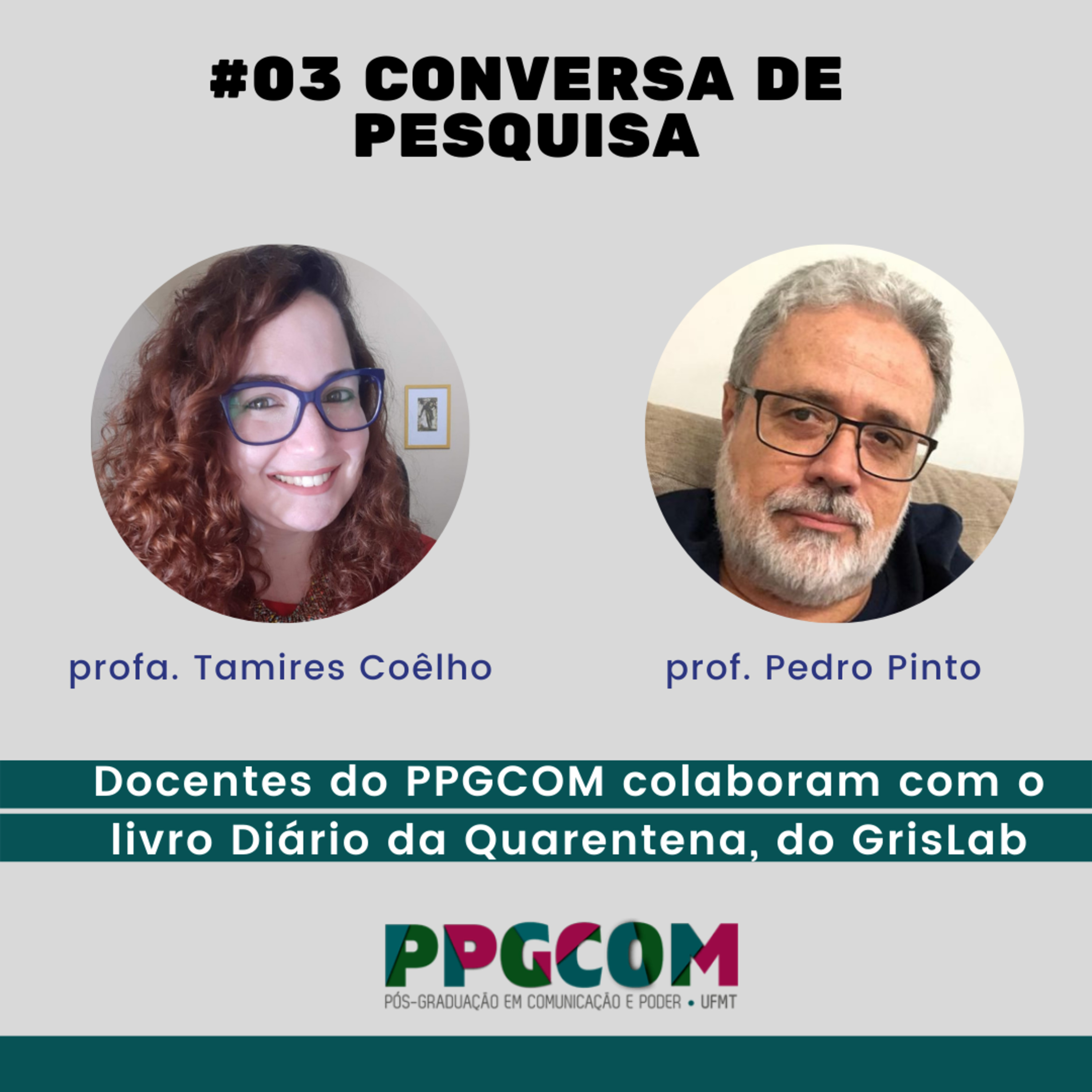
#03 - Conversa de Pesquisa - Docentes do PPGCOM colaboram com o livro Diário da Quarentena, do GrisLab
6m 50s
Professors from PPG-COM, FMT contributed to the Quarantine Diary book, delving into the multifaceted impact of the COVID-19 pandemic. Professor Tamir's texts explored diverse themes such as the pandemic's effect on the prison system and indigenous communities. Professor Pedro emphasized the importance of the work as a sensitive portrayal of the pandemic's consequences, including critical analysis of President Bolsonaro's handling of the crisis. The project serves as a poignant record of the challenges faced during the pandemic, shedding light on societal issues and individual experiences amidst the global health crisis.
Transcription
849 Words, 4898 Characters
In the midst of the impact of the pandemic in our lives, imagine having to explain the things
that happened and are happening. This was the challenge accepted by the professors of the
postgraduate program in communication and power, PPG-COM, FMT, who collaborated with the
Quarantine Diary book, the COVID-19 pandemic as an event. The work is a realization of the
research on image and sociability, GRISLAB, from the Federal University of Minas Gerais.
And that's what we're going to talk about in this third episode of the research conversation.
And for that, we invite the permanent professor of PPG-COM, FMT, Tamir Escoelio, and the professor
and collaborator of PPG-COM, Pedro Pinto. I am Rogério Jr., graduating in journalism
and volunteer of the project "Tornar Comum", from PPG-COM, FMT.
So, Professor Tamir, what do you highlight from your texts in the book?
Hi, Rogério. So, since I've done a lot of texts, I've been part of GRISLAB since
my doctorate. So, I've been writing on Quarantine Diary a lot of texts in different
ways from the pandemic last year, during the months in which we proposed to make these
debates, to think about these guidelines, right? And I've written a lot of texts, a lot of
verses, since thinking about the impact of the pandemic on the prison system, even
thinking about how it affected indigenous peoples, even thinking about the struggle. Anyway,
the rains, the rain, and how it gets articulated with the issue of the pandemic, with the needs
of the pandemic. So, there were a lot of texts with different themes.
If you could choose just one of them, what would it be?
So, it's very difficult to choose a text because these texts were written more or less
in a semester. But maybe, if I had to highlight a text, that is, the rain wouldn't
make sense and the meaning of the pandemic. Because, of course, the other texts are equally
important, right? And they all talk about issues that cross my mind, anyway, and with
the issues that are very important to me, in fact. But this text specifically talks about
the impact of the pandemic on the prison system, when we think of a region that is historically
affected by the drought, by the lack of water, for the arrival of the rains on the prison system,
to become a subject that means the daily life, to reverberate in all possible and imaginable
relations, right? But the need to talk about the arrival of the rains in a place where
water is missing, in the midst of a pandemic, in which the issue of hygiene and the need
for water is something essential. And, in addition, talking about my region, talking about
how this affected and affected my region. So, talking about the hope that comes,
about the will of life that comes with the rain, about the pronunciation that the rain brings
of better days, of possible days to live, instead of surviving.
Thank you, Professor Tamires. Now, with Professor Pedro, in your opinion, Professor, what is the
relevance of a work like this? It is not a collection of facts, but a sensitive record
of a process. Each text brings a dimension of affection, of the construction of senses,
and of the ruptures caused by the event. In this context we can see how subjects suffer
in reality in the pandemic, and the conditions of changes such as isolation, quarantine.
The analysis also rescues the performance of subjects, for example, who did not fulfill
with the responsibility of their public duty. In the case of President Bolsonaro, investigated
today for his actions and omissions in a Senate CPI. I wrote two lists for the daily
quarantine. In June 2020, Sanfona na Live de Bolsonaro do Bem, mortos atrapalha um Presidente.
It is an analysis of the performance of Bolsonaro, at the moment when he made an effort to express
a feeling of humanity in front of the deaths by COVID. An incident of the moment.
In August 2020, I wrote the second text. Among smiles, Bolsonaro emptied the mark of
the 100,000 Brazilian mortos. Next to General Pazuello, who was Minister of Health,
he appeared in a live anticipating the subject about the mark of the 100,000 Brazilian mortos.
He put in action the strategy to evade the debate, anticipating the shock that the country
lived, that is, if he talks before about this mark, the subject is evaded. This was the intention
of this live and of this anticipation. And we have to live and live with Bolsonaro.
The other shocks of the 200,000 mortos, of the 300,000 mortos, of the 400,000 mortos.
In addition to the death that does not cause the species, if the country does not react
with indignation, we have a terrible scenario of a Brazil delivered in the hands of an
selfish militant. This analysis of this subject, Bolsonaro only thinks about himself.
and our research conversation is here. Don't forget to follow PPGcom on social networks
and don't miss any news. See you later.
Podcast Summary
Key Points:
Professors from PPG-COM, FMT collaborated on the Quarantine Diary book to document the impact of the COVID-19 pandemic.
Professor Tamir highlighted various texts written on the pandemic's impact, focusing on themes like the prison system and indigenous peoples.
Professor Pedro discussed the relevance of the work, emphasizing the sensitivity in capturing the effects of the pandemic, including criticisms of President Bolsonaro's actions during the crisis.
Summary:
Professors from PPG-COM, FMT contributed to the Quarantine Diary book, delving into the multifaceted impact of the COVID-19 pandemic. Professor Tamir's texts explored diverse themes such as the pandemic's effect on the prison system and indigenous communities. Professor Pedro emphasized the importance of the work as a sensitive portrayal of the pandemic's consequences, including critical analysis of President Bolsonaro's handling of the crisis.
The project serves as a poignant record of the challenges faced during the pandemic, shedding light on societal issues and individual experiences amidst the global health crisis.
FAQs
The Quarantine Diary book discusses the COVID-19 pandemic as an event and its impact on various aspects of society.
Professors of the postgraduate program in communication and power, PPG-COM, FMT, collaborated on the Quarantine Diary book.
The texts covered a wide range of themes related to the pandemic, such as its impact on the prison system, indigenous peoples, and the struggle for survival.
The work is seen as a sensitive record of the pandemic process, focusing on the emotional aspects and societal changes brought about by the event.
The analysis focused on Bolsonaro's actions and omissions during the pandemic, including his public appearances and responses to the rising death toll.
The text highlighted the significance of rain in a region historically affected by drought and how it affected the prison system's daily life and hygiene needs.
Chat with AI
Loading...
Pro features
Go deeper with this episode
Unlock creator-grade tools that turn any transcript into show notes and subtitle files.
 PodcastTranscript AI