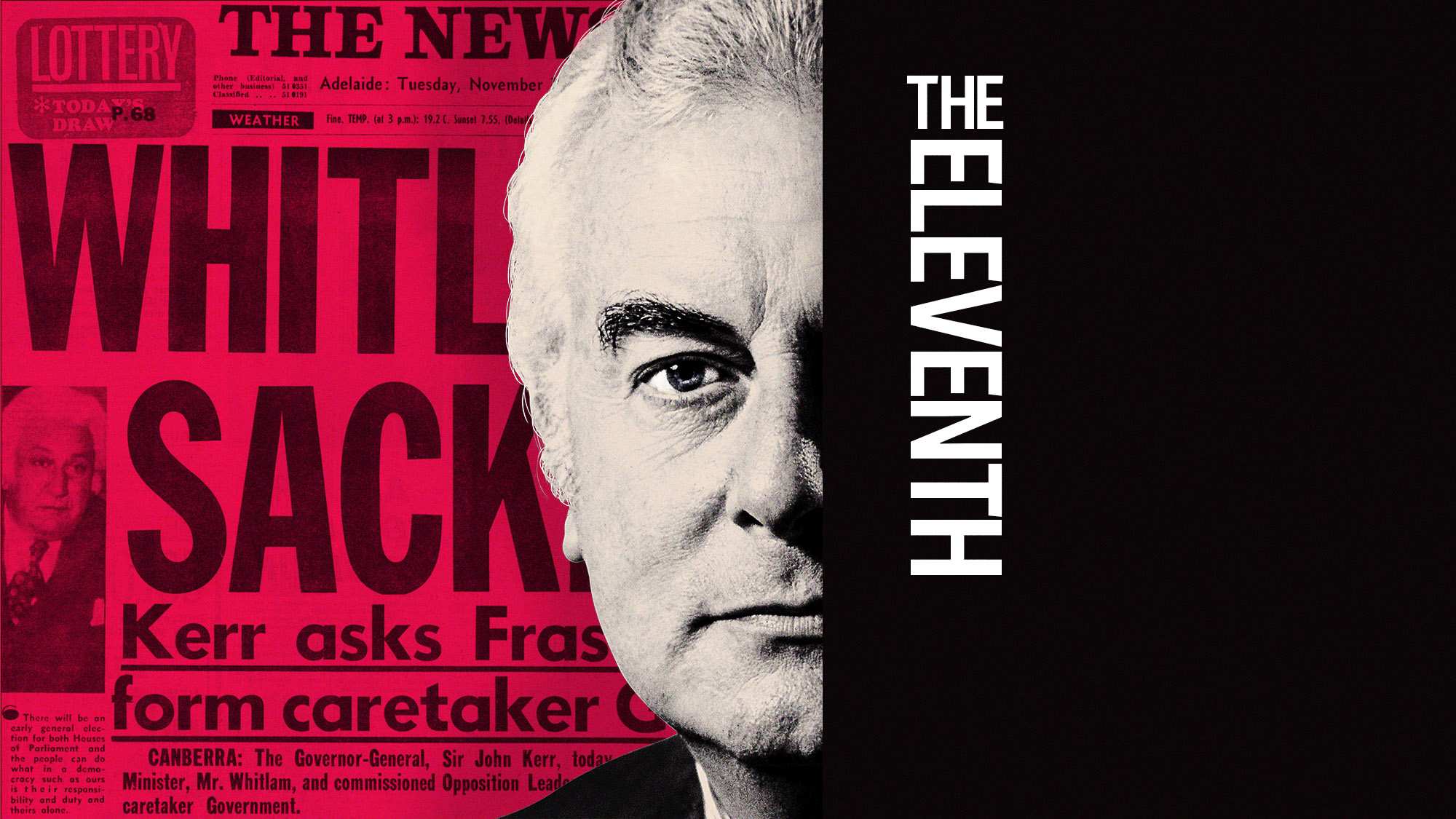
This ABC podcast details the 1973 raid on ASIO headquarters by Australia's Attorney General Lionel Murphy, as recalled by a former intelligence officer, "Duck Pond." Duck Pond, a Cold War-era Soviet counter-espionage officer, describes his career and ASIO's intense focus on communist threats. In 1972, Croatian extremists bombed a Yugoslav travel agency in Sydney, revealing ASIO's neglect of right-wing terrorism. When Yugoslav Prime Minister Džemal Bijedić visited Australia in March 1973, the Whitlam government feared assassination plots. Murphy, frustrated by ASIO's lack of information, ordered a raid on ASIO's Melbourne office to seize files. Duck Pond recounts the traumatic experience: staff were herded into an auditorium, denied bathroom breaks, and fainted from stress. Murphy, appearing hungover, gave a vague speech, but the raid yielded little. It severely damaged ASIO morale and created a rift with the U.S. CIA, which had shared sensitive intelligence. Journalist Ray Martin later interviewed CIA counterintelligence chief James Angleton, who revealed the U.S. was in "crisis" over the raid, fearing its secrets were compromised by an untrustworthy government. The incident highlighted Cold War tensions, the clash between security agencies and elected officials, and the lasting impact on Australia-U.S. intelligence relations.
This is an ABC podcast. Just a warning, this podcast contains some strong language. The world of espionage and intelligence breeds suspicion. And we've been speaking to a guy who spent most of his working life in that world. He's a former intelligence officer and he wants to remain anonymous. So when he talks to us, he doesn't use his real name. He uses a sort of James Bond kind of name. You have one saved message. My name is Paul Duck. I'm expecting you on Wednesday, but I haven't heard from you. I'm happy that I'm going to be well enough. I think I'll wait. I'll hate you to waste your time. I'm sorry, I'll be back from here. Hi. This message followed weeks of back and forth with Duck Pond. He'd been speaking in code, refusing to talk on regular phones and going by various pseudonyms. Anyway, he agreed to meet up. Three, two, one, zero. Duck Pond is super sharp. I haven't got a photographic memory, but it's close to it. After years spent hunting Soviet spies in the shadowy world of counterintelligence, he's got incredible recall for the tiniest details. I'm not as hyper vigilant as I used to be, but I think it probably just built on the sort of cold war mentality where you never knew who you know there was. Even now, he's driven by the same fiercely held convictions that motivated his work. I am an unrepentant cold warrior and I regard what is conventionally called the Cold War as the greatest event in the 20th century. The struggle between opposing ideologies. There's one event that Duck Pond remembers more clearly than almost anything else in his career. It was in March 1973. The Whitlam government had been in power for just over three months. Australia was still in the diplomatic deep freeze after criticizing the US, but a new incident was about to see the relationship hit a new low and Duck Pond would be caught up in the middle of it. We're going to Asia, what the hell for? Someone should smell a scum, some per copper. This is a story that involves spy catches, terrorists and a dooyeon of the Australian media, Ray Martin. I'm talking to the bloke who had run the world of counterintelligence. He's telling stories about my country that I couldn't even imagine. With the story of how a Whitlam government minister set off a flat panic inside the spy agencies of the Western world. There was a steep feeling that the cowboys had taken over the camera. There's panic in Washington, there's panic at the US Embassy in camera. There was a crisis between the United States and Australia. I may well have to pack their bags and go. When Duck Pond was young, he wanted to join the army, but they turned him away because he had a mouth full of feelings. Apparently they didn't accept people with that much dental work. Anyway, it didn't matter because before long another much more mysterious agency he came knocking. Somehow my name fed back to Asia. Duck was just 22, an Australia spy agency Azeo had asked him to come in for a job interview. It's one of those scenes you don't really forget and everybody looks at, thinks how weird. The location for the interview was the agency's Melbourne headquarters. The room was dirty, it was dingy. It was almost half light I would say. I found myself confronting three people. It was a panel of senior intelligence officers. Duck remembers them in great detail. There was the tall one, someone who stood about 6364. The smart one, a short rather rotund individual with a mind like a steel trap. And the one that looked like Colonel Sanders. He looked as if he should be an ad for KFC, but he didn't have the beard. So those were the men sitting opposite and they were there to test Duck. They asked me would I have any screwpaws about burglary house. I said if it was justified in terms of national security, I'd be prepared to do it. They asked me about how I felt about communism and I told them quite bluntly I considered it to be a world threat. If you wanted to work for Azeo back then, those were the right answers to give. So Duck got the job. They made the offer. That work, Duck, was a bit of a penitent, a details guy. I could never stand files or not in date order. Every morning would start the same. I would get out the files on the subject so I was working on it. Words like files and subjects hide the high stakes game that he was playing because Duck was a desk officer in the Soviet counter espionage section of Azeo headquarters. That meant he was looking into communist spies. I was doing personality profiles of certain officers, individuals, what they were doing. I think that was pretty productive. But the main game was to try and look at the Soviet emissive in Canberra and see what they were actually doing. This remained the main game throughout the late 60s and early 70s. The Cold War had divided governments all over the world into these two camps. There were the pro-US capitalists on one side and the pro-Soviet communists on the other. In Australia we sided with the US and started fighting communists in wars overseas and looking for their secret agents at home. But over time that all consuming anti-communist mission created some blind spots. It's September 1972 just two months before Whitlam's election and a bomb has just exploded on George Street in the middle of Sydney. It's a terrorist attack. But the attackers aren't communists. They're likely to be right-wing Croatian extremists and their target is a Yugoslav travel agency. It's a Cold War clash from Eastern Europe playing out between migrant groups on the streets of Sydney. And as this tape rolls you can actually hear the moment that they strike again. No, no one comes to approach it. We see there were three people. 16 people were injured in those attacks. I'm standing right where those bombs went off back in 1972. What used to be the Yugoslavian travel agency is now just this huge multi-story department store. There are heaps of people around and you can just imagine that if a bomb went off here now, the scrutiny over not just the terrorists but also our intelligence agencies would just be massive. People would want answers to the questions. Why didn't they see it coming? Who are these terrorists? What have they got planned next? But here's the thing about that attack. It wasn't the first by right-wing Croatian extremists. It was believed to be the twelfth. And so if ASEO didn't have a good answer to those sort of questions, then you can imagine people really would have wanted to know why not. If ASEO was responsible for keeping watch on terrorism and subversion, how it was it that they hadn't caught up with the Yugoslav terrorists? The answer from the Labour Party was an accusation that ASEO was so preoccupied with extremists of the left that it had neglected the extremists of the right. In ASEO's defence, this kind of terrorist attack was sort of a new thing. And it wasn't really clear yet who should be tackling it. ASEO or the federal police. But the bottom line was, ASEO just didn't really have a good handle on it. Then just two months after that bombing, Gough Whitlam and the Labour Party were elected to government. And they had serious doubts that their intelligence agency was doing its job properly. They were wondering if ASEO's Cold War mindset had made it blind to right-wing terrorism. And they were worried that the terrorists might strike again at any moment. Then in March 1973, the new government is preparing for its first visit from a foreign leader. The first visit bombing in the centre of Sydney was just six months ago and they're freaking out that the visitor might be in danger because that visitor is the communist Yugoslavian Prime Minister. This guy is like the number one target for those Croatian fascists believed to be behind the recent bombings. They confirmed here in Canberra today that several death threats have been made.
The government is in a mild panic, and Whitlam's attorney general, a guy called Lionel Murphy, is annoyed. The federal police are telling him that there is actually a credible plot to assassinate the visiting Yugoslavian leader, but he feels like Azeo isn't telling him much at all. He concludes that either they're incompetent or they're hiding something, and the only way to prove it is to do something that no one else had ever done before, or since. It's been so drastic that it would send shockwaves through spy agencies around the world, but to do it, he needed help. I was at home, Noble Park in Melbourne. It was very late in the evening. I was watching television. Peter O'Brien is the Commonwealth police officer you heard from last episode. The attorney general had been speaking to his bosses, and now Peter's boss was on the phone. My phone call came from our headquarters in McKenzie Street in the city. Peter, be on duty tomorrow morning, 0400 hours. I said, "Right, what's going on down?" I said, "Well, you'll be explained here when you get here." It's right, okay. Since Whitlam had been elected, Peter's days of arresting draft dodgers and following left-wing activists around were over. But Peter was about to find himself at the centre of political events all over again. So, I 400, I fronted up and there's a big mob of us. And the boss said, "We're going into ASEO." "We all looked at each other at ASEO. We're going into ASEO. What the hell for?" And the explanations did not come. For years, Peter O'Brien's missions had put him in line with ASEO, watching for communist threats and infiltration. But now, with the Whitlam government in power, he was being ordered to storm the very organisation he once thought was there to keep him safe. This blew my mind because I joined the public service when I was a kid of 14. And ASEO was, you know, "Hey, man, this is the heavies." You know what I mean? These were the people who protected Australia from the incursion of communist aggression. And I've had any other belief. Peter O'Brien and the other cops took their positions outside the ASEO headquarters. Meanwhile, the ASEO officer, Duck Pond, was getting ready for work. It was, as I recall, a pleasant day for March. And, you know, the weather was nice. I got up at the normal time, at 7 o'clock, drove to work, parked my car, got me briefcase, and we're in the suit, etching to undo my tie. While Duck Pond was still on his way to work, Peter O'Brien's team approached the ASEO building. So we all ran home. There was a commander in charge of the police contingency. He went to the door of ASEO and not they come to the door and said, "We want to come in." They said, "No, you can't." Finally, the officer was not a man who you argued at the point with, "We're going in." So, in we went. Peter O'Brien was sent to clear rooms and seal off drawers full of documents. Meanwhile, oblivious to all of this, Duck Pond arrived at the office. The first hint of being something, something being wrong was at the front door. As soon as he walked in, a police officer gave him strict instructions. He said, "You are not to go to your office. You ought to go to the auditorium. You take your bags with you." We were being heard. Duck had no idea what would happen next. Had the cops gone completely rogue? Who would order the rape? And what were they looking for? What would they find? I think about half past nine in the air and there you could have cut it sliced it neat and it was that bad. This is something that you can't get unless you were there. It's the stench of anger, of fear, and just not knowing. No one said, "Why were we there?" The fatigue, fear and anger continued to build. Anyway, the girls started to faint first. Two went down very quickly and more wanted water. They weren't allowed to go to the toilets. They weren't allowed, no one was allowed out. At one stage, I think we came very close to violence. Someone said to me, "Let's go and thump a copper." And I said, "Well, I don't think that's a particularly good idea." And they don't know what's going on yet. They were about to find out. The fun started at ten o'clock when a purple nose entered the auditorium. Its owner followed shortly afterwards dressed in a shade of violent with matching shirt and matching tie. It was Lionel Murphy. Senator Murphy, Attorney General of Australia, who's even been on the piss all night. I'll give him his two. He did walk steadily, but that was about all. So Lionel Murphy hung over or not. Was there in Melbourne looking for one of two things? He feared that either Azeo knew more about the terrorist threat than it was telling him, or that Azeo had overlooked the threat and was simply incompetent. Essentially he thought they were biased and not doing their job properly and needed a big kick up the ass. The night before he'd been on a raid of Azeo's camera officers for the same reason. So this was the second raid within 24 hours. This was like a domestic intrusion. I mean, you don't expect the first law officer of the land to secure the building. And arrive with his gun-toting accomplices. No, I am emotional. I can feel it. How do you feel to look there and see one of your secretaries has passed out? I was angry. I was traumatised. I was injured. I think I wasn't the only one by a long shot. Lionel Murphy stood up and addressed the staff and tried in vain to relay their fears. And it was a peculiar speech, really. He just said, "I am the attorney general. I have come here looking for some information." You have the support of the government and a few other, you know, I suppose, pleasant words. Not too many of them registered really because we wondered what the hell he was after. While Murphy was talking to Azeo's staff, Commonwealth police officers continued their search for the files he was looking for. They sealed filing cabinets and took copies of documents. They decided to let us out once Murphy had, I think, cleared the building. But by the end of the day, everybody felt we'd been kicked in the guns. The raid was now over. Murphy didn't find much because Azeo didn't have much. And now he'd created another problem. He'd made a whole bunch of intelligence agents really mad. It drove morale through the floorboards and through the foundations and into the dirt beneath. And it didn't matter what anybody did. A deep resentment towards the government involved from that point. Even Azeo people who voted for Whitlam were now angry at the government. We voted for this fucking not- What-what's happened? Not for the first time or the last time, a Whitlam minister had done something explosive without really consulting his colleagues or the Prime Minister, Gough Whitlam. Whitlam said he didn't even know the raid was going to take place. But as the PM, he had to wear it anyway. Questions started to be asked about whether the Whitlam government really knew what it was doing. And it wasn't just people at Azeo who were angry. There was panic as far afield as Langley, Virginia, at the headquarters of the US Central Intelligence Agency. The Australian government still in the deep freeze because of the last controversy of a Vietnam was now in the US's bedbooks again. Australia and the US had what's called an intelligence sharing arrangement, which really just meant that the two countries spy agencies, Azeo and the CIA, would share highly sensitive information with each other. So Azeo didn't just keep Australian secrets. It also kept American secrets. And to the CIA, Murphy's raid felt like an outrageous violation. At the time, the CIA said nothing publicly. But later, a journalist would uncover just how panicked they really were. That journalist was a 20-something Australian who was in New York on his first overseas posting. His name was Ray Martin. I was to scuffle later. There was this deep feeling that the cowboys had taken over in Canberra and that they weren't to be trusted. James Angleton is one of the most extraordinary men I've come across. At the one time, perplexing, charming, fascinating, and yet in a sense quite frightening. This is one of the most extraordinary acts that one has ever seen. It was not done in a front-end manner. It was done as an adversary. It was an array. It was a raid. It was done by the elected Attorney General of the country. I am not the spitting effect that he was elected. I'm only speaking to the outrageous lack of confidence inherent in his act. This rare type of James Jesus Angleton was one of the biggest scoops of Ray's career. Angleton was an extraordinary character with extraordinary power. And so he made and broke the governments. He was the boss of counterintelligence at the CIA for 20 years.
He's simply talking about Australia as though we've been naughty boys. We hadn't played the game that the CIA wanted. And he was one of the strangest men that Ray ever met. James, Jesus Angleton, is a caricature at itself, isn't it? I mean, yet anyone called James, Jesus Angleton, you'd have to take note of, we went to this house in Virginia just near the headquarters of the CIA. From the outside, Angleton's house looked like all the others in suburban Virginia. Inside was something different, inside all the curtains were drawn. It was a Saturday afternoon, and the house was dark. Angleton opened the door, wearing a suit and a tie. It was very gracious towards us in a sort of way that you'd expect someone to actually have smile and put a long thin blade between your shoulder blades. Mysterious images hung on the walls. The only things hanging off the wall were his photographs, and there were photographs of black and white objects, dark and sinister. Many of the photos were of orchids, not just ordinary orchids, but black orchids. That Angleton had taken himself. All beautiful photographs, but the sort of detail of someone who was obsessed with anything. Everything about him seemed designed to amplify his reputation as a career spy, who pulled strings and influenced the world from the shadows. As I say, if I was writing a fiction story, I couldn't have put in more adjectives or better description than this. But it was an Angleton's house that shocked Ray the most. It was what Angleton said in the interview. And James Angleton reveals for the first time publicly that there was a crisis between the United States and Australia in 1973. When the Veneterni General, Mr Lionel Murphy, launched his controversial raid on the AVO headquarters in Melbourne. Because the relationships are delicate, it's a tender plant that needs nourishment. It needs mutual confidentiality. Some of the major secrets, the deal with the world I was once in, were given to the Australian security services. And these dealt with penetrations. These dealt with the internal security of Australia and their well-being. And when we saw this weapon government come into power and this maternity general moving in, barging in, we were deeply concerned as to the sanctity of the information. Ray Martin couldn't believe how Frank Angleton was being. I've suddenly he's this sort of beaten old man who wanted to talk and he's got a really audience in me. And he's telling stories about my country and about my government and about my people that I couldn't even imagine. It's something like out of science fiction. Everything worried us. You don't see the jewels of counterintelligence being put place in jeopardy by a party that had extensive historical contacts in eastern Europe. I was seeking a no way for Australia, seeking a matter of compromise, seeking roads to pick in. It was now clear that the socialist sympathizers in the government's ranks had the CIA on edge. When we and others in the Western world had entrusted the highest secrets of counterintelligence to the Australian services and we saw sanctity of that information being jeopardized by a bull on a china shop who would not understand that the compromise of that information or exposure would result in a destruction of life. Ray Martin's interview with Angleton showed for the first time how furious the US was about the Azo raid and how much of a shock it was to them. They'd become used to working with conservative Australian governments and now they had this new left-wing government with ministers charging in and rummaging through their secrets. Though having to ask themselves questions they thought they already knew the answers to. Things like how much can we trust the Australians? How much should we tell them? But Angleton's interview hinted at something that the US was even more worried about. It was something about Australia that the US valued above everything else. A mysterious facility in the Australian Outback. It represents one of the greatest bonnances to Australia. Unlike any other summer installation that may be in any other place in the free world, it elevates the Australia in terms of strategic matters. The information of strategic matters. Rising out of the dry red sand of central Australia is Pine Gap, an American military base designed to detect and warn of an attack by intercontinental ballistic missiles. Unauthorized aircraft are not allowed within two miles of its perimeter. Pine Gap is a series of strange white domes constructed in an expansive red dirt and low scrub about 18 kilometres or so as southwest of Aller Springs. It's still there today. Then it started operation just two years before Whitlam was elected. But in Australia, a few knew just how highly it was valued by the US. The citizens of Aller Springs have been a bit bewildered because they don't know the true picture. In fact, I don't think anyone does. Well, what can we do except to have another there and go on? Over time, the white domes began to do much more than just monitor missile launches. Soon, they were hovering up all sorts of other signals and communications from the region. But ignorance around exactly what they did is stretched all the way from the suburbs of Aller Springs to Parliament House. Even the Prime Minister didn't have the full picture. Let alone any control over what happened at those bases. Whitlam and his ministers were keen to find out what was going on in the desert and to tell people about it. I could you at this time, sir, indicate the policy your government will take on these questions. I'd like to make it plain that they now need the no secrecy. Pine Gap wasn't the only facility of its kind. There were actually three crucial US installations on Australian soil. Labor's essential position had been that these were a violation of Australia's sovereignty. To have the intelligence facility of another country on Australian soil was in many ways in a front to Australian sovereignty. In 2010, James Karin began researching this crisis and that research uncovered secrets that had been held tight for more than 40 years. I wanted to know how the American Australian Alliance handled a time of discord and discomfort. James Karin's a professor of history at the University of Sydney. It was whilst I was digging around in Washington looking for material on that, I just discovered this incredible wealth of research material. What quickly became crystal clear was the importance of Pine Gap to the US. No matter how much Washington appreciated the Australian flag in Vietnam, no matter how much they appreciated Australian diplomatic support for American objectives around the world, no matter how much they appreciated the fact that the two military forces were training together, putting all of that aside, the intelligence installations are what really matters for the American government. That is all they are interested in in terms of this relationship. Thing is Pine Gap only existed on Australian soil through a lease with the Australian government and that lease was up for renegotiation at the end of 1975. The US had presumed that it would be renewed but Whitlam was now throwing all of that into doubt. In a meeting with the US ambassador he said if there were any attempt to screw us or bounce us, inevitably those defense arrangements would become a matter of contention. Whitlam would also occasionally reassure the Americans that he didn't want the bases shut down. But then he'd go back on that and he'd say something else in Parliament or to the media, they would freak them out all over again. At one point he said in Parliament that there should be no foreign intelligence bases at all in Australia. So there's panic in Washington, there's panic at the US Embassy in Canberra that this is it, this is what they've long feared that the moment was coming. The US intelligence community was gravely worried that they may well have to pack their bags from Pine Gap. So President Nixon and his security adviser Henry Kissinger, they were worried. Worried about the potential power of left wingers in the government and particularly worried about Whitlam's flip flopping on the future of Pine Gap. So they commissioned a top secret review into the relationship. The basic question they wanted to ask
was if Whitlam and his ministers continued to throw the future of Pine Gap into doubt, how far should they go to bring them into line? The answer they got was locked away in a file that remained top secret for decades until James Karen came along. In 2010, James Karen was sitting at a desk in the National Archives and Records Administration in Washington. It's this grey bunker like building. From his perch, James could see the trees outside in a blaze of autumnal colour, but inside he was surrounded by piles of books and papers. On one of the sheets of paper was a list, with the name of the document he was looking for. So this is National Security Study Memorandum 204. It was simply in a list of records to be consulted. It had an asterisk against it which said it was still closed. It was perhaps one of only two or three National Security Study Memorandum from that Nixon administration which had remained closed. No one was allowed access to this document. I asked the librarian and she said that is very odd, sir. I'll go out there and have a look at the document for you. Two or three hours later, while I was studiously working away on other files, I had this hand on my shoulder from this archive who said Mr Karin she said you will never ever get access to that file. It will do too much damage to the relationship between our two countries. And what did you say? Well I was incredulous. I mean I just said I said look this is bizarre. I said this is well over 30 years ago. I said can there be material in there that is so sensitive that it would do damage to the bilateral relationship today? What did she say? Did she say yes? Yes she said yes absolutely. The archive has said there was only one way this document would ever see the light of day and that is if the US government declassified it. James Karin formally applied to have the review declassified and a few years later it was actually released but it had large sections blacked out. There's still stuff that's redacted in there and crucially there is a document that Kissinger sent to Nixon about the recommendations which is still under lock and key they will not release it. But what James Karin did find in this document was explosive. It certainly did not pull any punches. It laid out a number of options. One of them was to dial back on all security cooperation. Basically they were saying let's reduce the flow of intelligence to Australia. Let's reduce joint military exercises. Let's react more vigorously to Australia and foreign policy decisions which we see is cutting against our interests. And if this option of putting the squeeze on Australia didn't make Whitlam changes tune it could have another handy consequence. It might look so bad for Whitlam that it would hurt him at the ballot box and then the problem would be gone. I mean it's just extraordinary. Now they're not to be fair they're not saying let's do it. They're saying this is what might happen if we went down that path but that is a remarkable statement. The administration in Washington contemplating what course of action would have had the most devastating domestic political effect. Let's be clear this was just an option that they were considering but even so to see it written down in a document prepared for the US president is pretty shocking. What we do have are very suggestive comments in this study memorandum which show at the very least that that kind of thinking was going on and why should that surprise us when we know the record of successive US administrations throughout the Cold War in having a role in directly and sometimes indirectly bringing down governments that it didn't like. And we knew that they didn't like this one. Absolutely they absolutely detested this government without a doubt. So with so much at stake did the US do anything to try and force Whitlam out? There'll be a lot more to say about that later in the podcast. In the next episode of the 11th two scandals erupt both of the government's own making one about sex. I've got a bit who I feel like going to bed with. You've said it yourself it's in your end though. And another scandal about money or four billion dollars. Have you heard the name Chemlani before? Plutically it was described as a strangler. He done nothing wrong. He done something for your country. You've been listening to an ABC podcast. If you're looking for another great podcast dishing up regular serves of political analysis and explaining the goings on in Canberra, check out the party room posted by plugged in political junkies Fran Kelly and Patricia Carvellis. You can listen for free on the ABC Listen Up or on podcast apps like Apple and Google.
Podcast Summary
Key Points:
A former Australian intelligence officer (alias "Duck Pond") recounts his career in ASIO's Soviet counter-espionage section during the Cold War.
In 1972, right-wing Croatian extremists bombed a Yugoslav travel agency in Sydney, exposing ASIO's focus on left-wing threats at the expense of right-wing terrorism.
In March 1973, Attorney General Lionel Murphy, fearing ASIO incompetence or bias, raided ASIO's Melbourne headquarters to find files on the terrorist threat.
The raid deeply angered ASIO staff, damaged morale, and sparked a crisis with the U.S. CIA, which feared its shared secrets were compromised.
Journalist Ray Martin later interviewed CIA counterintelligence chief James Angleton, who publicly revealed U.S. panic over the raid and distrust of the Whitlam government.
Summary:
" Duck Pond, a Cold War-era Soviet counter-espionage officer, describes his career and ASIO's intense focus on communist threats. In 1972, Croatian extremists bombed a Yugoslav travel agency in Sydney, revealing ASIO's neglect of right-wing terrorism. When Yugoslav Prime Minister Džemal Bijedić visited Australia in March 1973, the Whitlam government feared assassination plots.
Murphy, frustrated by ASIO's lack of information, ordered a raid on ASIO's Melbourne office to seize files. Duck Pond recounts the traumatic experience: staff were herded into an auditorium, denied bathroom breaks, and fainted from stress. Murphy, appearing hungover, gave a vague speech, but the raid yielded little.
S. CIA, which had shared sensitive intelligence. S.
was in "crisis" over the raid, fearing its secrets were compromised by an untrustworthy government. S. intelligence relations.
FAQs
The podcast is about a former Australian intelligence officer, codenamed Duck Pond, and his experiences in counterintelligence during the Cold War, focusing on a controversial raid on ASIO by Attorney General Lionel Murphy in 1973.
Duck Pond is a pseudonym for a former ASIO intelligence officer who worked in Soviet counter-espionage. He remains anonymous and is known for his sharp memory and Cold War mentality.
Attorney General Lionel Murphy led a raid on ASIO's Melbourne headquarters, searching for files on right-wing Croatian extremists. The raid caused panic and resentment among ASIO staff and strained US-Australia relations.
Murphy raided ASIO because he believed the agency was either incompetent or biased, failing to monitor right-wing Croatian terrorists who had bombed a Sydney travel agency, and was withholding information about a plot to assassinate the Yugoslavian Prime Minister.
The CIA, particularly counterintelligence chief James Angleton, was deeply concerned. Angleton feared the raid jeopardized shared intelligence secrets and described it as an outrageous lack of confidence in the Australian government.
James Jesus Angleton was the CIA's counterintelligence chief for 20 years. He was known for his secretive nature and obsession with security, and he publicly revealed the crisis between the US and Australia after the ASIO raid.
Chat with AI
Loading...
Pro features
Go deeper with this episode
Unlock creator-grade tools that turn any transcript into show notes and subtitle files.
 PodcastTranscript AI