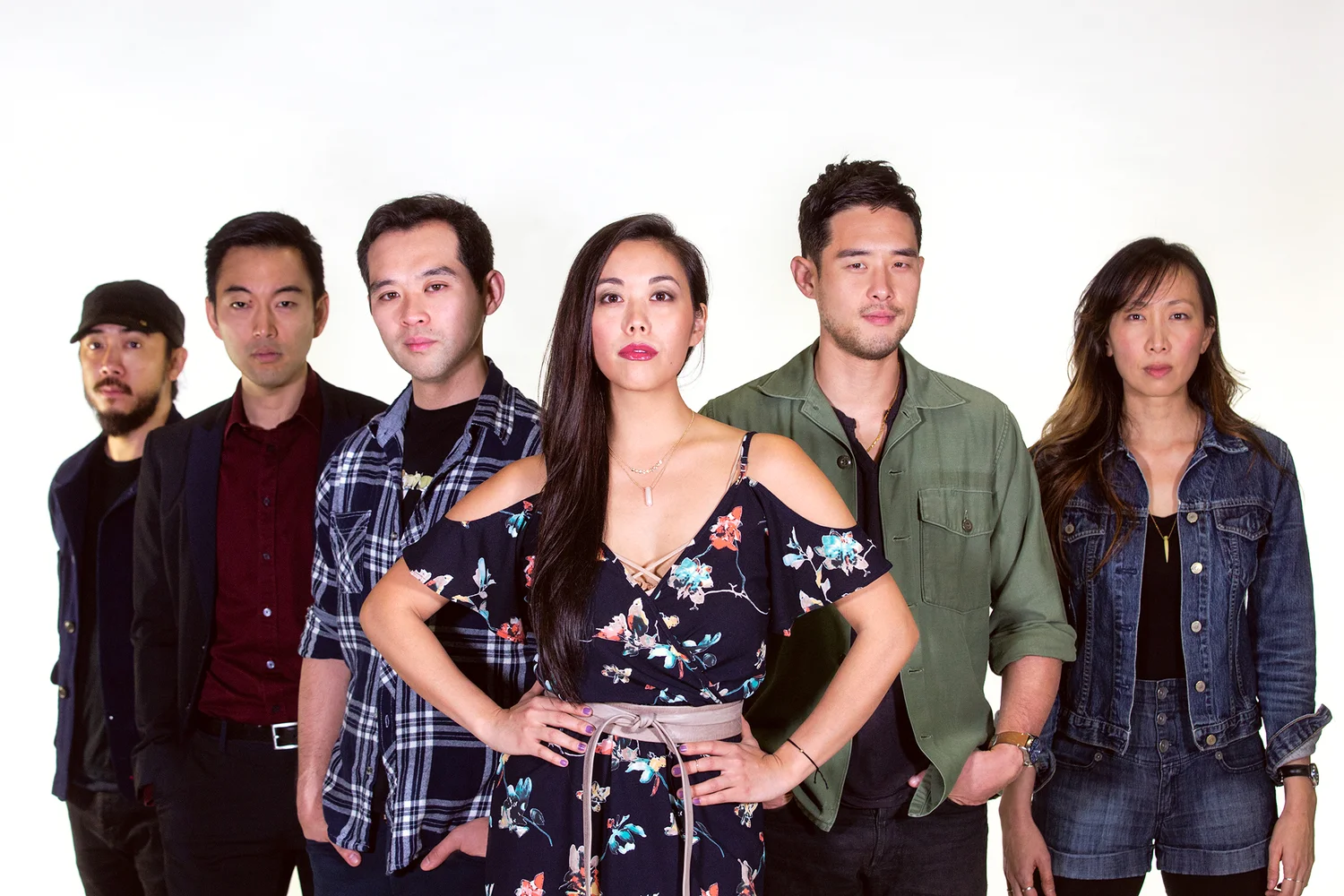
"Cambodian Rock Band" is a play that delves into Cambodia's lost surf rock scene of the 1960s and 1970s, intertwined with themes of music, history, and family. The storyline focuses on survivors of the Khmer Rouge era and the connection between a father and daughter. Playwright Lauren Yee's work aims to highlight the untold histories and family legacies passed down through generations. The play incorporates live music performed by the actors, featuring a mix of Cambodian oldies and contemporary songs by Dengue Fever. Through the characters' experiences, the audience gains insight into the vibrant culture that existed before the Khmer Rouge regime, emphasizing the loss of art and music during that dark period. The play not only sheds light on Cambodia's history but also serves as a universal story of resilience, family bonds, and the power of music in connecting people across generations and cultures.
Transcription
4099 Words, 22661 Characters
When I was a kid, my first major exposure to music was the double VHS box set of the sound of music.
It clearly left an impression because by my high school years,
I found myself in musical theater productions of Working, Carousel, and Bye Bye Birdie.
My teenage years were steeped in music and theater.
I did tons of plays, learned to play guitar, and sang in a college acapella group.
But as a Thai-American, I didn't really get into Thai music until YouTube came around.
And along with it, tons of uploaded songs from luk tuong artists, or the Thai folk rock sounds of Karabau.
But not everyone has easy access to the pop music of their heritage, or even know it exists.
Sometimes, those music and cultural movements get violently erased by the political history of a country.
And sometimes, it's a piece of theater that can bring those movements back to light.
Today, we explore the play Cambodian Rock Band,
and how this piece of Asian American theater weaves together a story of music, history, and family on stage.
This is Asian Americana.
For me, there's always something exciting in a mash-up of worlds that you don't expect.
To any outsider who doesn't really know the history of Cambodia,
the idea of genocide and psychedelic surf rock would not seem to fit together.
But they do.
I recently got to speak with playwright Lauren Yee.
My name is Lauren Yee, and I am the playwright for Cambodian Rock Band.
Cambodian Rock Band is a play with music about Cambodia's lost surf rock scene of the 60s and 70s.
It is also the story of survivors of the Khmer Rouge years in Cambodia.
It is also the story of a father and a daughter searching to connect with one another.
I'm already pretty familiar with Lauren and her work.
I saw her play King of the Yees last year,
and I was even an understudy in the Los Angeles premiere of her play Ching Chong Chinaman.
Her work tends to include certain recurring themes.
The story that I am obsessed with is the story of parents and their children,
and how family lore and secrets and untold histories get passed down from generation to generation,
or don't.
For me, Cambodian Rock Band is another version of how to tell that story.
It is a story that even though my family is not Cambodian at all,
it's a story that I deeply relate to and identify with.
Lauren didn't expect to dig so deeply into Cambodian and Cambodian American history,
but sometimes life has a way of leading you down unexpected paths.
I was commissioned to write Cambodian Rock Band by South Coast Rep through their Crossroads program,
and the only mandate they gave me was you can write your play about anything,
but before you do, come to Orange County for two weeks and research anything you want.
As soon as I landed and started my research at South Coast, everything fell into place.
Dengue Fever happened to be playing in Long Beach, and I got to meet them.
There happened to be an all-day Cambodia music festival going on in Anaheim.
We were invited to the Cambodia Town fundraiser.
By the end of it, I was like, "Oh, I know what my play is about,
because I've kind of been told by the universe."
Even though this process led Lauren to learning more about the history of Cambodia
and the Cambodian American community, many people aren't as aware of that legacy.
For those of you not familiar with this history, during the 1970s, the Khmer Rouge,
a brutally repressive and genocidal regime, took power in Cambodia.
During the four years they held power, they killed about a quarter of the country's population,
including artists and intellectuals.
Many of the refugees fleeing Cambodia during this time and the years following
end up immigrating to the United States.
Of course, the full story is so much more complex.
Political movements, massive amounts of foreign intervention by the U.S. and others,
and war in Southeast Asia all shaped this history.
Part of Cambodia's rock band takes place in the 1970s, right as the Khmer Rouge seized power.
I think it's such an incredible history that many of us have no idea ever really existed.
Growing up, I knew there was a country called Cambodia.
I knew something bad had gone down, but as an American going through the public school system,
you don't really hear a lot about Cambodia, maybe beyond the fact that
some of the Vietnam War was fought there.
You kind of see the country in black and white and sepia tones
that really don't do justice to the vibrant, young, modern culture that existed in the 20th century.
But of course, with a name like Cambodian Rock Band,
the play focuses heavily on the people and music that was lost during this time.
Particularly, Cambodian Rock Band is about the musicians that worked and loved and lived in
Cambodia before the Khmer Rouge and never got the chance to create their art to their fullest
potential. When the Khmer Rouge came into Cambodia and took over the country,
it was not only the people that we lost, but also all the incredible art and music
that these people had created.
The Khmer Rouge not only sought to kill their own countrymen,
but also specifically target music and Western-influenced music.
Literally, the first thing that the Khmer Rouge did when they took over Phnom Penh
was go to the National Radio Station and burn all the records.
There were just piles of vinyl records burning along the side of the road.
I'm writing this play in part for all the artists and singers of Cambodia
who never made it beyond 1979.
The play is really trying to give you a sense of that loss and give you a window
into what those people might have created had they lived longer.
And what does this music sound like?
The Cambodian oldies of the 60s and 70s are songs that both sound extremely familiar to
your ear as an American and also feel like something that you've never experienced before.
[Music]
Cambodian music of the 20th century is actually this blend of existing music
that was in Cambodia prior to the 20th century.
It is French New Wave of the 60s.
It is Afro-Cuban music.
It is a lot of South American sound.
It is also Vietnam-era American radio songs.
So it's this incredible blend that you really don't find anywhere else.
I think of a lot of those Cambodian oldies as Jackson 5 on top of Jimi Hendrix.
Their songs are frequently kind of these bubble gum love songs on top of electric guitar shredding.
And there's something just incredibly joy inducing about listening to those type of songs.
To help develop the music for the show, Lauren turned to Los Angeles band Dengue Fever,
whose music is heavily influenced by Cambodian rock and pop from this time.
The play includes a lot of their versions and arrangements of these songs.
Dengue Fever is an LA-based band that has been around since the early 2000s.
They are led by singer Cham Nhi Maul.
And they play this blend of Cambodian oldies, surf rock,
a lot of different types of world music.
We invited one of the members of Dengue to spend some time with us in the rehearsal room,
not really knowing that we were going to put Dengue Fever songs in the show.
Thankfully, the band was incredibly game and generous about their work.
They had some ideas and suggestions, but for the most part, I went through the catalog
and picked out what I felt to be my favorite Dengue Fever songs and also
some of the Dengue songs that are a little less known, but I think fit the story lyric-wise.
The soundtrack is this mix of Dengue Fever songs, which were written in contemporary LA,
and classic Cambodian oldies, which were written maybe 40 or 50 years ago.
We're trying to walk this line between honoring this musical history and these artists that existed
in Pre-Khmer Rouge and also celebrate the work of artists today. Something particularly unique
to this show is that all the musical pieces are performed live by the actors. A full rock band setup
of drums, guitars, keyboards, microphones, and lights slide onto stage for each number.
Lauren explains why all the live music gets woven into the play.
When I first started writing the play, I thought Cambodian rock band was going to be a play about
music, rather than a play with music. As I started doing more research and getting deeper
into their writing process, I realized that if it is a piece about an oppressive regime who tried
to destroy this music, it's important to be able to see those artists and see those songs on stage
live, that that is, in and of itself, a revolutionary act.
I think what's incredibly exciting in this piece is not only to learn about history that you may
not have known about beforehand, but also to see a kick-ass group of Asian-American actors
get up on that stage and not only act but strap on an electric guitar or pick up a pair of drum
sticks or sit down at a keyboard and just kill it musically. For Jane Louie, one of the cast
members, the use of music in the play was really impactful. Hi, my name is Jane Louie. I am a
musician first and an actor second. I am Poe, who is a keyboard player and and percussionist of sorts
and one of the band members of the Ciclos. The use of this music is fascinating because it's an
entire genre that was killed and so for it to be heard on stage along with the storyline of a
population being taken away so cruelly is really moving and I'm getting goosebumps just thinking
about it how the sound of the music itself is a device in the show. There's this immense celebration
of art and modern life for the youth and then it was just taken away. Jane herself is a very
accomplished musician and singer-songwriter. I adore her music and she draws from a ton of influences
but working on this show was her first exposure to this Kamai rock sound. Hearing like Beatles or
old rock and roll sung in Kamai because they translate it to make it their own is incredible.
They're pulling elements from music and their culture and their language and their traditional
music and making it its own thing. A lot of times as a songwriter I write songs in their their own
island they are self-contained on an album but to have context like this in a rock music setting
just adding the fullness of the culture onto it really digs into the meaning of music in life
and I personally love that very much it adds a lot of value. For Brooke Ishibashi the weaving of
music and difficult histories particularly resonated with her. My name is Brooke Ishibashi
and I am an actor and singer. I play two roles. I play Niri in present day and I play Sotia when
we go back to the past in the 70s in Khmer Rouge, Cambodia. It's kind of multifaceted for me. I come
from three generations of a musical family so my grandmother Mary Kageyama Nomura is 92. She's
kick-ass and when she was interned during Japanese internment during World War II she was called the
Songbird of Manzanar. Their camp was Manzanar and when they had things like camp dances they had her
as the entertainment so she has this legacy within the Japanese-American community for being
the Songbird of Manzanar and it's a little bit of a bittersweet kind of melancholy title because
it's being remembered fondly for something in a time that wasn't the time that a lot of people
want to remember fondly. That musical legacy continued from her grandma to both her parents
and her sisters, all of whom are musicians and performers. It means a lot to me because you
see the way music gets passed down from generation to generation. You also feel the responsibility
to live your passion because of the history that you come from. I feel a lot of responsibility to
tell the story right, to do them right. I feel responsibility to the Cambodians and Cambodian
Americans, the ones who survived the regime and their kids who now live in America and are carrying
that history and that legacy with them. Of all the folks involved Cambodian rock band probably
connects most deeply with its lead actor Jo Ngo. My name is Jo Ngo and I am an actor in the play
Cambodian rock band. I play a character named Choum. I am Chinese Cambodian-American. I grew up
in Monterey Park, California. I was part of this odd sort of second wave of immigrants that were
all either from Cambodia or Vietnam and we were all sort of from like broken countries.
When Jo first got involved with Cambodian rock band, he quickly connected with Lauren's writing.
After we read the play, I told her, I was like, oh, this is my family's story. I mean,
not exactly my family's story, but I'm Cambodian-Chinese-American. My parents are survivors. They
were from Batam Bang and they went through the labor camps and a lot of their family members
were killed. Playing the character of Choum really actually has allowed me to tie myself
closer to my family history and story. It wasn't just the broad themes of the show that Jo
vibed with. His family also had a relationship with the music. I did hear my music growing up
quite a bit, but it was always stuff that was just in the karaoke version. My direct uncle,
my mother's brother, used to be a karaoke wedding singer in the United States and my great uncle
was actually a karaoke live band performer in Batam Bang. When people would come sing karaoke,
they would just ask him to play a song and he would muddle his way through or if he knew it,
he would just play it perfectly somehow because he knew all the songs.
Learning the songs himself helped him deepen the connection between his family and this music.
One of the songs that Lauren was like, "Oh, you should listen to this," was Cham Ota Paramboy.
I brought it to my mom and I was like, "Hey, you know, do you ever hear this song?"
And she was like, "Oh my god, that is like my childhood song." And she immediately started
singing and knew almost every word to it. It was like a magic moment. She was like,
"Cham Ota Paramboy was pretty much when I was 16 and it was like my jam, the song."
And then like every time we would have a new song that we played, my mom was like, "I know that song."
Yeah, of course I know the Sin Sita Mood and Roscoe Cerezo Tian.
Music aside, Joe was also much more familiar with the history than his castmates.
Unlike a lot of other Kama Americans, my parents actually were pretty forthcoming about their struggles
in their time in the camps. A quick warning, Joe's about to talk about death in the labor camps.
When I was eight years old, my mom told me about this time where she had to bury this little boy
who was stealing something and they essentially killed this young boy in front of all the women
in the camp. And then my mom had to bury his body. She dug a hole in a grave for him. And
when she was digging this grave, she realized that like a whole line of trees that she had
been burying next to were all freshly planted. And that's when she like realized that all those
trees had bodies underneath. And she was like, "Oh my god, I'm adding on to this row of trees."
And then she said, "From that day on, I never will eat from those trees ever again. I won't eat
the fruit from those trees." So yeah, they were pretty forthcoming about their experiences. And I
think it was just because it was more a matter of fact for them than anything else. They were like,
"You should know what the world is like because it is sad. There are bad things that happen,
and they're just sad. And so you should know what the world can become and where we come from."
Being in the play, however, helped Joe to connect to his heritage and his parents' experience before
the Khmer Rouge. For myself, I never knew what it felt like or what was pre-Khmer Rouge. I think
my parents sort of gave me the indication that it was modern and there was rock and roll music,
but I never knew to what extent. Now, when I look back at pictures of the times, I can really place
my parents actually there. Like I look at the pictures of my dad, and he had long hair in a
lot of his pictures, or like there's one he's like posing in front of a motorcycle. And my mom,
she's dressed really like cutely and her hair is all tied up. And now I see them fitting in that
time period. I never really placed my parents before that. But when we started working on the
play and as I did more research into the character and the play itself and the world of the play,
I could see my parents there. When I look at it through that perspective, I give them a lot more
sympathy, empathy, and understanding. In particular, his father's words have echoed with him.
When I was a kid, my dad actually told me, if you're going to be an actor, you have a story,
you have a story already. And it's odd because when I work on the play and I speak the lines and I
play Chum, the frightening thing for me is that I sound like my father and it scares me to death.
That when I say certain things in that right tenor or tone, I can hear him saying it to me.
It bothers me, but in a way that's true and authentic and expresses something deeper in
myself that I can connect to. And it's odd because in truth, I'm neary. I live in that world of being
a refugee kid, a Khmer Rouge surviving kid who carries a lot of weight on their shoulders because
growing up, I could always feel when I would hear these stories, etc. Anger and resentment towards
what people did to my people. I feel like I wasn't able to be there in Cambodia, but to experience
that and be connected with that. I see it. I see all the little things that the play does. I almost
have been waiting for this show for my entire life.
Soldiers of protection with guns pointing out. We've all been silenced to your liking,
so say goodbye. It's your turn, Hyde. I've been there and back and each time you seem further.
Things are said, the kings and gestures by your hands.
The sun will rise 'cause you have perished in my mind.
I worry not, there's nothing like this being the sign of mine.
Every single one of us are so like in the most nerdy and excited and wholehearted way invested in
the show. I'm just pouring my heart into this because I don't understand why we never learned
about this and it's not just a Cambodian story. It is a story about family identity. It's a search
for who you are. You know, you look at my mom and she's like so happy and like she survived
the Khmer Rouge to see the joy in her face and think like how come her story is not being told.
It's absurd to me and I'm glad that the story is now going to be part of the Khmer experience,
diaspora, part of our community and like once we tell it then people would want to tell more,
talk about it more and know more. I don't even know what other words I could use to describe how
happy I am that this story or a story like this is being told. It's so refreshing,
heartbreaking, painful, but also needed that this story is being told, that people look at Cambodia
from the vantage point of survivors and not from the people who committed atrocities.
My hope is that Cambodian rock band is a story that resonates for a Cambodian and Cambodian American
community but I think at the same time it's a family story. It's a story about music. It's a
story for anyone and it's a story that I would love to share with as wide an audience as possible
because I think those musicians who never really got to see things through to the end of the Khmer
Rouge like deserve that. Sometimes the way into really difficult material like the Khmer Rouge
in Cambodia is by finding and celebrating the stories of ordinary people who persevered and
thrived and it's about investing in those characters on stage in a way that is three-dimensional
and full of empathy and humor and joy and I think if we do our job correctly it's a story that
everyone can find like a little bit of themselves in there. That it's about people struggling to
connect with those they love and it's a story about people trying to navigate their path as
best they can through incredibly difficult moral territory. Telling stories like these, stories
that are difficult and tragic, beautiful and specific, and ultimately ones that reflect our
experiences and histories is definitely a job worth doing well. As of the recording of this
episode in March 2018, Cambodian Rock Band is just about to finish its run at South Coast Repertory
in Orange County, California. You can go to scr.org to learn more about South Coast Rep
or follow the play on Instagram @cambodianrockband. You can learn more about Lauren Yee and her
plays at laurenyee.com. That's laurenyee.com. Joe Ngoh can be found at joe-ngoh.com. That's
joe-ngo.com. More info about Brooke Ishibashi is on our website BrookeIshibashi.com. That's Brooke
I-S-H-I-B-A-S-H-I.com. Jane Louie and her music is at JaneLouie.com. That's JaneL-U-I.com.
To learn more about the Kamai music from this era, check out the amazing documentary
"Don't Think I've Forgotten." Asian American is hosted and produced by me, Quincy Suresman.
Our opening song is "We Belong" by Magnetic North and Tai-O-Na featuring Chris Ajima. The song
you're hearing with these credits is "We Are the Children" by Chris Ajima, Nobuko Miyamoto,
and Charlie Chin. The music you heard during this episode included "Made in Thailand" by Karabao,
"Dance a Go-Go" by Sin Sisa Muth, "Old Pot Still Cooks Good Rice" by Roth Sere Sotea,
"Sni-Bong" by Dengue Fever, "Punheo Sam Nian" by Kong Penao, and "Pan-Ron"
"Chanam Ota Pram Mui" by Roth Sere Sotea, and "Parished" by Jane Louie. Special thanks to
South Coast Repertory and Lauren Yee for helping me get access to all the interviews and recordings.
You can visit our site at asianamericana.com, find us on Facebook, and follow us on Twitter
@Asian_americana. If you like the show, please rate and review us on Apple Podcasts. If you really
like the show, you can become a monthly supporter on Patreon. Just click the support button on our
site. Our first round of supporters include Sean Kim, Ajin Lee, Ryan Akuno, Maria Sipin, and Krista
Suh. Asian Americana is a proud founding member of Potluck, a collective of podcasts featuring
voices and stories from the Asian American community. Thanks for listening and stay tuned
for more stories of Asian Americana. If you're looking for more to listen to,
try one of our other potluck shows. Books in Boba is a podcast and book club dedicated
to books written by authors of Asian and Pacific Islander descent. They cover a wide range of
genres, from thrillers, to sci-fi and fantasy, to YA and graphic novels, to non-fiction and memoirs.
Each month, they pick a book and discuss it in the episode.
Podcast Summary
Key Points:
The play "Cambodian Rock Band" explores the lost surf rock scene of Cambodia in the 60s and 70s.
The play intertwines themes of music, history, and family, focusing on survivors of the Khmer Rouge era.
The music showcased in the play is a blend of Cambodian oldies and contemporary songs by Dengue Fever.
Summary:
"Cambodian Rock Band" is a play that delves into Cambodia's lost surf rock scene of the 1960s and 1970s, intertwined with themes of music, history, and family. The storyline focuses on survivors of the Khmer Rouge era and the connection between a father and daughter. Playwright Lauren Yee's work aims to highlight the untold histories and family legacies passed down through generations.
The play incorporates live music performed by the actors, featuring a mix of Cambodian oldies and contemporary songs by Dengue Fever. Through the characters' experiences, the audience gains insight into the vibrant culture that existed before the Khmer Rouge regime, emphasizing the loss of art and music during that dark period. The play not only sheds light on Cambodia's history but also serves as a universal story of resilience, family bonds, and the power of music in connecting people across generations and cultures.
FAQs
Cambodian Rock Band is a play with music about Cambodia's lost surf rock scene of the 60s and 70s, the story of survivors of the Khmer Rouge years, and a father and a daughter searching to connect with one another.
Lauren Yee was commissioned to write Cambodian Rock Band by South Coast Rep through their Crossroads program and was inspired after researching in Orange County and attending Cambodian music events.
The music in Cambodian Rock Band showcases the blend of Cambodian oldies, surf rock, and various world music influences from the 60s and 70s, providing a unique and culturally rich sound.
All the musical pieces in Cambodian Rock Band are performed live by the actors, with a full rock band setup on stage for each number.
The use of music in Cambodian Rock Band is impactful for the actors, helping them emotionally connect to the story, their heritage, and the difficult histories portrayed in the play.
Cambodian Rock Band explores themes of family relationships, cultural heritage, the impact of oppressive regimes like the Khmer Rouge, and the resilience of ordinary people in the face of tragedy and loss.
Chat with AI
Loading...
Pro features
Go deeper with this episode
Unlock creator-grade tools that turn any transcript into show notes and subtitle files.
 PodcastTranscript AI