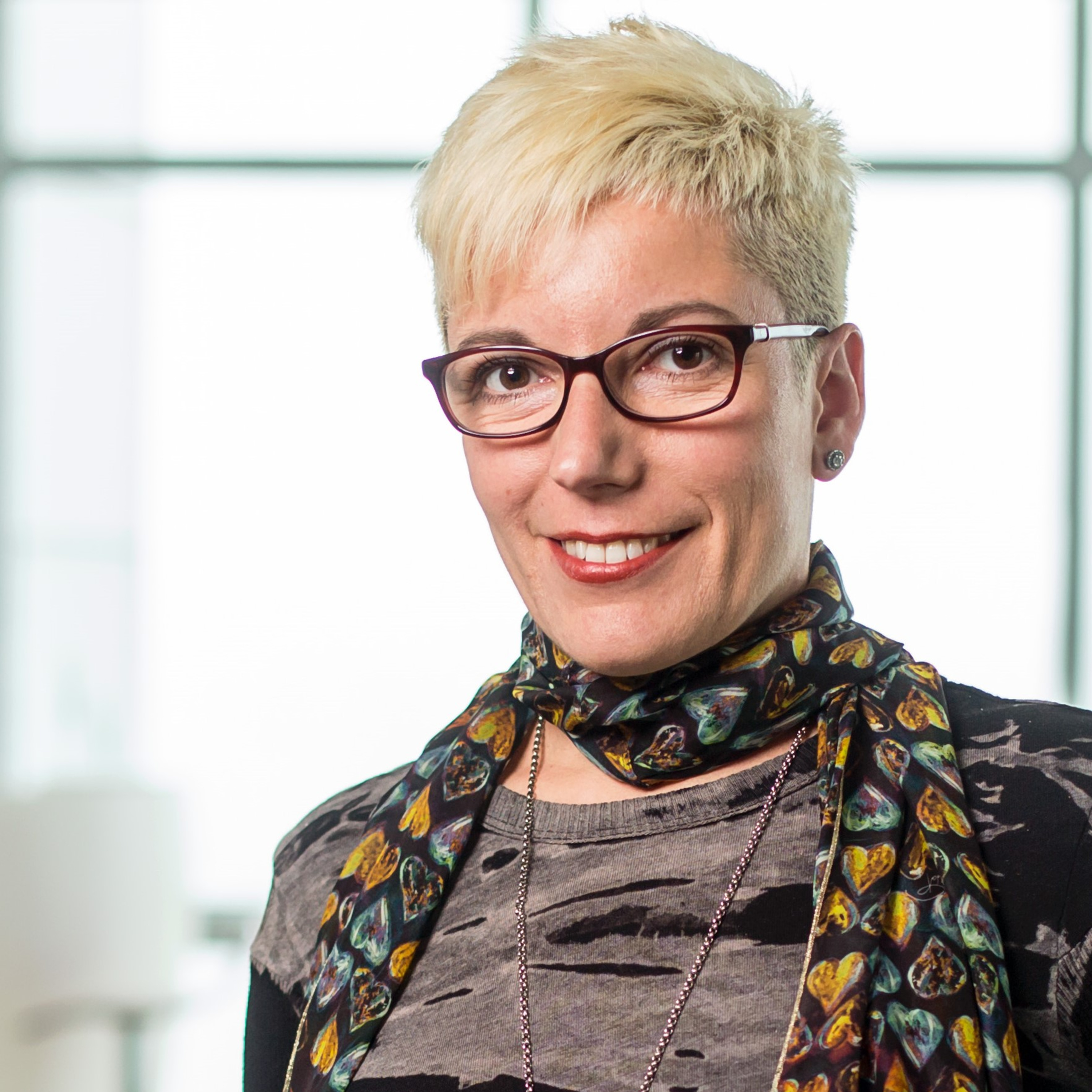
Episode 17: Silvia Garcia Codony, Assistant Vice President, New York Ventures
from UR Ventures Tech Hustle and Buzzle
51m 42s
In this podcast episode, Sylvia Garcia-Codone, Assistant Vice President of New York Ventures, discusses the fund's mission and operations. New York Ventures, under Empire State Development, seeks to promote economic growth by closing venture capital access gaps across New York State, particularly for entrepreneurs outside New York City or from underrepresented networks. Sylvia manages the $135 million Innovation Venture Capital Fund, which co-invests from seed to Series B stages in sectors like life sciences, climate tech, and AI, requiring at least double the investment from private lead investors. The fund evaluates startups based on team capability, technology defensibility, market size, and stage-appropriate traction. Since inception, it has invested over $90 million in 77 companies, catalyzing more than $1.2 billion in additional private capital, with about 10-15 new investments per year. Additional programs include support for emerging venture capital managers and a pre-seed fund. Sylvia emphasizes the fund's role in building a sustainable innovation ecosystem by providing capital and strategic support to high-potential, often deep-tech, companies that might otherwise struggle to secure funding.
[Music] Hello and welcome to the 17th episode of our "You Are Ventures" Tech Hustle and Vuzzle podcast, where we dive into the world of technology innovation, entrepreneurship and commercialization of discoveries from academia. I'm your host, Dina Uzri, and today I'm joined by Sylvia Garcia-Codone, Assistant Vice President New York Ventures, which is part of Empire State Development. Sylvia manages the New York State Innovation Venture Capital Fund, which is a state-backed fund that invests and seed through series-b technology companies across New York State. Sylvia, welcome to the podcast and thank you for joining us today. Hey, Nina, thanks for having me. So Sylvia, can we kick things off by having you tell us a little bit about your professional journey and what motivated you to join ESD's New York Ventures team? Again, sure. So I do have a background as a mathematician. I did a master of science in mathematics and then later on I did an MBA, but that's probably a less typical starting point for most people. So after graduating I went into life sciences, so I started in industry really doing direct development. So I was doing clinical trials for drug development as a volunteer statistician and that was my entry into industry and the life sciences. So I did a lot of clinical development and regulatory affairs. I went into more brother types of roles, project management and more executive positions. So kind of going away from, to a certain extent, from the more typical or specialized positions to more general ones. And then at some point, this was in Europe. I am from Spain, so I did most of my mathematics degrees in Spain. Then I went to Switzerland for a year where I finished the degree and then I went to Denmark to work, to starting working in this space. Then after eight years I moved to the States. And when I moved to the States was maybe the first foray into something more entrepreneurial. Some people call it entrepreneurial because it's inside the company. So I joined a startup company that, you know, it was a startup but a little bit bigger. There was in Europe and was wanting to move to the States. So I joined the company to come over here and start to affiliate from scratch. And I mean, I'm talking affiliates and so about that. I made the company at its bigger size was probably about 30 people at that time. And then later was a little bigger. So that was a huge leap, right? And the experience of also building an organization. And I was by myself here in the States for a period of time until we hired some other stuff. So that was also a company in life sciences. And then after that I did several things into a still life sciences, some biotechs, some digital health started another division for a digital health company. And then after there, they came the opportunity or the thought to try my, try my health, my work with starting my own company. That was also in digital health. And so I had a bit of the more direct into pre-nordial experience. And then after that I thought that, well, investment seemed as a better fit for me. And more something I was more interested, but I think there was the part of the appeal of doing more than one company and seeing many different things was part of it. But also the analytical skills and putting to work a lot of the things that I have been collecting and learning over the years was similar fittings. So I started investigating that area and ultimately became an investor. And what was that, was that an angel investment firm or venture capital firm or something in between? A little bit in between. I think everybody kind of closed it together, however you can at those stages. But I did join another venture capital firm out in the area more as a, there are different roles in ventures. So it was more of an ad hoc or a venture partner as compared to a full time. And so that allowed me also to see if that was something I would want to do. And then the more typical full time was when I decided to join New York ventures. And that is, that was a very interesting potential, right? And a very, one of the things that were exciting about this is it was both the ability to be able to invest, right? There is a fund that we can deploy into very exciting companies. But also the impact part or lenses that are at New York ventures were, is of course, having good companies, but is also good companies in making an impact for the innovation ecosystem for growth in the state, for finding companies and people that don't have the same networks or they have it as easy to to be out there. So that that was a very appealing part of the investment process. So not just looking for a shiny object, but more like looking for diamonds in the right way would call it. Yeah, I think that's a, that's a great segue because my next question was going to be, you know, for those who are new to New York ventures, how would you describe its mission and the structure within the Empire State Development organization? Yeah, so so new, as you say, New York ventures is part of Empire State Development. So which is the Economic Development Corporation for the state. So at the end of the day, well, we, we want or everything we, the agency that is used to support growth, economic growth in the state and everywhere across the state for everybody, right? So that's, that is the overarching lens and the way we have been, we think about New York ventures is that innovation is one of the more sustainable engines for economic growth. And we, but access to capital and to venture capital in particular is not the same across. So our mission is to close gaps in venture capital to access. And those gaps can be of different types. I think that an umbrella way to think about it is, is the networks, this is a business where it depends a lot on who you know and how you get to know the people you need to know. And it's for everything, for getting funding, for getting talents, for getting customers. So obviously if you are more privileged on how your network looks like and, and where you are, you also would have an easier time to build your company. You would also have a stronger ecosystem. You, those things would be there and it is, it would be easier. It's not going to be easy, but it's going to be easier. And for, for those that are not so fortunate and not have this around them, whether because of their location or because of their background, there is an inherent, inherent disadvantage to that. So these are the gaps that we are looking to close. Oh, and of course they need to be aligned with the priorities of the state in terms of industries and articles. Obviously New York City doesn't generally have the impression of being you know a difficult place to raise money, but across the rest of the state there are gaps. And so are you you know, is your philosophy and your mission?
that you will help support those companies to stay where they're located, but to bridge that gap and help them find access to capital, talent, customers, partners, etc. Yeah, so I mean, obviously the ecosystem in the city is much stronger than ecosystem somewhere else around the state. And that is one of the gaps we are focused on, right? We support the companies to grow there, whatever. But I also think there is a recognition that money is not the only thing. So the full ecosystem matters and the way to build it is by getting all the pieces together. So we are one important piece and we also, because it's both the money, but in the support we can provide to the companies in a more advisory way, or connections and so on. But then there are also the other things that are part of the ecosystem that help do that. And I also think those are important or not to be disregarded, because one piece alone doesn't make it. So it's very interesting to see how some of these ecosystems are developing and growing. Then there are, I think that important both the competitions that we have around the state, the incubators, just even entrepreneurs that have done their company, have maybe access it and do another one or help other entrepreneurs, the one, all those things matter. And obviously, economic resources are also an important one, but not only ours, also from private funds. Can you tell us a little bit more about the size of the fund, and then how many companies you currently have in your portfolio? Yeah, sure. And maybe I can also tell you one more thing about New York Ventures, so it's also out there, and I'm just stood on our structure, because as the full New York Ventures has three main programs basically. So the Innovation Venture Capital Fund, which is the fund that I manage, this is the one that has existed for a longer period of time. If you have met New York Ventures before 2023, this was the only program that we actually were running. And I'll speak a little bit more about that. But then since then, we also have two other programs. One is for the Merging Manager, so we invest into new emerging managers that do venture capital as well, and they will then invest into other companies. And we have a pre-seed fund that does smaller checks and has a more streamlined process to apply for that. And then our Innovation Venture Capital Fund is the main fund from we do seed-to-series-be early-stage investment. The fund has 135 million. We have five different verticals, life sciences, climate tech, agricultural technologies, advanced manufacturing, and computing AI. And that works more as a normal venture fund. We get to know the companies. We follow them. There is a full evaluation. There is investment committees to make the decision. And then when we finally decide to invest, then we will send the check. We do not lead rounds, so we always would be co-investing with other private money. And somebody else, the lead investor, would put the terms. So we're looking for reasonable terms, but we would not be negotiating party on what number to put in there or what relation to put in there. And so do companies pitch you-- while they're also pitching other private investors and sort of work out the deals simultaneously, or do you come in only after they've secured the lead investor? Yeah, no. It would typically be somewhat in parallel, because the dynamics of a round can be different. But normally, when you really have everything secured, then it's time to close. And hopefully, you have also circled the rest of the money in front of the round. So really talking to us sooner or later is a good idea. And also, we also have a process to run through, so we cannot just make a decision in no time. I actually think that most people don't do decisions just in an afternoon, of course. Yeah. And that's kind of what I was trying to get at was, can companies start having those conversations and getting that feedback before they've secured their lead investor just to understand whether this is even in your scope and interest. Yeah, absolutely. And actually, we welcome that very much, right? And knowing the companies early and entrepreneurs, it's the best way to get conviction and to make it smoother later on. And also, we are part of these ecosystem and building the ecosystem. So we are always happy to talk to entrepreneurs and say, yeah, this may be for us, this may not be for us, or maybe you can do something else. Or there is a limit of ours in the day, but we try to be as helpful as possible both to our portfolio companies, but also to the ecosystem in general. And you'd mentioned that there is a precedence seed matching fund, but the New York State Innovation Fund that you're managing is seed through Series B, is that correct? Yes. Yes. Well, we are going best. And we have minimum requirements on how much private money there is. It's not the matching fund, because most of the time, we basically decide on a check that we want to put in. And then there needs to be a least double as much money from somebody else, but it's from private investors. But it's not the way of, oh, I raised eggs. Are you going to match that? That's not how it's thought for the innovation fund. And how many companies do you have in the portfolio right now? So overall, we have invested in 77 companies. We have 56 active at the moment. So we have deployed over $90 million. And this is an interesting number. We have attracted more-- these companies have attracted after or simultaneously to that or investment a total of more than $1.2 billion. Wow. That's incredible. Yes, I think this is a very impressive number. And it tells how we are leaving our mission right this. We are there to be catalytic, to bring those-- to flatten the playing field and to close these gaps. So our company is kind of track. This kind of emesment also tells you that it's good companies are attracting more and moving along and growing. Yeah, that's a really important validation. So how many investments do you typically make each year? Typically, between 10 or 15 last year, with you 17, this year I think we're going to be more into this range. It depends a bit on what happens. But yeah, 10 to 15, I think, is the target. And can you tell us a little bit more about the key criteria that you are looking at when you evaluate early stage startups? Yeah, so I think you're going to hear the themes that we all look at as investors. So we want to see team that the way we like to think about it is we have some people in front of us, the team that's running this company. And the question really.
is can they make it to the next inflection point? You're going to make an investment. As an investor, we're going to make an investment into a company to bring them to the next level and to the next big inflection point, which is then they would raise another round or they ultimately would tax it. But since we are early, typically is another round. And so the question is, can this team-- is not that it needs to be perfect and have every single capability, possibly unimaginable? But are they good in us to bring the capabilities that they are going to need? Do they have the grid to do this? Do they have the resilience and the key abilities to make it happen? So-- and that means is the plan not only of the credentials because they can be more or less relevant eventing of what you are, but also how they have been doing so far, how are they reacting to things. And that also in part why is nice and relevant to know the companies for a longer period of time. So knowing them early, you can see how they have been evolving and how they have been handling certain things and how they interact with us as well. So all those things matter. So team matters, then, uniqueness or defensibility of the business. There needs to be why this is different. Why is this not so easy to copy? And they're going to be very successful company and can defend their position. The other one is market. In it's to be vegan, otherwise this is not a venture vacable endeavor. As compared to general businesses, venture vacable businesses need to have this high potential for growth because they are more risky. And that is the equation you take more risk, but there is also higher potential. So the market needs to be vegan, us. And then the last one that I'm mentioning here, whether it's actually very important, is what I would call traction. And that can manifest in different-- in means different things, at different stages of a company. So a company that's really at the very early formation stage, their traction is different. You cannot expect that they are commercial because they have to do a lot of work before they get there. But a company that is farther along, then you would want to see certain milestones on more a commercial side or a product side. So depending on where, you want to see something. But I think one piece is you need to see something, right? An idea is not fundable. You need to have a business. And you need to have something that tells you that this is moving in the right direction. And I'm thinking of life sciences companies that often take a lot of time to get something commercial. And maybe they wouldn't even exit that way. They would be exiting through an acquisition. So would you be looking at traction in terms of receptiveness and interest from a potential acquireer or partner? My view-- I mean, potential acquisition is farther down the road. So for life science companies or especially biotech companies, you want to see that there is real and manate. And that there is an idea of that this can be a product as well. I think one of the challenges sometimes is that the science can be very interesting, but how that translates into ultimately a product in an amenate and closing a gap for an amenate, a clinical amenate is that. And then there is a process to those things, right? So you know the steps. There is a in vitro, then you put it in animals, then you put it in humans. So all these steps belong to a certain stage of the company. And that's where you can see-- is that farther along for what the stage and the ground and the money that they are asking us? And I'm curious how many of our startups are coming out of a university or research institution versus not academic-based? So I don't know if I can give an number because I'm a very dated-driven person. So I don't say a number unless I know it first. So but they're a number. So I think we have both cases. There is-- this is the beauty about the startups. There is not one recipe to make it. It can come from either. Obviously things that are deep tech or they tend to come from academia because there has been a long time of basic research or more deep research before they get spun out. But you also see that companies, once they get spun out, they do more development and their own IP and several things. So I would say both. Yeah. I think some companies that are more tech-- like software, type Bs or so-- they don't tend to come from the universities. Yeah, that makes sense. Yeah, it makes sense. It tends to come from that. So looking at your portfolio and the history of your fun, are there certain categories of ventures that have been showing exceptional promise? So obviously, we always invest in things that we think have exceptional promise. Because that is the goal-- That's the name in the game. Yeah, exactly. I think one of the-- a bit of a gap as well in venture capital access is it is in deep tech. It's harder to raise for things that are risky technically. Or there is a perceived more risky-- if you look at from a general response of you, the software you can iterate it, and you can change it very fast. Technology that has been after years of research and so is much harder to pivot to that level. You can pivot to product, you can pivot some other stuff. So there are investors focused on these kinds of opportunities because when they are successful, they can be very, very successful. We have also seen that there is a little less money. And while we don't do that only, are explicitly, it's some of those that have potentially a higher, risk higher reward opportunity as well. And you need to be more patient. Yeah, the horizon is a little bit longer. Can you speak about some of your success stories from the portfolio? Yeah, so I think in the history of the fund, there were fewer investments in the beginning. We have been more active as time has gone by, and we are more active now. I don't think we certainly did not do 10 to 15 investments the first year of existence and not for a few. So there are some companies that are a little-- our first investment was some time ago, and we have seen them grow. So these are very exciting. And then there are some of the newer ones that we're excited about an evolution that is in a shorter period of time. So I think I can mention a few. So one of interesting companies has been in business in January, which is a tech biocompanied out of Cold Spring Harbor Laboratory and Long Island. So we actually invested in them very early when they were pretty much starting. And so now it's more than 40 employees company. They combine.
I don't know if Iology and AI discovery for new therapeutics. So that we have seen it grow too so much. And they are now based in Long Island City with a big laboratory. I also can think about another one that is in Buffalo, and that is in defense tech. So it's a company called Bounds Imaging. They do a throwable camera that can look 360 degrees. So they support military, low enforcement, and forest responders. And this company won the best innovation of the year by Time Magazine just last year. They won it actually twice. But last year was also-- [LAUGHS] And this is a company that, again, know they have a manufacturing in Buffalo. They have grown very well, very excited on how this is going. And then let me tell you maybe a couple of more at a tire. Newer companies were excited about what they are doing. And already the initial detection that they are having. So we have Exodus Energy. This is Albany and New York based. And they are recycling nuclear waste. So you can reuse the nuclear waste. So at the end, it's going to be very, very much smaller than what we are having now as waste. But also you can recycle so you can create more and more energy from it. And given the needs of energy that are coming across the board, I am sure you have heard many people asking how we're going to store energy, produce energy, the data center, the Poloia revolution needs. Yes. So very excited about this company. They have it work. They have the technology working. So that is an early stage investment for us, but very excited on how it's evolving to actually make it that it works. We also have a material science company called Kintra. We invested in this company. And when they also work at the lab scale, getting a bit of a product, see if it works. If it doesn't, now they have a scale to being able to produce and add industrial capacity. So they have the process for that. And they do a biovaz and bio-degradable. Yeah. So the fashion industry, which is also important in our state, can get high performance fibers that are also sustainable. And I didn't talk so many others. That's great. No, I love it. And I know you might be a little bit biased, but what do you think makes New York State special for entrepreneurs? I think there are several things that are good in New York. And also depends a bit on where we look, right? But we have a very vibrant ecosystem. We have a lot of well-prepared people. There are a ton of STEM graduates in our state. There is also a lot of-- for example, also talk about AI and so, but the applications of AI are much more relevant in our state than maybe the foundational models, but is also where you may get come to life. I also think there is a bit of different things to offer, depending on the state, right? If in the city there is a lot of people who want to live in the city because it's the city. There are more than 100 incubators and 200 co-working spaces. And obviously, there is money in the sense of there is the bankers and those resources. And then, I also look at the other things that are offered in the state. There is still a good workforce that is ready and available. There are these different hubs of excellence, whether it's the photonics in Rochester or robotics in the room area. Battery is in Binghamton. The Buffalo area, we also have very good clinical systems that are in hospitals who were talking about before life sciences and biotech. And those other areas still offer areas where you can put the manufacturing facility, where you can have other infrastructure that can benefit the company and can grow. So I think this is complimentary. And there are many ways you can put different companies in different places. So people likes to be in places where there is an ecosystem, where there is support, where they can find the talent, where they can grow their companies. And I think these exist in New York and are probably more vulnerable than in some other places. And you've kind of hinted at this a little bit about the different complimentary resources that contribute to the strength of an ecosystem and beyond funding. So are there any resources in particular that you've found to be especially impactful for founders? Yeah, I think some of our incubators across the state are very relevant and has been huge for those who are part of it. I think talking a bit about outside this update, the Central New York Biocolorator has been excellent. I also was quite excited to see some of the incubators both in-- I'm actually visiting the ones in Buffalo next week. And also in Rochester, the next Corpse part. So I think those are very relevant, very needed, because they also provide focus for gathering those entrepreneurs. The other things though that might be a little less known or less is the CAD centers that provide a lot of support to do certain research and tools and equipment to do it. So that it helps, especially in these early stages, to be able to co-develop and try things. And when you need this huge machine that is simply another 40 is there, and they can help you do that. The other thing that I think is enforcing our ecosystems is the competitions that we have across the state. So grown New York, genius, Ilombin A43 North. Again, those put those ecosystems into the map. They attract people. They showcase what are the special resources that they are and what you can get. That sometimes is not top of mind for entrepreneurs. And honestly, there is so much to research. And so that if you have a little easier way to figure it out, it can also be very difficult to come across everything. So those components build and help build the ecosystems that I think have made a big impact. So what areas are you most bullish on right now? There is always a lot of changes. Had wind, still winds. And so-- but Anna still pretty bullish about the climate tech and the life sciences. And obviously, I think that is nearly a given AI instance for me, everything we do. I think the challenge is to find where it is real and where it is hype.
But applications in these two areas in itself, I think, are very exciting in addition to what else we can find a bit more certainly peacefully. Okay, switching topics a little bit, if you're talking to academic researchers who are thinking about starting a company based on their university research, are there any particular words of wisdom that you can share? Yeah, I think, I think the biggest thing is that it requires a shift on the mindset, right? The way you think as an entrepreneur or business is different, that's the way you think as an academic. Typically, it's a little bit stereotypical, but the nature of it is in academics you think about the science and solving that problem and publishing and in business you think, what is going to be my product and how I'm going to sell it and what is my business. Maybe you are an investor on top of that, then is how am I going to make money on this? Because ultimately, as investors need to provide returns to their LPs, to their investors. So that is a change of mindset because often times you will see, especially when people start thinking about doing a company, right? It's like, oh, I have great science or I have a pattern, so I can go raise money and then I would have the money to do those experiments and so on. And I have a pattern, so I would be on my way. Yeah, it's not exactly like that, right? The questions are more, okay, so what is it going to be at the end? Why? Pattern or no pattern? Don't get me wrong, the pattern is not important, but it sometimes even is not that important. If you are doing, I mean, many people don't do a pattern because it's better to keep it as a trick secret. So again, a pattern in that space, for example, is probably not very useful. So the investment and the investment comes on business, not on an idea and not on a piece of science. So it needs to be translated into that. So I think that's a different mindset and getting that thought through and what it means for your particular invention or breakthrough is a caravan moment for anybody trying to spin a company. Absolutely. It is definitely a hard shift to make. Yeah, and mindset. I think that's also a way, you know, happy to have those discussions with people who are thinking about it. I mean, because it's like, well, it always is useful to understand how the people you're going to need, if you are the aspiring entrepreneur, understand how the other people would be thinking and what questions are they asking and it's not that they are right or wrong. And also they come from a different perspective and a different mindset. They have seen different things. So understanding what they are looking for and why are they asking why they are asking is very useful to then decide what you want to do and how you want to do it. And does New York ventures have discussions directly with tech transfer offices at universities? I mean, do you collaborate or how do you get to know, you know, the different university technologies that are available? Yeah, it's one of these that all of the above kind of answers because yes, we can, we talk to tech transfer officers, but we also talk directly to scientists and researchers. If somebody is thinking to or creating a company, whether it's through their tech transfer offices or not, we're happy to talk to them. If they are taking it from the university, they're probably talking to the transfer offices. We hope. Yeah. Right. We have to do our own marketing. And I think that's and for sure, I think I think they can be very useful and very helpful. And the more they also know what is out there and what is again, I was talking before about learn what people are asking and why they have one type of people you should talk to and understand why they are asking and why and how because they have seen it and they have tried and they have helped other companies, right? So you can learn a lot from that if you are an entrepreneur. Sure. Yeah, I think the point here too is that you see a lot of technologies and so you have a valuable and unique perspective to offer to early stage entrepreneurs. Yeah. And exactly. I would even say it doesn't mean that we are right or but it's we it comes from somewhere and understanding that somewhere is is very useful no matter what, right? Yeah, I mean, it's an important data point. I think sometimes people are hesitant or afraid to, you know, to go out and talk to people. And they should be encouraged to speak to you early on even if you're not going to meet a position to write a check. Yeah. And I think, you know, most people want to hear it, right? I mean, that's also that's also our job. So our job is to know what's out there and to find it. So is is exciting to hear about new things and what are your ideas and so and. And also it helps refine the communication, right? I think that's another typical thing that happens and so you need to be able to communicate what you're doing in a succinct way. That's actually that's one of the reasons incubators can be very useful because it get you these frameworks as well to to communicate more succinctly, right? And one of the worst things that happens is when somebody tells you that they need half a day or two hours to explain to you the details of their technology is like, no, we're just having an introduction here. I just need to be excited and understand not that high level and then, you know, as things progress and depending on if it's a fit for us and it's something we want to take a deeper life, then we'll do it. But you're not, nobody's really going to use hours and hours to understand one particular thing that you didn't even know or have understood if it's interesting or not to start with, right? So first you need to understand what is interesting and then you go more into it. And it's not just human nature in a way. And also because well, if you're going to see, we see many, many companies on a given wake and certainly across the year. So there is an opportunity caused of not meeting with the other ones or getting many people upset because you don't answer. A tricky balance to achieve. Yeah. So time is limited. So whenever I think people are generally somewhat generous with their time and they will give you a first intro, a first call and so on. So we also thinking that you make this count because you win the next call. It's still a need to cover everything. You want to make sure that you're going to be in that radar for the next. So one more question for you. You know, what's next for New York Ventures? Do you have plans to expand funding or launch new programs? You know, develop more partnerships? So yes, we always are looking for more opportunities to increase our impact, increase
is our funds that we can deploy and we can support more companies, more ecosystems. The specifically coming up right now, I don't have announcements to share, what I would also say is that we do have a lot of dry powder still and we also recycle our money. When a company exits, the funds go back into the fund and we're ready to deploy them. We do have a lot of dry powder that we can keep under in basements and we really are focused on all of us doing that. Well, we think about other ideas, but in the short term, this is our main goal. And I think we have three programs running, two newer ones. So we certainly want to make sure that those get put to good use while we think how we're going to increase it in the meantime. Wonderful. Sylvia, it's been a real pleasure having you on the show today. And you know, far listeners, if you'd like to learn more about Sylvia and New York Ventures, you can find links and resources in the show notes. Thank you very much. It was a pleasure, Dana.
Podcast Summary
Key Points:
New York Ventures, part of Empire State Development, aims to close venture capital access gaps across New York State, especially outside NYC, by investing in early-stage tech companies and supporting ecosystem development.
The Innovation Venture Capital Fund ($135M) invests seed through Series B in life sciences, climate tech, ag-tech, advanced manufacturing, and computing/AI, co-investing with private lead investors and requiring at least 2:1 private matching capital.
Investment criteria focus on capable teams, defensible technology, large market potential, and tangible traction appropriate to the company's stage, with a catalytic goal to spur further private investment.
The fund has deployed over $90M into 77 companies (56 active), attracting over $1.2B in follow-on capital, making 10-15 investments annually, and also runs emerging manager and pre-seed programs.
Summary:
In this podcast episode, Sylvia Garcia-Codone, Assistant Vice President of New York Ventures, discusses the fund's mission and operations. New York Ventures, under Empire State Development, seeks to promote economic growth by closing venture capital access gaps across New York State, particularly for entrepreneurs outside New York City or from underrepresented networks. Sylvia manages the $135 million Innovation Venture Capital Fund, which co-invests from seed to Series B stages in sectors like life sciences, climate tech, and AI, requiring at least double the investment from private lead investors.
The fund evaluates startups based on team capability, technology defensibility, market size, and stage-appropriate traction. 2 billion in additional private capital, with about 10-15 new investments per year. Additional programs include support for emerging venture capital managers and a pre-seed fund.
Sylvia emphasizes the fund's role in building a sustainable innovation ecosystem by providing capital and strategic support to high-potential, often deep-tech, companies that might otherwise struggle to secure funding.
FAQs
New York Ventures aims to close gaps in venture capital access across New York State, particularly for entrepreneurs in underserved locations or backgrounds, to foster economic growth through innovation.
The fund invests in seed through Series B technology companies across five verticals: life sciences, climate tech, agricultural technologies, advanced manufacturing, and computing/AI.
In addition to funding, New York Ventures offers advisory support, connections to networks, and helps companies access talent, customers, and partners to strengthen the broader innovation ecosystem.
Key criteria include the team's ability to reach the next inflection point, the uniqueness and defensibility of the business, a sizable market opportunity, and evidence of traction appropriate to the company's stage.
The fund has invested in 77 companies, with 56 currently active, deploying over $90 million and helping attract more than $1.2 billion in additional capital to these companies.
No, New York Ventures does not lead rounds; it co-invests with private investors, requiring at least double the amount from private sources and relying on lead investors to set terms.
Chat with AI
Loading...
Pro features
Go deeper with this episode
Unlock creator-grade tools that turn any transcript into show notes and subtitle files.
 PodcastTranscript AI