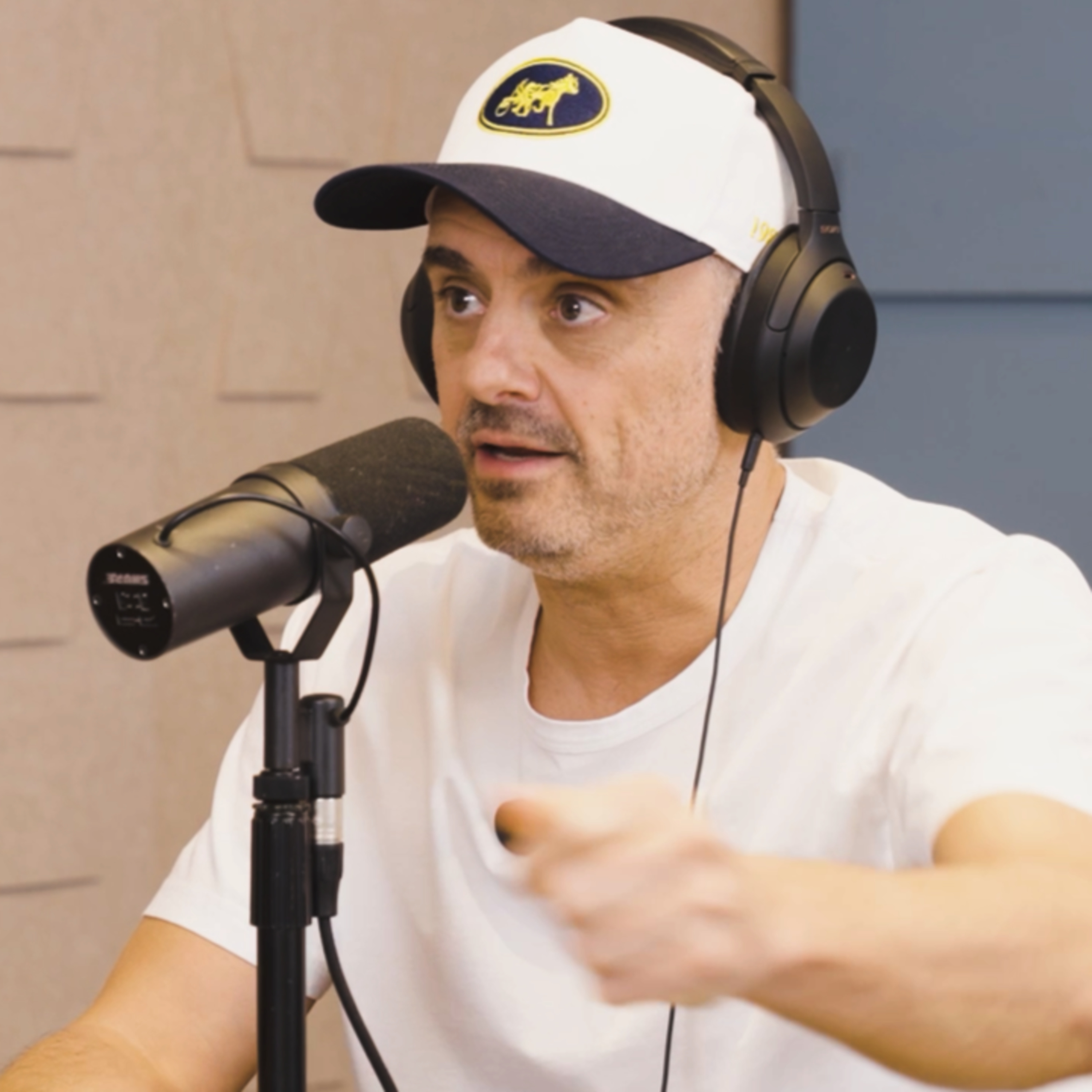
Why 90% of Brands Fail at Social Media Strategy | The 505 Podcast PART 1
25m 37s
The transcription covers a conversation about the significance of social strategy in day trading, particularly highlighting its impact on revenue growth. It emphasizes the importance of organic social media efforts over paid advertisements, focusing on authenticity and interest-based content. Gary Vaynerchuk's transition from the wine business to social media marketing is discussed, along with the value of expertise, humility, and adaptability in the marketing industry. The dialogue touches on the evolution of platforms like TikTok and the shift towards interest-based content. Overall, the discussion underscores the need for a strategic and authentic approach to social media marketing for business success.
Transcription
5325 Words, 28364 Characters
- In day trading attention, you said that 90% of brands,
they just do not get strategy.
If you could sit them down, brand or creator,
and talk to them for 60 seconds,
what would you say about social strategy?
- That it's the single most important thing to do
if you want to grow your top line revenue.
Let's start with that.
The reason it's easy for me to say that 90% of people
and companies don't take this shit serious
is I do not believe that 90% of people
understand that being remarkable at social
means that your business will be dramatically bigger.
I believe that many people know
that if you are remarkable at basketball,
you will make lots of money a year,
more than if you're remarkable at being an accountant.
I believe when it comes to marketing and business,
it's the reverse.
Basically, everyone's acting as being a remarkable accountant
will make you more money
than being a remarkable basketball player.
That's the point of my entire thesis.
- They're sleeping.
They're sleeping on it.
- They're sleeping on it.
- Coming here, I remember seeing a video and I was like,
if I'm not posting every day, I'm not flying out here.
- Yes.
- You know, so I've been on the grind.
We've been busting our ass with the pod
for the last three years, every single day.
And it's like-
- And then the question becomes, so that's one.
And you've gotten there.
Next thing I would look at,
if we were like all first cousins
and we're getting together right now,
and we were like actually ourselves,
but we're first cousins, but I've been busy,
but now we're hanging out for four days at the grandpa's
and you guys are like, hey,
can you like really look at the fuck we're doing?
I'm like, okay, cool, I'll do it.
The next thing I would look at is
how many platforms are you on
and how do you do it on those platforms?
Right, let's take an average 26 year old dude,
like you guys, right?
How old are you?
- 27.
- Nailed it.
- 29.
- I'm pretty proud of that.
- But we look 26.
- Yeah, definitely.
- We're in the way.
- You know, there's your personal life in like dating,
like what's your personal like romantic relationship?
Then there's your careers.
Then there's who are you guys as a friend?
Like are you good homies?
Or are you like so in your own shit right now,
you can't be a great friend.
Then I don't know if you have siblings,
like who are you as a sibling?
Then there's the version of you of who you are as a son.
Right?
And as I'm saying this right now,
I'm sure you're going through it
and everyone's going through it,
you're better at some things
and you're worse at other things.
That's called being a fucking human being.
That's how I think about Facebook, Twitter, Snapchat,
Instagram, TikTok, and LinkedIn.
The first thing I would look at first I would know
'cause you just said it, you guys were in it.
But then I'd be like, yeah,
you're like overly focusing on fucking TikTok and Instagram.
'Cause that's actually the answer to almost everyone.
Just like physical trainers,
like they all know like all the things we have,
like, oh, everyone's quads are fucked up
or everyone's glutes are like,
that's how easy it is for me to walk into every meeting.
I'm like, I walk into cool guys,
like you doing the thing in a new way.
I'm like, these guys are not fucking
paying attention to Facebook.
- Oh no, I took your advice.
We started posting them now.
- And?
- It's like seven and so we don't have--
- So early.
You really prepped for this.
- Yeah, yeah, yeah.
Brother, I wasn't about to count.
- You were ready for me to like flip it
and be like, do you post on Facebook?
You're like, yes, we do.
- Organic Facebook.
- Organic Facebook.
- But here's what excites me.
This is, we're getting in it now.
Then after I'm like, are you on everything?
Then I'm gonna look at like,
do you know how to do Snapchat spotlight?
Do you know how to do LinkedIn?
And so like, it's a very deep game.
And what would I say to everybody?
Organic social is life.
Then you do paid.
Then you do campaigns.
Then you do influencers.
And I think organic social for most people
still is like last place if you're a big company.
'Cause they think about social media from a paid.
I literally just had a meeting right before this meeting
where they were like, no, no, we're good.
We're running paid ads on social.
I'm like, no, no, it's organic social.
And then when something does well, paid ads.
Don't use media to amplify bad creative
and really hide bad creative.
Use it to amplify good creative.
- Test and learn, push money behind.
- Yes, but here's the key.
It's not test and learn.
It's market every day.
And when you have winners know what to do with it.
Every time I post on social organic, I'm trying to win.
I'm not like, oh, let's throw it against the wall
and see what sticks.
This is not spray and pray.
This is fucking real to me.
- But going at it every day, you're getting more at bats.
Like I feel like somebody who's kind of posting
a few times a week versus someone who's going
multiple times a day on multiple platforms,
you're just getting more reps.
- Yeah, and everybody's so insecure.
They'd rather have more views on one post.
So they let it sit there for a fucking month.
Like I don't give a fuck.
Like I'm trying to win out here.
And so like, yeah, I mean, more at bats is more at bats.
Like everybody who's listening right now
is one piece of content away from their life being different.
Do you know what I'm saying that is?
- It's crazy.
- It's fucking crazy.
- But it didn't used to be like that.
You're talking about the tick talk vacation of content.
- That's right.
What I now call interest media.
Content is finding people that are interested
in that content.
It's not social media.
I'm not posting and every time 80% or 60% of my people
see it.
Now it's like, I mean, every day someone's like,
in my comments like, GaryVee, where you been?
They hadn't seen a piece of content for me in nine months,
even though they followed me for nine years.
That's the game we're in now.
- And so how would someone,
how should someone think about their strategy differently
now that it's different?
- They need to realize that it's not about followers
the same way.
They need to realize that they have to mix up their content
more to find different audiences
while doubling down on what works for them.
So I'm like, what everybody does is like, Gary,
no, I have to have a niche or I have to be consistent.
I'm like, me too, that's 80% of my content.
But 20% of my content is giving me a chance
to fucking explode.
- Yeah, we're going for, yeah, you can go for a Homer.
- I wanted to ask you about you are the niche as like advice.
- Yes.
- If you go back on your-
- Thank you for knowing that.
- Of course.
- 'Cause that was like a once or twice piece of content
for me, but I think it's, I'm pumped that you picked up
on it, 'cause I think it's profound.
- You go back on your YouTube channel and at the time,
17 years ago, you're deep in the wine game.
- Yes.
- But your YouTube channel, you're posting about
so many different things.
So how do you feel about the advice of you are the niche?
- I believe in it.
For example, on YouTube proper,
me being all over the place is hurting me in some ways.
That algo works in a way that like is more Mr. Beast's life.
I'm okay with that ish.
My whole framework of document don't create,
you know, being contextual to a lot of people.
There's definitely in a YouTube proper world,
some shortcomings that come along with that,
which is why I've never,
even though I have a lot of followers,
my views are not strong,
'cause I'm not doing the best practices.
And that's kind of out of like sustained curiosity,
if it ever changes.
And a shortcoming that I should be better at,
and is very much a big priority for mine in 26 of like,
being more production oriented.
- But you like showing multiple different things here.
- I do, but I can do that on every other channel.
Like YouTube is now like looked me in the face,
like YouTube proper, not shorts,
has looked me in the face as a platform.
And like that's cute, Gary,
but like you're gonna fucking lose
if you don't like conform to us,
which is more programmatic stuff.
So I feel like I'm ready to like fold.
Like I feel like YouTube beat me, you know what I mean?
Kind of like this can beat me and I got two nine, you know?
So I think that's where I'm at with that.
But bro, like everybody does everything.
Like this concept that you're gonna find some niche.
Oh, so what, you're a magician, so is everybody.
So what are you a fucking social media expert?
That's nice.
Like, Lee, you know what I mean?
Like everyone's doing it.
There's a billion people.
There's gonna be a hundred billion people doing it
'cause 92 billion of them
are gonna be AI influencers doing it.
So how the fuck are you actually gonna break out?
It's just you being you all the fucking way.
- I saw a clip from--
- Do you know what I mean?
- Yeah, no, a hundred percent.
I saw a clip from Hermosi and he was saying how,
he started going broad.
He was like philosophy, some dating advice.
And he's like, my sales dipped or sales dipped like crazy.
And he's like, fuck that.
So that's 'cause he was going brand.
- Yes.
- Like if you go brand, your sales will dip.
- But do you think if he sustained it
for a longer period of time
that he would have seen it start to flat,
like start to go back up?
- I don't know and I haven't analyzed what Alex is doing.
What I would say is in the macro.
I do believe that most people don't run marathons,
they run sprints.
And this is not an indication to Alex.
I really genuinely, on the record,
like fully have no fucking clue.
But like what I would say is that a lot of people
want sales.
And like, that's good.
It's just that when you build brand,
you are not over analyzing every day, month,
or even year on sales.
- How long did it take you though
to kind of build this muscle of you post something
and you're not so deathly attached to what it does?
'Cause it's been hard.
It's been hard.
Like I've been doing it and I'm like, yo,
I'm now looking at the 30-day aggregate total,
not individual and it's so much more holistic for me.
Because like if you do three posts a month or something,
you're like so tied to what is going on.
- I have never had to make my money from my audience.
Think about that, right?
Like I broke out in wine.
I was building a business for my dad.
I was getting quadruple hosed.
I was building a business that wasn't mine.
My dad wasn't paying me for shit
and I wasn't getting any money from my audience.
Like a triple hosed, like triple fucked.
So think about how lucky I got.
For the first five years of my life, I got triple fucked.
So I got trained into not worrying
about making money from it.
Then when I exploded over the last decade,
I've been building VaynerMedia.
Yes, I've sold empathy wines, I sell V-Friend stuff,
but like if I didn't sell a single V-Friend,
it wouldn't matter. - Like this company
that you're in right now,
this company will do $365 million this year.
It's a big business.
This year, revenue, not valuation, revenue.
- Is it true that one of the first Vayner clients
came through the wine shop and you had met them there?
Or is that next? - Yes, yes.
- It is true, is it Gillette?
- Yes, it was an agency that was working with Gillette.
He was a customer and he outsourced some work to us.
And what, talk me through the early days
'cause I remember hearing a clip of AJ and he's like,
we weren't in this ad agency game.
You were just a big listener
and you had an inclination of what you thought would work.
How did those early days go?
The very early days, 'cause you walk into this room
and it's electric, I'm just so fired up to be
in your office and walk through these halls
and I just wonder, what was your idea back then
when you're still in the wine shop?
- That the world was about to change in a real way.
And everything I did was around that.
I took all my savings and invested into Facebook and Twitter.
I started to put myself, I was 34 years old
when I started to really put myself out there.
31 for 34 Wine Library, but 34 in 2009 is when I'm like,
should I show everybody like who I fully am?
Not just a wine critic?
So I did that, then I started this company.
Like basically my mindset was social media is going
to eat up the oxygen of the entire world
and I'm gonna be at the forefront of it.
- And what sparked that for you?
Like what was that thing that you were saying?
You were just so in the trenches.
- I was living it.
I was living it, even before Facebook and Twitter,
I was trying to figure out how to use my space to sell wine.
And I couldn't, 'cause it was really kids
and like I couldn't figure it out,
but I was trying to figure it out.
- And was there like an aha moment of you using social
that led to way more sales selling wine
that you're like, I can do this with every other company?
- It was Wine Library TV.
I would review wines on Wine Library TV
and I remember right away, episode one,
I was like, I'm not gonna shill.
I'm gonna fucking review these wines.
And even if I have a hundred cases of this shit
downstairs and I need to sell it
and if I personally don't like it,
I'm gonna say I don't like it.
Which was bananas crazy.
- Yeah.
- Like fucking bananas crazy.
But the point it was trying to make with Wine Library TV
and for anybody who's listening right now,
still my passion to tell people about wine is,
this is what I think.
Do you like, actually let's play a game.
You guys like oysters?
- Yeah. - Yeah, a little bit.
- Good.
Oony, sea urchin.
- Here and there.
- English peas.
- Never had 'em. - Never had 'em.
- Blueberries? - Yeah, big blueberries.
- What's your favorite fruit?
- Strawberries. - Yours?
- Every day. - Yeah, strawberry.
- Great, literally for me,
strawberry is probably 10.
- That's wild. - What's number one?
- Blueberries. - Blueberries, mango,
kiwi, you know, raspberries.
Dude, a ripe nectarine hits.
- You know what's funny?
I had a fucking apricot this weekend
that blew my face off.
But like strawberries, genuine, this is real.
Way down, like as like the big fruits,
like strawberries are just like--
- It's a hot take.
- And it's funny, oranges, bananas, and apples,
I'm also like okay with, but like all three of them,
and those are like my bottom tier,
and I like all three of them more than strawberries.
So, let me get to the point.
You guys shouldn't blindly like every wine that I like.
We have different palettes.
So my point to everybody was like,
try different things just 'cause I'm an expert
'cause I know a fuckload about wine, doesn't mean,
you don't ask me what food you should eat
just 'cause I've eaten more food than you.
Like we have our own preferences.
So the framework of the show made me comfortable
saying this is shit, and realizing it won't kill us
selling it 'cause I was pushing the audience
of like don't even listen to me, but try different shit.
So then we get into Vayner.
We leave the wine, we're fully going into Vayner.
What do you think about social at that period of time?
Are you like YouTube is gonna be a ticket?
This is gonna be more eyeballs.
It'll get me in front of CMOs.
They'll see this, maybe I'll be able to book a meeting.
Or was it outbound?
Were you emailing them?
- I already had hundreds of thousands,
maybe even a million followers on Twitter
when no one did already.
- Because of all the wine stuff.
- Correct. - Okay.
- And that blew people's fucking fix.
- And that gave you social proof.
- And that gave me social proof.
- Okay.
- And when you walk into the meetings,
you have no pitch deck like your brother said,
and you're just like, check out all the followers.
- We're doing something right.
- No, it was even better than that.
That would have been like, lazy.
It was, here's what you should do.
- Here's what's working.
- Like, I literally did what agencies
would spend three months game planning on,
improv ad hoc on the spot.
- Oh, you're like, hey Gillette,
this is like actually what you should do.
- Gillette was like outsourced,
so we had to execute something.
The meeting we had with Stride Gum, Stride,
was like, basically I told them their entire ideas
and marketing plan off the rip.
Like, I didn't even know I was,
like, just like on, just because I'm in the,
I could do that now.
- Yeah, you're in the game.
- I'm in the game, that's it bro.
Like, listen, everybody was listening.
Whatever you know most, people are like,
man, you're such a good public speaker.
I'm like, of course.
'Cause I only talk about shit I know,
and I'm not scared to say I don't know.
The reason I do Q and A publicly,
and nobody else does, is I'm not scared
if you ask me a question, and I don't know.
Like, if you used, I have humility as my superpower.
If you asked me a basic marketing term, acronym,
and for some reason, I'd never come across it,
or maybe I'm having a brain fart.
And I just, I would have the humility to be like,
what's a TCN?
And you'd be like, whoa, what the fuck, Arivie?
Like, how do you not know?
Or a cack.
Like, if you're like, hey, what's the cack?
If I, for some reason, had a weird moment in my brain,
and was like, I'm sorry, what's cack?
And you're like, bro, customer acquisition.
Where you'd be like, whoa, like, Ari,
like, you would look down on me?
I don't give a fuck.
So when you have humility,
and you just talk about shit, you know,
I watch so many people do interviews, podcasts,
keynote speeches, talking about shit they don't know.
And I could smell it on them.
Mainly 'cause they're talking about something I might know.
You know what I mean?
Like, when they, I don't know it,
then I don't know either, sounds pretty good.
Exactly, like, but, you know, and so, I don't know,
like, I'm not, I'm never scared.
And I wasn't scared in that meeting,
or building this agency.
I understood that I didn't go to marketing school.
I knew that I didn't go to ad school.
I knew I had no relationships.
I knew I knew none of the terminology.
I knew I knew nothing, other than I knew exactly
what was happening and going to happen.
- Take me--
- Which is the only thing that matters.
- Yeah, no, it is.
Take me back through when TikTok kind of transitions over,
and now it is called TikTok.
Me and my boy Kyle, we were literally
in our fraternity basement hiding from people
making videos, 'cause they were clowning us so hard
for being on TikTok.
And we posted every single day, and it worked.
So shout out to you for making those videos.
What were you telling the big brands
you were meeting with being like,
hey, we need to be on--
- I mean, there's videos of me,
and you guys can clip this for audio,
of me doing fucking Ask Gary Vee about musically.
Like, this is even before TikTok bought musically,
because it was like Tumblr.
Tumblr, the reason I vested in,
it was around interests, not who.
It was what?
You were into art.
You were into skateboarding, and you followed those accounts.
Not you were into wine, but you followed Gary Vee, got it?
You were following interests.
I could tell that musically was gonna be that.
It was the interest graph, not the social graph.
I could see that content was finding audience.
I'm like, this is big.
- You just make it, and whatever comes to you, comes to you.
And then your interest, it starts to--
- Guys, do you understand that you could double
your podcast audience if you guys made a video about burgers?
People don't believe that when I say that.
- Go deeper on that.
- I will.
By you throwing off speed pitches, that 20%,
that gives you the opportunity to get a whole new world.
If you guys just literally told a frat story of a keg stand,
that's the video that might get 3 million views,
and they'd be like, who are these guys?
Oh, shit, this podcast, oh, I do that.
Like, people are not giving themselves a chance
to be discovered.
People want sales.
People want depth.
People have philosophies of like, I wanna be on brand.
I wanna be consistent.
Ideologies, it's not how the game works.
- Yeah, another piece of advice that you've given
is sawdust content, which I love.
Can you go deep on if there's a brand
and they have a big photo shoot coming up?
Like, how can they best utilize that whole campaign,
that day shoot, to get as much content as possible?
An intern that's there setting up the food in the corner
for this shoot you're doing around your fucking nice watch
might be doing the thing that most sells watches.
So, if you're filming everything, if everything's meta,
if everything's a production day,
I mean, most retailers should be filming
their stores day to day.
Like the security cam footage,
post produced properly, is probably more effective
than the fucking millions of dollars they're spending
on making videos and pictures
to sell fucking shirts at the gap.
Like, people don't get it.
It's like, it's just so goddamn obvious.
It's like the mundane.
It's the fucking why reality TV works.
It's why influencer marketing works.
Like, people are interested in different,
like, everyone's pumping.
Do you really fucking believe your nice photo shoot
for your fucking sweatpants is what's gonna get it done?
That's what every piece of content on Instagram is.
- Okay, so if you were--
- So the model, when they sat down
and like said lettuce is fucking delicious,
that's the thing.
- Yeah.
- Do you think they're afraid though,
because they're like, that isn't on brand,
like the luxury brand-- - Yes.
- Yeah, that's what it is.
- But that's why they're bad marketers.
- 100%, yeah.
Even, so when you sit down with these big boys
and you're talking to them and you're saying,
hey, this is what we should be doing.
How much pushback are they still giving you
on like their social strategy?
- At this point in my career, not a lot to me,
but then they don't do it.
- They're like, yes, yes, yes.
- 10 years ago, they would shit on my fucking face
and like pushback and yell and argue with me
and then I ended up being right to a lot of them.
So now in these meetings, they're not really pushing back,
they're yesing me to death, but then they're not doing it.
So their pushback is more like in reality,
not in the meetings.
In the verbal meetings, like I'm also incredibly hard
to debate with because I really know too much
about what's actually happening.
Meaning when I told Pepsi that liquid death,
prime energy and poppy were a problem
and they're like, no, it's not.
And then it is like, you know, this is now 15 years deep.
When I said TikTok, when I said, like, you know,
it's like, it gets hard.
And I know how to talk to them now.
I'm not, by the way, I'm not trying to, like,
I'm not trying to be cool with our clients.
It's not cool to talk to our clients.
You know what I mean, these are business meetings.
I'm not trying to put on a show.
Like I don't think it's cool to talk
to the CMOs of these clients.
Like corporate America people are not cool.
The world's cool.
Like this is not cool stuff for me.
This is business.
So my meetings are very business.
I'm like, let me show you why this is good
and what this does and why you get leverage
against Walmart for retail media if you do this
and what's happening on Amazon.
And like TikTok shop, like, these are business meetings.
I'm animated like I am right now,
but this is not about like show.
I'm not trying to convince them.
I'm not trying to like win the debate.
We're having business meetings.
- You said that you've changed the way you've talked to them.
You've learned how to talk to them.
So how have your pitches changed
from when you first started Vayner to now?
- I know all the dumb shit they believe in.
(laughing)
You know, back then-- - Give me an example.
Give me an example.
- An example before was like, well, this works.
And they're like, you know, I was like,
okay, you should do Twitter and this is why.
And like, if you do community management,
they're like, well, how do we measure that?
I didn't even understand what they meant.
I'm like, it's common sense.
This is good to like get customers to care.
They're like, yeah, but the report,
like what's the report that says community management
on Twitter in 2009 as ROI positive?
I'm like, what are you talking about?
And I was like, oh, fuck, this is school.
Like, oh shit, MMMs and MMA is like internal modeling.
Like all this fake shit.
I didn't realize how many companies sell bullshit
to Fortune 500 companies to justify bullshit behavior.
So now I at least can talk about 'em.
Like, you know how your MMM will listen?
You know, like I could talk to the acronyms,
the rules, the way they actually work.
They think in like lower cost CPM is good.
I'm like, you do know when you buy shit for less money,
it's normally bad.
Like if you shop at Marshall's versus shopping at like,
in like a boutique in Soho, you're getting worse stuff.
You should be paying higher CPMs for good shit.
- Absolutely, you said in day-train attention
that post-creative strategy was one of the most important
metrics that you're looking at.
Break that down to like the everyday person
who's just a creator without them getting--
- Every creator listening here should read every comment
left on every piece of content
and read every DM they've ever gotten.
- Are you still in the weeds of the DMs?
- Yes, but I can't read all of them.
I'm getting 10,000 a day. - Yeah, you can't do it now.
- I'm trying to use AI to get me summaries.
What people have to say to me publicly and privately
is the most important shit.
I'm just a human and I can't outsource it either.
I'm not gonna have my admin team do it for me
and act like they're me.
I read five hours a week, 10 hours a week of DMs
and comments still to this day.
That used to be enough to get back to everyone.
Now it's not even a, you know, I'm not even in the game.
- You got back to me seven years later,
which is fucking epic.
Tell them, tell them a story.
- So I read Jab Jab Jab Right Hook
and I DMed Gary as I was reading it.
I forget what I even said to you.
And seven years later, I get a message from him saying,
sorry I missed this, hope you got it all figured out.
And then you wished me a happy holidays.
And I was like, fuck yeah, you too.
Shoot my shot here.
Do you want to come on the podcast?
And then you go, maybe let me connect you with my guy
and then you put us in a group chat
like 30 seconds later.
- This is real life to me.
Like I'm, look, you guys know this.
I'm super out there.
Like super out there, right?
I say a lot of things out there.
I'm petrified to not live what I talk about.
I would have the worst reputation behind the scenes.
You know, you mentioned Babin before we started the show
or maybe on the show.
I like when people ask about me to people that really know me.
99.9% of people don't really know me.
Luckily for me, they do because I'm very much who I am
publicly, but I get really happy knowing
what's going on right now.
Like right now, knowing there's conversations about me
and the person that really knows me
is blowing the other person's mind
and telling them I'm better than they think I am.
Not worse, 'cause unfortunately you guys are starting
to live, a lot of people let you down.
Like don't meet your heroes is a real fucking thing.
And not that I'm a hero, but I'm a public figure.
I'm aware of that now.
And so people are curious.
And so like, I like eating my own dog food.
I like telling everybody on this podcast to answer everyone.
And I like that a human can tell them a story that is real.
And that's insane.
That like even is insane to me.
Even though I live it and do it, like seven years.
I'm in my shit.
I'm in my bag.
I live what I talk about, which is good.
I wish more people did that.
Podcast Summary
Key Points:
Importance of social strategy for top-line revenue growth emphasized.
Focus on organic social media as a priority over paid ads.
Value of personal authenticity and interest-based content highlighted.
Gary Vaynerchuk's journey from wine business to social media marketing discussed.
Emphasis on humility, expertise, and adapting to trends in marketing.
Summary:
The transcription covers a conversation about the significance of social strategy in day trading, particularly highlighting its impact on revenue growth. It emphasizes the importance of organic social media efforts over paid advertisements, focusing on authenticity and interest-based content. Gary Vaynerchuk's transition from the wine business to social media marketing is discussed, along with the value of expertise, humility, and adaptability in the marketing industry.
The dialogue touches on the evolution of platforms like TikTok and the shift towards interest-based content. Overall, the discussion underscores the need for a strategic and authentic approach to social media marketing for business success.
FAQs
It is crucial for growing top-line revenue and making a business dramatically bigger.
Organic social media is essential as it lays the foundation for paid advertising and influencer campaigns.
Individuals should focus on being authentic and consistent while experimenting with different content to engage diverse audiences.
Gary Vaynerchuk used his expertise and social proof from his wine-related content to attract clients and offer valuable marketing insights.
Gary Vaynerchuk emphasized the importance of recognizing emerging platforms early and leveraging them based on interests rather than just social connections.
Chat with AI
Loading...
Pro features
Go deeper with this episode
Unlock creator-grade tools that turn any transcript into show notes and subtitle files.
 PodcastTranscript AI