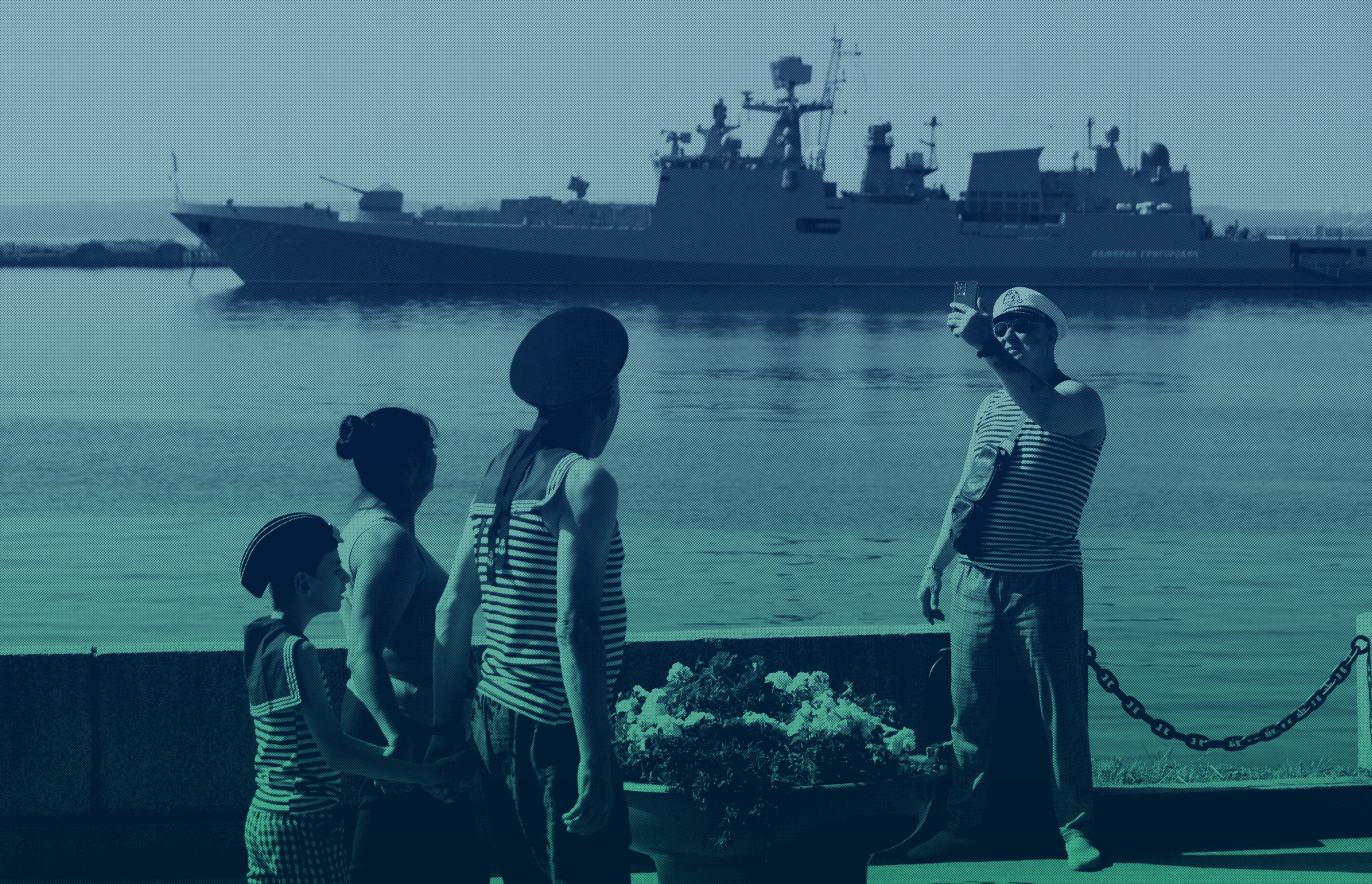
Whither Strong? Exploring Conceptions of Russian Power
31m 38s
The "Bear Market Brief" podcast delves into Russia's geopolitical influence despite its middle-income status, questioning why Russia holds significant weight in global affairs. The conversation with Seva Gunitsky touches on the complexities of Russia's power, highlighting both material resources and agentic capabilities. The discussion underscores the importance of not just possessing resources but also mobilizing them effectively to achieve political outcomes. Additionally, the impact of perception on Russia's power is explored, examining how varying viewpoints, such as those of Trump and critics, can skew the understanding of Russia's strength. The analysis delves into the implications of these perceptions on global politics and the potential risks associated with underestimating Russia's ambitions and actions. Overall, the conversation provides valuable insights into the multifaceted nature of Russia's power dynamics and the intricate interplay between resources, agency, and perception in shaping its role on the world stage.
Transcription
5269 Words, 30323 Characters
Welcome to Chain Reaction, the Foreign Policy Research Institute's flagship network of podcast series examining the political, security, economic, and social trends shaping Europe and Eurasia. Throughout the year, we're talking with experts about developments in Russia's war in Ukraine, the new European security order, the past, present, and future of the Baltic states, Russia's political economy, and great power competition in the region. Join us each month for Fair Market Brief, Baltic Ways, Report in Short, and of course, our flagship, Chain Reaction. New episodes are available each week on Apple Podcasts, Spotify, or wherever you get your podcasts. This week on the Bear Market Brief. By many accounts, Russia is a middle-income country. If you look at measures of nominal GDP, its nearest neighbors are Brazil and Spain. So why then does it exercise such tremendous weight in geopolitics? I'm Aaron Schwartzbaum, and this is the Bear Market Brief podcast. This is going to be another meta-episode. I want to zoom out and ask a bigger question here. What shapes Russia's ability to drive the global agenda? And if it's strength, what does strong even mean? There's another question here though. Why do conceptions of Russia's strength tend to vacillate so much? If you look at the news, you'll see usually two extremes. Russia is either unstoppable or it's about to collapse. Both of those can't be true. We have a recidivist guest this episode, one who is always a pleasure to talk to. Seva Gunitsky is an associate professor and the George Ignatieff Chair of Peace and Conflict Studies at the University of Toronto. He is the author of Aftershocks, Great Powers, and Domestic Reforms in the 20th Century, which was selected as one of the best books of 2017 by Foreign Affairs. His work has appeared in International Organization, International Studies Quarterly, International Theory, and Perspectives on Politics, as well as public outlets like Foreign Affairs, Foreign Policy, The Washington Post, and The New Republic. We had a great conversation. I hope you enjoy. Seva, welcome back to the Bear Market Brief Podcast. Aaron, thanks so much for having me back. So catching up a little bit since your last appearance, what has been keeping you busy? So I've been working on a few things, mostly related to Russia and the new Trump administration. I have a piece in Foreign Affairs a few weeks ago on secession and what Trump means for separatist movements. And I also have a new piece in Post-Soviet Affairs with a co-author, Anna Lysenko, looking at the IT army of Ukraine that just came out a few weeks ago. There was a strange thing that appeared in the wake of the invasion, where this IT army of volunteer hackers sprung into action, and our article kind of documents that. And a little bit recently, I've been interested in Russian power. I wrote a subsequent essay on sort of the strange paradoxical nature of Russian power, which is, I think, why I'm here. Yeah. Lots to cover. And I think we want to zoom in on the Russian power angle specifically, but I mean, really relevant topics across the board. Yeah, great. And I think we can, like, honestly, I don't think people care what I've been up to. I think we can just go right to the fake country. Well, I think they care. Yeah. Great. So, we have, in a methodologically rigorous effort to understand what makes a country strong, come to the conclusion that we need to make up a not-Russia, which I have terms that Primerian Federation, little linguistic wordplay there, Primer in Russian, meaning example. Very nice. I love it. So, we want to talk about the Primerian Federation, which is assuredly not Russia, a different place altogether. How do we think, in the case of this made-up country, what makes a country strong? How do we even begin to measure that? Yeah. Well, this gets into a really tough question that political scientists have tried to resolve for a while. How do we measure national power? I guess I'd say when we first started trying to measure national power, we kind of naturally gravitate to tangible things you can kind of see and count. Armies, factories, wheat, whatever. And so, in IR, the traditional measures are exactly what you might expect, focusing on material resources, on hard power. And probably the most influential measure we have is the Sink Score. Have you ever heard of the Sink Score? I have not heard of the Sink Score. Yeah. So, it's very popular among IR scholars, but not very well-known outside. It's been around for about 50 years now. And so, it's become sort of one of the most popular measures, almost by default, you know, when over a thousand papers are cited. And it was developed by this guy, David Singer, at the University of Michigan, way back in the 1960s. Actually, I housed that for Singer when I was an undergrad one summer, kind of randomly. He was a very old man by that point. He was kind of infamous as kind of a jerk. He was reviewing a paper and he said, you know, the paper did not have a statistical component. So, he wrote a one-sentence review. This is not social science. Which to me is just kind of like a mean thing to do and unproductive. Anyway, I promise this actually, there's a point to this tangent. His thing was, we need to gather as much data as possible on war, on alliances, on national capability. The more data we have, the more we can run regressions and figure out what causes war, which is kind of like a very inductive approach, not very theoretical. And he had this big nemesis in Ken Waltz, who was another big IR scholar, who took the opposite approach saying, you need theory, not data. Otherwise you just end up with a bunch of disorganized data that's not really capturing what you're trying to capture. What was the line that academic feuds are so intense because the stakes are so small? Was the line? The famous Kissinger line applies very much here. They really did not like each other. In fact, when I was applying for a PhD program, Singer wrote me a recommendation letter. He showed it to me, which is just how he operated and in the letter it said, you know, we've had discussions and this young man has really taken the wrong side in the Singer-Waltz debate. But I appreciate his honesty, even though he's totally wrong. That was probably the letter that got me to Columbia, where I eventually studied under Waltz and some of Waltz's acolytes. But anyway, how is this related to Russian power? So Singer's SINC score is a composite index, which means he just throws a bunch of things in that deal with material resources. Like remember, he just wants data, right? These are things that are easily observable, relatively speaking, and they're measurable. And so there's six components, total population, urban population, iron and steel production, energy consumption, military personnel, military expenditure. So the individual elements don't matter. The basic idea here is that these indicators somehow collectively capture a country's demographic, industrial, military resources that can be used for war or whatever other state objectives. And it's been used for like, as I said, over a thousand studies by now and more every year. And so you get, with that index, you get countries like China, which has been leading the world since 1995. Okay. And then you get US and India in the top three. So countries with large populations and armies that produce a lot, US has something like 14% of global power, China has 22%, then India with six, and Russia has 3% of global power by that measure. And Japan comes behind by two and a half. So by these measures, Russia is in the top five, kind of a great power of sorts, but it's very far behind China and the US and India and all those. And that's the most common measure, but you could probably imagine there are a number of problems with that measure. I mean, first of all, are these really good measures of power, like coal and steel, and seems a bit outdated. Maybe it was important in World War II, but not as much today. What if there were a large power like the Primarian Federation that didn't have nuclear weapons, but had lots of other metrics in its favor, like there's a capability angle there too, I suppose. Yeah, like microchips or something else that's not captured by those kinds of crude material resources. So those measures are very crude, and we know this, but we use them anyway, because it's hard to come up with anything better. I think the main issue really is, okay, so you have these resources, does that mean you can mobilize those resources? Do you have the political capital to use them? And that's what I mean when I wrote in my piece about agentic power. You need to have that willpower. Of course, willpower by itself is not alone. You can't just will yourself into great power status. But the point is, having these resources is a necessary but not sufficient condition. You have to mobilize them. So that means things that can't really be put into regression tables, like the willingness to use your army, and the ability to absorb pain, and to experience losses without endangering your regime, or to break global rules, and all those things. Let me give you a specific example. In the 1894 Sino-Japanese War, China has a sink score that's five times as large as Japan. But in the war, Japan just mops the floor with them, because they have a much more organized, much more efficient fighting force. And in fact, throughout the 19th century, China has the world's biggest population, the world's largest GDP, the world's biggest military. So it has a very high sink score, but you know what that century is called in China, the 19th century. A century of humiliation? Exactly right. It's a century of humiliation, defeated repeatedly by much smaller, quote-unquote, powers like Britain and Japan. That's why I think we need to think about power, not just as the sum of resources, but the capacity to turn those resources into political outcomes. So does the state have the internal cohesion or decision-making autonomy to do all those things, the ability to act decisively or even rashly? And I think Russia, in some ways, is a perfect example of that. Part of this has to do with leader personalities, so like the oomph required to go to war. And I guess part of this has to be institutional. So can we dive into some of the, like, there's, you need to be organized to launch a war, but there also needs to be somebody theoretically on top or a collection of people on top who are, I don't want to say cultural, that starts to get into some topics we'll talk about later, wink, wink, nudge, nudge, but a willingness to use it for. So any thoughts there on some of the differences or nuances? Yeah. So in order to have those resources, you need to have people who are willing to use those resources. And that's not controversial. Like, even structural realists like Ken Waltz will say, look, if you want to examine the nature of power, you have to look at who's running the place, not just how much power they have. And so as a result, that means we have to deal with things that are pretty intangible, and that's uncomfortable for so-called realists who are used to material things. So on Russia, Russia, for example, there, again, like if you look at GDP or SINC score, it's far behind the US or far behind China, all right? And this is why people, every few months, somebody goes, why is Russia running geopolitics when it has an economy smaller than Italy, right? It's a small, relatively small economy, middling technology, bleak demographic future. But it's still, through its leadership, through its institutional capacity, through Putin's actions and through his ability to sort of tame domestic institutions, Russia has mobilized to kind of punch above its weight. So annexing Crimea, intervening in Syria, obviously the invasion of Ukraine, and just destabilizing, working to destabilize politics across Europe. So these are not really the moves, to me, of like a mid-tier power. They're the moves of a state that's willing to absorb risks, even when their material indicators would suggest, hey, be more careful. And that's why I'm thinking of the Japan-China 1894 example. In theory, China had more latent power, but they had very different agentic capacity. And the same applies with something like Russia in the EU today or in 2022. The EU has the latent power, but it doesn't have the capacity or the political will to mobilize that to turn it into any sort of capacity. So power is not just about iron and steel, like in the Sink Index. It's about the political will to use them. And that means, as you say, having the leadership who wants to take those actions, and the leadership enjoying the luxury of a domestic regime that allows them to undertake those actions, so that they can domesticate and tame the domestic regime, let them pursue their needs. Now, this often leads regimes to tricky places and rash decisions, but that's another story. Well, I'm thinking of the end of the Soviet Union, like Gorbachev, who had, I think, institutional command and lots of forces to mobilize to brutally repress burgeoning democratic or anti-Soviet movement and just didn't feel like it. So that's a good example. Goes both ways. That's a perfect example where agentic power was exercised, even though the capacity was there, they chose not to exercise power, even though they could have. You're absolutely right. It goes both ways. Those elements of power do not necessarily go together, and that's really key. And by the way, I just want to say that Russia is not necessarily unique in that regard. We talk about fetishizing Russia to some extent or putting it up on this symbolic pedestal of the enemy, but Russia is not unique in that sense, where you see echoes of this with other revisionist powers, for example, like Iran or North Korea, where they have the ability to escalate unpredictably, which gives them influence beyond the resource base. Although Russia, of course, is not North Korea. It's much bigger, and that amplifies that agentic effect. But even as a historian, this is not new. If you look at the Dutch Golden Age, it's like, what, two million people, tiny country, not very strong. But for a period, it was a great global power, dominating trade routes, even though it would have scored probably pretty low on the SINC score. But it had financial innovation and maritime innovation, those things that are hard to capture. And I think that Russia is similar in the sense that its material base might be smaller than its ambitions, but it compensates through a willingness to take risks that others don't and to operate outside accepted norms. And that's what it's done. So I want to flip this viewpoint around, over on its head or whichever direction we're flipping it, that we talked about material power. We talk about agentic power. But I would have to say that some of this has to be based on perceptions of the people the power is being leveraged against. And this is one of these topics that I try in covering Russia on this podcast and the brief before it, not to have any strong editorial lines, but one that I really insisted on and looked out for was what I always called the Russia boom-bust cycle, where Russia was never having a middling week or month or year. It was either on the verge of conquering the entirety of Europe and Central Asia, or about to collapse, or sometimes both at once. And it's kind of weird that I don't see a lot of countries covered that way. Maybe China gets some of that. I want to ask about the perceptions of Russia and why we see this lack of calmness, frankly, in a lot of the coverage. It's always breathless in either direction. Yeah. So it's a great question because it gets at something that we're circling around, but political scientists don't like to admit, which is that power is not purely objective. We can't pretend it's just numbers and that what we call, at least some of what we call power is socially constructed. But that's fine. We all know that. I think there's another piece here that's specific to the moment that we're in, which is how Trump perceives Russia and then how critics of Russia perceive Russia because they come from, as you say, very different perspectives, but I think for valid reasons in both cases. So valid from their perspectives anyway. So how Trump talks about Russia or perceives Russia or Putin, Trump, I think it's not controversial to say at this point, seems to have this instinctive admiration for rulers like Putin and he sees Putin's authoritarian strength as a kind of national strength. Like if running the country like a personal business empire makes you kind of powerful by definition. And I think that skews how he talks about Russia. He treats Putin like the leader of a peer grade power. And not to mention that view, that perception resonates with large parts of his political base too, because they don't want to see Russia as a crumbling petro-state, right? They don't see it that way. They see it as a kind of important cultural ally, like an ally against woke liberals or against global institutions. And so Russia gets elevated in the perception in that conversation because it's not Ukraine, right? It's not some border state. It's not Canada for God's sake, some puny regional actor, but it's a legitimate rival actor to the U.S. that's entitled to its own sphere of influence. And that inflates Russia's importance, I think, artificially, as you alluded to. When you combine that narrative with this temporary inflation of Russian power, and that happens not just because Russia is getting bigger, because the U.S. is treating it like it's strong. At the same time, the U.S. is pulling away from global leadership, leaving more space open for countries like Russia and China. So we have a temporary increase in the perception of Russian power. I think that's true. That's one way in which perceptions skew things. There's another way in which perceptions skew things very differently. Like I hear this argument sometimes online from people who, usually who are not people who are not on the Ukraine side. An argument is something like, okay, look, if Russia is losing the war so badly, if it's overstretched militarily, why are Poland and the Baltics so worried? Why are they so concerned about future invasions? What resources would Russia even use for war with NATO? That's a reasonable argument, especially, look at Syria, for example. You have a decade of Russian military and political investment, and the regime falls apart in days, and Russia can't intervene because it's focused on Ukraine. So if a hallmark of global power, at least one hallmark of global power, is the ability to manage these multiple fronts at the same time, and you're failing to imperial overstretch, you've barely started to cobble together your empire again. That's not a great sign for Russian ambitions. How much should Poland really be worried is the bottom line, which is, that's fine. But that's also kind of like saying, okay, the Russians are not really stupid enough to actually do this, are they? Would they actually go against NATO given everything that's happening? That would be dumb. But you're asking sort of generals in Poland and Lithuania to sit there and say, no, they're not going to do it because that would be dumb. And the question, are they dumb enough to do it, was asked a lot before February 2022. And a lot of people said, no, no way. And here we are. So in my view, I think by this point, maybe this is too cynical, I'd be curious to hear what you think, but actions by Russian security forces by now have become so untethered from any idea of a national interest of any kind that I can't say with confidence that they would not try to expand the war in some way, either out of mistake or hubris or stupidity. It happens. Like Stalin was totally convinced that Hitler would never be dumb enough to start a two front war. That's why he never mobilized for Barbarossa. So countries do stupid things, you know, all the time, especially when their leaders are disconnected from the population, as Putin surely is. So in that sense, I think there is this maybe overinflated perception of a Russian threat, but that perception is rooted in the reality of Russian aggression that's hard to deny. Well, I think this gets at some of, you know, theory and international relations about constructivism and identity and understanding. So like understanding national power. So like easy to say as an outsider that, you know, Russia would never be that stupid. But if you or your parents were part of what in Poland's case, give or take 60 years of occupation by the Soviet Union, successor state Russia, like I think that would be pretty fundamental in educating your identity, negative identities, separation from Russia and fears of that past state. So it would seem, you know, reasonable, regardless of the material capacity of Russia. It's not even necessarily about Russia at that point. It's about your own. your own frame of reference and mine's there. Exactly right. It's very hard to say confidently to these people, you're just being paranoid. Russia is tied up elsewhere. We may have the luxury of saying that, they don't. So you had talked about, I want to pivot to our final topic, this topic of nationality as determinative. And I think that the way it came up is you talked about willingness to absorb losses and suffer. And this comes up all the time in the arguments. I've seen, I'm sure I'm guilty of having engaged in it myself from time to time, that Russia is uniquely able to absorb vast suffering or the sanctions don't work on Russia because Russia is uniquely willing to take casualties. Weirdly, that doesn't get extended to Ukraine, even by people who are arguing Russia and Ukraine are the same. Interesting. But besides the points, what drives this, I guess, fetishization? We had talked about that. What drives this fetishization of Russia and somehow like a special magical place with unique characteristics that doesn't really get applied to other countries? Yeah. So I do have a problem with a lot of these takes that are like, well, obedience is in the Russian soul. And that's why they're willing to go along with the war. This kind of like very crude, cultural essentialism is very old fashioned, but somehow when it's applied to Russia is okay. I can't think of another country that has like a soul to that extent. It's quite unique to Russia, really. It is. It's partly a problem of Russia's own creation. I think lots of Russian nationalists would, I think, probably encourage the idea that there's a unique Russian soul that lets them suffer. So it's not entirely a Western imposition, but certainly the kinds of narratives we see in the West don't help to sort of demystify this issue. Yeah. So we talked about sort of agentic powers having internal coherence or internal legitimacy, or at least acquiescence, I guess, willingness by the people to prioritize kind of state objectives. And I think Putin enjoys some of that. I use an example in my piece in the book by Svetlana Alexeevich called Secondhand Time. Have you had a chance to read that book? Great. It's a great book. Recommend it to everybody in the field, or even if you're not in the field and want to understand the self-perceived identity of Russia today. Really, really helpful. Exactly. And even if you're not interested in Russia, it's a fascinating study of nostalgia and human psychology. And it's really a book about, in many ways, about Soviet nostalgia. And one of the interviewees in the book says, you know, I would rather live in a great power than a supermarket. I want to go back to those days. And again, I'm not at all generalizing to the people as a whole. I think it does reflect a certain willingness by a part of Russian society to tolerate bad living conditions. If it means the country is important, the country plays a major role in the world, et cetera, et cetera. And I want to sort of say, I'm making, I want to make a limited claim here, that there are some people in Russia enough that they're willing to tolerate these bad choices by the state, including a bad economy, including the war going poorly, if they get to feel like they have a mission. And that helps Putin in his pursuit of foreign policy, because it gives him a political running room. He does not need overwhelming public support. He just needs enough passive tolerance, right? You don't need the whole country marching in the streets, waving flags. You just, you just need enough people who are willing to sit home and just go along with it and not resist, because that allows the state then to feed a larger narrative of national pride, geopolitical relevance. And by the way, this isn't, again, this isn't some mystical, like Russian soul bullshit or some ancient cultural determinism. This is a political structure that's been cultivated through propaganda, through managed media, through appeals to history, through the trauma of the 90s, right? So the Kremlin can afford to do more things, like to escalate, to take risks, because it's calculated that, and so far it's calculated correctly, that domestic blowback will be limited and will be manageable. You know, the kinds of constraints that Western leaders face, media cycles, all of that, Putin doesn't face any of that. And again, that's not about the Russian mentality, that's about regime design. And it's one of the reasons Russia can still project power abroad, even though its fundamentals at home might be weak. And so, you know, how do we know whether the people support the war or the regime? Obviously, you know, we have to be cautious with Russian public opinion data. You know, most surveys show consistent majority support, at least for Putin's framing of it, some trailing more recently. You know, for an autocrat like Putin, that's enough, right? You don't need overwhelming support, you just need the absence of meaningful resistance. You know, we can look at something like Israel, right? That's a much freer country than Russia, and they're also fighting their own genocidal invasion in Gaza. And there you get, like, insane measures of support, like something like 82% supported the forced expulsion of Gaza's population, etc., etc. Of course, the situations are not the same, Ukraine did not attack Russia in that way. But it does suggest the rally around the flag effect is real. And I think the broader point, you know, is under some conditions, when you frame war as existential, when you frame it as defining your identity, then large chunks of any population can tolerate extreme policies, maybe even endorse extreme policies. And this isn't uniquely Russian, I have to stress, it's a function of how political elites can frame threats and control information. So I think what does make Russia distinct here is not some cultural instinct for suffering or anything like that, but kind of a combination of state control, and historical trauma, and a political structure that really allows Putin to leverage that social acquiescence into risk-taking geopolitically. And so in that sense, it's not like the driver of Russian power is some kind of taste for sacrifice, like, I wish people would stop making that claim or alluding to it. But it's a system that makes that kind of sacrifice politically manageable. And that matters for perceptions of Russian power, as we discussed, and also for how it exercises that power. Culture, in quotes, as a function of... Culture, very much in quotes, as it should be. Now, on the fetishizing point, I think we should be careful because it's not like Russia is some, like, this passive object onto which the West just keeps projecting its anxieties. Like, if Russia is upset about always being cast as the villain, like, it should stop actively doing villainous things, like annexing Crimea, or shooting down airliners, or, you know, launching invasions, threatening nuclear strikes. I could keep going. Like, this is not just Western paranoia, or threat hyping, or narrative construction. I think these are deliberate and aggressive choices made by the Russian leadership. So there's, yeah, like, absolutely, perceptions matter. Of course, narratives matter. But there's, like, a hard floor of actual behavior that you can't explain away as Western projection. I don't think it's fetishizing to take seriously a country that keeps starting wars. If anything, sometimes the opposite happens, where we create these elaborate theories about Russian weakness and Russian collapse. That's one way in which we underestimate the regime all the time. Like many analysts thought, Putin is about to fall after 2011, the protests, or when the war was going poorly, or when Prigozhin was marching on Moscow there. But each time the regime is still there, it tightens control, it outlasts our expectations. And so that's the other thing, like, when we talk about power, national versus regime power. So yeah, in terms of national power, Russia is probably weaker economically and geopolitically, but Putin's regime is probably stronger. Like, he's tightened control over the media, and the oligarchs and society. And again, even Prigozhin's failed attempt ended up consolidating Putin's rule. So basically, I guess, if the regime could keep the war going, it will go as long as Putin is in power, it seems like. And so, you know, that's not nothing. That's not just hyping the threat. It's something that we will have to deal with. And it can't just be dismissed. Once again, on a somewhat bleak note, thank you for coming by the Bear Market Brief, illuminating conversation, lots of grounds to cover. We're very grateful. It was my pleasure. Thanks so much for having me. Thanks to Seva, and to you, listener, for joining. So how do you feel? How strong is Russia actually? You can let us know at the Twitter and or X handle at Bear Market Brief. The Bear Market Brief podcast is a project of the Foreign Policy Research Institute. That's FPRI, a nonpartisan think tank based in Philadelphia. For more information on this initiative, and many others, be sure to visit fpri.org. We'll catch you next time.
Podcast Summary
Key Points:
The podcast series "Bear Market Brief" explores Russia's geopolitical weight despite being a mid-income country.
The discussion with Seva Gunitsky covers Russia's power dynamics, including material and agentic power.
Perception influences on Russia's power are analyzed, including views from Trump, critics, and the impact on global politics.
Summary:
The "Bear Market Brief" podcast delves into Russia's geopolitical influence despite its middle-income status, questioning why Russia holds significant weight in global affairs. The conversation with Seva Gunitsky touches on the complexities of Russia's power, highlighting both material resources and agentic capabilities. The discussion underscores the importance of not just possessing resources but also mobilizing them effectively to achieve political outcomes.
Additionally, the impact of perception on Russia's power is explored, examining how varying viewpoints, such as those of Trump and critics, can skew the understanding of Russia's strength. The analysis delves into the implications of these perceptions on global politics and the potential risks associated with underestimating Russia's ambitions and actions. Overall, the conversation provides valuable insights into the multifaceted nature of Russia's power dynamics and the intricate interplay between resources, agency, and perception in shaping its role on the world stage.
FAQs
The podcast series covers political, security, economic, and social trends shaping Europe and Eurasia.
Experts discuss developments in Russia's war in Ukraine, the new European security order, the Baltic states, Russia's political economy, and great power competition in the region.
New episodes are available each week on Apple Podcasts, Spotify, or wherever you get your podcasts.
The Sink Score is a composite index focusing on material resources and hard power to measure a country's demographic, industrial, and military resources.
Russia compensates through a willingness to take risks, mobilize agentic power, and operate outside accepted norms, allowing it to punch above its weight.
Perceptions of Russia can be influenced by political leaders' admiration for authoritarian strength, temporary inflation of power due to global shifts, and differing views on Russian ambitions and capabilities.
Chat with AI
Loading...
Pro features
Go deeper with this episode
Unlock creator-grade tools that turn any transcript into show notes and subtitle files.
 PodcastTranscript AI