LinkedIn SEO Secrets: How Daniel Alfon Turns Profiles Into Lead Generation Machines
39m 36s
The conversation between Jeremy Rivera and Daniel Alfvin delves into the transformation of internet usage from websites to social media platforms like LinkedIn. They emphasize the significance of personal branding and authenticity on LinkedIn, highlighting the platform's role in professional networking and business growth. Strategies for leveraging LinkedIn effectively include tailoring content to the target audience, focusing on individual profiles over company pages, and incorporating keywords that resonate with prospects. The importance of differentiating between LinkedIn posts and articles based on shelf life and content relevance is also discussed, with insights shared on how to maximize visibility and engagement on the platform. Overall, the dialogue provides valuable guidance on optimizing LinkedIn presence for personal and professional success.
Transcription
5265 Words, 29167 Characters
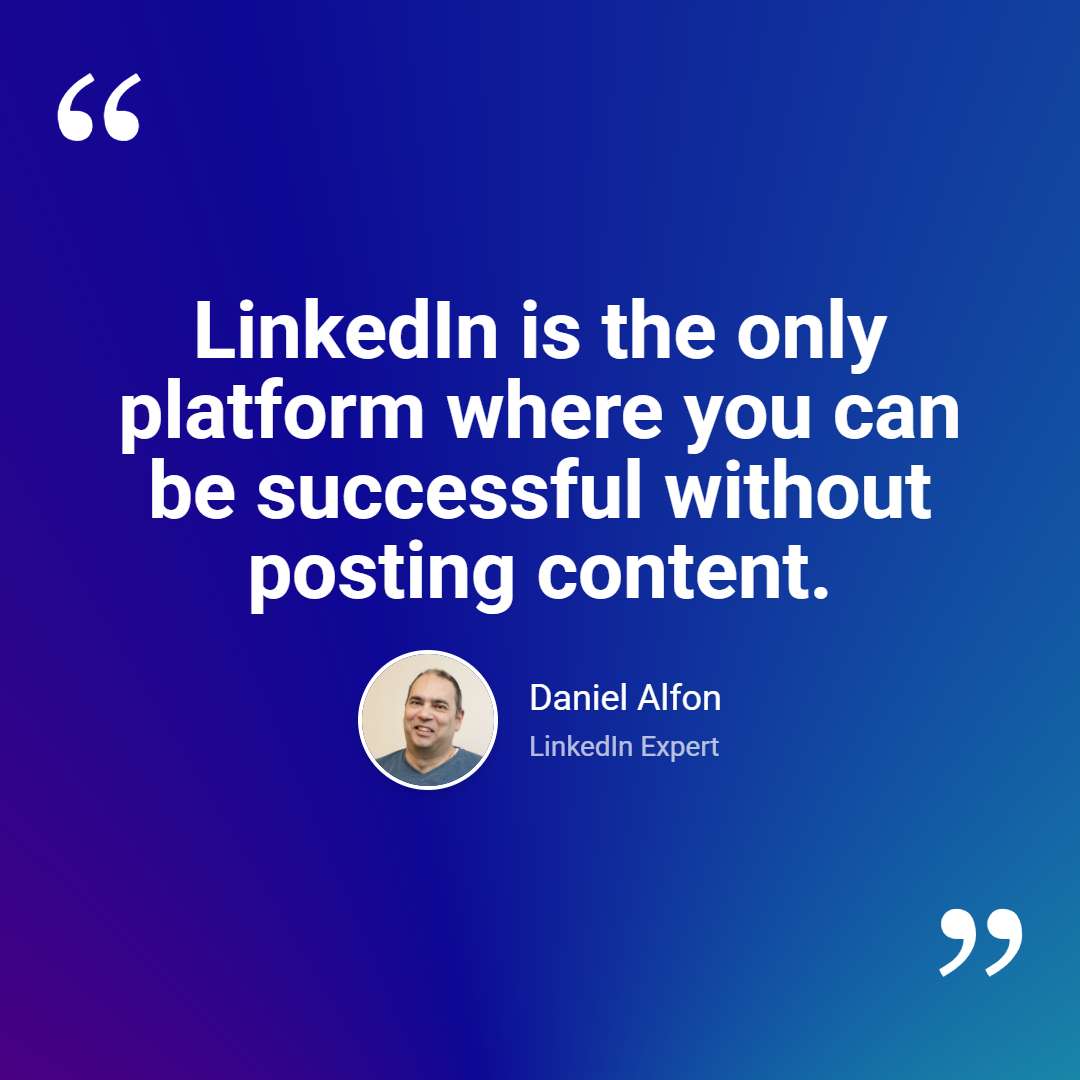
Hello, I'm Jeremy Rivera, your Unscripted Podcast host. I'm here with Daniel Alfvin. He's going to introduce himself and tell us why he's an expert. Thank you very much, Jeremy, for having me on the Unscripted SEO Podcast. I made all the possible mistakes in the book as I signed up for a platform called LinkedIn back in 2004. Searching wasn't even a thing, and gradually I discovered a very powerful platform where SEO is even hidden, like billions of searches are performed on the platform every year, but most people don't think about LinkedIn as a repository or as a keyword-sensitive platform. The place they put their resume for the four years they don't need it until they're changing jobs, and then they rush to make five changes, oh, when did I start at that cookie company? I don't know, this date, maybe, and then occasionally, you know, check out the TED Talk videos that they might want to watch, right? This is the exact definition of what 90% of people would do, not necessarily the best thing to do, but yes, that happens a lot. You're absolutely right, Jeremy. I think there's this fascinating thing I want to dive into, the psyche aspect and element of people, the transition from 1995 to 2000, maybe even 2005, where you went on the internet, you found a website, you went to other websites, you did things, you posted blogs, you read blogs, you maybe participated in forums, but there was this mind shift of suddenly, you know what, we're going to call one particular website that you go and interact on, it's not a website anymore, it's social media, and we stripped away all of the conventions of traditional digital marketing that we understood and just said, oh, it's just social media. We post stuff there, and it's got its, you know, we'll hire somebody differently who is a social media expert to post, you know, and there was a kind of a stepping away of like any other sort of marketing other than, oh, it's social media. So do you agree with that strange evolution in how we treat these particular sites? Yes, I would. I went back and listened to the first episode you hosted, like with Mark, the previous host, and I think one of you mentioned the fact that you have a real life business and a real life personality, and if there's a gap or a mismatch between what people think about you and your brand and what the website shows, then you're not, you can't be successful. And truth is, our listeners have a real life personality, and they don't need to hide it or become someone else to be successful on LinkedIn. That's an interesting point, because it often comes across in my interviews, you know, at the end, I ask, hey, where can they find you? Where do you hang out? And you know, a lot of SEO professionals, or a lot of people I interview, say I'm on LinkedIn, because it's the most professional. And I think that might be because it's the closest, closest association of identity with what you're putting out there. And there's an association of your experience and a connection to your job that isn't in inherent in, say, Twitter. I mean, I have a couple of handles that I'm not going to dox myself on that aren't connected to my name at all. I have a handle that's for the Unscripted Podcast, I've got a handle for SEO Arcade, which is my software SaaS, and then Jeremy Rivera SEO. But there are other, you know, Reddit profiles that are completely anonymized. So I think there is something there to be said of the heavy connection and the reliance of this particular platform to produce authority by connecting the person more heavily to their history, their job history. And I think that elevates in some ways, it elevates on one level, the discussion, but it doesn't seem to phase the direct messages I get from link sellers or direct sales people who are extremely bold, even though they're on such a platform of like, no, I'm not going to take up leads from you, even if you guarantee, you know, you'll pay me $10,000 if I'm unhappy. It's fascinating. I'll mention two quick things. You mentioned authority. For most of us, when we run a Google search for our own full name, many people will find that their LinkedIn profile tops the list. Without, you know, paid advertising with like organic, pure organic, LinkedIn is on top of the list, sometimes number one. And even people who, you know, wrote books, you publish a book, still, the LinkedIn profile would be important enough to manage it and not let LinkedIn manage it for you. I think, you know, some of the conversations I've had with SEO folks who are focused on Google's dissection and understanding of entities, people as entities and connecting your own personal knowledge graph of who it is that you are and what you do and how it's not as simple as, you know, I published a previous book that was, I published this SEO book, I self-published this SEO book, and all I got was this lousy knowledge panel in Google. The funny thing was, six months in, I hadn't actually gotten the knowledge panel. I had to take, explore and take some additional actions of getting into like a Wikipedia entry for authors and a couple other places before Google would even surface my Amazon profile for my book, much less give me a full author panel. So, but all the time, if you searched Jeremy Rivera SEO, you would find among the first page, my LinkedIn entry for sure, as well as my other websites and such. But I think you're hitting on something valuable here of entity and identity and leveraging this platform. So tell me a little bit more about some of the processes that you use that you consult so that you tell people to consider when it comes to leveraging LinkedIn to connect to your entity and connect to your authority. So the initial question we would ask is what would we like to be known for? If you'd like to be known for local SEO, then you try to step into the mind of someone who needs SEO for their local business. Can I give an example? Sure. So, so let me discuss the Nashville billiard and patio, a client of yours, you know, that, so I'll mention a very quick thing, which you could do promoting the Nashville billiard and patio is instead of saying, we have this cater in cater into the LinkedIn community, which is business oriented. So you would offer companies instead of thinking about the customer, you will think about the CEO or the VP marketing, or they want to launch something. They have an annual meeting, they have a sales meeting and they could come to the patio. And you would offer them a whole new service. So instead of promoting the patio for individuals, you would cater to companies, you would say, you would add photos of executives dining there, having fun, and you would brand it as a corporate entity. Even if it's 5% of your business, this could be much more valuable than 95, 55% of your business because corporates are less price sensitive. They could bring dozens of people to the patio. And if they're happy, they would recommend it to other people and to other companies. Who you are expecting to interact with, your brand or your business. And you know, it's the simplicity of saying, you know, like, oh, I'm a B2B. You know, I do do business to business. But really, you know, when I have so many of my audits or processes, I try to ask multiple questions to understand who is the person that has the credit card that's being swiped or who is approving the finance person for that purchase. If it's B2B, then the B stands for bureaucracy. So you need to know who has the stamp. You know, I just re-watched The Hitchhiker's Guide to the Galaxy, the movie. And they're like, oh, you can't release the prisoner. You need a presidential release form. Those are blue. They're racing to save her life and they have to fill out the right paperwork and check it up and bring it to this alien Vogon for processing. And it's like, you have to remember that the B in B2B is bureaucracy and you are not dealing with an impulse buy. You're dealing with multiple layers, approvals, potentially meetings, discussing. It's ridiculous. But you know, like a $15 subscription could be a multi-meeting line item that needs to get checked off. It's not like, oh, I'm in the convenience store and I would like some gum and I will make this impulse purchase. Absolutely correct. And if you mentioned B2B in the bureaucracy or business aspect of it, then you could think, Jeremy, of many, many businesses that consider themselves to be B2C, but could have a small B2B aspect. Can I give another example? Great. So the easiest thing to do, you know, a lot, a lot about real estate, say I'm a realtor and most people would think about the LinkedIn platform as the place to go and say, hi, I have this condo, I have this, uh, this apartment, but what you have to take into account is the fact that business owners are living on LinkedIn. So what you could do 90% of your time, you would sell condos in Nashville, Tennessee, but what you would show on LinkedIn is office space to managers who want to relocate their business into downtown Nashville or anything like that. So this could represent again, only 5% of your business, but that could be a lot more valuable than, you know, selling 20 properties, um, in three months. So you have, you probably have a B2B aspect of your business. That's what you need to stress on LinkedIn. I did an interview with a realtor, Carrie McGee, and she talked about the personality type. So when she's posting content, she keeps in mind that, uh, you'll often have like an A type personality with a C type personality of like one person's like, okay, what are the specs? How old is the AC? When was the last time on the maintenance? And the other is like, ah, can we do barbecue on this back patio? You know, they're like totally different personality types. And so like the information you want to display, you want to be able to, you know, promote that material, promote or have material that speaks to your audience. And so in a business scenario for a commercial realtor, you're very much more, more likely. Um, I think Ray Cornell talked about this as well in my interview with her of, uh, uh, in a B2B situation, you have a lot more, uh, detail oriented people and you have a much higher need, higher functioning process of minutiae and detail and much less vibe. Um, and you know, they, they need it, you know, again, it goes back to B2B is bureaucracy, but it's also like speaking to your audience and understanding, you know, a part of that. I agree is, you know, like if you're using a platform like LinkedIn, it's smart to understand, uh, who is there and why they're there, um, to make the most of the opportunity. You're absolutely right. And since we started this very chat on the unscripted SEO, thousands of people, Jeremy, have joined LinkedIn. According to LinkedIn stats, every second, three people sign up. Okay. I mean, that, that is, that is a, a convincing argument, um, for paying more attention, especially as we feel the squeeze, we feel the squeeze as, uh, you know, AI overviews eat more and more of the SERPs. Um, but also note that, uh, LinkedIn data does appear available and consumable and presented within LLM results. The, one of the benefits of LinkedIn is that if you decide to pivot your business and you update your page or your profile within 20 seconds, that's what the world will see. And there's no log, like no one sees what happened before that people will run a search and go to SEO Arcade or go to Jeremy Rivera SEO. And just a quick tip, if you visit, uh, I encourage listeners to check out your LinkedIn profile, which could be in the show notes and the handle is Jeremy Rivera SEO. 20 seconds of work, a work of genius. Do it. I love it. And it's also like, it, it magnifies out too, because like, if you take, uh, there's so many extra steps of rebranding that we put, put ourselves through and all of the migrations, but you're right. Like the entity update for LinkedIn is transitory. There isn't a backlog and Google polls does pull LinkedIn snippets right away. Um, I know also Inc, ChatGPT, you can query data and access, uh, information through their GPT search and find LinkedIn as well. So there's secondary, you know, thinking beyond just the Google SERP and thinking about other search engines, you know, LinkedIn, I'd love to get your insights on, uh, what are the, the ways that you can influence whether or not you show up, uh, when people type in a, a particular industry search or, you know, try to find a business or service in LinkedIn, treating it as a search engine. Um, what is it about profiles? What is it about posts? What is it, um, about recommendations? What are the things that cause or, uh, influence, we'll call it your LinkedIn indexation or your LinkedIn, um, ranking? What do you, if you had to rate those, like, what are the factors that you consider? Excellent. So the thing to, uh, remember is to write for the human eye using the words that algorithm use. In other words, let's take an example of a sort of planner or someone who was a consultant and they offer, um, give you an example of a client of yours or someone we could discuss hypothetically. Uh, let's say like an Atlanta law office. Excellent. So the Atlanta, uh, um, attorney would probably use words that are very specific, technical and legalese. However, you need to remember the words that your prospects will use and they could, enter words that are either way more general or even plain wrong. They would run a search for inheritance or they would run a search for divorce or they would run a search for something that the attorney themselves, that they would not think about those terms because they know a lot more about their business. So interviewing prospects or interviewing clients coming in could help you understand the search they're using. And then there should be a smart way for you to weave those terms in a natural way into your own profile. And I'm saying profile because the 90% of, of what, uh, we should focus on is our individual profile and not our page. LinkedIn is a different beast and unless the law firm employs thousands of people, then most lead generation will come through their individual profile. So look at that profile, ask yourself three simple questions. Who's my ideal reader? What action would I like them to perform once they discover me? And am I making it as easy and smooth as for them to understand what the next step is? That makes sense. So it's about profile completion. Is there an impact of, um, some of the bells and whistles that LinkedIn has added over the years, um, like getting recommendations? Is that, um, something that provides additional weight, uh, provides additional, uh, authority transfer from those other profiles that can impact your ability to be seen? That's an excellent question. It does make a difference for the human reader much more than the algorithm. Going back to the, uh, Georgia, uh, to the Atlanta, Georgia, uh, attorney, if I visit two profiles and one of them would have a strong or a high, um, recommendation to connection ratio, they have 400 connections and I see 10 recommendations and I read them. It would carry more weight than someone with 2000 connections with one recommendation. That's luck warm or dull or plain vanilla. So it wouldn't change the algorithm necessarily, but as a reader, you tend to give more, you trust more, uh, individuals or attorneys that other people have recommended. And you would see, you would note commonalities. They mentioned the fact that they're business-like, they're direct, they're, uh, serviceable. This can help you either say, this is the right attorney for me or to say, I'm going to disqualify myself. I'm looking for someone else. So recommendations are important. And one of the, uh, recommendations I would suggest is to ask for recommendations. Every time you pivot, you mentioned people running to LinkedIn every three or four years. That's the time to ask for the recommendations because it's easier for your coworkers and managers and employees and subcontractors to write that recommendation for you today and not harass them in two years time. Cause they would, it would be way more difficult for them to write that simple recommendation. That totally makes sense. I'm curious how, um, you know, uh, education credentials, like say you're running a rehab in New Jersey, you're as a business. So you're saying, don't use a page. You're going to want your individual, like top therapists to be the ones that are posting on LinkedIn. And, you know, they've got like a, uh, multiple designations that they've gotten from the state for their accreditation. So you want to make sure that those, the education pieces are, are put in there, um, and updated. You got the general recommendations. What is the, the importance or non-importance of, of tools like, uh, the LinkedIn Pulse where you can post full articles as opposed to just a usual LinkedIn post, uh, posting video. And I know that they also have, and it might be just in the marketing side, but I was invited to participate and answer questions in like a, uh, I forget what the, there's a knowledge repository or something. Right. Collaborative articles, probably. Collaborative articles. That's it. Yes. So does, uh, participation in collaborative articles, does posting, posting articles on LinkedIn Pulse and, or posting, you know, just posting, um, what are the influences of that on your access visibility, um, accessibility, um, in the algorithm or in general? Wow. That's such an amazing question. I'd like to, um, stress the difference between what LinkedIn calls a LinkedIn article and a LinkedIn post. What we see usually or often is post. I visited that conference and here are my five takeaways. Articles would be great for thought leaderships, thought leadership, sorry. And the, the amount of time you need to, uh, uh, invest in order to write a well-written article is sometimes a lot more, uh, it will take you a lot more time to draft the article and to publish it. So the easiest question to ask is what is the shelf life of that content? If the shelf life is long, if this is, if you're analyzing trends and this is going to be important in six months time, then maybe a LinkedIn article is best for you. If you're saying that tomorrow you have, um, a time sensitive event. Okay. I was, I was listening to another episode or a recent one with Marisa Kelley and you discussed the importance of events. So if I have a real life event tomorrow, I will not use the platform of the LinkedIn article because it would be dated by the time. Great. So the difference between LinkedIn posts and LinkedIn article is very simple. We ask ourselves, what is the shelf life of this content? So Jeremy, I was listening to a recent episode you released with Marisa Kelley about events and SEO. So imagine I have a time sensitive event. It doesn't make sense to publish a LinkedIn article because by the time the event is gone, it's worthless. However, if you analyze trends, if you're speaking about something that's general and if the content can be a good read in six months time or 12 months time, then a LinkedIn article article gives you more weight and is something that in terms of SEO, even people with no LinkedIn account can still read the article because the moment you hit publish, there is a URL that people can, uh, access without even having access to LinkedIn. Yeah. Ask yourself what sort of content is like long shelf life. Sorry. And use that for articles. I would know Lily Ray and other SEOs have demonstrated that sometimes taking the same article that isn't performing on your own site and posting it as a LinkedIn pulse has actually given them the chance to show up because of Google's favoritism for UGC platforms like Reddit, like, uh, LinkedIn polls, like, uh, surfacing pulse articles, medium sub stack are seen in a different weight class or it's a different content type. So even if it's the, I've seen the exact same article, I take a slightly different strategy. Um, for my own recaps, um, I take the interview. I have a version I give to the guest. I have a version that goes on my own site that goes out on the show notes. And then a version for my domain. But I also make a LinkedIn pulse article as well. Um, that does contain the same, you know, links and references, uh, for it as well. And I, I have been able to, you know, co-find, I, uh, I think our previous generation called it barnacle SEO, where you, you know, like the, on a, uh, the, the barnacles on a ship on a whole, you're not recreating the ship, but you're like sticking something on extra, but it really is more, I think the big, the bigger term now is about content owned content distribution. And the name of the game is less in terms of how do I get the most visibility on, on Google for my site versus how do I get the most visibility on Google or search engines of all kinds, period. So thinking about the potentials of how do I, you know, how do I better display my entity? Well, LinkedIn is a great way to boost your entity, but also these LinkedIn pulse posts associated with my identity and entity are topically relevant. And the UGC aspect, that user generated content aspect, gives it a separate entry into the same query space that might give you an advantage, um, uh, a little bit of a boost or even grabbing more space on the same query. If you're able to show up twice, as opposed to just once, then you, you push back on your competitors because then you have more owned space in that SERP, uh, you, by creating a different, uh, data entry point in the knowledge graph for that topic. It's interesting. And if you're discussing boost, you mentioned the fact that many guests point to their LinkedIn profile in that it conveys the kind of authority we want to associate ourselves with. However, Jeremy, conversion happens better on our own domain, on our own website. Yeah, no, I agree with that. So the, the call to action should not be check me on LinkedIn, but go to my website. Because if I go to your website, then I can, you, you own the system. If I contact you through the website, you, you, you'd get a lot more information from me, just like the, the, uh, the book you published. When I buy the book, the entity that holds the information is Amazon or the Barnes or whatever, and not yourself as the author. So we want to move people from the LinkedIn, um, arena to our website. LinkedIn is important. It's a, it's an important source, but don't be confused. The metrics should be your real life business metrics and not the LinkedIn metrics. Absolutely. I think that that is, has been true, will remain true no matter how Google messes around with the SERPs. It's about ownership of your audience. Um, and, uh, thinking, you know, even on your site, just because somebody visits, like, yes, you could set up retargeting that then you have to pay for a second bite at the ad Apple. But if you're not taking the time to properly set up your calls to action off of that, then, you know, you're, you're not doing your job properly. So thinking about those conversion aspects off of your site is the next step down the funnel. But, uh, so top, mid, bottom funnel all feeds in. Um, so with a engagement where you're consulting or doing things for, for people on LinkedIn, what, what's the most surprising thing, um, that people find out about LinkedIn, um, that they either act really surprised about, or always seems to catch them off guard that we haven't covered yet? Um, let me try one thing, like in every workshop, ask like half a dozen questions. And by the middle of the workshop, people know that the first answer is not the right answer, but I'll give just one example. Um, what is the, uh, action that LinkedIn users perform the most on the LinkedIn platform after logging in? Like there is over 1 billion users. And according to LinkedIn statistic, there is one action that most people perform the most on LinkedIn. Try to guess. Like what? That's a good question. That's a good answer to a different question. No. So the, the single most important and frequent action is visiting other people's profiles. And if you think of it, that's one reason why profiles are so important. And LinkedIn is the only platform where Jeremy, you can be successful. Jeremy, you can be successful without posting content. That's amazing because if you want to be a successful YouTube, uh, or Instagram or TikTok, you have to upload content. But what's, what interests your reader is first of all, getting back to the, uh, Atlanta, Georgia law office is your specialty, the specialty I'm looking for and not have you posted about last week's, whatever. If you are the right answer for me, then I may look at your post, but it's not as important as what you bring to the table. So take care of your profiles. And this is way, way more important than posting and start with making sure your profile converts. Let's talk about profile conversion from an aspect of, are you looking for people to reach out and follow and connect to you and start a DM conversation? Or is it more about getting them off of your profile to your site? So making sure that you have listed appropriately in your profile, an offsite destination for them to click through to where you can capture their information. I think, you know, the answer, the second, uh, scenario is much better. It's tempting to stay in the first scenario, like DM me or add me or send me a connection request. But what's more important is what happens in our domain, in our website. So you give, you have to give them enough information to want to discover your website or your domain. So by visiting your profile, I can see the unscripted CEO. I can see in the contact info, the Jeremy Rivera SEO domain. And when I found the content to be interesting, then I would jump off LinkedIn and move to your website. Another quick suggestion would be to feature, like to think about the single most important link you'd like people to go to. Which link would that be if you had to pick one, Jeremy? Sure. No, it's your call. Like if you, who's your ideal reader? Oh, yeah. For me, it's, it's definitely, I want to reach other SEOs, because I do best with collaborations, doing, you know, partnerships, subcontracting. So for me, you know, connecting with, I want to talk to agency owners. Good. That's my audience. My ideal audience is other SEO-savvy digital marketing agency owners who might want to white label, you know, what I'm doing at seork.com now, or might want to, you know, get my take on a complex SEO issue. But for the most part, it's more along those lines of trying to, it's definitely B2B, and it's definitely talking to SEO agency owners. So, so let's take, for the sake of this conversation, let's take seork.com and then the white label podcast service, if that's a decent example. So we could highlight that in your LinkedIn profile in less than a minute. You basically go to your profile, you click on add profile section, recommended featured link, and you paste the link. And that would show the link, if you like, above the fold. So it would be a strong, stunning visual on the left, and then text you can control on the right. And that could increase the traffic to the white label podcast service or whatever link you'd like to use. And Jeremy, if in six months time you'd like to offer something else, it would take you 20 seconds to highlight link building services or your blog or any idea you can think of. Feature your strongest link. Got it, so this is on my LinkedIn profile, was that the add profile section you said, or was that the resources? Yes, please. Okay. Exactly. Add profile section. And now you select recommended. Recommended, okay, okay, okay. And the first one should be add featured, and you would see a plus sign on the top right, which shows you four or five possibilities. Add the link is the one to choose. And all you have to do now is paste the link, click add, and customize the text or the picture if you'd like. I'm going to visit your profile before this episode drops to make sure that you featured it. Yeah, yeah, I'm going to do that. That's smart. Okay, got it. I did not know that that was a thing. That's super helpful. Okay, cool, cool, cool, cool, cool, cool. Thank you for the advice. I think, I know it's kind of ubiquitous of like, there's so many SEOs that use LinkedIn, and like, oh, I prefer it, but I think a lot of SEOs just kind of take the platform for granted and don't really think about optimization for it. So, I definitely appreciate the fresh take on it. Tell me a little bit, is there any, you know, classes you're doing? Where can people see what you're talking about? What's the name of your domain? If they want to engage you for their own LinkedIn expert assistance, where can they find more information? With pleasure, danielalfon.com is the place to go. Awesome. Thanks so much for your time, Daniel. I really appreciate the conversation. Thank you very much for the unscripted conversation, Jeremy.
Podcast Summary
Key Points:
Discussion on the evolution of internet usage from websites to social media platforms like LinkedIn.
Importance of personal branding and authenticity on LinkedIn.
Strategies for leveraging LinkedIn for business growth and connecting with the right audience.
Differences between LinkedIn posts and articles, considering shelf life and impact on visibility.
Summary:
The conversation between Jeremy Rivera and Daniel Alfvin delves into the transformation of internet usage from websites to social media platforms like LinkedIn. They emphasize the significance of personal branding and authenticity on LinkedIn, highlighting the platform's role in professional networking and business growth. Strategies for leveraging LinkedIn effectively include tailoring content to the target audience, focusing on individual profiles over company pages, and incorporating keywords that resonate with prospects.
The importance of differentiating between LinkedIn posts and articles based on shelf life and content relevance is also discussed, with insights shared on how to maximize visibility and engagement on the platform. Overall, the dialogue provides valuable guidance on optimizing LinkedIn presence for personal and professional success.
FAQs
Consider what you want to be known for, step into the mind of your target audience, and focus on your individual profile for lead generation.
Recommendations can provide more weight to your profile for human readers, showcasing trust and serviceability.
Posts are suitable for time-sensitive content, while articles are better for evergreen or trend analysis content with a longer shelf life.
Collaborative articles and videos can enhance your visibility and accessibility on LinkedIn, especially for thought leadership and engaging with the audience.
Interviewing clients to identify their search terms, and integrating those terms naturally into your profile can enhance discoverability and engagement.
Chat with AI
Loading...
Pro features
Go deeper with this episode
Unlock creator-grade tools that turn any transcript into show notes and subtitle files.
 PodcastTranscript AI