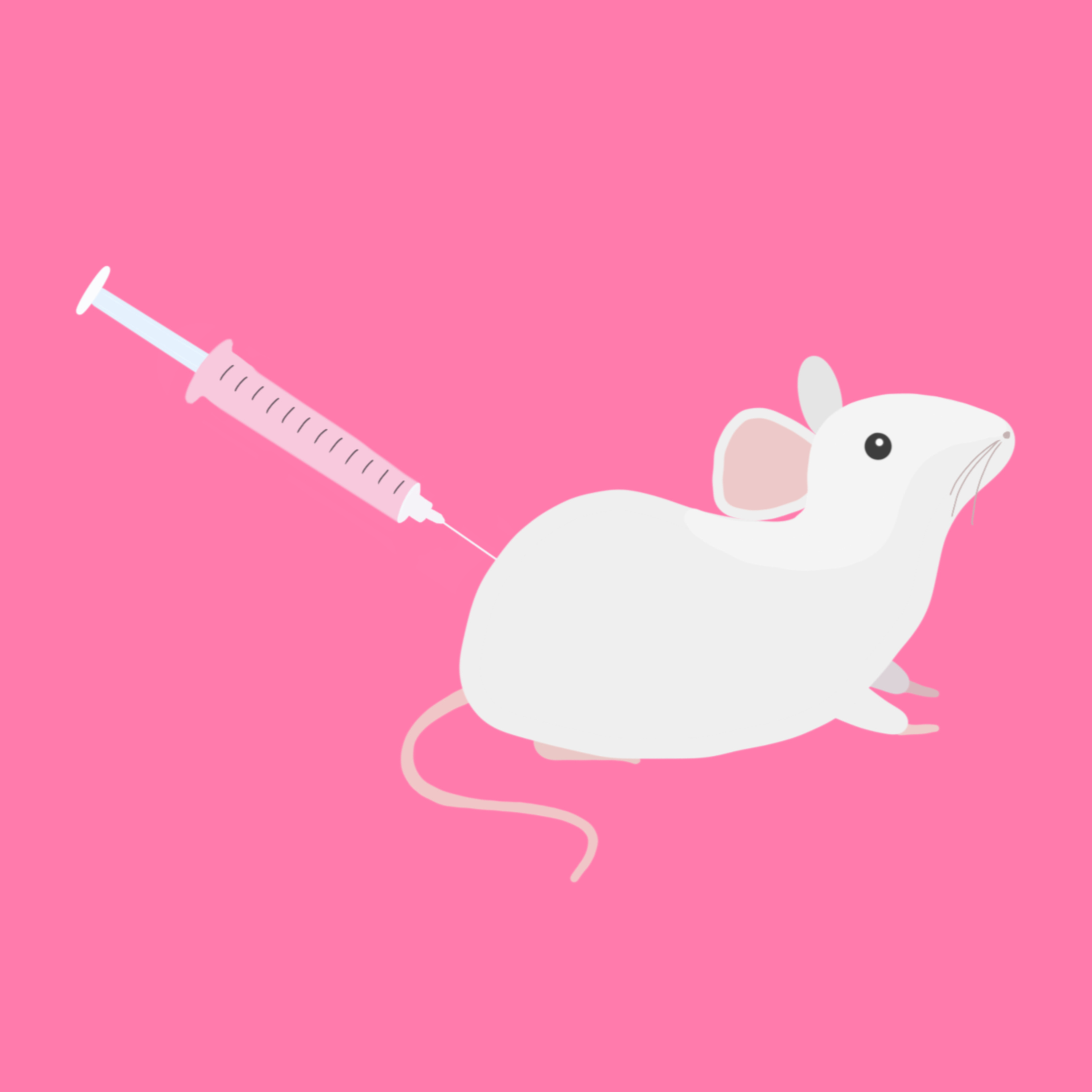
The podcast outlines three pivotal experiments establishing DNA as the genetic material. First, Frederick Griffith's 1928 work with pneumonia bacteria in mice revealed transformation: a mixture of heat-killed pathogenic (S-Strain) and live non-pathogenic (R-Strain) bacteria caused disease, indicating a "transforming factor" from the dead cells. Next, Oswald Avery and colleagues in 1944 isolated this factor by enzymatically degrading components of heat-killed bacteria; only when DNA was inactivated did transformation fail, pointing to DNA as the key substance. Despite skepticism, Alfred Hershey and Martha Chase in 1952 provided definitive evidence using bacteriophages labeled with radioactive isotopes. They found that phosphorus-labeled DNA, not sulfur-labeled proteins, entered bacterial cells during infection, proving DNA carries genetic information. Together, these experiments conclusively demonstrated that DNA is the hereditary material in cells.
[Music] Welcome to Biosight, a podcast to help you pass high school biology and understand the signs of life. My name is Chris and I'm your host today. Hey guys, today we will be discussing the experiments that led to the conclusion that DNA is the genetic material of the cell. We will be reviewing the Griffith experiment, the Avery McLeod McCarty experiment, and the Hershey Chase experiment. Let's first discuss the Griffith experiment. Frederick Griffith was a British medical officer who is trying to develop a vaccine for pneumonia. To perform his experiments, he used a bacterium that causes pneumonia and mammals and then proceeded to inject this bacteria into mice. He used two types of this pneumonia causing bacteria. The first was called the S-Strain. S stands for Smooth and this S-Strain is able to cause pneumonia and mice. For the sake of vocabulary, when something is able to cause disease, it is referred to as pathogenic. This pathogenic S-Strain is able to infect the mice because this S-Strain bacteria has an outer capsule that protects a bacteria from the mice's immune system. The second strain that Griffith used in his experiment is called the R-Strain. The R stands for Rough and this R-Strain was unable to give mice pneumonia. When something can't pass on a disease, it is referred to as non-pathogenic. The reason why this S-Strain was unable to spread pneumonia to its host was due to the absence of a protective capsule. As without this capsule, the R-Strain immune system is able to defend itself and the R-Strain will fight off this bacteria. So remember, the main difference between the two strands used is that the S-Strain can cause pneumonia due to the presence of a protective capsule. And the R-Strain cannot cause pneumonia as it does not have this capsule to protect itself from the mice's immune system. Alright, so let's talk about what actually was tested in this experiment. There were a total of four variables tested. The first was living pathogenic S-Strains, which means that it can cause pneumonia. The second was living non-pathogenic R-Strains, meaning that it can't pass on pneumonia. And the third was heat-killed non-pathogenic S-S-Ls, meaning that it won't be able to pass on pneumonia. And the fourth and final variable tested was a mixture of heat-killed S-S-Ls and living R-S-Ls. I know that was a whole lot of information, so let's dive into the details and results of each experiment. In the first experiment with living pathogenic S-Strains, the mice died when they were injected with it. This is completely normal, as remember, the S-Strain has capsules surrounding it so the mice can't fight off the bacteria. In the second experiment with living R-Strains, the mice lived. This was also as expected, as remember, the R-Strain does not have a capsule, so the rest means it can't fend for itself. In the third experiment, the S-Strain was heat-killed before it was injected into the mice. The mice survived as this bacteria is now dead, as it's heat-killed, so it's going to be unable to kill the mice. And now onto the fourth experiment, the mixture of heat-killed S-Strains and live R-Strains. This here is the big experiment. The result of this experiment was that the mice died, and this was completely unexpected, as the pathogenic S-Strain was heat-killed. So how could the mice die? And it can't have died to the R-Strain because, remember, in the previous experiment, the R-Strain was proved to be harmless. Finally, Griffith was able to make the conclusion that there was a transforming factor. There was something in the dead heat-killed S-Strains that was able to transfer its material into the R-Strains, causing the R-Strains to now become disease-causing. Furthermore, these R-Strains that became disease-causing also created disease-causing offspring. So the conclusion of this experiment is that there was an unknown chemical substance in the dead heat-killed S-Strains that was able to somehow enter the R-Strains infecting it. This phenomenon is called transformation. Today, transformation is defined as a change in genotype and phenotype due to the absorption of external DNA into a cell. Anyways, scientists in this time were now left with a big question, "What is a transformation principle that allowed for this to happen?" With this new big wild question in mind, scientists Oswald Avery and his colleagues, Maclin McGuardie and Colin McLeoyd, set off to find what this transformation principle is. Their experiment is called the Avery McLeoyd McGuardie experiment. Their hypothesis was that either DNA, RNA, or proteins were responsible for the transformation. In their experiment, they took the heat-killed S-Strains bacteria and broke it down to its cellular components. They then took out three samples of this broken down substance and treated each sample with a different agent. The first sample was treated with DNA inactivators. The second was treated with RNA inactivators and the third was treated with protein inactivators. Each sample was then tested for whether or not they would be able to transform a non-disease causing bacteria into disease-causing bacteria. After many different tests, they concluded that only the sample with DNA activated was able to transform living non-pathogenic cells into pathogenic ones, proving that DNA is the transformation factor. Despite this finding, people were still skeptical of this conclusion as back in this time, which was 1944, DNA was still a big mystery and very little was known about it, so people were not entirely convinced yet. So after this experiment, in 1952, Hershey and Martha Chase began their own experiment to help prove that DNA was a transformation factor. They were able to narrow the possibility down to proteins or DNA. In their experiment, they used bacterial phages, which are these viruses that infect bacteria. Bacteria phages are commonly shortened to just phages. The specific phage that was used was a phage called T2. This T2 phage was perfect for the experiment as it is almost entirely composed of DNA and proteins, which are the two factors that Hershey and Martha are testing for. In their experiment, Hershey and Martha used two tags. The first was a sulfur tag to identify proteins. This was perfect as proteins have sulfur and DNA do not. The other tag was phosphorus, and this was used to identify DNA. This was also perfect as DNA has phosphorus while proteins do not. Hershey and Martha then created two different batches of bacterial phages. In the first, they tagged the phages with sulfur. In the second, they tagged the phages with phosphorus. These two batches were then each mixed with a bacteria. The sulfur phage bacteria mix was blended in one blender, and then the phosphorus phage bacteria mix was blended in another blender. The blending allows a phage to break apart, leaving them with precious phage genetic material that Hershey and Martha were looking for. Finally, after blending, the mixtures were then placed in a centrifuge. The centrifuge is an instrument that spins at extremely high speeds, leaving heavier material at the bottom and lighter material at the top. For the relevance of this experiment, this means that the infected bacteria, which is the heavier material, will be at the bottom, and the useless phage parts, which are lighter, will be at the top. Hershey and Martha examined the results at the bottom, and they found that all of the infected bacteria at the bottom had large amounts of phosphorus, and that all of the useless phage material at the top had all of the sulfur material. Remember, phosphorus means DNA, and sulfur means proteins. So since all the bacteria at the bottom only contained phosphorus, it was proved that DNA was the transforming factor, and that the genetic material of cells is DNA. Now that we have covered all three experiments that led up to the conclusion that DNA is the genetic material of a cell, let's do a quick recap. in the Griffith experiment, Griffith.
5th testate between two strains, a pathogenic estrange and a non-pathogenic arous strain. After testing a mixture of heat-killed estrange and live arous strain, she surprisingly found out that the mice had died and that some of the live non-pathogenic arous strain had somehow become pathogenic. And this led him to ask the question, what is a transforming factor that caused the arous strain to become pathogenic? The Avery-Maklioid Maccardia experiment then came along. In this experiment, they treated their samples of heat-killed estrange bacteria with agents that deactivated either DNA, RNA, or proteins. And in the end, they discovered that only the samples that DNA activated were able to transform live non-pathogenic bacteria into pathogenic ones. This evidence was not enough for the scientific community at the time, so then the Hershey-Chase experiment came along. In this experiment, Hershey and Martha Chase experimented with bacteria of phages. They narrowed down the possibility to the transforming factor either being DNA or proteins. They created two samples, one tagged with phosphorus and the other with sulfur. This is perfect as DNA contains phosphorus and not sulfur, while vice versa, proteins contain sulfur and no phosphorus. These samples were that individually blended in a blender and spun around in a centrifuge. In the end, they discovered that only phosphorus was found in the bacteria, meaning that the transformation factor must be DNA. With the evidence found in all three of these experiments, we now know that DNA is a genetic material of the cell. And that wraps it up for our podcast on the Griffith experiment, Avery experiment, and Hershey-Chase experiment. Thanks for listening everyone.
Podcast Summary
Key Points:
Griffith's experiment demonstrated bacterial transformation, showing that a non-pathogenic strain could become pathogenic when exposed to heat-killed pathogenic bacteria, suggesting an unknown "transforming factor."
Avery, MacLeod, and McCarty's experiment identified DNA as the transforming factor by systematically inactivating DNA, RNA, and proteins, finding only DNA inactivation prevented transformation.
The Hershey-Chase experiment confirmed DNA as genetic material using radioactive labeling (phosphorus for DNA, sulfur for proteins), showing that only DNA entered bacteria during viral infection.
Summary:
The podcast outlines three pivotal experiments establishing DNA as the genetic material. First, Frederick Griffith's 1928 work with pneumonia bacteria in mice revealed transformation: a mixture of heat-killed pathogenic (S-Strain) and live non-pathogenic (R-Strain) bacteria caused disease, indicating a "transforming factor" from the dead cells. Next, Oswald Avery and colleagues in 1944 isolated this factor by enzymatically degrading components of heat-killed bacteria; only when DNA was inactivated did transformation fail, pointing to DNA as the key substance.
Despite skepticism, Alfred Hershey and Martha Chase in 1952 provided definitive evidence using bacteriophages labeled with radioactive isotopes. They found that phosphorus-labeled DNA, not sulfur-labeled proteins, entered bacterial cells during infection, proving DNA carries genetic information. Together, these experiments conclusively demonstrated that DNA is the hereditary material in cells.
FAQs
The Griffith experiment aimed to identify a 'transforming factor' that could change non-pathogenic bacteria into pathogenic ones, leading to the discovery that genetic material could be transferred between bacteria.
The S-Strain is pathogenic and has a protective capsule, allowing it to cause pneumonia in mice. The R-Strain is non-pathogenic, lacks this capsule, and does not cause disease.
When mice were injected with a mixture of heat-killed S-Strain and live R-Strain, they died, showing that the R-Strain had become pathogenic due to a transforming factor from the dead S-Strain.
By treating samples with agents that deactivated DNA, RNA, or proteins, they found only samples with active DNA could transform non-pathogenic bacteria into pathogenic ones, proving DNA is the transforming factor.
At the time, DNA was poorly understood, and many scientists doubted it could carry genetic information, preferring proteins as the likely candidate for genetic material.
Hershey and Chase used bacterial phages (viruses that infect bacteria) to test whether DNA or proteins served as the genetic material, as phages are composed mainly of these two components.
Chat with AI
Loading...
Pro features
Go deeper with this episode
Unlock creator-grade tools that turn any transcript into show notes and subtitle files.
 PodcastTranscript AI