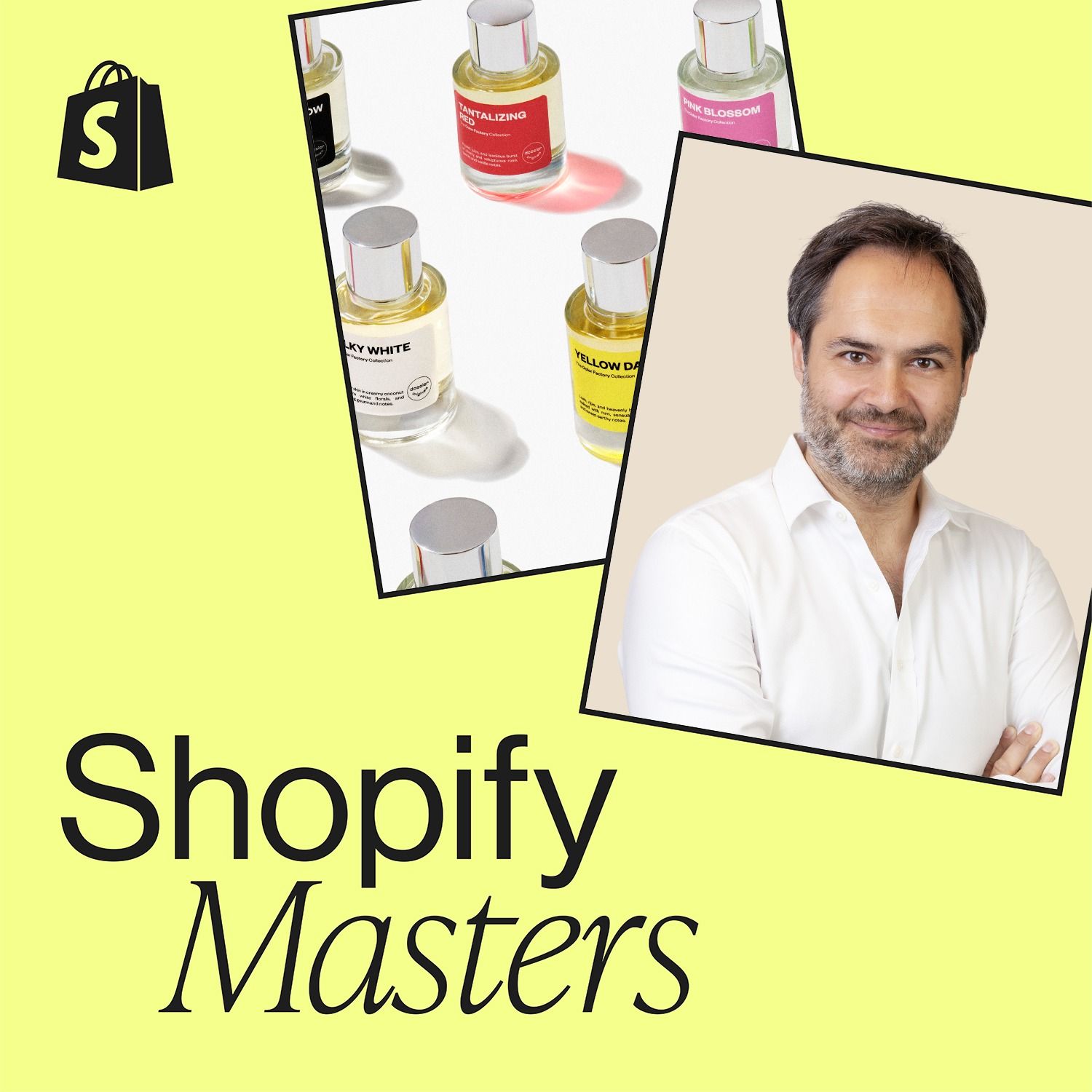
From Zero to 1 Million Orders—Dossier’s Blueprint for Democratizing Luxury
42m 47s
The traditional idea of a signature scent is evolving among younger consumers who seek a diverse perfume collection. Sergio Take disrupted the perfume industry by launching Dossier, providing premium fragrances at accessible prices. Sergio's transition from banking to entrepreneurship was supported by mentorship and a focus on quality and efficiency. Dossier's success is attributed to its customer-centric policies, such as a generous return policy and attractive pricing. The company's strategic approach includes optimizing unit economics, leveraging comparative advertising, and influencer marketing. Dossier's appeal lies in enabling fragrance discovery through affordability, contrasting with high-end brands. Respect for established brands is maintained, while Dossier emphasizes affordability and accessibility as its unique selling points in the perfume industry.
Transcription
6623 Words, 36355 Characters
The whole concept of signature scent where people have one perfume and that's their signature perfume, that concept is gone with the younger generation. They really want to discover perfumery and have what we call wardrobe of perfumes. Hey everyone, Shuang SR Shan here and this is Shopify Masters, your companion for starting and scaling a business. What happens when a former banker sees high prices of luxury perfumes and decides to revolutionize the industry? You get Dossier. Sergio Take challenges the status quo by crafting premium fragrances without the exorbitant price tags, bringing made-in-France luxury scents to everyone. Sergio is here to share the strategies that allow Dossier to reach the remarkable milestone of shipping over 1 million orders and opening their first retail store in New York City. Welcome to the show, Sergio. Thank you for having me. Well, so happy to have you here. You have had such an interesting career from banking to starting your own businesses in beauty. What has inspired you to take the jump into entrepreneurship? Well, it was hard. It's never easy to leave, I guess, the comfort of the corporate world. I'm not sure I should put it as comforting, but it's never easy to leave that job that provides you some financial security. So that was difficult. I guess there's a couple of elements that made me jump ship. Number one, in a previous lifetime, I used to be a banker and the early 2010 years were particularly difficult for the banking sector. So that's one element that sort of helped me make that decision. And I think the second point was the most important one, which was when I decided to become an entrepreneur in the e-commerce beauty space, I immediately had a friend who was dedicated to be my mentor. So I think having that mentor and that person who can guide you through the difficulties of starting your own company was key. And that really was what made me ultimately jump ship and start an e-commerce company and then leading all the way to Darcy here. How did you prep yourself for that giant change, right? Within the beauty space, you first started in hair and then you also started a skincare company. How do you upscale and provide education for yourself for those industries? I think one of the great things about my previous job is that it taught me a bunch of important things. First of all, work ethic. Banking is very traditionally hard and long hours and also an analytical mind frame. So these things helped me at least get my feet wet. But really nothing prepares you from working on Excel all day long or working on presentations and talking to clients to having to go to USPS and ship customer orders. It's a pretty drastic change of lifestyle and of types of things that you do. The only thing that really helps you get through it is that you've launched a new journey and you've seen success around you. You have a mentor who really believes in what you do and who guides you through these steps and that's what keeps you going. And I think you also need to have a little bit of delusional optimism. I think that's a strong quality that you have as an entrepreneur because if you really start thinking about what you're doing, I mean, it's a little bit nuts. You're shipping stuff to USPS every day by hand and just hoping that this random business you started is going to grow at some point. So you need to have that optimism that things will grow and get better. Yeah. And I think you were very good at knowing when to invest more time and when to also move away from an idea. So eventually you notice this white space within fragrances and you really wanted to start Dossier. But for those learnings before, how did you know when to close down those ideas and invest in something else? So the first business, which was as you mentioned, the hair extension business, that one is still active now. So I had a small share in that business. Both my mentor and I were co-owners of that business and ultimately I sold my shares to my mentor and that company still continues to exist. In the skincare business, that never really took off. And that's really the tough decision is to say, okay, when do you actually stop? Because they always tell you, well, you got to push through the difficult times, you got to persevere and all these things are very true. But ultimately, you also have to come to the conclusion that things are not working for you. So what helped me, and we were involved in it every single day and you don't have the outside view, it's very difficult to come to that conclusion. And I got some outside help from somebody and that person told me something very simple. He said, look, what are the things that right now is clearly not working? What are the things that you still want to test and try before you call it a day? And then we put on paper these three things that I still had hoped for. And he told me, look, I want you to make one promise. If these things don't work out, you need to quit because you agree that you've tried everything you could and it's okay to fail faster. That's not a problem at all. The worst thing you can do is just continue trying on something that's just not working for years and years. And I tried those bunch of things, they didn't work out. I still took a couple months to make the final decision to quit because it's so difficult. But ultimately, you had to come to the right conclusion, which was to say, the project in its actual and the form it was just didn't work. And that's when I started thinking about my next venture. And that's when I started having conversations with the person who became our first investor, among other things about perfume. And that's when I had that aha moment about the perfume industry, which led to the creation of Dossier, the way it is now. Well, tell us about that aha moment, because it is quite the beginning. And what was it about the fragrance industry that got you excited again? If I think about all the ventures that I had in the beauty world and the fashion world, they all have one thing in common, which is how can we provide more value and give back more value to the customer? I mean, this industry is typically a very high margin industry. And I was always fascinated by that. I always thought there's got to be a way of creating great products, but sell them at an affordable price and really find a way for the customer to get the best bang for their buck. And that's really what attracted me to the perfume industry is that I thought to myself, there's got to be a better way of doing this. It doesn't make sense to me that to go out and smell nice on a date, you have to fork out $150 plus at Sephora, Ulta, name your retailer. That's how the opportunity started formatting itself in my head, is that there's got to be a way of creating great perfumes, manufactured in France, with the highest craftsmanship, but sell them at a much more affordable price. So that's what we did. We took all the things that make great perfumes fantastic, which is super high quality ingredients, great craftsmanship, made in France, no nasty ingredients, and removed all the fluff and unnecessary marketing around them. So no super fancy bottles, no super fancy packaging, no mega celebrity endorsement. And that's how we got to Dossier. I think the concept makes a lot of sense for essentially everyone, because we all have this problem with fragrances and we all would love to smell nice at an affordable price. But on the flip side of operations, how did you find the right producers and find the right partners to actually make sure they can make these luxury scents at an affordable price? Yeah, that was the hardest part. To your point, finding the right perfumer to work with was difficult then. This industry is still a pretty closed up industry, a pretty opaque industry. So finding the right partner to work with and who would trust you was very difficult. And it was a mix of perseverance and luck, like in many other occasions, that got us there. So we started working with this partner in Grasse, in the southern part of France, which is really the birthplace of great perfumery. And we managed to establish trust pretty quickly with that partner. And as soon as they saw the opportunity, as soon as they saw how much trash in Dossier was having, then obviously we both knew we were onto something special. But it was difficult because you can be the best marketer in the world. If you don't have a good product, I always feel you're not going to go very far. So it all starts with the product. And for us, having a good product meant having a great perfumer. And we were fortunate enough to find that perfumer pretty early on in our venture. So for those who are trying to start their own business, they are probably also in industries where it's harder to find producers. How should they go about researching? And once they do find the producers, what's your advice for pitching them? So if you're a founder who is lucky enough to know the industry inside out, that's fantastic. That means you already have the contacts that you need, and you just need to work on your network. That was not my case, and that is not the case of a lot of entrepreneurs who start in a specific industry. So the way I went about it was just a very simple route. It's just to reach out to dozens and dozens and dozens of manufacturers. And just by having conversations with them, first of all, you start understanding the industry better. Second of all, you start gauging who is good and who is not. Third, you start creating your own network. And through that network, you start understanding who are the right people to talk to, who are the good producers, who will be the right partners. And some partners might be fantastic down the road because they have huge MOQs. So you need to also find the partner that's willing to have small MOQs, because that's often an issue too. Okay, that partner might be fantastic in about two years when I can produce X units. But right now, I just need a small batch. So honestly, it's about persevering and reaching out to as many people as possible. And that way, you start understanding the industry better, you start educating yourself. But nothing replaces having those initial conversations. And for the pitch, you don't need to put a fancy presentation together. I think most manufacturers just want to hear the idea and understand the idea. And once you explain them to that, once you have a pretty credible idea, then very often, they're willing to at least entertain the idea of working with you. And then you can see whether it makes sense for them, it makes sense for you. But nothing replaces just sheer volume, reaching out. Amazing. You get the first perfumer on board. Now you have to convince strangers on the internet who cannot smell your perfumes to actually be excited and also buy something from you. So what were those early marketing strategies that allowed Dossier to be what it is today? Yeah, I always like to say we did perfume the hard way, which is to sell online. Perfume is, by the nature of the product, something that you need to interact with. I think that a couple of things. First of all, the price is attractive. So you see the price point, you're going to give it a try, just because it's so different from the rest of the industry. And secondly, the nature of our product, our first collection was an impressions collection. So just the nature of our product helped us get that initial traction, because people were very interested in having a perfume inspired by Chanel No. 5, but sold at a much more affordable price. So that definitely helped us also get that first traction in the market. And then it's all about applying tactics that work. So for us, at least in the very, very beginning, comparative advertising worked out pretty well for us. And then we started really emphasizing the price points, but also the super high quality, the made in France, the fact that had clean ingredients, and also the fact that our return policy was really generous. So what we told our customers was, look, you can buy perfume from us, open the bottle, try it on. If you don't like it within 30 days, just reach out to us, send it back to us, and we'll refund you no questions asked. It doesn't matter if you try one, two spritzes, it doesn't matter if half the bottle is empty, we will refund you no questions asked. So at every single point of the funnel, we tried to provide reassurance to the customer, try to make her understand that the product was really high quality, and that even if they didn't like it, they could get their money back pretty easily. And by the way, you're not forking out 500 bucks to some random person on the internet. At the end of the day, the price point is still pretty low. And therefore, it almost becomes an impulse buy. So I think all these elements contributed to us growing, and to use your words, just convincing a random person on the internet to buy our products. Yeah. Well, let's dig in and break down the pricing a little bit. Because on the one hand, I can understand you cut out a lot of the marketing, a lot of the fluff, you're working directly with this perfumer, which allows you to make this product for the fraction of the price. But then how do you also incorporate the return policy? And also, how do you incorporate all of the marketing tactics that you are using on digital platforms to also make that unit economics make sense? So unit economics is something that from the get-go, I was obsessed with. I was always very, very careful to understand how my unit economics worked. So we decomposed this into several layers, if you will. So we have our AOV, and then we have what we call internally CM1, CM2, CM3. So contribution margin 1, 2, and 3. And the definition is pretty simple. Contribution margin 1, CM1, is my price point, my net revenue minus COGS. CM2 is CM1 minus logistics. And then CM3 is CM2 minus my CAC, or my cost per order, and function of how you want to look at things. So that way, I mean, it's a very simple framework, but it really helped me understand, okay, this is the amount of money I'm making per order. These are my fixed costs. Therefore, I need to have X orders per month to make my fixed costs. I mean, the math of e-commerce is not very complicated, but you need to understand that math. And I was very, very, very focused on that. So then we're trying to optimize every single layer. How do I optimize my COGS? Okay. We don't spare any cost when it comes to the quality of our perfumes. So we use the highest quality ingredients. We have fantastic perfumer. We concentrate our perfumes as much as we can to make them smell amazing. But on the other hand, we have created a supply chain that is very efficient on other aspects. So for example, we have the same bottle for every single one of our perfumes. It doesn't matter which SKU it is. It's always the same bottle. Two things come out of that. One, it creates this uniform branded effect. It's a simple, elegant bottle. But number two, from a very practical point of view, you can order way more bottles, and you can save money by doing that. And you don't have the nightmare of managing stock for 150 types of bottles. So that's obviously helpful. And we did the same thing with caps, the same thing with pumps. So wherever we could save money and be efficient while still having that nice branded moment, we did that. Wherever we had to spend a lot of money because we felt it was really important, we spent a lot of money because it was important for us. Again, I go back to our juice. Our juice is super high quality, but also our cap. Our cap is not the cheapest because it's magnetic, and it's heavy, and it creates that nice brand and luxury effect. So we spend money on that because we think it's important. So we try to be smart about every single step of that value chain. And obviously, we are super, super, super careful on our CAC and our cost per order and our repeats, and frankly, our AOV too, because at the end of the day, you can have 99% margin. If your AOV is 10, you don't have a lot of money to play with to acquire new customers. So whatever we could do to increase that AOV, we try to do that. So you might have seen this on our website, we have a buy more, save more program where the more bottles you buy, the more you can save, the bigger the discount you can get. That helps people buy more perfume in one go, which helps my AOV, which helps my margins, because shipping more products in one order is actually cheaper on a per unit basis. So all these things come into play. We try to be as tactical as possible by trying to optimize every single line of those unit economics. Yeah. I can see the banking experience here. Yeah, it did come out a little bit, I think. I also like the offer at the end of bundling, right? Because these are people who are already excited about the brand, so you're essentially also rewarding them for being interested and also making your marketing dollars work extra hard at this point, because if they're already shopping and you're increasing the average order value right then and there, it just makes the marketing dollars work extra hard as well. When it comes to that comparative marketing that is in a lot of dossier ads and also influencer marketing, did you ever get nervous about mentioning other brands and big brands? And how did you think about that tactic when you're first deploying the idea? I just want to come back to one of the points that you just mentioned, because I think it's a really important one. And then I'll answer the question about that comparative advertising piece. One of the things that fascinated me when we started off Dossier is that in the beginning, we thought that people would just be interested by the value. And just having an attractive price point was the important piece. Turns out that for a lot of our customers, value is just a means to an end. And that end is discovery. So yes, we encourage people to buy more products just by the way we structure our discounts. But it also corresponds to what they want in the sense that the whole concept of signature scent, where people have one perfume and that's their signature perfume, that concept is gone with the younger generation. They really want to discover perfumery and have what we call a wardrobe of perfumes. So they want to have a perfume for going to work, a perfume for going out with friends, a perfume for other circumstances. So it's kind of hard to do when to buy one bottle, you have to pay $150, $200 plus. So if you want to discover perfumery and want to buy three perfumes, all of a sudden, you have to pay $500 to make that discovery. So I'll really attract a price point, enable that discovery process and allow them to try fragrances that they wouldn't have tried otherwise. So that was an interesting aha moment for me too when shortly after we launched D'Artier. But to come back to your initial question about comparative advertising and how we talk about other brands, look, these brands have created absolutely incredible universes and incredible perfumes and we have the absolute utmost respect for the work they've done. The way we chose to innovate in this industry is that not everybody can afford those perfumes. So how can we make them affordable? That was our innovation and our small contribution to the world of perfumery is making these fantastic scents affordable for the 99%. So we have nothing but utmost respect for what they do. They've created fantastic universes and fantastic scents and that's really the way we think about them. Obviously there's some legal components which I won't bore you with, but it is very, very important for us that everything we do is obviously in accordance with the law. So we spend quite a bit of money in the very, very beginning of the company making sure we understand what we can and cannot say just from a legal standpoint. And that was obviously something that even to this day we're very, very careful with. A lot of the ways for people to discover D'Artier is through their favorite influencers. So what has been your approach to find the right creative partners to help you boost the reputation for D'Artier? That's something that we've done really extensively since the beginning of the company. We are firm believers in video. That's an important piece. It's very difficult to explain the concept of D'Artier and of perfume in general just by showing a photo of the product, but that's not going to tell the story at all. It's hard enough to sell perfume online. So if we can't even have the video support, it becomes even more difficult. So from the get-go, we are very focused on working with influencers and content creators who are in the video space. So YouTube and TikTok were our best friends. And we wanted to create that awareness around our perfumes. And the best way for us to do that was to work with a really wide array of influencers. So first of all, we built that team in-house. So we didn't go down the agency route. We have a team of about 10, 12 people whose only job is to scour TikTok and YouTube and find the influencers that we should be working with. And their job is to go on YouTube, TikTok, find the influencers, reach out to them, send them our perfumes, strike an agreement with them, and then just continue working with them and really having them as trusted partners of the company to really put the word out there for this great product. But we've worked with dozens of thousands of influencers down to now. So we have a really wide program, all the way from influencers on the smaller side to much larger influencers. And we talked about so many things you thought about and also the different strategies. What are some other things you've done you felt like that really contributed to reaching that one million mark of order shipped? What other learnings has really helped you to get that unlock? So many things. I think it really depends on at what stage of the company you're at. In the very beginning of the company, my only, only focus was, can I get 1, 10, 20 people to take out their credit card and purchase perfume online? That was my sole focus. So in the very beginning, I was very focused on conversion, very focused on making sure that the ads were very action-driven and not necessarily awareness-driven. So that was really, really important for me, making sure that I can prove that this has traction. And I think anybody starting off needs to be focusing on that. You don't need to be able to build a rocket ship. You just need to have some people buy your product, get that first customer. So we had decent branding, not the best. We had a decent product, not the best. We had a decent website, not the best. And you just need to have something that's viable and making sure that there's at least some interest in what you're trying to sell. And you build from there. So I mean, that's how we started, by being laser-focused on Unique Economics. We're still very focused on Unique Economics, but especially in the beginning, very focused on understanding the metrics and very focused on making sure you can get those first people to convert. And then once you start building the orders, once you stop delivering packages yourself to USPS and UPS, and you actually have a 3PL you work with, then you can start focusing slowly but surely on other things. So then obviously, you're not going to have fantastic branding from day one. That's just an iterative process over time. And then the things that you think are important are going to change too. And so you adapt your messaging, you adapt your branding. So I'd say, long story short, just be at least in the very beginning of the journey, laser-focused on getting those first customers in. Never cease to improve the product. I think that that's crucial. Whatever you can do, even the smallest improvement is important. I'll give an example. People in the very beginning were complaining about the longevity of our perfume. And we were very surprised because we put a lot of effort into the quality of our perfume. Turns out that people think in terms of number of spritzes, and not necessarily how much quantity of perfume they put on their skin. So our pump just didn't have a lot of liquid. So we changed the pump, and all of a sudden, the perception improved. So there's always things that you can improve on the product. So just be very focused on how you can improve a product. Then slowly but surely, start understanding who your customer is, really, how you need to adapt your messaging, etc. Yeah. And it sounds like you really value those attention to detail and having that feedback from customers and keep on iterating and improving their experience. And I know that you have a lot of experience with pop-ups and also getting into Walmart to have the product interact with the customers in real life. How have those experiences helped you to develop even more? I think we're always listening, whether it's in the physical world, the online world, we're always listening to what our customers have to say. And you're not going to take every single idea that customers give you. But really, that's one of your important sources of inspiration is, you read the reviews, you look at comments on social media, you look at complaints. By the way, as an entrepreneur, if you ever think you're amazing, all you have to do is start reading reviews or on Trustpilot or BBB to really get very quickly back to reality. It's like, oh shit, there's still a lot of work to be done. So I mean, there's a lot of places where you can gather feedback from, which is super important. Obviously now, especially with a pop-up, you get a ton of feedback just by seeing people interact with your products in your own pop-up, which is really exciting. So you understand how it's so obvious, but you understand how important it is for them to interact physically with the product. So for us, obviously being in Walmart, and now in CVS, that all of a sudden just increases the number of customers we can touch, because a lot of people are just not comfortable buying a perfume online, which I totally get. So as I mentioned in the beginning, we started doing perfume the hard way, which is to say we started selling online. We feel very strongly that there's this big boulevard in front of us in the physical world, where at the end of the day, there's still 65% to 70% of transactions still happen in the physical world. And we feel great about the fact that we will be able to grow quite a lot now in the offline world. Now that we've created our brand online, and we've made ourselves more popular, I guess, in the online world, now it's time for us to switch to the offline world. It's exciting because there's so much blue sky ahead. And I think also from opening and experimenting with pop-ups, it's leading you to opening the first store in New York. When someone is thinking about whether it's a pop-up or a retail space, what are some things that is important in your eyes to think about when picking a location? Well, the first obvious one is, where's your customer? Very obvious point. And for us, we consider ourselves to be the brand of the whole America and not just New York, LA, and whatever. So we're the brand for everybody. But at the end of the day, New York is still the biggest city in America. So most of our customers are here in New York City, just by sheer fact that it's a big city. Number two, we're based in New York City. And I think the other really important piece for me and for the team is that we are able to go to our first boutique every day in the beginning, just to see how people interact with the products. There's so much to learn. You mentioned the pop-up, obviously, that was eye-opening for us. In the beginning of the year, we were at Cosmoprof in Miami, and we had two sections. We had the impression section, the original section. And just seeing how people interacted seamlessly from one collection to another, it was quite fascinating to see because, I mean, it's a little boutique by itself. So that's, I mean, location is super important, proximity to where we are is also super important because we want to be there to learn and to understand how customers think about us, what's important to them. And I mean, that's just a fantastic moment to do that. What were some things you were excited about or even worried about when you're leading up to the opening of that first flagship? So it's not open yet. Okay. But, yeah. You're still in the middle of it, so what are you excited and worried about today? I think it's like any first-time home builder. I would imagine he or she is feeling the same thing. It's a mix of stress, apprehension, and excitement. It's a shocking amount of work to open that first location. We, I mean, my experience has always been in the online world and e-commerce. So dealing with permits, dealing with construction is all new to me. So it's a lot of work, but we feel very excited about how it's taking shape and hopefully all customers are going to love the space. I think what's interesting for me and through these conversations is I realize the gray area is the uncomfortable part, like the period where you're trying to make this thing happen is a little bit uncomfortable because as an entrepreneur, you're optimistic and you know that things will work out. But as you're working out and as new problems come in, you have to also manage your own emotions and also your own expectations as you're trying to problem solve. So how do you manage that side of things when you're trying to open this first store? I mean, you could apply that to anything, not just the first store. It's just open your first Shopify store or launch a new product. You know, some mornings I come to the office and I think I'm Jeff Bezos. And then the afternoon I'm like, what the f*** am I doing here? Why am I doing this? It's you know, that rollercoaster of emotions is hard to deal with. The good thing now is that we know that there's traction. We know that people love our products and we've established that. That's a big step. I mean, for any entrepreneur, just understanding that the product they have, people actually enjoy it and want to buy it is a big step. Once you figure that out, the rest becomes, it's not that it becomes easier, but at least you've established one of the very, very fundamentally important things that you need to establish. So after that, it's a lot about just execution. But I think that after six years, you've seen a lot of situations that don't go the way you anticipate them to go. And I think that what I tell myself is, look, these are the things I control. These are the things I'm going to be focusing on. These are the things I can actually fix. The rest, I cannot be worrying about the rest, because if they're not in my control, I'm just going to go crazy by thinking about them. So I guess that's how I kept my sanity. Also, as I told you, I'm a pretty optimistic guy. I think you need to be if you're a glass half-empty kind of person, you're going to have a hard time in this kind of job. So I think ultimately, that's also what helped me. And finally, just being in New York City, surrounded by super successful entrepreneurs and see other people's success, it just motivates you to do better. It's like, I can do it too. There's something to be said about being surrounded by people who have made it, who give you advice, who want what's best for you, and also who can inspire you. I mean, I grew up in Belgium. I love Belgium, but it's not known for incredible entrepreneurship. And being here surrounded in that ecosystem by people who are really successful, I think it really helps you tremendously, because you see the path and you understand what the opportunities are. That's invaluable. I mean, also the location you're in is so iconic to New York, and I think there's so many other Shopify stores and Shopify businesses that are along in the same area. Anything you're doing special to this flagship store that you've built on the learnings from pop-ups or things that you're excited to share about the store? I mentioned to you that we started the company off with Precious Collection, and then we started building our Originals Collection, which are our own creations. I think the thing that I'm the most excited about is showcasing all of our perfumes. And that's the Impressions, which are well-known for, but also our Originals. So we have a really cool space dedicated to them, and if people are going to be interacting like they did in Miami at Cosmoprof between our two collections, if that's what's going to happen in the boutique, I'm very, very excited about that because once people try our perfumes, whether it's the Impressions or the Originals, they're hooked. The product is good. We have over 150 perfumes. We will find something that you like, I promise you. And just by being able to guide our customers through our entire collection, I'm very excited about that. Yeah, if I had to pick one thing, it's really that emphasis on all of our perfumes and not just the ones we're well-known for. Yeah, exciting. I've asked you about managing emotions and also your own expectations when you're going through the building process. Dossier has grown so much. For a while, it was a team of three. Now your team have more than 10x. Because the company looks different one year after the next, how are you also adjusting yourself to stay balanced as you're scaling the brand? So you mean myself, correct? Yeah. Yeah. Yeah. Okay. So just one point there. We just reached the 100 employee mark, so we've grown quite a bit. Oh my gosh. 30x? Is that the right math? Yeah. Okay. That's roughly the right math. Yeah. 30x the team. Yes. Yeah. Okay. Yeah. I think what's important for me, there's a couple of things. Number one, I really value people being collegial with each other. So again, I used to work in the banking world. The dynamics can be very, very different. That's not something I particularly enjoyed. So I like people being collegial to each other. The other thing I say is you can't coach motivation. If somebody comes in who's highly motivated, doesn't know everything they need to know, but we can train that person, that's something I'm really focused on. So that's one aspect of how we deal with things. But for me, I try to stay in the weeds as much as possible. And it's difficult because you got to keep that high level view to guide the company strategically. But it's also very, very important to stay in the weeds. And people take that, staying in the weeds as a negative connotation. I don't think that it should be the case. I think details really, really matter. And it's important for me to stay in contact as much as possible with these details because it really helps me understand the company. And it helps me put things together in my head. Okay, what's happening in operations has an impact on what's happening in, I don't know, marketing or finance. So for me to make those links, which the team's already making, but for me to make those links in my head is really important. Because at the end of the day, especially when the team grows, details really matter. And that's where you can make the biggest mistakes. I think also being so close to the product and the customers allows you to stay very sharp and in tuned to how things change and also just know the business so well, which is what sets Dossier apart. But yeah, I'm so excited for the flagship to open. And thank you so much for sharing so much about the journey of building Dossier so far. You're very kind. Thank you. That's the end of the recording of this episode with Dossier. Their flagship store in New York City is now open. So go check it out. Our show is produced by Gogo Zoger and Alicia Clark. Our engineers are Matt Schwartz and Miku Bellum, and I'm your host, Schwang Esther Shan. Come back every Tuesday and Thursday to catch brand new episodes of Shopify Masters. And go check out our YouTube channel for video interviews. Thank you so much for tuning in and we'll catch you next time. ♪♪♪
Podcast Summary
Key Points:
The concept of a signature scent is shifting, with younger generations preferring a variety of perfumes.
Sergio Take revolutionized the perfume industry with Dossier, offering luxury fragrances at affordable prices.
Dossier's success is attributed to strategic mentorship, product quality, efficient supply chain, and customer-centric approach.
Summary:
The traditional idea of a signature scent is evolving among younger consumers who seek a diverse perfume collection. Sergio Take disrupted the perfume industry by launching Dossier, providing premium fragrances at accessible prices. Sergio's transition from banking to entrepreneurship was supported by mentorship and a focus on quality and efficiency.
Dossier's success is attributed to its customer-centric policies, such as a generous return policy and attractive pricing. The company's strategic approach includes optimizing unit economics, leveraging comparative advertising, and influencer marketing. Dossier's appeal lies in enabling fragrance discovery through affordability, contrasting with high-end brands.
Respect for established brands is maintained, while Dossier emphasizes affordability and accessibility as its unique selling points in the perfume industry.
Chat with AI
Loading...
Pro features
Go deeper with this episode
Unlock creator-grade tools that turn any transcript into show notes and subtitle files.
 PodcastTranscript AI