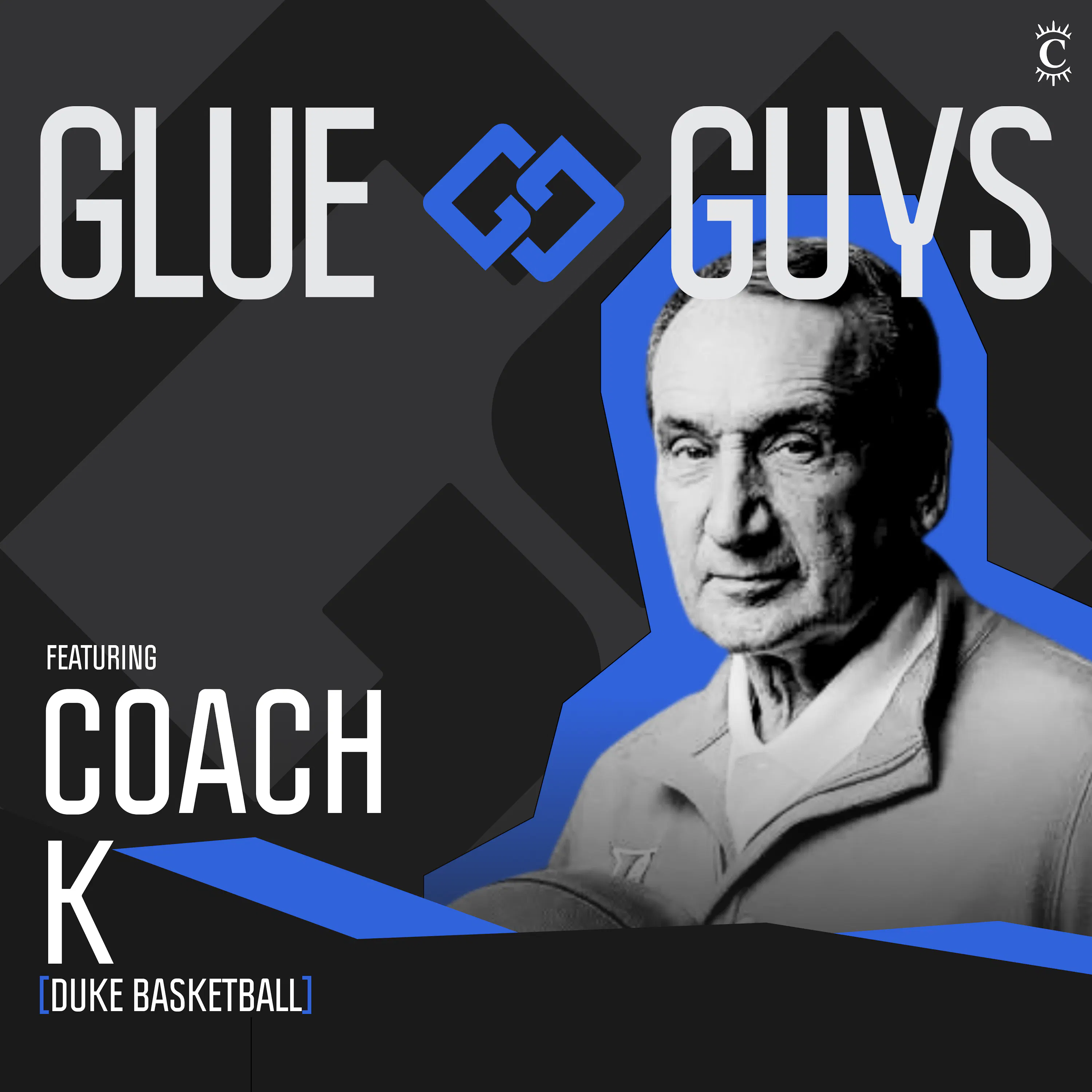
The transcription begins with a metaphorical conversation about driving one's own "bus" and surrounding oneself with good people to reach new heights. It then introduces Ramp, a financial operations platform, emphasizing its efficiency and benefits for businesses. The text transitions into an interview segment with Coach Mike Krzyzewski, focusing on leadership and coaching insights. Coach K discusses the importance of understanding and motivating individuals, the evolution of leadership, and the significance of feedback and time in effective leadership. The transcript concludes with reflections on learning and adapting in leadership roles, highlighting the continuous nature of understanding people and evolving in leadership practices.
Transcription
11119 Words, 58041 Characters
The most pivotal talk I've ever had in my life was the night before I was going to high school. So the night before I'm going, my mom says, Mike, tomorrow, make sure you get on the right bus. And I look at her, you know, like, ma, Damon to Armitage, Armitage to wear me, right? And she says, that's not the bus I'm talking about. So I'm, what bus are you talking? Says, tomorrow, you're gonna start driving your own bus and only let good people on your bus. If you get on someone else's bus, make sure they're good people. And those buses will take you to places that you would never go alone. Glue Guys is proud to have Ramp as the first presenting sponsor of the podcast. I was shocked to learn that most financial teams spent 80% of their time doing operational work and only 20% of their time doing strategic work. Ramp flips that equation. This financial operations platform simplifies everything about how businesses spend money and spend their time. With Ramp, you can manage spend approvals, control your expenses, automate your accounting, track your vendor relationships, and even book your travel. Ramp enables finance teams to focus all of their attention on what's most important. It allows companies to issue physical and virtual cards to every employee with spend limits, category restrictions, and automated compliance checks to ensure spend outside of expense policy is never allowed to happen. Ramp eliminates both manual expense reports for employees and removes the need for accountants to spend hundreds of manual hours each month classifying transactions so financials are accurate. The Ramp team is all in on saving their customers time and money. Ramp is used by best-in-class businesses like Shopify, Airbnb, Anduril, and many more. They all use Ramp to manage their spend and automate away tedious financial processes that just distract from the main thing. Ramp is easy to use. Get started now and build a more efficient team and a more profitable business. Whether you have five employees or 25,000, go to ramp.com slash GG to sign up for free and get a $250 welcome bonus. That's ramp.com slash GG. Welcome to Glue Guys. We're your hosts, Shane Battier, Ravi Gupta, and Alex Smith. And we're bringing you behind the scenes of the locker rooms, the boardrooms, and the living rooms that taught us everything we know about what it takes to be great leaders and even better teammates and friends. We hope the conversation helps you bring more ambition and more joy to your own work, life, and relationships. It certainly has for us. We have an extra special in-person Glue Guys today, which we have all the way to places that's near and dear to my heart to interview and talk with one of the most important people in my life. I wouldn't be here, I wouldn't be a Glue Guy without him, Coach Mike Krzyzewski. His record speaks for itself. 15 Final Fours, five national championships, three gold medals, two World Cups. But more importantly, he shaped the lives of so many people, not just people who walk through the doors of Cameron Indoor Stadium, but the world. He's one of the truly great role models and leaders of our time, and so excited for everyone to get a glimpse into what I got to experience the last 30 years dealing with the GOAT, Coach K. One take, Shane. That was pretty good. It better be, I was ready to punch him right now. If he can't take that in one take. This ain't no hobby, Coach. I feel like he performed. This ain't no hobby. I will say this, because I can knock him a lot. He did not suffer from a lack of willingness to work. He came ready to earn his job every day, and that's one of the things I tried to make him do, is earn his job every day. I know it'd be hard for you guys to believe this. As good as he was, he didn't think he was as good as he was. Coach, he tells us this story about how he was interning in Chicago. Yeah, yeah. And you'd call him, and you hung up on him. True story. Couple times. Yeah, tell us about it. Two straight days. No, because we had a great team, and we lost almost the whole team, and he was gonna be the next great player. He was already a starter and a good player, and I needed him to be thinking of being the ACC Player of the Year and all that, so I'd call him, and it's a shame. So, when you went to bed last night, did you look in the mirror and say, I'm gonna be ACC Player of the Year? He said, no, and I hung up on him. And I'd call him another next day and ask him something similar about winning national championship, and I hung up on him. And then the third day, I called him, and he said, Coach, don't hang up on me. And I said, listen, I will stop hanging up on you when you stop hanging up on you. Oh, that's cool. You should be a plant that's not put in a case. It should just grow, and you're putting yourself in this box, and it's a good box. I mean, you're a really good player, but you got a chance to be the best player, and that's why I enjoyed coaching like elite talent, because he was, and still is elite talent, but how can they maximize? How can you get, and to be best friends with that best player. I was always hardest on my best players, because they could take us to places that good players could not take you to, but if you had your best player, the good players became better. I just will never forget in film session, it wasn't about like, okay, Shane, against Clemson, you gotta do this, right? Or against Wake Forest, hey, do this. I remember vividly saying, well, you know, well, Battier, like Leitner would have made that play, or like- Well, he would have. Like Grant Hill, you know, he never got screened. Like- And by the way, I didn't have to put a thing on ceiling with Leitner. With Grant, I had to do kind of the same stuff that I did with him. But you know, and I don't know if you do this intentionally, but the way you talked to me, it wasn't about like a competition that we were playing that week or last week. It was, I'm challenging you to be like Christian Leitner, like Bobby Hurley, like Grant Hill, like Trajan Langdon. Can you be that? And like, it was infuriating. Like inside, I'm like, oh, like those fighting words, and I'm gonna show you. I'm as good as those guys. I'm gonna show you. And that's how you got the best out of me every single day. I don't know if that was intentional, but like it drove me insane when he used to do that. So when someone is that best player, his teammates can only make him so good because he's better, he can make his teammates better. So how do you, I couldn't do it physically, but how do you do it mentally with the best player? That was my goal. How quickly were you identifying those different traits? Like the difference, obviously, of Shane and Leitner, like who needs what button push? Could you see that in him as a high school kid? I mean, were you 15 or 16 when you guys first met? Like you've known him a long time, right? And at that point, you are the man in high school, but like could you even see then the traits? Yeah, and yes. Not just physical. Yes. It's who you are as a person. So he had a certain magnetism, a charisma, but they all have to have a work ethic. One of the best games I saw him in was an alumni game. True story. Yeah, it's a true story. And because I'm watching, you know, like he was a center in high school. So I'm saying, eh, you know, and in the alumni game though, he was shooting threes. So I said, damn, he can shoot threes. The best thing for a basketball coach is if you have a really good player on the court who could make changes in the moment, kind of like a football court audibles. But our game's continuous. Yeah, so fluid. So I could make the change at a timeout or a free throw. But if you had a guy, and that's what Leitner did. Shane did that. Wojo did that. John Shire did that. You know, a number of players, not that many. It's a force multiplier, you know, for a team. It's kind of like what LeBron or Kobe, they talk about their physical talents. But Jordan, in the moment, they could make all these, and he could do that. He was kind of, he was our point guard really, but he wasn't that position because he had that ability to do that. And that's a gift to a coach. I saw that somewhat in him in high school. He was a leader on the court. And when you have that, you have to let them run with it. They have to have the ego to do it. That's what we were doing in getting him there. So as junior and senior, you're, boom, he. Well, you know, in fairness, I learned that from Trajan Langdon, Steve Wojohowski, Rashawn McLeod. Like when you walk in the doors of Cameron for the first day, you know, it's Duke. And the expectation, that's why you're there. You're there to accept the expectation. But just looking at Wojo, looking at Trajan Langdon, Rashawn McLeod, the seniors, like, you know, I learned what the expectation was of a Duke basketball player, you know? And I said, that's how you lead, you know? So like, when I was a junior, when those guys were all, you know, gone from the program, it wasn't like, oh, okay, I gotta be someone different. I gotta be like Trajan. I gotta be like Rashawn. I gotta be like Wojo. Yeah, you know what though, what happened, 2010. Yeah, yeah. The one and done. One and done, yeah. So now, your best player was not a senior. It was a freshman or the most talented. And you didn't have that. It was kind of like, who did that? So you had to try to do that in a shorter period of time without the help. Yeah, yeah, exactly. Just prepping for this, you talk a lot about your time at the service academy and then serving after. Like, part of the deal of leading is learning to be led. Yeah. Right, and the things you learn from that. And certainly what Shane's talking about, I think is part of that, right? Like, that natural cycle when you had a four-year career in college that you could learn from the upperclassmen. Culture had been set, they learned the ways, and then obviously they could continue to pass that on. You mentioned this, obviously, change, and basketball obviously is still going through a lot of changes. Yeah, you know who helped us keep our culture? Our managers. Yeah. He was asking us about this before. I'm fascinated by the managers. I mean, if I'm hiring, you know, in business, I'm hiring a Navy SEAL or a Duke basketball manager. But they've done pretty well, you know? They've done pretty well. Pretty well. Can we talk, like, what's the culture here? Is that, I mean, what? How does it work? Like, I'm wearing, like, a brotherhood. They have their brotherhood also, although they're mostly guys, but some gals. And, you know, their motto is something like, the difficult is easy, the impossible takes a little longer. That's awesome. That's so true. So great. What do they do? Everything. Okay. Everything. I never had to, I never thought about the logistics of a practice ever. They are wired, and they taught their culture. Now, they also, you know, one of the values of our program, we have seven, but one of the values is respect. So a player, you can't say, hey, you, or, you know, get this. I would tell my managers, if they said that, tell them to go take a hike. I got your back. And so, so many of the managers become friends, roommates, and whatever. And they weren't, you know, they're already really smart, or they wouldn't be at Duke. They learned the dignity of work. Yeah. That no job is too small. Yeah. It's a job, everybody should be ready to do it. So, they're there. There's a guy in the huddle. I always notice this in the timeouts. There's a guy in the huddle who stands there with the pen for you, right? Like literally, like so that you don't have to turn or anything. Unless I'm throwing at her. Yeah. Yeah. I think that, I think it's a hard challenge you guys went through, or Duke went through. I'm going to go wee on Duke, because I'm lifelong. But like, there's a hard challenge that we had to go through because Sheryl Sandberg has this quote, if you cannot be what you cannot see. Yeah. And I think all of a sudden, the one and done's if they don't have somebody ahead of them, right? No, it's difficult. Yeah. Now, what we have to do, like, because I, okay, this, an amazing change in recruiting. We recruited Shane for over two years. He was, we have four year return. Just the business aspect of it. Now you recruit the one and the guy, and they should go. They're the same guy. Someone said, you're recruiting different guys. No. Yeah. The world changed. And so, still recruited him for two years, got one year investment. So, for four years of that caliber of player, you now had eight years of recruiting. Yeah. Crazy. So, that whole money, time, that changed. Efficiency. Yeah, everything's sped up. And you have to do it more frequently. Like, John Shire is doing it all the time. And I have to do it more frequently. I had to do it all, you know, once that all, you know, you're doing it all the time. So the culture that you have around these guys, the infrastructure, it's not just the managers, but it's the secretaries, the people who feed them, the trainers, they all have to be, they have to own it. They can't work for you. They have to be immersed in the culture sooner because you need to get the return sooner in that time. A key thing with culture is the word accountability, and shared values, shared standards, but then they're administered by everybody. And so when one of my guys would come up here and talk to Jerry, my assistant, they'd better be, Ms. Jerry, thank you. And if she's not getting that, she should hold them accountable. And that's a big part of, and I speak a lot for businesses, it's gotta go all throughout the organization. How do you, with the one and done phase, how do you get the shared, like common purpose, the singular focus, right? That again, the team goals, the program goals are bigger than all of us. I think that, I mean, it's, you have more time with these kids, you can mold that and build that, but when it's just one and done, right? Yeah, well, everyone talks about like your goal is to win the national championship, which that's good. That's a good goal. But what do you do on a daily basis? There has to be common ground for everybody. I call it shared values, shared standards. How does everyone own it? The two standards that I've always had was when we talk to each other, we look each other in the eye. And the second is we always tell each other the truth. And when I'm speaking, I said, like, if I'm recruiting Shane, and I tell him, I'm gonna be one of the few people in your life that will always tell you the truth. I promise you that. And I want the same in return. So like, boy, your shoes are really nice. Nice. The slacks are, you know, that top sucks. Yeah. Not that it doesn't. But, because there's gonna be a time out where you come to the bench and you're playing not well, and I look at you and I say, you need to get your head out of your butt, man. And you can't shrivel up and say, like, that's the truth. Same thing, you just hit two threes, and you're like, man, keep it going. And what happens then, so he and I trust one another. We still do in a moment. And part of really establishing a great organization is that speed to trust. How quickly, when you say something to me, do I trust you, or do I have to check it out? Do. And I think that part of our program has been like a cornerstone or a big foundation where there's no BS. Coach, one thing that happens a lot, I feel like, is people in business talk about what's someone's superpower? What's their superpower? And one thing Shane always talks about with you, you're obsessed with your people. Obsessed. They're the most important resource. So one of the questions for me is, how quickly do you feel like you get to know someone well enough to know what will motivate them, what will piss them off in just the right way? Is it something that happens, you get it quickly, or is it something that happens over for a long period of time? Well, it's continuous because a person changes. Really, in the study of leadership, it's really the study of people. And so people are the best resource for every organization. You can have AI, analytics, and all that. It's the people. And so you have to constantly, not have to, you want to, keep learning about your people. And so even like for him, he came back four years, he was a different person each year. Same thing with the team. Same thing with an organization. You may have had this great year, now it's another year. Who are you now? How did you handle success? Or do you have a vision, hunger to do more, or are you pretty happy with what you've done? And so you have to have interaction. So I think a big thing, it's neat if I know his son just played against my grandsons. That's a cool thing. And they beat him, by the way. Pretty bad. Yeah, they're better. So, but I love my grandsons. And so that's a cool, cool thing. But say we're in business, or he's playing for me, when he became our leader, I would ask him things like, what do you think about what we're doing? Or how do you feel like we're gonna try something? What do you think about it? If you ask people in your organization that, it hits you in a different spot. You feel more empowered. A lot of people think a really good leader is somebody who can solve problems. That's cool, solving problems. The great leaders don't have those problems. Because they have a group around them who develop a communication system where you see something and you tell me how you feel before we did it. And I don't make the mistake. Instead of saying, after it's done, I knew that would happen. Key thing, right? Like, and you know what it costs? Zip. Well, why is that so hard, though? Why is that so hard? When you say it, it sounds so simple. But that is the differentiator between an effective leader and someone, right? Right, so it costs zero, yes. But there is some kind of cost, whether it's fear, whether it's fear of looking weak, fear of looking stupid, like what is it, right? So the cost, there is a cost. What do you think it is, coach? Why do you think people don't do it? No, I do think part of what Shane is saying is, it's all true. It's not the complete answer, obviously, because there are many things. But a lot of people don't like any type of confrontation. Yeah, for sure. Yeah, and there's less of it now. There's less, confrontation is really meeting the truth head on. So, but the other thing is, it's a four-letter word. It's called time. Like, I need to spend time with you. I don't have time, I'm doing this. And again, where would you allocate your time, would you allocate it to your most important resource? Crazy, right? No, it's fascinating. Where did you learn this? Where does it get developed? Yeah, were you always okay with confrontation? Well, I was confronted a lot. I don't know. We want to hear about it, yeah. I got accustomed to being the receiver of the confrontation, especially being the point guard for Coach Knight. And then, I've been confronted because, my wife and I have been married for 55 years, got married on graduation, and I have three daughters. So, I get confronted. My friend says, feedback's the breakfast of champions. And I always say, my wife makes sure I eat my Wheaties every morning. Every day, yeah. But I've been fortunate to have my girls in my life. There's a woman's wisdom that guys should, oh, wow. Take note, yeah. Take note. They have a, anyway, I've benefited from. Leadership is something you never have a complete handle on, you know? It's the most fascinating profession in the world because it transcends everything in our world. And with it, those things are better. But you keep learning about it. So, I'm excited to talk about it because I still learn about it. I'm learning about it. A big thing is because people keep changing. Society keeps changing. God's been good to me with USA basketball, Duke basketball, all the success, you know, big successes. But he screwed me in one area. I kept getting older and the guys I coach stayed the same age. All right, all right, all right. So, I had to embrace that word, adaptability, especially in communication. And so. And that's not like just a buzzword, right? So, like every year, Coach K would come and say, look, our absolutes are with each other in the eye and we don't lie to each other. Everything else was on the table every year. Every year. Every year. Style of play, you know, what we believed in. And that was probably one of the most shocking things when I tell people. Because they thought, no, no, you've had 45 years of success. It's rinse and repeat. It's paint by numbers. My way or the highway, whatever. This is how we did it. And that actually was not the case at all. And I think one of your biggest strengths is your malleability. I call it personalizing your team. Like, why, even though a system worked well for last year's team, you don't keep trying to fit those people into that. To me, that's what made it really interesting. But also, in personalizing it, you guys were gonna feel more comfortable. Even in personalizing how you spoke to the team. You know, not all the time. There was some consistencies. I was thinking about this interview, and I don't even know if you would recall this, but I think this was maybe the most important moment of your USA basketball coaching career. I was on his first team in 2006. Okay, the World Cup in Japan. And we were in Seoul, Korea. We had an exhibition game. You remember this game? Yeah, exactly. But, and so, we played Lithuania, okay? And if you knew one thing about playing for this man, okay, it didn't matter what the scenario was. Whether it was the Final Four, or whether it was an exhibition game, or if it was a game at Christmas, or you're playing Carolina, all right? It was about the standard of performance, right? And it was about how we came out. And in that particular game, we played a really good Lithuanian team. You know, they were one of the favorites with us. And we might have been down at the half, or it was a tie game. And what I saw at halftime was what I saw in my four years at Duke. That our standard of basketball was not up to USA basketball, and I'm going to tell you in a very direct manner. And there was a player, I'm not gonna say his name, but he was not very good in pick and roll defense. And you let him know. He never was. And you let him know, in no uncertain terms, that this is not going to fly. And at that moment, like, you could see the look on this player's face. He had never been talked to. Oh, wow. Like this. Yeah, that's true. His entire life, and you could see it. Like, who is this cat talking to me like that? And the look, look, I lived it, so I understood where it was coming from. It was coming from a place of love, and it was coming, like, standards, right? So like, I didn't bat an eye. But the look on Coach, about halfway through this diatribe, it clicked for you. It clicked. And you realized, oh, this is not appropriate for him at this moment. And it was an amazing, like, I saw it. I saw it click in your eyes. And like, we went to, you know, you followed that away, and you still coached that team hard, and you were learning, it was your first year. Yeah. That was one of the main lessons I learned. But we lose to Greece in the semifinals. We went, you know, we beat an Argentinian team in the bronze medal game, you know. And, but you came back and you were a different coach. Yeah. And I wholeheartedly believe I was here in the locker room where that moment. Yeah, I'm glad you said that. It propelled you to two more World Cup gold medals, three gold medals. And it was like, I'm like, no, I'm telling you, that was the moment that might've been the most important in that journey. It's a great point, because as a result of that, the first meeting I had with every one of the other U.S. teams was a standards meeting of how we're gonna live together. And so with the next team, the Redeem team, that first day, I had individual meetings with LeBron, Kobe, Dwayne, and Jason Kidd. And individual, and I said, we're gonna have a meeting tonight. And he said, yeah, about offense and defense. I said, no, no, no. We're gonna talk about how we're gonna live together. Really. And I told him my two standards. Look each other in the eye. I said, I'd like for you guys to contribute. Individually, now, when I do a meeting, I always like to have someone in the audience that I've talked to already, who I can count on to talk or answer, have a friend in the room. So the meeting comes, and the very first thing I say to him, I said, I want you guys to know, I want you to bring your egos, I don't believe in leave your egos at the door, and bring your egos in. Kobe and LeBron would have brought them in anyway, so you might as well bring them in. Which is good, I want you to be who you are. And then I said, I want you to know that you are not playing for the United States. And we always had a picture of the gold medal, and I stopped, and they went, where's the pro coach? You know, like, this guy's an idiot. And I looked at them, and I pointed to each one of them, and I said, we won't win that unless you are United States basketball. You are. You have to own it. And you have to not just hear and see what we're doing, you have to feel what we're doing. And we have to share common ground, and that's where the standards. So then we have the meeting, and I said, okay, look each other in the eye, tell each other the truth. It's a moment of truth now, because all these guys, you wonder if anyone's going to give you anything. And you guys have anything, and Jason Kidd raises his hand, and I said, good. And Jason said, coach, we should be on time, and we should respect one another, and be on time. And I said, what do you guys think? So instead of a rule, and yeah, we agree on time. And so speaking of respect, I'd like to introduce another standard, that we've lost four of the last five competitions because we're arrogant and didn't prepare well. Like that we never have a bad practice. We never have a bad practice. It's not my, we have to become a team of plural pronouns, and so we agree. And I will tell you, for all five of those teams, we never had a guy late, and we never had a bad, I get chills thinking about it, because they owned it. And then Dwayne Waite said, have each other's back. We talked about, one of the coaches said, we need to have poise, don't show weakness. We need to be, and I said, here's one, intelligence, like no team fouls. Our value is not measured in our playing time. Yeah. That was a cool one, too, with that team. Yeah. And then Kobe raised his hand. He was the best player at that time, and maybe best player of all time, but he was, and everyone, we had alpha dogs, but he was the alpha dog. And so everyone was going, and so he raised his hand and said, if we, and he was the leading scorer in the NBA, he said, if we play defense and rebound, we'll kick everyone's butt. And then he met with me two days earlier and wanted, he told me he wanted to guard the best perimeter player on every team that we played, and in our first practice, he never took a shot. Without me, if you have somebody like that on your team who's already doing this stuff, this is, like, hardly anyone does this stuff, and we had, like, 14 standards, and LeBron never said anything. I said, like, I don't know if he's punking me, but I'm okay. But he raises his hand, and he's really good, and he's a great friend, and he says, coach, I've dreamed about winning this gold medal and playing with these guys, and he was eloquent. He said, no excuses, and he looked at everyone, I don't want to hear anything, ever, excuses. That became our first standard, and so that became a staple for how I coached, and I used it with our Duke teams, but it was even more important for men. And that was the common denominator, and you know what, Shane? These guys loved it. They, a great player wants to be coached, and they want to be held accountable, and a lot of people don't hold them accountable, because they are that player. They use them, but they don't, and so we had great rapport. I didn't have it with your team, because I did, I was learning. We didn't spend the amount of time, and whatever, but I learned from that, and part of leadership is to be, you're not going to win all the time, but when you get knocked back, why? What costs it? But I'm really happy you brought up that, because I didn't take it to one event. I've been evaluating myself after that, and I said, I got to get closer to these guys. We have to be, have some type of relationship. You know, Coach, we have some amazing guests, Doug McMillan, and Urban Meyer, and it's amazing all these moments in the dark. Everyone knows the success, and everyone knows the big things, and coming back from the huge adversity, but it's amazing all just those small throwaway stories that, you know, you haven't thought about that in years, you know, that turn everything. 2006, I mean, three national championships in. Yep. You know, widely seen as, you know, the greatest, if not one of the greatest coaches of all time at that moment, already named the US coach, right? And you're still learning, and that idea of, and being humble enough to say, okay, you know, I was named to this, I was chosen for this, but I can do better. That's something that, there's a real lesson in there. You're already in the Hall of Fame, and you're learning. A really good leader is humble, but they don't, like, hey, look at me, I'm humble. Yeah, yeah, yeah, yeah. They just show it. Yep. Well. They do it. They know they need it. Yeah. You know, like, it's not like, I'm doing this, and I'm really, it's like, you know, you do it. You have to show that you, your vulnerability, you know, like, if you screw up, like, look, like at a time out, like, what I told you at the last time out was absolutely wrong. You know, this is right, right now. And there's a human element, and then the connection becomes better. Yeah. Yeah, the relationship becomes better. That's, my last, like, decade at Duke, coaching, we had really good, and we won a couple national championships, and we were right there with a couple others, but I never got as close to those teams as when you had them for four years, because you really knew, well, it's just like any relationship. The longer you're doing it, right? If you're doing it the right way, it keeps getting. You know, I also tell people, when I came to campus in 1997, I showed up with a footlocker and a backpack, and a bunch of dreams. You know, your last 10 years, they showed up with a footlocker, a backpack, and a business plan. And a social strategy. And now they show up with an agent and get paid. Exactly. So how did, you know, that whole paradigm, that whole, wow. Not that it's bad, you know, like, this change in college sports, everyone should just admit it's a change, and not say the way it used to be, or this is the way it is, and then organize it. Give it guardrails. You know, it's mind-blowing to me, like, a coach told me after my freshman year, hey, you should go do an internship on Wall Street, right? So I spent the summer in Stan Brunson's couch in Brooklyn, you know, number 31. And I went and I learned the subway system, and it would be unfathomable to have a player who's a top 50 recruit say, no, no, why don't you go to New York for, you know, take some time off and learn some life skills. Well, we have an NIL event for you, where you're going to make six figures. And you won't take the subway, we'll have a car for you. But like, that experience, that changed my life, and it made me a more developed person. And I think it made me a better basketball player in the end, because I had world experience and life experience. I knew I didn't want to work, you know, at an office, so I better work hard at basketball. But like, you know, one of the things that was the hallmark, you know, playing for you, it wasn't just about basketball. And then that's a misperception, we won so many games, and we had so much success. You told us, hey, like, be a student, like, enjoy college. Well, you're around so much talent here. Like, every young person here is talented. And become friends with them, because they'll share their talents with you. And you know what, you might- You don't have to have sharp elbows. Yeah. Yeah. You know, you talked about what you did, and what's now. We just kind of mentioned that. It'll be interesting in the professional ranks. The players coming out of this system now, where they're already professional, they're already- before, they were professional, but they got paid, and all that. Nothing against that. How does it influence you when you're 23? When you're, you know, like, how are you incentivized? How are you- are you still as hungry? And the other thing, though, is that there'll be a multitude of guys who will not make it, but who have been paid more for their abilities than they will ever be paid. Yeah. Where do you go? Where do you go? I worry a little bit about mental health, with, you know, not the stars, but people who don't make it, you know? Because in college, you were- everyone was hungry, like, you hadn't made it, you hadn't, you know? Economically, you were motivated differently, and it's going to be an interesting study. Coach K, did you always have that hunger in you? Always from the time you were a kid? Or did you, you know- Yeah. Was it always there? Yeah. Hunger was never a problem, and hunger and anger were never problems, and wanting to win, and I just wanted to be really good all the time, and so whatever it took to be really good was not a sac- everyone says you have to sac- really? I don't look at any of that as sacrificing, that's what you needed to do to be good. I can tell you, like, I can't remember one day where Coach came in, and he was low energy. Ever. One day. And we could pull every player, like, I'm sure you had days where you felt like crap, and you were sick, or you're tired, or, you know, Mickey was yelling at you, or whatever, but the second that Coach walked in, you know, he was huge on body language. You're- call it your face, you've got to have a good face, right? And he actually showed us a video of game film, and we had a bad face, because that showed the opponent weakness. And you know, for me, when I looked at Coach, I said, you know, I want Coach K to meet my level every single day. Because I know that he's going to bring it every single day, but what if- can I make him better? And so I'm never going to have a bad day, either. And like, again, we talk about, you know, capability versus willingness, you know, a lot of people are capable of doing it, who's willing? Who's willing? There's a hell of a lot of people capable. Who is willing? Every day. Every day. That's the difference. Every day. Not a bad day. Yeah. Not a bad day. Yeah. Right? And your stamina for that is just mind-boggling. Mind-boggling. Yeah. You know, really some common- a lot of this is common sense, but it's hard to do, is, okay, why would you want a crappy day? So who's in control of your day? Me. Yeah. Especially if I'm the leader, we're going to have a good day. And now, one of the things that I would tell a player is, I'm going to be enthusiastic every day. I want you to be- like, so we share a common enthusiasm. If I have to use my enthusiasm to get you enthusiastic, that's not good. That's not good. So, as a veteran, that's how he- although, you did that as a young player, too. You were welcome. and we have good guys, you know, like we recruited talent with character. We didn't recruit talented characters. And so a lot of people say, boy, you really, coach, you did a great job of developing all these young men. I say, you know what, they had a pretty good base when they came in here. Now we added, and Duke added, but that's a key thing, too, in recruiting to any organization, is if you can recruit character, too, and how do you find that? Do you think that's part of the reason you stayed in college, that you were able to mold and be around young men? And if it were today, do you think you would have made the jump? I would have made the jump, yeah. Because it is that now, you know, like I call it crossing bridges. So he and I crossed a number of bridges together, not just player bridges, but life, and that's beautiful. And then financially, college coaches then were making a lot of money, not as much as I could have made. But it wasn't that, it was just all that, you know. However, if I was 60 today and still coaching at Duke, I would think very seriously about coaching in the NBA, because right now, it is a pay-for-play sport, and so is football. There's nothing wrong with that. If I'm going to do that, I'd rather do it at a level, at the highest level, where I have an organization around me doing all the stuff, so all I have to do is coach, you know. Now, the job that John Shire has as coach is complicated, you know. Everything's a one-year contract, he's the CEO. He's the CEO in a business that has run wild. Yeah, I was going to say he's the CEO, but to your point, he's not insulated from a bunch of the other work, right? He has to go do a bunch of the work directly, and the recruiting, for instance, right? The two years for one year. Not only that, but every kid today has an agent. Even your walk-ons have agents. They have NIL. Every kid. Yeah, yeah. Walk-ons? Every kid has an agent. What? Wow. Are you kidding me? Of course that's true. Not all of them have what Cooper Flagg is doing, but they get something, and they get a lot. I mean, most of the really good players playing college basketball are making six figures and above, you know. The common fan, that's everywhere, or it's at a place that's going to disappear. As a coach, you have to have people talking to agents. It's a business now. It is, while you're still doing college. In saying that, the sport has not suffered. There's great basketball games and whatever, but for the sake of the sport, and for the sake of the kids, it should be transparent. Like whatever school I'm at, you're at another school. I don't know what your guys are getting. You don't know what my guys are getting. In the NBA, everyone knows everything. It's transparent, and also where the kids are protected more. The model for college athletics has been exploded, and somehow the power conferences and the commissioners have to put their arms around this and figure out what this new model is. We don't have a model yet. We do not. The NCAA has not been a well-run organization, and it could be more well-run if it had antitrust protection. If you were running it. No, no. College czar, maybe, you know? I'm happy working for the NBA. That's the one thing. No way. No way. However, if I could, I'm trying to help in whatever way I can. Really it should be run by the people who are doing it. College basketball has never been run by the people doing it. In other words, a college coach has never been in a room where all these decisions are made, which is stupid. So what I'm saying is the coaches and their organizations should take control and figure out the new paradigm. It shouldn't be a retired coach who does not have a feel anymore. When I talked to John Shire, I said, I can tell you about the mistakes and the good decisions I made and a whole bunch of things, but not in NIL. Yeah. Yeah. Yeah. Yeah. In transfer portal. My NIL was the extra meatball at the cafeteria over there. You got an extra meatball. I got an extra meatball. I did. That was my NIL. Great game plan. I'm going to find that person who gave it to me. I mean, you've coached unbelievable teams for a long time. I mean, like all these Duke teams, the Redeem team, like the Eagles people. Has there ever been a moment when you've had self-doubt or you felt like you've been in over your head? And I even wonder, like I can't get out of my head thinking about this, is you come out of West Point and you've just obviously gone to coach night school and West Point at the same time. You're 22 years old and you come out as an officer, and you have to lead men at that point. Has there ever been a point of self-doubt for you? And I guess if there was, what did you do? I think everyone has worry or whatever, but I always believed I should win. And then you figure out how to win. And so at West Point, especially during your plea beer, there's not an app that you can get for improvement. You have to go through experiences. And so failure is part. So they made you fail. And so we had this motto, failure is not our destination. And so you get up, and now you get up and you figure, can I do this by myself or do I need someone else to help me do it? So it teaches you to get up, but maybe you need to form a team for it in that regard. So did it break this fear of failure then, even a little bit? You know what? When I was younger, and it actually followed me a little bit longer than younger, when crap happened, a tough or something, or an injury or whatever, you might be in a room alone and yell, like, ah! There are dents in our coach's area for me throwing something against the wall or whatever. So once I matured a little bit more, I went through a four-step process when I was in that. One, I knew the longer I was in that moment, the longer I was not going to find a solution for what I was going to be in. I had to get out of the moment, and because I was the leader, I had nobody but me to get me out of the moment. So I went through kind of a four-step process. I would look in a mirror and say, all right, idiot. I believe in me, and I believe in me, and I believe in my team. So you have a reaffirmation of belief. The second thing, we're all blessed equally with the ability to have a great attitude. It's on you. It's only on you. Attitude is only on you. You start putting it on someone else, you're an idiot. It's on you. And so the next thing I would say, I have a great attitude. It's kind of self-talk. And then the third thing was to figure out why whatever crap happened, why it happened. And full disclose what it is. And as a result of that, the third phase is preparation so it doesn't happen again, yourself or with your team. And the fourth thing is execution. You execute, and what you find is that the thing that you were throwing something against the wall for, if it's handled right, may have been an opportunity for you to get better. And so that process, the quicker you can go through it, whatever the process is that a person goes through. So if it was self-doubt, it probably did, but I'm not going to stay there. Because that's not going to solve the thing. And as a leader, one of the beautiful things about leadership is that you feel like you are in control. You're responsible. So a responsible human being does not stay in a crappy moment. And you have to hold yourself accountable. You talked about speed to trust earlier. One of the things we talk about a lot for the leaders we admire is their speed to getting back on their front foot. It's not that they don't have the problem, but their ability to go from I have a problem to I'm going to do something about it is faster than some of the other folks. And it's learned. So talk about the other end of the spectrum. It's well documented your success is unparalleled. How did you think about appropriately celebrating successes? There's only one champion at the end of the day. There's one team that raises the trophy. And so you can't judge it on did we win a championship or not. We won a lot of games, a lot of games. How do you think about celebrating wins? When? When do you move on? Talk to us about your mindset. One thing we read about you was that you talked, this meant a lot to me. You talked about how you got to make sure you feel joy, not relief when it happens. And so I'm super curious about this. You should celebrate. You just can't stay in the celebration. I guess that's the thing I would say. I want to be jumping around. And also shared joy is better than individual joy. But you also should define your own success. A lot of times now, when I speak or whatever, what about your legacy? What are you, really? No, I don't think you don't. If you're thinking about your legacy, I'd feel bad for you. Yeah, you're distracted. You're not even. Yeah, and you're backwards looking, not forward. Also you're being a phony for what you're doing now. Just be you and your legacy will take care of itself. But defining your own success. We lost some big games over the years and won a lot of big games. I was OK if we lost, but we were worthy of winning, if I could say. Because you know what? The other guy can be worthy of winning, too. And it might be that they just did something a little bit better or whatever. And I loved that old quote from Roosevelt, being in the arena. Yeah, totally. Man, I've been in the arena my whole life. All of the people who want to write about people in the arena, God bless them. They don't really mean that much to me. I respect, not that I don't respect that, but I really respect the people in the arena, even if the person in the arena beat me. Because then he and his team made that arena bigger. And so I've loved that. And I think it's one of the great quotes. It's amazing. Of all time. Those cold, heartless souls that know neither victory nor defeat. Maybe a little bit too much of a knock in the audience. I don't want to just downgrade everyone else in the world. He kind of kicked everyone in the butt. He deserves it. He earned that. Yeah, but I don't want to go that far. I do respect all the fans and everybody. But it's like you're brothers in battle. Or it's a good portion of my career. There's a handshake line after, and if we lost, and say there was a kid, or even if we won, there was a kid who, but especially if we lost, that really was, did an amazing, or whatever, just to, I would just tap him right on the chest. That son, that was terrific. To respect the opponent. The game and the battle. Coach, what were your parents like? I didn't know my father as well. My dad died when I was a senior at West Point, and we're an ethnic family in Chicago. My dad's an elevator operator, maintenance person. My mom's a cleaning lady. I hardly knew my father. Oh, he worked. He supported us, came home tired. His cigarette would, the ash would be that, you know, and so I got to know my mom, and I would tell stories about my mom to my players, because she showed up every day. I never knew. Tell us the bus story. My personal favorite, the bus story. The bus, yeah. So my mom, you know, Polish lady, shopping bag, you know, and she gets off a bus on Chicago Avenue, and a couple guys knocked her over and tried to take away her purse, and she wouldn't give up her purse, and she never did give up her purse, and they went away, and so we, like, ma, they could have done something. She says, Mike, it's my purse. So when these guys would turn the damn ball over, I said, Shane, my mom wouldn't, and you're giving up that damn ball. 50-50 ball, come on. Like, be as tough as my, this Polish lady. True story. And it's true, like, value the ball. What do you say, what do you say to that? You thank him for telling you the truth, right? Yeah. And I also love the story about your mom talking about, you know, who is on the bus that you're driving. Yeah, that was the most pivotal talk I've ever had in my life, and it really set the stage for what I did the rest of my life, was the night before I was going to high school, and I was a cocky, I was punk, you know, and I'm going to Catholic Boys High School, and you take the city buses, you know? So the night before I'm going, my mom says, Mike, tomorrow, make sure you get on the right bus. And I look at her, you know, like, ma. They went to Armitage, Armitage to wear me. I can take Division to Grand. And she says, that's not the bus I'm talking about. So I'm, what bus are you talking? Says, tomorrow, you're going to start driving your own bus, and only let good people on your bus. And if you, now this is from an eighth grade educated lady, wise, just the best person in my life. And she says, and if you get on someone else's bus, make sure they're good people, and those buses will take you to places that you would never go alone. I get chills. The best advice, in other words, hang with good people. You know, if you're an idiot and you go with, and so, West Point, US, Duke, I've been on great buses, and some of those buses were, you know, he drove the bus sometimes, or Leitner drove the bus, or Kobe Bryant drove the bus, but they were always, they were good people. And so you were proud to be on those buses. Coach, can you quickly talk about Coach Knight? And I mean, I think it's like, I mean, you guys, two of the most, I mean, winningest coaches of all time, and you played for him, and there is a mentorship there, and then you coached with him. Obviously, your styles are different, but what were the commonalities? What were the things you took from him? Well, I was lucky, although I didn't feel it was luck when I was going through it. My four years at West Point, I went to the best leadership school in the world, and learned to change limits, and learned a whole bunch of things. And then I was the point guard. We didn't play as freshmen at that time. I was the point guard, so I was held ultimately responsible by one of the great coaches of all time. And so I call it a double dose of tough love. But I learned at the highest level. So Coach Knight was brilliant, and he taught me the value of preparation. We were unbelievably prepared. And emotion, positive and negative, but how strong you can be emotionally. And then we had a different relationship throughout. It wasn't always good, but he gave me tremendous opportunities to be associated with basketball at a high level. And as a result, I also met other people just by working for him or whatever. And then I learned a lot from watching him, his preparation. He started motion offense, making reads, obviously defense, all those type of things. As a result of being with him, I had many opportunities that were afforded. Anybody who was with somebody who was really good, you got opportunities. And one of the pivotal nights or late afternoons in LA for the LA Olympics in 84, I wasn't on the staff, but I did the scouting. And I had a room in the Marriott where I broke down tape or film or whatever. One afternoon or night, I was sitting at a table with Coach Knight, Mr. Iba, who's one of the great legendary coaches, and Coach Newell. So I kept my mouth shut and just listened. And I'd become friends with Coach Newell and Mr. Iba. And Coach Knight left. And it was my fourth year at Duke in 1984. And both of them said, you're a good coach. You have a chance to be really good. Damn, that's good. And then they both said, you shouldn't try to be us. And I said, what do you mean? He says, well, just like you shouldn't try to be like Coach Knight or me, Mr. Iba. Now, if you see things that you like about what we do, use them. You're not a copycat or whatever word they use. And it was like I was being freed to be me as a coach. Up until that time, even at Army or my first, I was more, I have to do it that way, that way. There was like a 10, the commandments of- There was nobody else. I said, okay, I'm gonna do that. Now, that doesn't mean you still don't learn from other people, but you will never be as good as those people. Yeah. Alex had that, just to brag on him for a second, Alex had that with Harbo. I feel like this idea of you don't have to be like- Yeah, you're good enough. You're good enough. You can do these things. You don't have to be what you think of as a pro-style quarterback. Running is good, right? Yeah, and it was a similar thing, like the freeness. Oh, I can just, I can stop trying to stretch myself to be like Peyton or like- To fit yourself in. Yeah, you don't have to fit in. That doesn't mean you're a rebel or anything like that, but you're, and what you do is you open yourself up for more growth, because now you're thinking of the way you would think with those things instead of thinking of using those things the way the person used them. It's subtly amazing, you know, and that. So those opportunities are not afforded, so I'm eternally grateful for all of that. And with Coach, you also learn there's some things you don't, or that you can't do. Yep, sure. And so, but you know, he's one of the great coaches. I was fortunate to be my wife being touched by his. There's no question about it. Well, Coach, traditional question on glue guys. You think about your career, your unbelievable career. Who comes to mind when we ask you, who are the glue guys, the glue gal, the glue people that helped you along the way? Yeah, well, they're my wife, my daughters. They became glue guys. My mom was a glue guy, you know, and there were a couple teachers that I had in high school. One was my coach, who thought I was better than I thought, and I thought I was good. And that's where I learned to coach my best player the hardest. And one was a priest, Father Rogue, who passed away a couple years ago. I grew up and still am Catholic, but at 16, being Catholic in the 60s, it's like being in prison. One day, I was talking to Father Rogue, and I said, Father, really, how can you go through life with everything you think, act, do, is a sin? Really, like, this is how I feel right now. Like, you're not allowed to do this, this, this, this, this. It's just like, really? And he started laughing, and he explained faith to me in a way that I've grew from it. And whenever I had problems or understanding something, he would be my mentor. So that, you know, for any leader, how you keep balance, how you keep, because you can go, you can get torqued out here, and really, you can have a lot of problems if you don't keep balance. And the two things that, for me, have kept balance, for me, are family and faith. And so, the glue guys would be people. I don't know if you call faith a glue guy. But it's, because it keeps you grounded, you know, like, okay, you just won. Really, are you really that good? You know what I mean? Like, come on, settle down, hotshot. And, you know, and stay balanced. And so, you know, obviously, I can tell you, glue guys are my teams, but glue guys in life are more important. And what you're doing. And really, you get more glue guys if you let good people on your bus. 100%, right. That you just find them. I would tell you, too, a glue guy, for me, is my best friend of all time, Mo. We've been friends for 70 years. We're the same. And I talked to him yesterday. And he's in a nostalgic period. You know, like, I'm 77, he's 78. And people at our age start thinking about nostalgia a lot. And so he's, I said, Mo, quit being so damn nostalgic. I said, what the hell's wrong with you? We got a lot more to do, man. We got a lot more to do. But Mo would be, Mo shared, every success and failure with me, the same. It was, and I knew that. And then we could joke about it, or we could give each other crap, you know. Good crap, you know. And so Mo's been there all the time, all the time. All the time, all the time. Well, Coach, thank you for being, you know, this is a special day for us. You are a glue guy. All right, you know, honorary and literal glue guy. And, you know. How did you guys come up with that? Like, whose idea? I don't know. The idea for the podcast was that we're all on a lot more teams than we think, right? That's right. Yeah, so it's not just your work. Hopefully. Yeah, exactly. Right. But you we should aspire to be on more teams than we think we're on teams in our communities. We're on teams with our families. We're on teams at work. We're on teams at sports. And you play different roles on each of those. But we got to recognize and celebrate the people that keep those teams together. Yeah. Right. And so that was the idea. And then it also, I don't know, a fit in the box on Spotify, you know, so, you know, there's a double meaning. And then, you know, because we have Brother Battier here, we thought that was a good honor for, you know, what we think of as the ultimate glue guy and glue teammate and glue friend. See, I never looked at him as a glue guy. I looked at him as a star. Well, you know, he's both, you know, yeah, you can be you can be both. Yeah, you know, he, he, he was a joy to coach. And, and I love that. Yeah, yeah. And I, I, I missed that the last part of my career with a kid, because you couldn't be with him for four years. And not, you know, you're still close with Paulo or Jason or whatever, but it can never be. Yeah. Like that. That was that's beautiful. Yeah. You talked about 70 years of friendship with Mo. I mean, time, it's really important, right? And time. Yeah. Time and honesty. Yeah. Which, which builds, imagine how many people you actually trust. Yeah. You know, who believe in you. Yeah. Who share in everything that you do, you know, gobble them up. Yeah. And keep them around you. You know, because they make it worth worth living. So but no, I, I, I was wondering if Shane could talk this long. Actually, to listen this long. That's why I brought them. That's why I brought them. To listen. Yeah, exactly. He's a talker. He's a talker. Is he? He was actually, he shared, he really shared the ball today. We, we have to, we look each other in the eye and are honest with each other too, coach. So sometimes we got to hold them accountable. Yeah, we got to hold them accountable. Well, thank you coach. Thank you. It's an amazing day. We really appreciate it. Thanks for tuning in to glue guys. We're on social media at glue guys, underscore podcast, and we'll be back next week.
Podcast Summary
Key Points:
Conversation about driving one's own "bus" and surrounding oneself with good people.
Introduction to financial operations platform Ramp and its benefits for businesses.
Interview highlights with Coach Mike Krzyzewski regarding leadership and coaching strategies.
Summary:
The transcription begins with a metaphorical conversation about driving one's own "bus" and surrounding oneself with good people to reach new heights. It then introduces Ramp, a financial operations platform, emphasizing its efficiency and benefits for businesses. The text transitions into an interview segment with Coach Mike Krzyzewski, focusing on leadership and coaching insights.
Coach K discusses the importance of understanding and motivating individuals, the evolution of leadership, and the significance of feedback and time in effective leadership. The transcript concludes with reflections on learning and adapting in leadership roles, highlighting the continuous nature of understanding people and evolving in leadership practices.
FAQs
Ramp is a financial operations platform that simplifies how businesses spend money and manage their time. It enables finance teams to focus on important tasks like spend approvals, expense control, accounting automation, vendor tracking, and travel booking.
Ramp allows companies to issue physical and virtual cards with spend limits, category restrictions, and automated compliance checks. This eliminates manual expense reports for employees and saves accountants from spending hours classifying transactions.
Glue Guys podcast delves into the behind-the-scenes stories of leadership in various contexts like locker rooms, boardrooms, and living rooms. The hosts share insights on being great leaders and teammates to inspire ambition and joy in work, life, and relationships.
Coach K emphasizes shared values, shared standards, and accountability among team members. He values honesty, direct communication, and building trust within the team to ensure everyone is aligned towards common goals.
Coach K continuously learns about his team members to understand what motivates them and how to challenge them effectively. He believes in building relationships, empowering individuals, and fostering a culture of open communication and trust.
Chat with AI
Loading...
Pro features
Go deeper with this episode
Unlock creator-grade tools that turn any transcript into show notes and subtitle files.
 PodcastTranscript AI